Day 9: Siem Reap

This morning we woke up, assessed our health, and decided we were feeling well enough to have some breakfast and go see the temples of Angkor. We hired a tuk-tuk and headed off into the (blazing) midday sun.

Basically, this place is massive. Of the hundreds of temples that make up Angkor, we started at Angkor Wat (‘temple that is a city’). The most famous temple of Angkor is also the best-preserved as it was never abandoned to the elements. To reach the actual temple, you first must cross a huge rectangular moat and pass thru an outer wall, encompassing over 200 acres of land where the city that supported the temple once existed.

Angkor Wat's western entrance is a stone causeway over the moat


Inside the outer wall (which is 2.2 miles long)


Very old stairs


Apsara figures dominate Angkor Wat's stone carvings


Approaching the temple

Angkor Wat contains three stories, each enclosing a square of intricately linked galleries. Surrounding the outside of the first story is an amazing series of bas-reliefs, which describe important events in Khmer history.

Detailed bas-reliefs cover the first ring of the temple

We wandered through the galleries and made our way up to the second story; unfortunately we weren’t able to climb the steep staircase up to the third level. Crowds were incredibly light – we practically had the grounds to ourselves.

Advance to level 2!


You have reached level 2!


You did not reach level 3. Try again!

Everywhere you look there is incredible detail carved into the stone; Angkor Wat features over 3000 apsaras (heavenly nymphs), complete with 37 different hairstyles. 🙂 Thousands of myths, legends, signs, and symbols are seen around the temple, some serving as protectors or purifiers. Many of the carvings were damaged by previous attempts to clean the temples with chemicals in the 1980s, but a large restoration project is underway.

Yeah it's hot

Overheated (why did we decide to come here at noon again?) and still a little wobbly from our tummy issues the day before, we weren’t feeling the best but decided to press on to another one of the area’s highlights: the tree-locked temple of Ta Phrom. The most atmospheric of all the temples of Angkor, it has been swallowed by the jungle, its towers and walls consumed by the vast root systems of the gigantic trees that surround it.

Build your own ancient temple


Banyan trees took a liking to the central sanctuary at Ta Prohm


Banyan tree + 600 years = good photo op


Temple is in better shape than we are in this photo

After an abbreviated tour of Ta Phrom, our shaky state of health deemed our day of touring over. We shuffled past the many children selling bracelets and postcards at the temple entrance, found our driver napping under a tree, and drove back to the hotel for some much-needed air-conditioning and pool time.

Back at hotel pool


Relaxing on the balcony

Feeling better, we enjoyed a lovely dinner at the hotel’s cafe before doing some more shopping at the nearby night market.

Cheers to semi-sick travelers!


Whoa! Why don't you try heading home!

We didn’t see as much of Angkor as we wanted today, so here’s hoping we feel well enough to head back out tomorrow on our last day in Siem Reap!

Day 8: Siem Reap

Today, unfortunately, the symptoms of ‘traveler’s tummy’ sunk their hooks into both of us in varying degrees. Thus today was as follows:

Nic: pool, book, spring rolls, sleep
Matt: sleep, sleep, toast, sleep

Pool day


Matt's breakfast, lunch, and dinner


Gorgeous day!
Oh well. 🙂

Day 7: Phnom Penh/Siem Reap

Up too early for the hotel’s breakfast, we made a quick meal of oatmeal and coffee in the room before leaving for the bus station. There are several travel options between Phnom Penh and Siem Reap (air, boat, bus, taxi), and we opted for the cheapest: $12 bus tickets on the Mekong Express. The ticket included transport from the hotel to the bus station, where we boarded a comfortable, air-conditioned coach bus. The trip took six hours, and we were provided cold towels, snacks, and water, along with a guide who offered information on the areas we passed through.

Fancy oatmeal breakfast


Mekong Express bus station


Making announcements in Khmer, followed by English

Halfway to Siem Reap we stopped at a restaurant in the province of Kampong Thom. We opted to skip lunch and instead checked out the large market across the street filled with housewares, food, and more endless racks of clothes.

Pit stop in Kampong Thom


All TVs inside the market were tuned to the live Bradley-Pacquiao fight


These cookies are yo' friend

As promised, six hours from our departure in Phnom Penh we pulled into Siem Reap’s small bus station, where a tuk-tuk driver from our hotel was waiting to pick us up.

Entering Siem Reap city limits


Unfortunately, not our driver's tuk tuk


Ready to roll

The Golden Banana Hotel is a gorgeous boutique hotel located in southwest Siem Reap, and our room is one of the coolest we’ve stayed in: poolside, two stories, high ceilings, rain shower, and private balcony with super-cool hanging ‘basket’ chair. We loved it immediately and I would like to stay forever. 🙂

Two-story hotel room

We spent a relaxing afternoon by the pool, then after a nap we walked over to check out the nearby night market.

One of Siem Reap's night markets (helpfully pointed out!)


Shopping at the night market

Today was pretty uneventful, but we’re set up in a lovely hotel and are ready for some hardcore temple trekking during our three days in Siem Reap!
Day 6: Phnom Penh

This morning we took a Cambodian cooking class that included a trip to a local produce/meat market. Along with fifteen other people, we piled into tuk-tuks (motorcycles with carriages pulled behind) and went grocery shopping. Our instructor pointed out various fruits, vegetables, and spices used in Khmer cuisine, and we passed through a large butchering section (though most of the butchering had been done earlier that morning).

Piles of fruit at Kandal Market


Quick produce identification class


Dry-goods shopkeeper

The market was packed; we squeezed our way through the tiny alleys and stopped at several different stalls to pick up ingredients for our lunch (including fresh tumeric, coconut milk, tigerfish, sawtooth coriander leaves, and taro root).

Fish so fresh they jumped right off the table


Limes for sale (spiky, stinky durian fruit in the background)


Delicious mangoes


She is definitely not moving for that motorbike

The class was held outside on a rooftop of a nearby building; we got aprons and a brief overview and got to work. The menu was spring rolls with taro, carrot, and peanuts (with sweet & sour dipping sauce), and a traditional Khmer dish called fish amok, or steamed curried fish. The spring rolls were a community effort, with everyone helping shred and chop vegetables, mix the filling, and roll it into rice-flour wrappers. We sat down to enjoy the delicious fried goodies before moving on to the main course.

Outdoor kitchen setup


Spring rolls ready for the oil


Hard at work with our mortars and pestles

We made the curry base for the fish amok from scratch, using mortars and pestles and fresh turmeric that turned our fingers yellow. The curry base (lemongrass, turmeric, garlic, shallot, galangal, chili peppers, and chili paste) was mixed with fresh coconut milk, egg yolk, palm sugar, shrimp paste, and chopped peanuts, and thinly sliced fish was stirred in last. The dish is traditionally steamed in a “cup” made from banana leaves, which we all more-or-less successfully created.

Fish amok ready for the steamer basket

Fifteen minutes of steaming later, we enjoyed our delicious curry with rice. This dish was very easy to prepare, although I don’t know how practical it would be to replicate it at home. Banana leaves might be a bit of a challenge to find! We received a recipe booklet with both dishes we prepared as well as a few others. The class was extremely well-run with great instructors – we’re really happy we signed up. 🙂

Delicious!

Back near the hotel, we browsed in a few shops before heading back to rest a while and catch up on the blog. We planned to visit the Central Market, Phnom Penh’s largest, but were disappointed to realize (at 4:30 PM) that it closed at 5 PM. Since we had already visited the night market, we checked the guidebook and learned that there was a theater showing shadow puppet performances every Friday and Saturday night. Sold! We walked to a nearby noodle shop for dinner and thanks to some iPhone sleuthing, found a supermarket to get some things for our bus ride the next day.

Chess is a good three-player game when one is asleep


We watched this motorbike transform into a schoolbus


Taking important calls during the commute


Distance from bike wheels corresponds with happiness

With 45 minutes before showtime, we tried our best to convey our destination to a tuk-tuk driver and set off in search of the theater. Forty minutes later, after turning around several times, stopping for directions, and ending up at the end of a dark street where there definitely was no theater, our driver stopped to ask directions once more and was gratefully pointed in the right direction by a large group of nearby children. We made it into our seats with a minute to spare (as has been our MO many times this trip so far).

Close only counts in horseshoes, hand grenades and tuk tuk driver directions

The shadow puppet performance was fun, featuring a live Khmer-music orchestra and a storyline we didn’t necessarily follow but enjoyed anyway. After the one-hour show, we got to go backstage and see the beautifully-made, intricate puppets.

Shadow puppet wolves eating donkey


Orchestra and puppeteers


Are there a lot of wolves in Cambodia???

We took a much smoother tuk-tuk ride back to the hotel and went for one more swim, stopping for fruit shakes and board games at the poolside cafe.

This version has it right. Chutes sound like fun, snakes do not.

Our time in Phnom Penh was brief but very enjoyable; I hope to return here someday. Next up: the temples of Angkor in Siem Reap!

Day 5: Phnom Penh

Our first full day in Phnom Penh began with breakfast poolside at the hotel’s cafe. Highlights included fresh passion fruit juice and homemade pineapple-ginger jam, along with piles of amazing fresh fruit. After breakfast we met the driver we hired for the morning and set out for the Tuol Sleng Museum and the killing fields of Choeung Ek.

In early 1975, the Khmer Rouge took over Phnom Penh and forced the entire population into the countryside. During the time of the Democratic Kampuchea (Pol Pot was the prime minister), huge numbers of Phnom Penhois were imprisoned or killed. Tuol Svay Prey High School was taken over by Pol Pot’s security forces and turned into a prison known as Security Prison 21, or S-21. This soon became the largest center of detention and torture in the country, and the Tuol Sleng Museum now serves as a testament to the crimes of the Khmer Rouge and the atrocities that occurred at S-21.

Gallows in courtyard at Tuol Sleng


Instructions for detainees at Tuol Sleng


Expulsion of populations from Cambodian cities

Each prisoner in S-21 was photographed (sometimes before and after torture), and the museum has room after room of harrowing photos of men, women, and children. Visitors can enter the cells – some big enough for only one person, while others held many – and some cells still contain the rusted iron beds and various instruments of torture. Gravesites of several prisoners remain in the museum’s courtyard. This was a very depressing place but was also important in helping understand this major part of Cambodia’s history.

Torture devices used at S-21


Barbed wire to prevent suicides from upper floors

From Tuol Sleng we drove southwest to Choeung Ek, better known as the Killing Fields. Between 1975-1978, about 17,000 men, women, children, and infants who had been detained at S-21 were taken here to be killed. The remains of ~9000 people were exhumed from mass graves in 1980; 43 of the 129 communal graves have been left untouched. A large structure known as the Memorial Stupa displays more than 9000 skulls and bone fragments behind clear glass panels.

Memorial stupa at Choeung Ek Genocidal Memorial (kIlling fields)


Over 9000 skulls stacked in the Memorial Stupa

An audio tour accompanied our walk around the grounds, offering explanations of various areas and describing buildings and structures used for extermination that no longer exist today. The area is beautiful, full of trees, plants, flowers, and a large lake, though the many large depressions in the ground serve as reminders of the large graves disinterred not so long ago. We learned that from time to time, especially after heavy rains, fragments of bone and bits of cloth still surface and are carefully collected and preserved by the groundskeepers.

This was a tough place to visit. What happened here is impossible to imagine or understand, and the peacefulness of the grounds now makes it even harder to do so. Two spots were particularly difficult – the large tree primarily used for killing women, children, and infants, now strung with hundreds of colorful bracelets in their memory, and the nearby Magic Tree, whose branches held speakers that played loud Khmer music to drown out the sounds of the screaming people. Standing under this tree listening to a combination of this music and the sounds of a diesel generator (described by the audio narrator as “likely the last sounds these people ever heard”) was a chilling experience. Grim as it was, I’m very glad we visited Choeung Ek; it’s a place I will not be forgetting any time soon.

Killing tree's trunk used to bludgeon victims


Prayer bracelets for women and children killed


The branches of the Magic Tree

Back at the hotel, we avoided the afternoon thunderstorm and booked massages in the lovely hotel spa. Properly relaxed, we headed back out into the streets of the city in search of a restaurant called Friends. Owned by an NGO, Friends is part of a local organization working with Cambodian street children and their families to help them become independent and productive members of the community. The entire staff, including servers and cooks, are street children training for the hospitality industry, and both the food and the service was fantastic.

Shrimp wontons, mango cashew chicken and fried rice

After dinner we walked over to Sisowath Quay, the street running along the Tonle Sap river. Lots of people were out, fishing, dancing, playing soccer; we had a great time strolling along observing the locals.

He looks about as sure of fishing the Tonle Sap River as he should be


Phnom Penh's riverside athletic club


And the dude on the far right is king


Participating on the sidelines of the dance mob


Handing out flyers to traffic... without slowing down!

On weekend evenings Phnom Penh has a large night market, so we walked over to check it out. There was stall after stall of clothes (many recognizable US brands, unsurprisingly), along with a few trinket stalls and lots of food stands. We bought delicious fish-shaped chocolate pancakes but no clothes.

Phnom Penh night market


Food court mats


Fish-shaped chocolate-filled donut makers

We walked back along the river to the hotel, had a swim in the beautiful pool, and called it a night. Initial Phnom Penh observations: very poor, very dirty, maybe the worst traffic of anywhere we’ve visited, easy to navigate, unique French-inspired architecture, and some of the friendliest people we’ve met. I’m already wishing we were here for a longer time. 🙂

Day 4: Bangkok/Phnom Penh

This morning we slept in, had one last delicious Peninsula breakfast, and packed up to leave the hotel at noon.

Chao Phraya view from hotel


Peninsula ferry coming to pick us up

Anticipating more terrible traffic, we opted to take the Skytrain to connect to the city’s Airport Express train. The travel gods smiled upon us once again and we dashed onto the train seconds before it left (only two trains per hour). The $3 ride took only 15 minutes and we were checked in for our Air Asia flight to Phnom Penh with an hour to kill. With some baht left to spend, we browsed the restaurants and shops looking for snacks.

Mango with coconut sticky rice


Suvarnabhumi International Airport

Our one-hour flight passed quickly and uneventfully (love Air Asia!) and after a quick stop for visa processing we met our driver who drove us to our hotel in a really cool red vintage Jaguar. 🙂

If you don't have a street named after you in Phnom Penh, you were probably a crappy Communist

The Pavilion is a beautiful little boutique hotel I found thanks to my trip-planning assistant, aka TripAdvisor, and we were welcomed with hot towels, cold drinks, and a complimentary welcome massage. Thanks to the helpful staff, within ten minutes we had bus tickets, spots in a local cooking class, a driver arranged for a half-day trip, and several nearby restaurant recommendations.

The pool at the Pavilion

Dinner was at Frizz, a restaurant specializing in Khmer cuisine, and we opted to try the Khmer BBQ with its ‘volcano pot’, a large charcoal-fired burner on which we grilled fish, chicken, and beef that were mixed with raw egg. Vegetables and fruit cooked alongside, and once done, everything was wrapped in lettuce leaves and dipped in an incredibly potent lime-pepper-fish sauce.

DIY dinner


This little lizard watched us eat our entire meal


Street outside hotel

We’ll miss Bangkok but are looking forward to our week in Cambodia!

Day 3: Bangkok

After a lazy morning lounging in our beautiful hotel room, we enjoyed another delicious breakfast and decided to spend the afternoon shopping and spa-ing before our scheduled bike excursion later in the evening.

Matt loves the mangoes here. Like, a LOT.

Bangkok is full of gigantic shopping malls, but Terminal 21, opened last October, was worth checking out. The entire space resembls an airport terminal, and each floor is designed around a different city (Tokyo, San Francisco, Istanbul). We skipped all the regular, high-priced stores and headed for my favorite area – the basement food market and grocery store, where I was delighted to find an international food exhibition going on as well.

Aerial view from top floor of Terminal 21


Get excited, Katie - this is your souvenir

Near the mall was Bai Po, a little massage shop where we enjoyed another $10/hour massage (such a ridiculously good deal). As we were leaving it was beginning to rain, so we decided to get a cab and head toward the bike shop. By the time we hailed one it was pouring, and our driver told us it would take one hour to get to our destination (we had an hour and ten minutes until our tour started).

Traffic was so horrendously awful that with fifteen minutes to go, we looked at our map, consulted with our driver, and decided to walk the rest of the way. I don’t know how anyone ever gets anywhere driving in this city at certain times of the day. Hustling through the crowds (and the rain, still) we made it to the Grasshopper Adventures office at 6 PM on the dot.

Going nowhere fast

We were signed up for a Bangkok Night Ride, a four-hour tour through the back streets of the city and an opportunity to visit some of the markets and area temples after dark. Our guide set us up with our bikes and helmets, and our little group (us, a couple from Norway, and a girl from China), took off in a drizzly rain.

Ready to ride!

Almost immediately, the drizzly rain became a torrential downpour; we were soaked to the skin in minutes. We rode on until we reached an underpass, where we stopped to wait it out and try and secure whatever was in our bags.

Really happy with my decision to wear a black t-shirt today

The rain did not let up, and we rode until we reached a pier where we loaded our bikes on a ferry and crossed the river (which was now lit up with lightning as well). Once across, we stopped for a long time at another underpass while our guide tried to decide if it was worth continuing on. (She also chose this moment to hand out disposable ponchos, which most of us declined for obvious reason.) As a group, we decided to go on; we were already soaked, so why not?

The tour is designed to avoid the city’s busiest streets; we rode along side streets and back alleys, past tiny shops and food stalls, waving hello to people as our single-file bike line rolled by. And by the time we reached Wat Arun (the Temple of Dawn), the rain stopped. 🙂

We visited Wat Arun on our last visit to Bangkok, and it is one of our favorite temples we’ve seen. But seeing it at night, gorgeously lit up with no tourists around, was pretty awesome. Our guide gave us a brief history of the temple and then we had some time to walk around and take pictures.

Wat Arun at night


Matt is happy because his clothes are starting to dry


Gate protectors

The next stop on our ride was the Flower Market; here we locked up the bikes and did this part on foot. We stopped at a stall where our guide bought us all drinks – soda is poured from its glass bottle and served in a plastic bag, ice and all, for easy transport.

This is actually a very convenient way to carry a drink

Pak Khlong Talat (translated: market at the mouth of the canal) is Bangkok’s primary flower market and is open 24 hours every day, selling flowers, fruits, and vegetables. The flowers are all grown in Thailand, with many coming from nearby provinces and others from cities further north, like Chiang Mai. It is considered Bangkok’s largest wholesale market for flower vendors, and it is easy to understand why – I have never seen so many flowers in one place. The variety was incredible: orchids, roses, daisies, lotus flowers, jasmine and marigold blossoms, some sold loose, some in bouquets, and some strung into beautiful garlands.

Bags of marigold blossoms


Everything wrapped neatly

Along the way our guide bought us a variety of street snacks: sticky rice and sweet beans wrapped in a banana leaf, tiny coconut crepes filled with custard, and grilled sausages-on-a-stick served with cabbage leaves and fresh ginger. All delicious!

Crepes for everybody!


Trying Issan-style sausages

The last stop on our tour was Wat Po, the Temple of the Reclining Buddha. We also visited this spot previously, but it was still cool to walk around the temple grounds in complete solitude. After a few more pictures, we rode back to the bike shop, passing the Grand Palace along the way. This bike tour was an absolute delight, despite the downpour, and I’d recommend it to anyone visiting Bangkok.

Wat Po after dark


Beautifully lit halls


So cool to see these structures at night

After thanking our guide for an excellent outing, we went in search of a nearby pad Thai restaurant I’d read about. The huge woks of noodles being fried up outside should have been an indication we were in the right place, though we didn’t know for sure until we sat down and looked at the menu! We sampled regular pad Thai with tofu and egg and shrimp pad Thai wrapped in egg, omelet-style. Both were excellent and a ridiculous bargain at $1.50/plate.

All the cooking is done right out on the sidewalk


SO DELICIOUS OMG

Another great day – can’t let a little rain stop us! That’s what they make quick-dry pants for, after all. 🙂

Day 2: Bangkok

Jet lag mostly gone, we woke up this morning and had a lovely breakfast outside at the Peninsula’s riverfront restaurant. I caught up briefly with the hotel’s manager, a former colleague from Chicago, discussing his move to Bangkok two years ago and what it was like to live and work here. After breakfast, we studied a few maps, planned our day’s route, and set off for the Grand Palace.

Fantastic breakfast with some of the most delicious mangoes we've had

The Peninsula has a ferry to shuttle guests across the Chao Phraya river; from connecting piers one can connect to the Skytrain or water taxis. Last time we visited Bangkok when we were deposited on the public pier to pick up the water taxi, if it had not been for a nice tourist telling us which boat to take, we might still be waiting there. No helpful maps or English signage on these little piers whatsoever! This time we were much more confident and successfully hopped aboard the Chao Phraya express boat bound for the pier nearest the Grand Palace.

Monks watching the view from water taxi

There is a well-known scam in Bangkok where tourists, as they approach the Grand Palace, are told it is closed for the day and are offered trips to see other temples (which are disguised as trips to jewelry stores). Three years ago, there was a 50-50 chance the Palace was actually closed because a high-ranking Malaysian official was in town…or it was open as usual and we fell for the scam, because we never made it inside.

This time we were determined to get to the entrance gate without listening to a single person, and after meeting a couple from the UK also headed there, we successfully managed to get in. Public announcements at the gate loudly informed us that yes, the Palace was open every day, and no, do not trust anyone who tells you otherwise! Matt, however, was slightly disappointed that not one person tried to tell us the Palace was closed. 🙂

Well, look at that - we got in!


Grand Palace complex as seen from entrance gate

Established in 1782, the Grand Palace complex consists of the one-time royal residence, throne halls, government offices, and the famous Temple of the Emerald Buddha. Developed over 200 years, the Palace showcases many eclectic styles and is massive in scale, covering 218,000 square meters. Since 1925 the King and the Royal Family have not lived on the grounds, however, the Palace is still regularly used for official events, royal ceremonies, and state functions.

Grand Palace structures


Matt posing with the statues

We toured a large section of the grounds, although not every hall was open to tourists, nor could photographs be taken inside most of the temples. The Temple of the Emerald Buddha was one of the most elaborate, golden, sparkliest, ornate temples we have seen, and we were amused to learn that the Emerald Buddha (in fact carved from jade) has three different ‘outfits’ for rainy/summer/winter seasons, which are changed in an official ceremony presided over by the King.

Incredible detail on everything


Phra Siratana Chedi in the background


Monks touring the grounds


Phra Siratana Chedi stands out in all its golden-ness

After stopping to rest and rehydrate (weather was, predictably, HOT AND HUMID), we left the Palace and walked east into the city toward an intriguing spot on our map labeled “Giant Swing”. Although we discovered the Giant Swing to be out of commission, along the way we observed store after store selling all manner of sizes of Buddhas, floral wreaths, and ceremonial offerings.

Napping with the Buddhas


Posing in plastic


You mean they're not solid gold?

On we walked until we reached MBK Center, a gigantic eight-story, 2000-store mall where we had a lot fun shopping the last time we visited. We stopped by the huge food court for a mango-passion fruit-pineapple smoothie, then wandered through the sixth-floor bazaar loaded with Thai souvenirs, clothes, and trinkets where I successfully haggled for the Thai-style pants I wanted. A sign advertising Thai massages for ~$12/hour was too irresistible to pass up, so we stopped by a lovely spa for a little pampering.

Walking to MBK (lots of food stalls set up below)

Dinner was at Soi Polo Chicken, an awesome restaurant we found last visit that was so delicious we had to return. We took the Skytrain to Lumphini Park, a beautiful green space in the middle of skyscrapers and crazy traffic, and used our memory to navigate our way back to the restaurant. The food was as good as we remembered – crispy chicken showered in fried garlic, sticky rice, and spicy som tum sua, green papaya salad with salted crab and Thai noodles. A fantastic meal for a crazy-reasonable $11.

Garlicky chicken, papaya salad, chili sauce to drench it all in, and Chang beer

Sweaty, tired, and pleased with the day’s events, we caught the ferry back to the Peninsula, took a swim in the beautiful pool, and called it a night.

Day 1: Bangkok

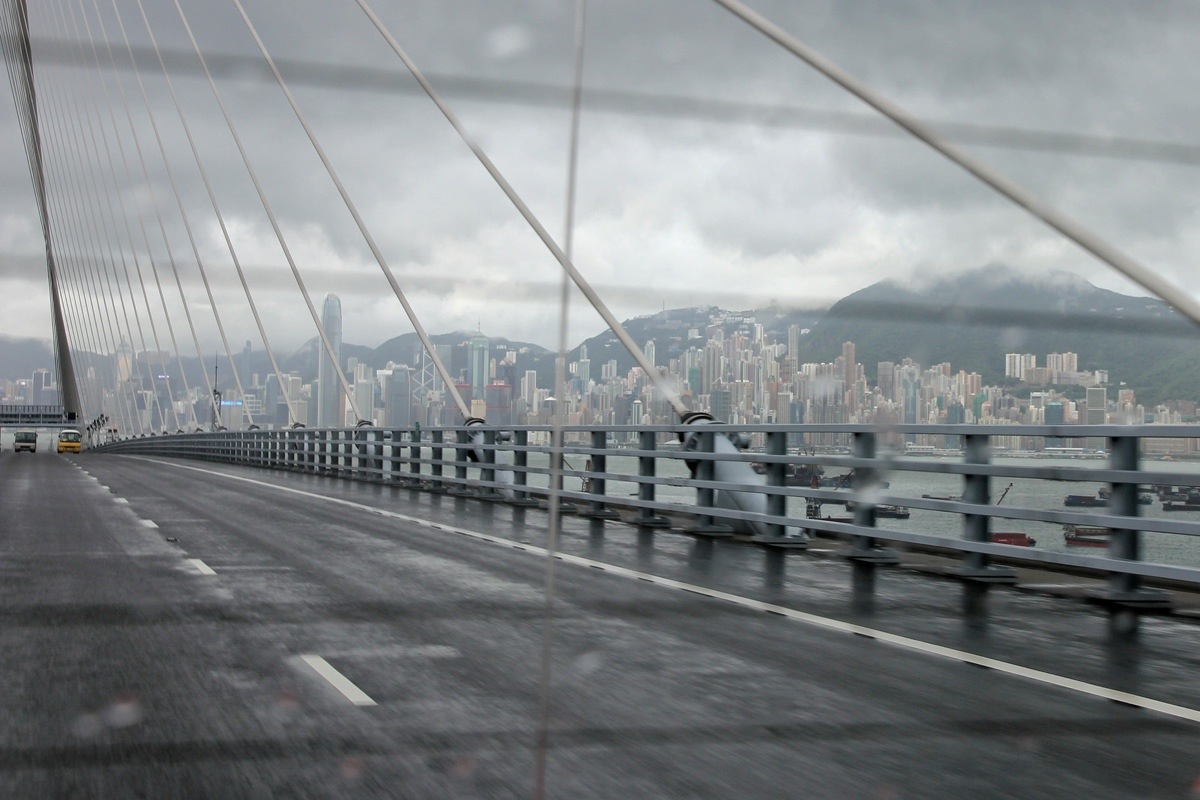
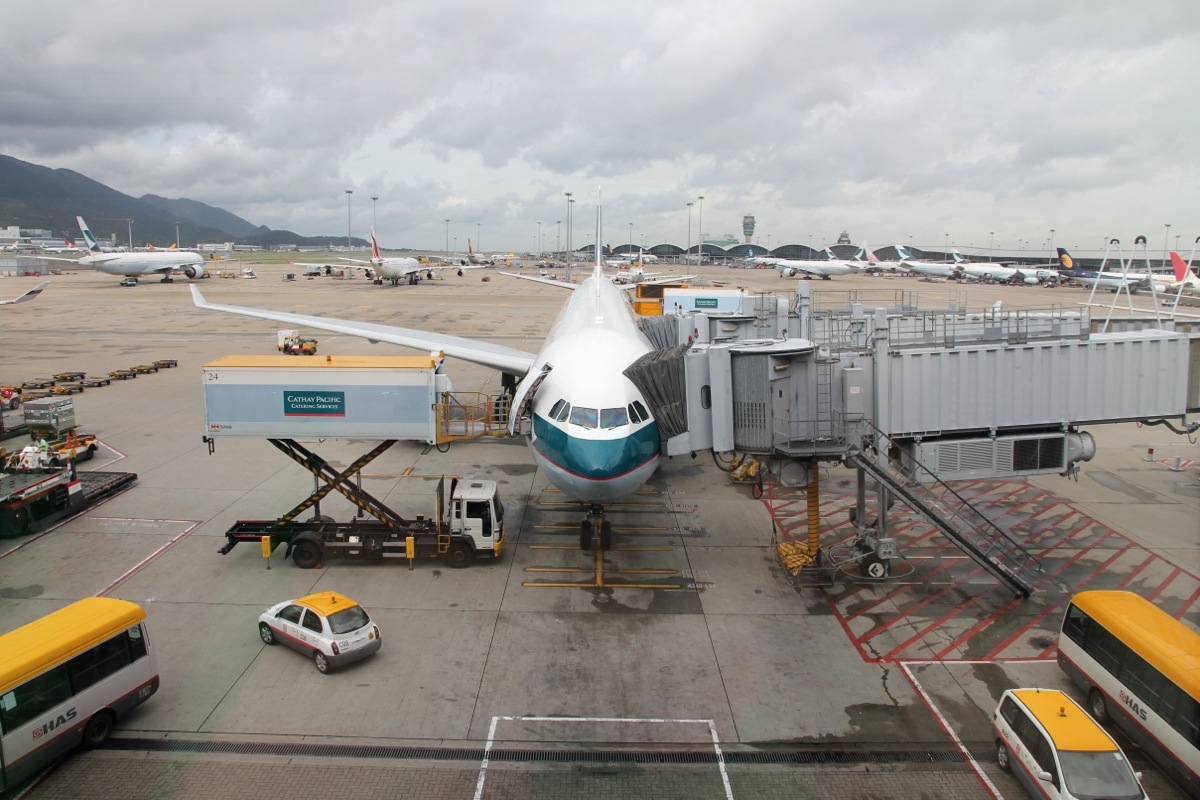
Here we go again! Matt and I are off on another Asia adventure; this time we’re traveling through Thailand (Bangkok), Cambodia (Phnom Penh and Siem Reap), and Hong Kong. Day one is all travel: Chicago-Hong Kong-Bangkok, with the gorgeous Peninsula Bangkok waiting for us at the end of our long day.

Trip itinerary


Free wi-fi at Hong Kong International Airport!


Entering Thailand!


Waiting to catch a taxi at Suvarnabhumi

We love comments! To leave them, click on the particular day’s post and look for the window at the bottom of the screen.

Enjoy the blog!

Day 15: Anchorage

We woke up on our last day in Alaska to a beautiful blue-skied morning. Matt’s parents went to visit the Alaska Native Heritage Center, which provides an introduction to Alaska’s native people through interpretive displays, artifacts, photos, demonstrations, dances, storytelling, and films. Matt and I opted instead to bike along Anchorage’s Tony Knowles Coastal Trail, running 11 miles along the coast of Cook Inlet. After another delicious breakfast, we walked over to Pablo’s Bike Rental to pick up mountain bikes and a map.

Pablo (in the background) is not responsible if we get stomped by a moose on the trail


22 miles in three hours - can we do it?

The path was surprisingly quiet for a Saturday morning; there were a few other bikers and joggers around, but overall, we had the trail to ourselves. Keeping our eyes open for wildlife, we referred to the map for descriptions of various landmarks along the way. We stopped at Earthquake Park to read about the 1964 Good Friday earthquake; the biggest ever in North America at a magnitude of 9.2, it killed 131 people and flattened much of the region. The park is the site where the quake caused huge tracts of land to slide into Cook Inlet, destroying many homes; the majority of the deaths occurred due to the resulting tsunami that devastated Valdez and nearby coastal towns of Seward, Kodiak, and Chenega.

Ears back? You've angered the moose.


Commemorative sculptures and interactive displays explain the earthquake and its aftermath

The coastal trail runs past Anchorage’s Ted Stevens International Airport; at one point a jumbo jet flew so low over us that I actually ducked. 🙂

Part of the runway alignment system


Neat bench design

The Anchorage Lightspeed Planet Walk runs from downtown to Kincaid Park at the end of the coastal trail; a scale model of the solar system, each station has a 3-D representation and information on the unique features of each planet. It is designed so a leisurely walking pace mimics the speed of light, i.e. the eight minutes it takes you to walk from the Sun station to the Earth station equals the eight minutes it takes for a light beam to travel from the sun to Earth. Similarly, it takes you and a light beam 5-1/2 hours to reach Pluto at Kincaid Park. When we passed Neptune we figured the trail end was near, but when the last half-mile of the trail turned out to be totally uphill, I gave up and let Matt ride ahead in search of Pluto. I rested in the grass until he returned, exhausted and disappointed in the lack of a Pluto station. Perhaps the project designers subscribe to the theory that Pluto is not a real planet after all.

They may have deep-sixed Pluto because Matt couldn't find it on the trail


Biking back toward downtown Anchorage

It took us just over 90 minutes of our three-hour rental time to make it to the end of the trail; the return trip was a little faster and we arrived back downtown about ten minutes early. We chatted for a while with Pablo and his brother about how they ended up in Alaska and how Pablo quit his job in the dull office building across the street and now greets his old coworkers when they look out the windows. Thankfully, they also convinced us to try their mother’s-secret-recipe smoked salmon quesadilla.

Returning the bikes


This was so delicious we went back later and had another one for dinner. YUM.

Posing with Pablo - Alaska's state flag painted on side of his trailer

On summer weekends, Anchorage has an enormous open-air market featuring over 300 vendors offering Alaskan-made crafts, ethnic imports, clothing, jewelry, music, and all sorts of food. Walking through downtown toward the market, we stopped to watch a live music performance and check out a few gift shops.

I did not see any live bears in Alaska, but this one was happy to pose with me.


We saw several excellent hula-hoopers around town

At the market, we wandered through the booths, admiring the beautiful art pieces and other crafts. It was crowded; occasionally an announcement came over a loudspeaker welcoming the arrival of another tour bus. We bought some locally-made tea and delicious kettle corn before meeting back up with Matt’s parents.

Anchorage's popular summer market


Took me a minute, but I was highly amused by this t-shirt


Live music and goofy shop names

After a quick stop back at the bike rental place for another smoked salmon quesadilla, we headed back to the guesthouse to get packed up. Matt and I walked to the nearby park for a few more holes of disc golf, then we said our goodbyes to Carly and left for the airport to catch our 11:30 PM red-eye back to Chicago. Matt’s parents leave tomorrow for a week in Denali National Park – here’s hoping for some clear views of Mount McKinley!

Alaska Airlines = good airline!

My Alaska highlights: sea kayaking and delicious halibut in Homer, disc golf and a beautiful bike ride in Anchorage, stunning glaciers and darling otters in Whittier, the moose who was kind enough to make an appearance even though all the bears stayed hidden, and spending so much lovely time with Matt’s parents, who I don’t see nearly enough. Rick and Mary, thanks for letting us tag along on your trip – it was fantastic. 🙂