
Day 8: Arashiyama and Nintendo
Today we woke up and ventured to northwest Kyoto, the location of our bike tour scheduled for 8am. We figured going earlier would allow us to beat both the crowds and the heat. Well, it worked for the crowds, but when it’s 97 degrees out at 7:15am, there isn’t much you can do about that. Bring your towels and stay hydrated!
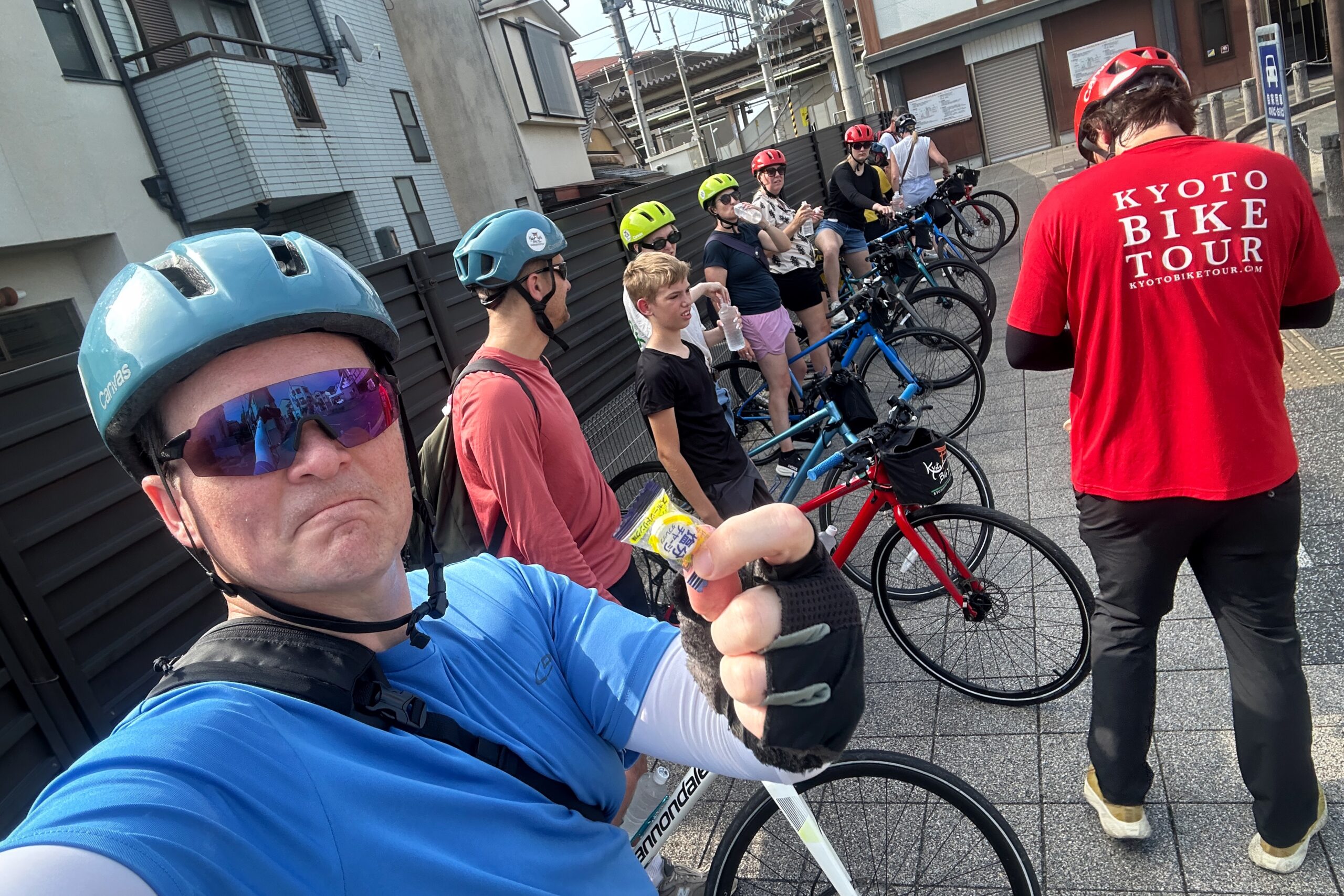
Ohhhh… these are salt tablets for the water bottles
We met our guide, Don, and got fitted for our bikes. We started our ride through the Arashiyama area of Kyoto, moving from the main streets to the quieter residential streets. Even on the main roads, there were only a few cars.
Don explained that the word “yama” means mountain, and “arashi” means storm. So this region is called “mountain storm,” because thunderstorms would build atop the mountains, but usually wouldn’t progress any farther. We continued to our first stop, the bamboo forest. We parked our bikes in front of a lotus pond, and headed towards the bamboo.

Ogura Pond in Arashiyama

Arashiyama Bamboo Forest
Bamboo is actually an invasive grass from China, so while this forest is well maintained and therefore touristy, you can find bamboo in many areas. This is also the type of bamboo you can eat (when it is young), and it grows super fast (50-60 meters in a month), so the Japanese didn’t mind the invasiveness too much.

Calming canopy
Within the bamboo area was the Tenryu-ji Temple, a Buddhist temple and a UNESCO World Heritage Site. We learned that temples have walls and are Buddhist, while shrines are Shinto and feature torii gates. We saw the Zen Buddhist Gardens where the monks meditate. The gardens were created in 1339 and have essentially remained untouched. It was designed to look like the mountains in the distance behind. The monks planted trees from the mountains in the garden, and from the garden in the mountains so the backdrop would blend together.
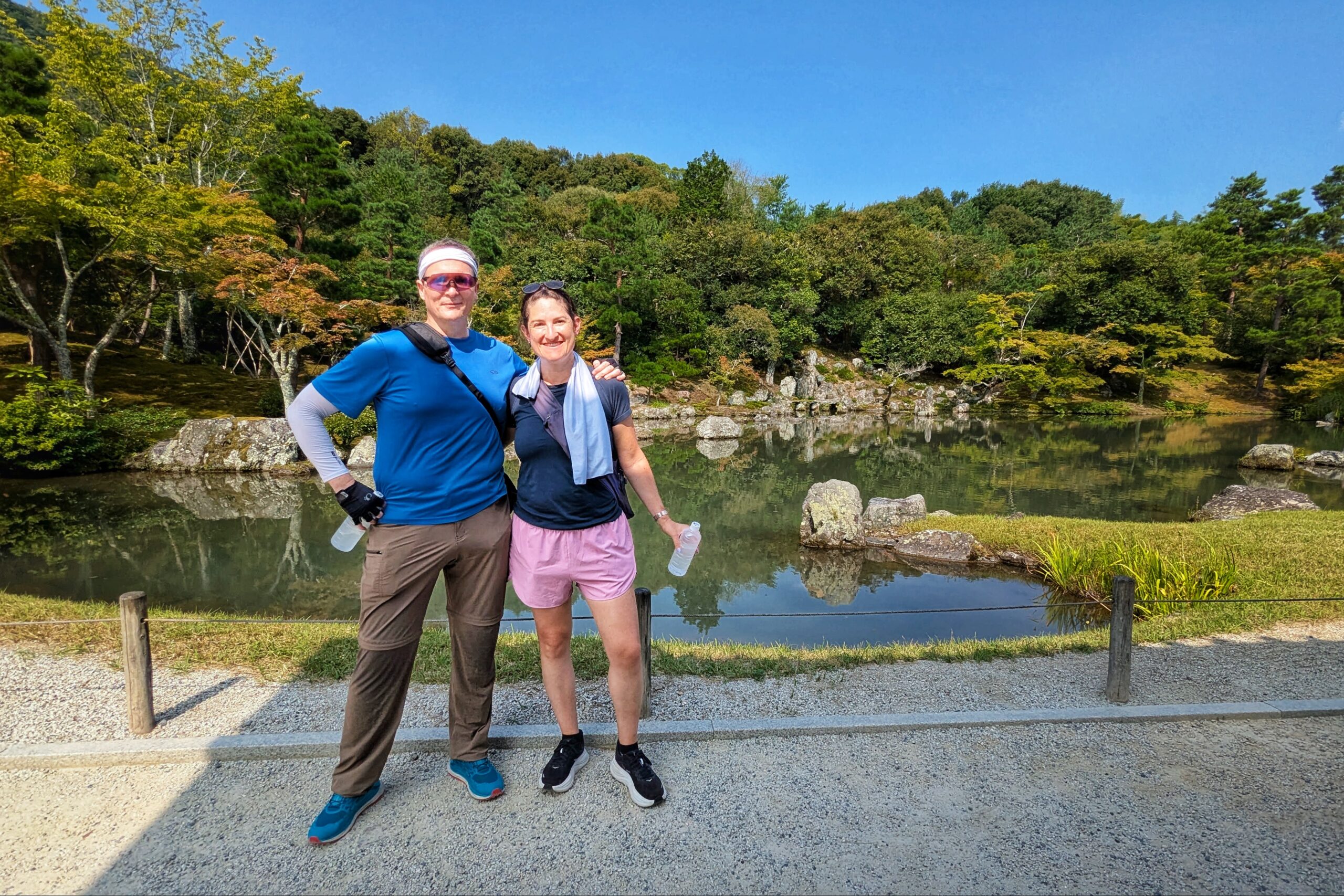
UNESCO World Heritage Zen Garden

The dragon only works weekends, apparently
Before biking to our next stop, we visited one more shrine. The Mikami Shrine is Japan’s only shrine dedicated entirely to hair. It honors Fujiwara no Uneme no Suke Masayuki, the country’s first historical hairdresser. So if you’re an aspiring stylist, a cosmetology student, or going bald, this is the place to be.
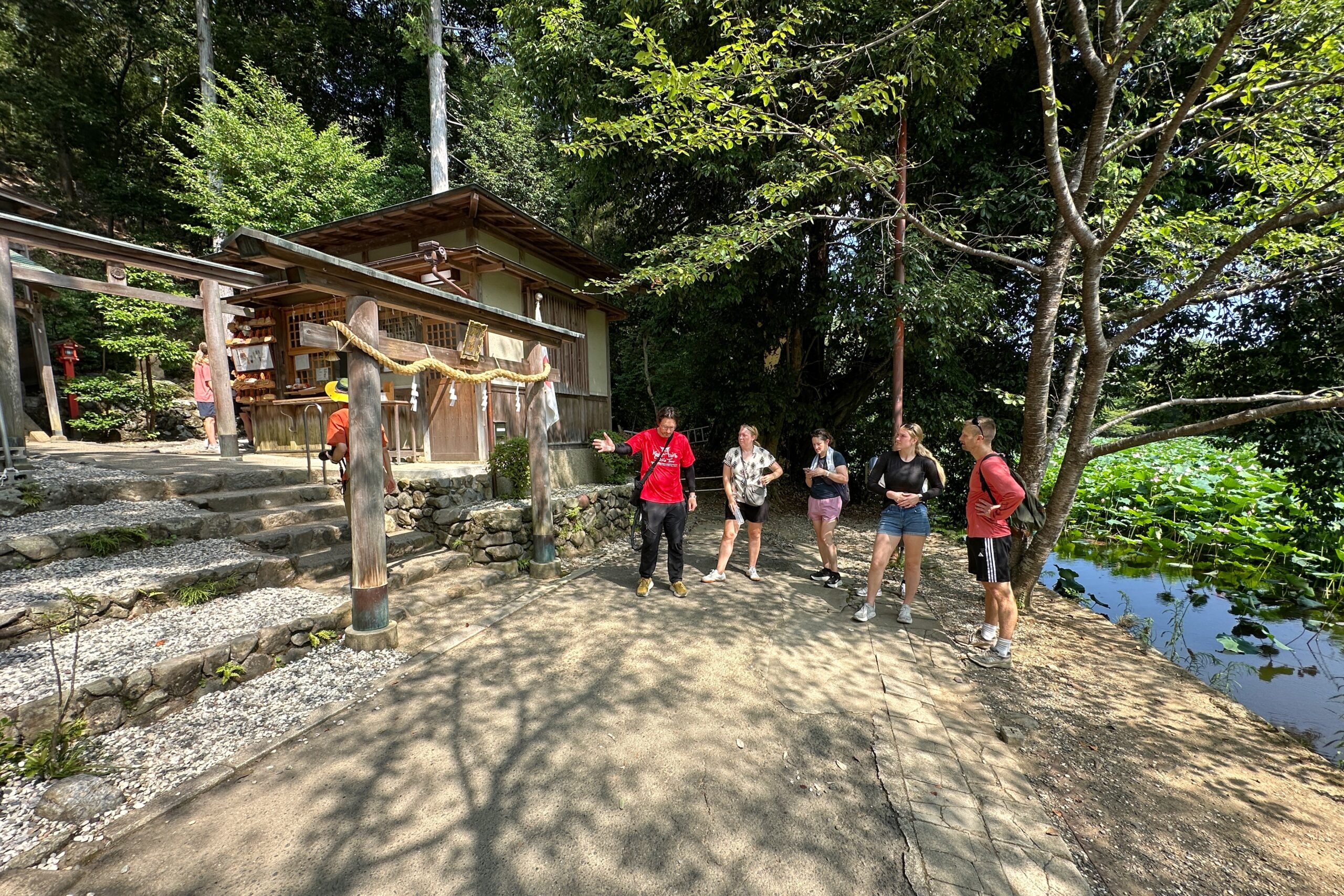
Japan’s only Shinto shrine dedicated to hair

Notes (ema) at this shrine feature a comb design on the front
Riding onward through a rural area, we entered fields of the local farmers. We made a quick stop to see a roadside vending machine, where the locals put their vegetables up for sale in little clear lockers, and people drive up to buy the fresh produce.

Vending machine farmer’s market
Don taught us about the rice fields in the area. If someone owns land on a rice fields, they are required by law to grow rice, and nothing else. There are three types of rice: mochi, sticky, and table. All of the fields here grow table rice. Don gave us rice cakes to eat, and explained that it’s typical to say “oishii,” meaning delicious, as soon as you take the first bite. We then spent some time biking through the fields, admiring the mountains in the distance.

Col de la Rice Field
Next stop was the Seiryo-ji Temple. This is also a Buddhist temple, but for Pure Land Buddhists, a different sect than the one in the bamboo forest. Pure Land Buddhists pray for a good afterlife, rather than being in the present in this life. The temple features a large carved Buddha statue. We were able to spend some time further in the temple, tracing over Japanese characters to write prayers.
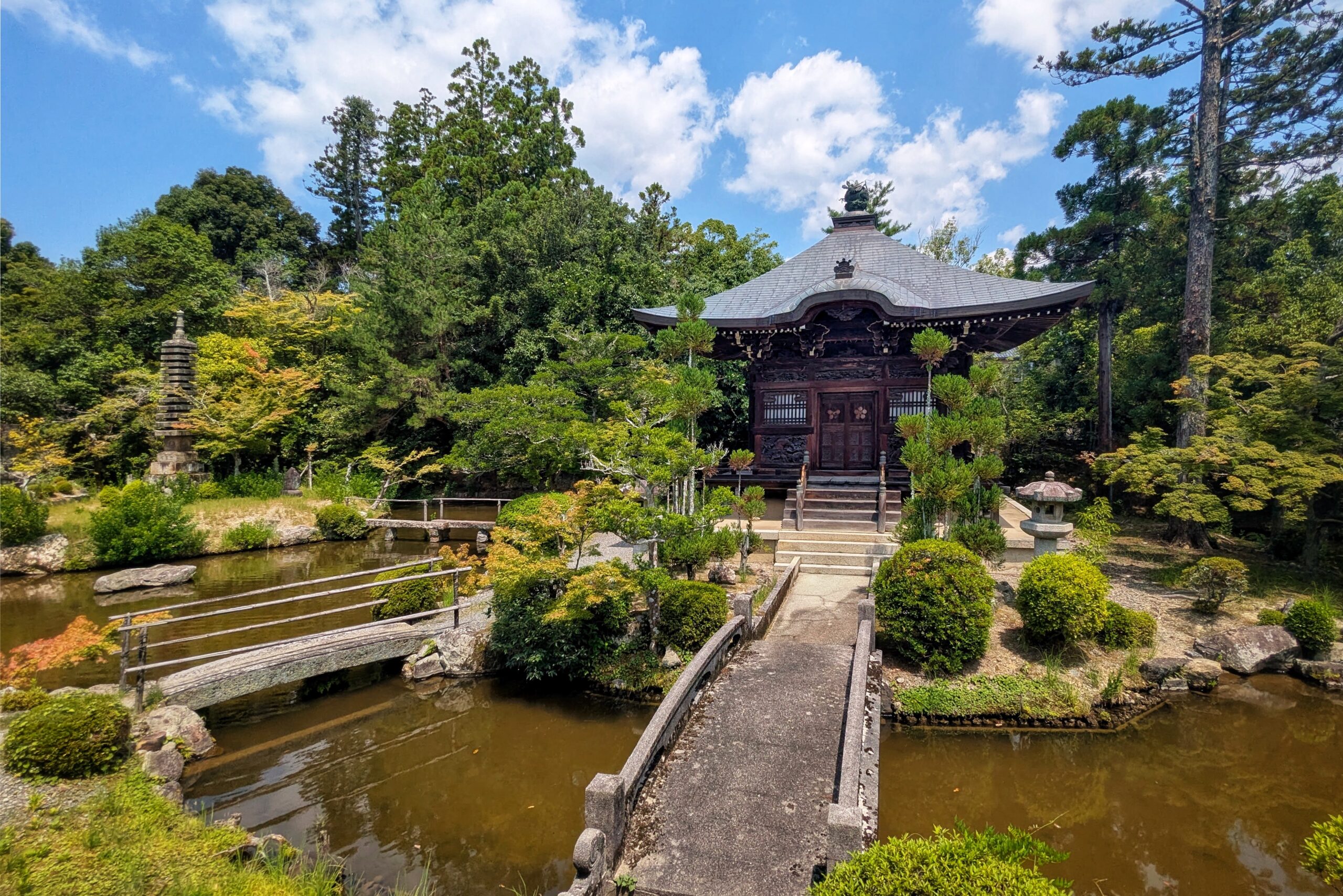
Seiryo-ji Temple garden

Contemplative Cordinas
The final stop of the tour was the Togetsukyo Bridge, an iconic symbol of Kyoto. We had to ride through a more congested touristy area to get there, but had no issues. The bridge is 94 years old, and designed to retain the look of bridges that came before it. The name means “moon crossing bridge” because at night, it looks like the moon is walking across the bridge.
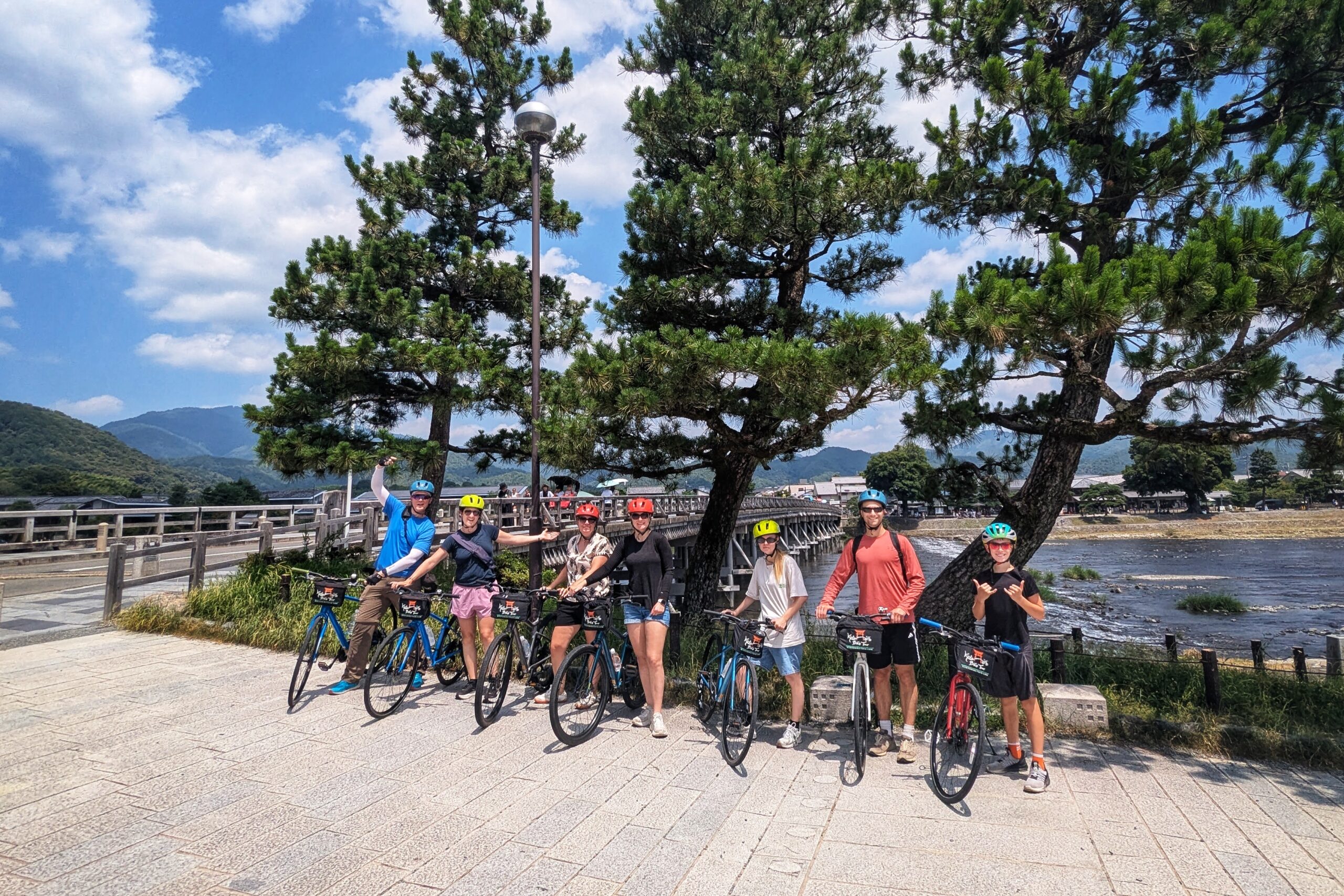
Togetsukyo Bridge (Moon Crossing Bridge) over Katsura River
Japan tends to make cute cartoon characters for a lot of things, including towns, buildings, and bridges. Surely, the mascot they made for this bridge is adorable…

The Moon Crossing Bridge mascot is… something!!!
We biked back to our starting point by the train station to conclude the tour, where Don gave us stickers and magnets as our parting gifts. We had a great time and learned a lot – Belinda and bike tours are still batting 1000%. A quick train ride back to our hotel followed, which gave us all a chance to cool down, grab some lunch smoothies from our trusty 7-11, and prepare for our afternoon excursion to the Nintendo Museum.
We made our way southeast by train to the museum and checked in for our 2pm ticketed entry window. The level of security to enter the Nintendo Museum is incredible. We first had to match our tickets to our passports, then we had to scan our bags for liquids, then we had ID keycards printed which used to scan in and out of each area and when making purchases. I think they deport you if you lose this Nintendo ID.
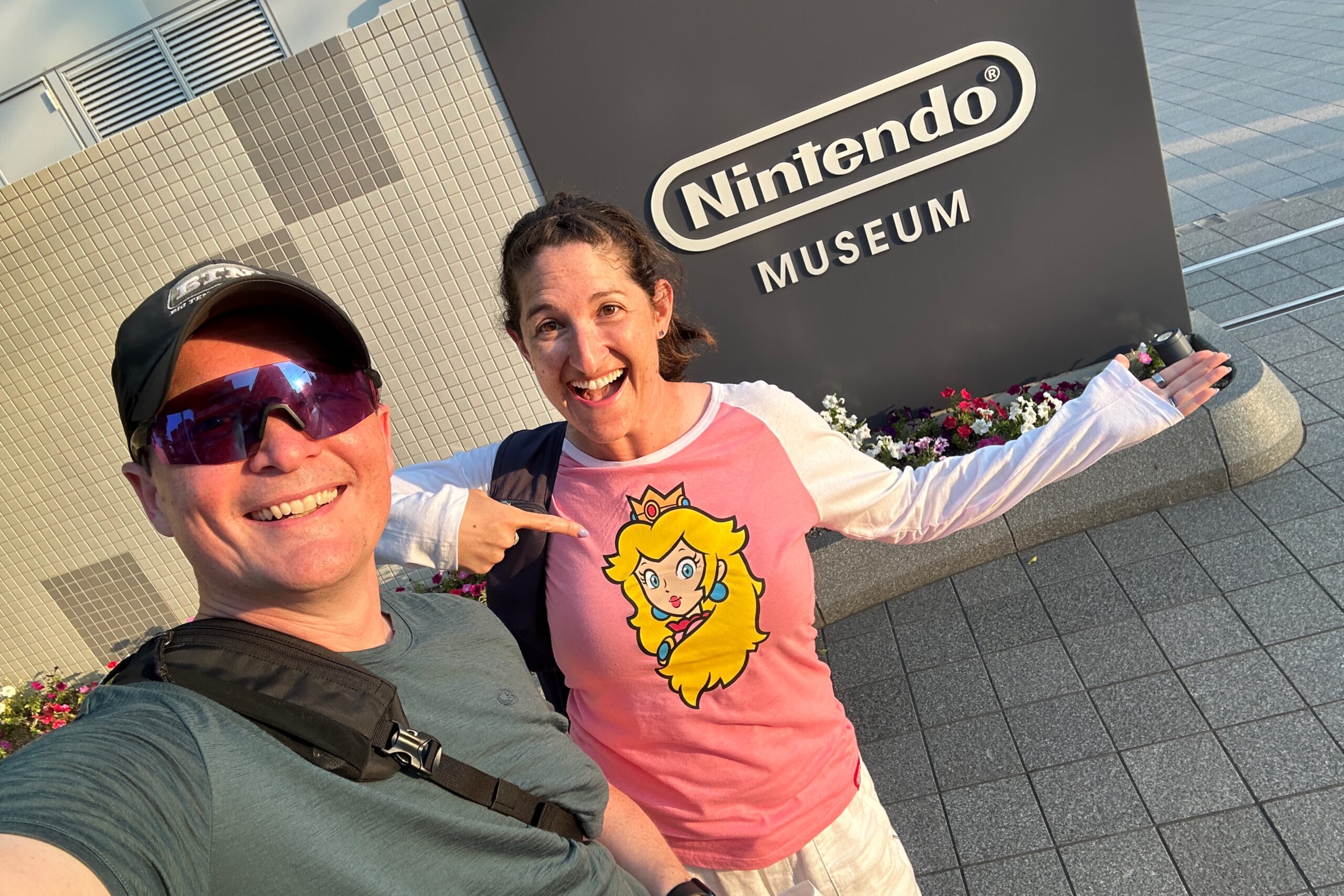
Princess Peach has arrived, but does she have ID???
On the bright side, we do get to keep the keycard, which has the Nintendo 40th anniversary logo on it, which will no longer be an option after September.

Our new legal identification
Once we were actually able to enter, we surveyed the scene and signed up for Hanafuda card making. Yay, more crafts! There was a class available in ~20 minutes, so we quickly checked out the gift shop, buying what we thought might sell out, and plotting what to buy later. When it was time, we went to the crafts building and checked in. Nintendo started as a card game company, and Hanafuda was their first game. It’s a classic Japanese game, that we don’t actually know how to play. We’ll figure that out later. First, make the cards.

More arts & crafts! (Making Hanefuda cards)
There were 12 designs to choose from, one for each month (presumably, that is relevant to how the game is played). By chance, we all picked different months. Each kit included four cards for the month. Using stencils, we painted each card, glued them to backing, folded the edges, and displayed them. The entire process took about an hour, and we now have our own Hanafuda cards, though we would need to go back a few more times to make a full deck (the other five months).
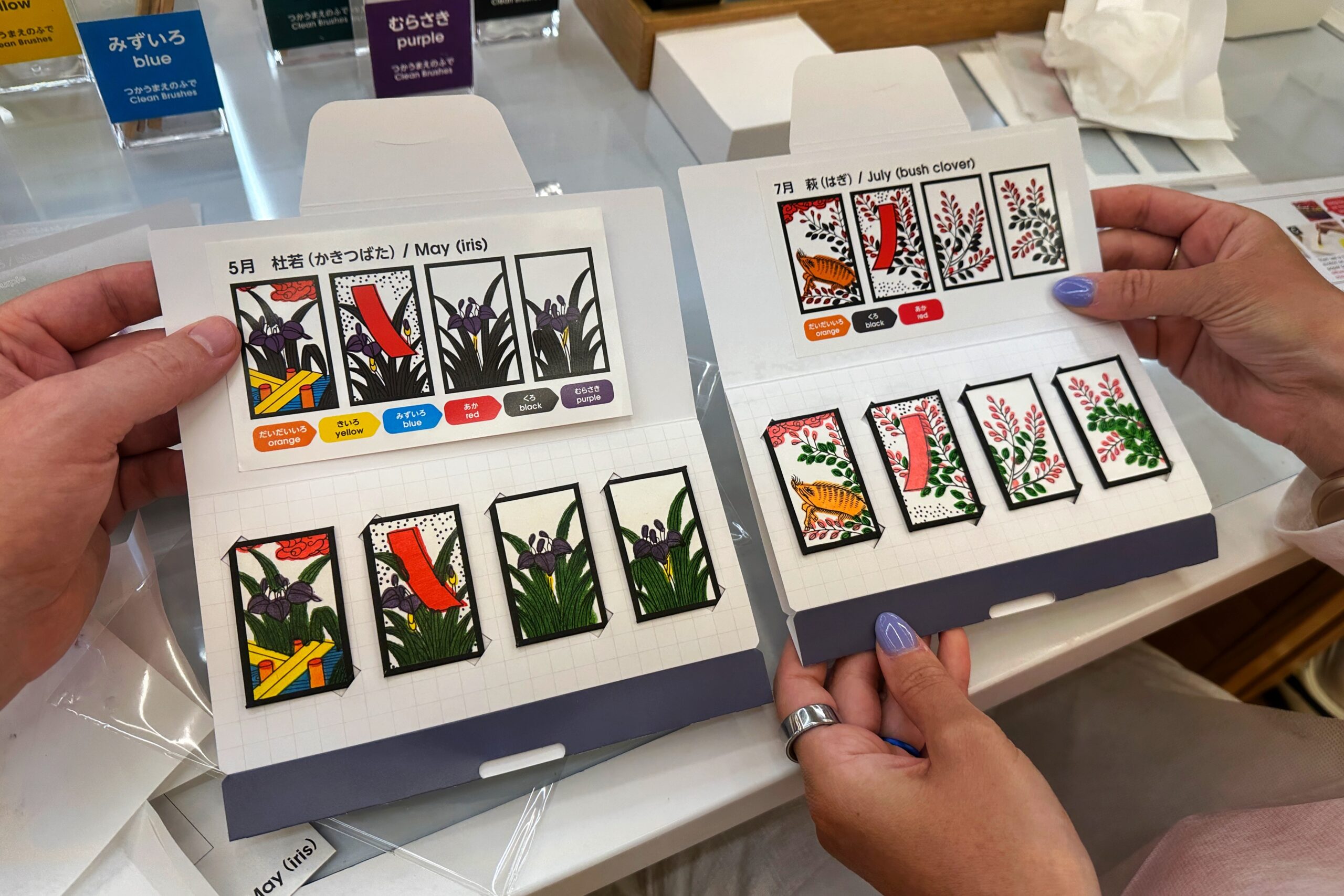
May and July
With craft time over, we went into the exhibits. We started on the second floor, where there were displays of consoles games, and accessories from the entire history of Nintendo. There was an art gallery with original character development and game concepts. The art gallery sold the Official Museum book that each person is only allowed to purchase once. We understood the assignment, so we each picked one up.

Turns out we have a more complete Zelda amiibo collection than the Nintendo Museum
The most popular section of the museum is the interactive games. You get 10 coins on your ID card included with your ticket to play the various games. We split up to get in line for the games each person wanted. Matt, Jo, and Lily first went to Zapper and Scope, where you shoot the bad guys. Thirteen players share the giant screen for each round. Lily got first place and Matt got third. Jo had fun.
Next, we went to the giant controller games. We tried to defeat Bowser, grabbed and tossed him a few times, but ultimately ran out of time before we could succeed. We went back to Zapper and Scope, this time to try with the scope rather than the Duck Hunt gun. Matt got third again!

Alas, MarioKart 64 was not an option

Zapper… AND SCOPE!!!
With all of our coins spent, we made one more stop at the gift shop. One popular item are the blind box Nintendo System controller keychains. You can pick from new school or old school controllers, but you don’t know which specific controller you will get. Matt and Jo bought their maximum allotment of four old school boxes (two each per person) and ended up with an NES, GameBoy, Super Nintendo, and a Virtual Boy controller. Overall, we were pretty lucky – no dupes. We didn’t get a coveted N64 controller, but we got an N64 pin (that will be converted into a magnet) as a backup.

Happy 40th to Mario, Luigi and Jo
It was now about 6:15pm and we were hungry. Belinda (using her food-locating superpowers) found a conveyor sushi place just down the street. We weren’t sure if they were going to be busy since we couldn’t make a reservation, but it turns out we are basically in the Kyoto suburbs, and we were able to be seated right away. It took us a few minutes, but we eventually figured out the ordering system and soon had awesome sushi flying out at a breakneck pace. Extremely fun. All seven of us kept ordering until we were full, and the bill turned out to be… a whopping $80 bucks (or something like that) for 7 people… What?!? Can’t get those deals at home.

Conveyor belt sushi is great
We took the train back towards the hotel. Once we got out of the station, Matt, Jo, and Lily decided to walk to the Oniksuta Tiger store (because Matt was having some Onitsuka Tiger FOMO). They closed at 9pm, and we arrived at 8:15pm, but they cut off the line at 7pm and it was still packed. We’ll try again tomorrow, but it might be harder than it looks to just drop in and pick up a pair of shoes. TBD.
We continued walking around to see if we could find any of the floats being prepared for tomorrow’s Gion Matsuri parade. We did not. But, we did find the downtown shrine where all the Shinto gods “temporarily” move to during Gion Matsuri week. Like a Shinto god airbnb.

Shijo Otabisho Shrine where the Yasaka Shrine gods hang out downtown during Gion Matsuri
Amazingly, our quiet hotel is just a 10-minute walk across the river, literally three blocks away from a bustling city center with crowded streets and giant shopping centers. One the way back, we treated ourselves to 7-11 ice cream, so the excursion ended up being well worth it.
Tomorrow morning we will walk back across the river and brave the crowds to see the Gion Matsuri festival. Maybe we’ll figure out how to get Matt some Onitsuka Tiger shoes. And then we’ll do some more indoor activities to stay out of the heat.
