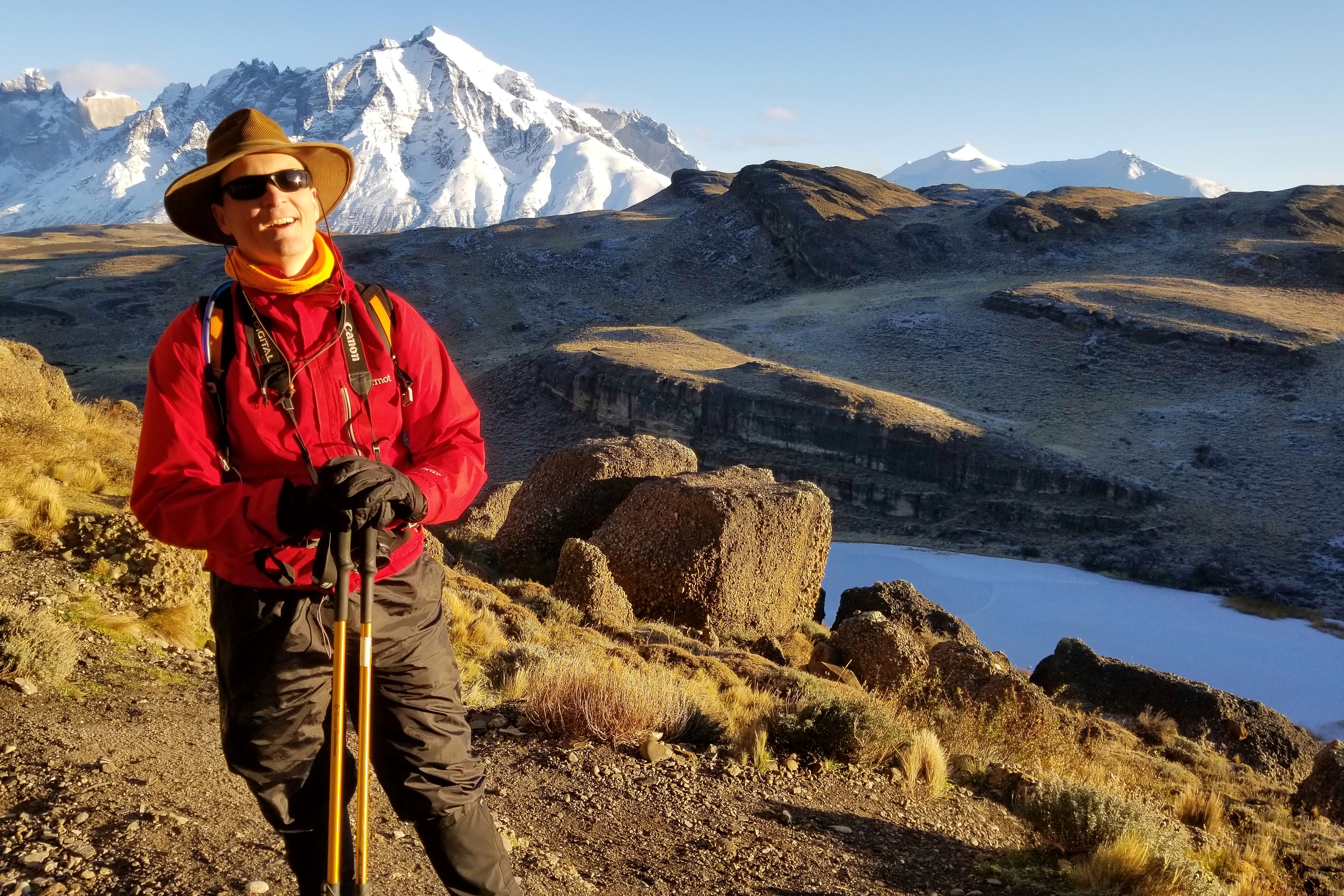
Day 15: Santiago

Our last day in Chile was nice and relaxing. We slept in and went to breakfast. Today we employed all the secret buffet hacks we learned yesterday, such as where to find the espresso machine (mmm, mochacinos) and how to order salmon eggs Benedict. We also successfully acquired a late checkout, so we leisurely packed up our luggage, watched Stage 8 of the Tour de France, and prepared for an afternoon stroll in Santiago.

Caffeine hunting


Meet me at 9AM on the roof, bring your laptop

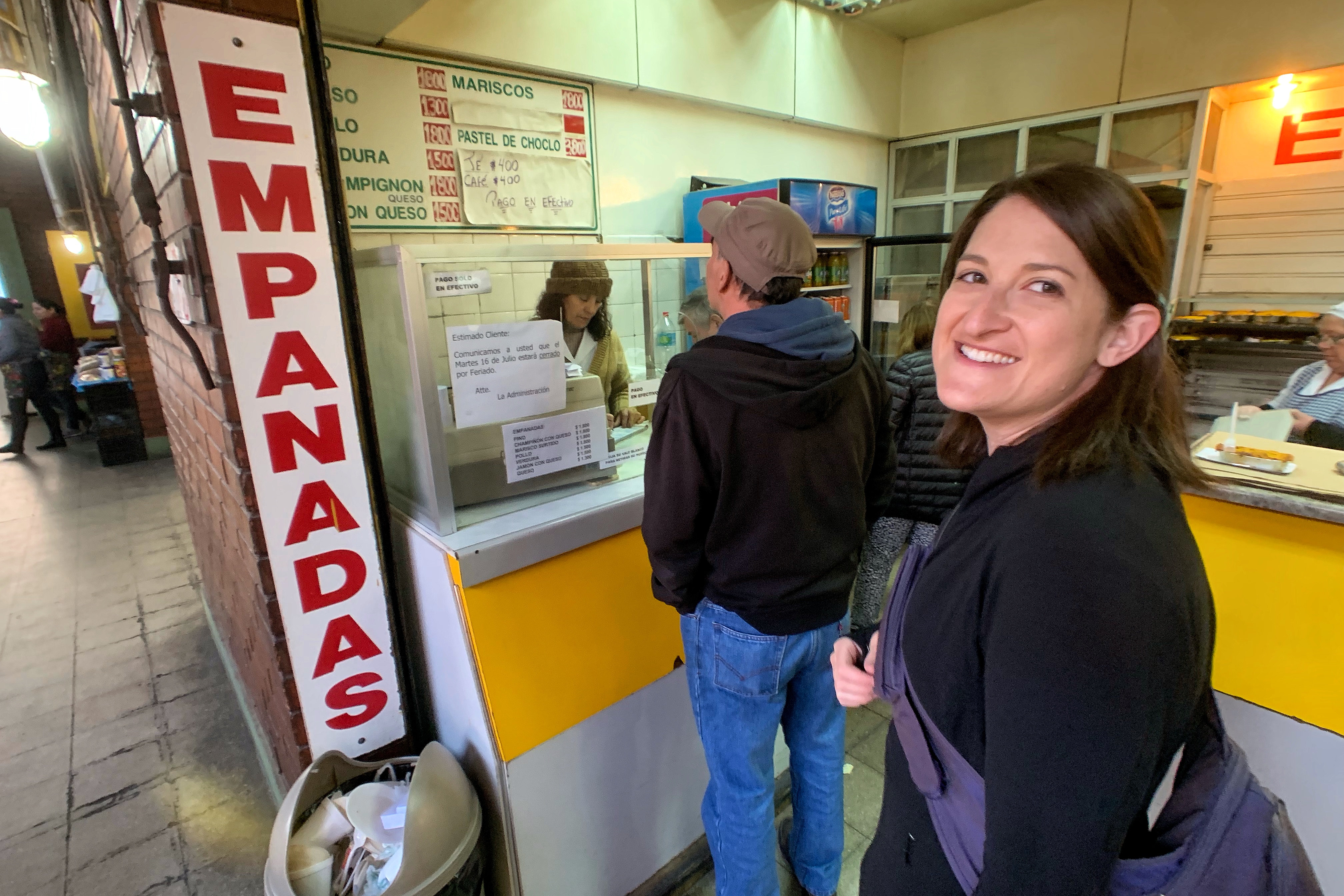
We dropped our bags off at reception and embarked on our first quest of the day – to find an authentic empanada. With some internet sleuthing, we found the perfect place to go. Located a couple of blocks southwest of the hotel, off the main street, is a market where locals buy vegetables, fish, and other supplies. Within said market is an empanadas counter.

Iglesia de la Divina Providencia
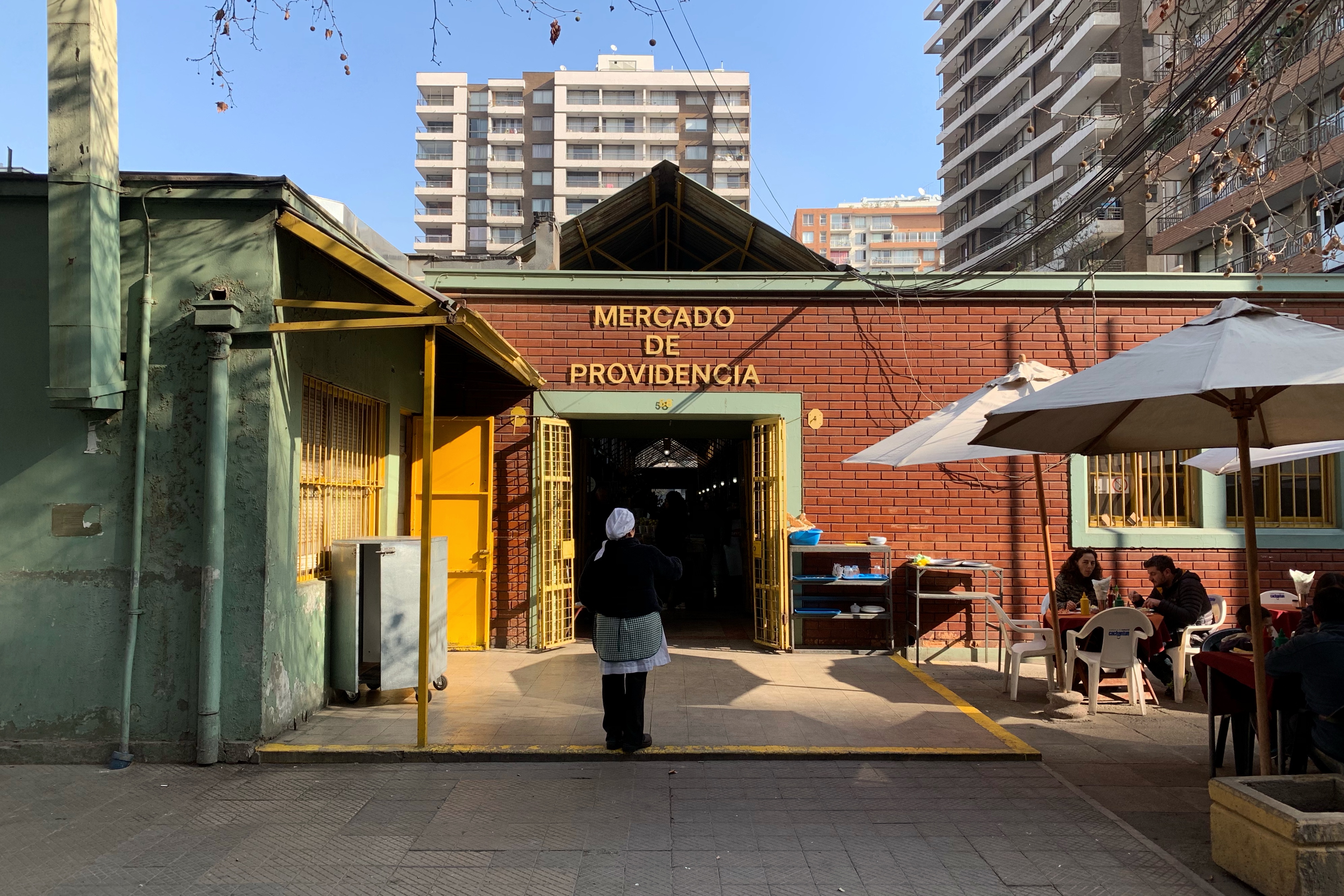

Found the market

With a constant line, a cash-only register, and no English spoken, we knew Tanita’s Empanadas was the jackpot. We ordered a pino emanada, a traditional Chilean flavor made of ground meat, onions, black olives, and a hard boiled egg. It was delicious and definitely corrected our “empanaditas” error of yesterday.

The real deal


Always reminds me of that Coke ad

After the delicious empanada, we walked a few blocks further west in search of a game store we saw on google maps. Along the way, we passed through a cool mall packed with tiny used book shops (the shops are tiny, not the books). We also saw an incredible number of shops and booths selling vinyl records and cassettes, so if you are trying to fight that new trend of digital music, Santiago has you covered!

We eventually found the game store and the sales guy did an amazing job explaining to us a few different Chilean-designed games (after modestly claiming he knew only a little English). However, without finding a game we really liked – or wanted to translate from Spanish – we moved on to our next mission: finding La Burguesía (the burger place Roberto recommended).

Book fair!


El Señor del los Anillos… Viajes por la Tierra Media!
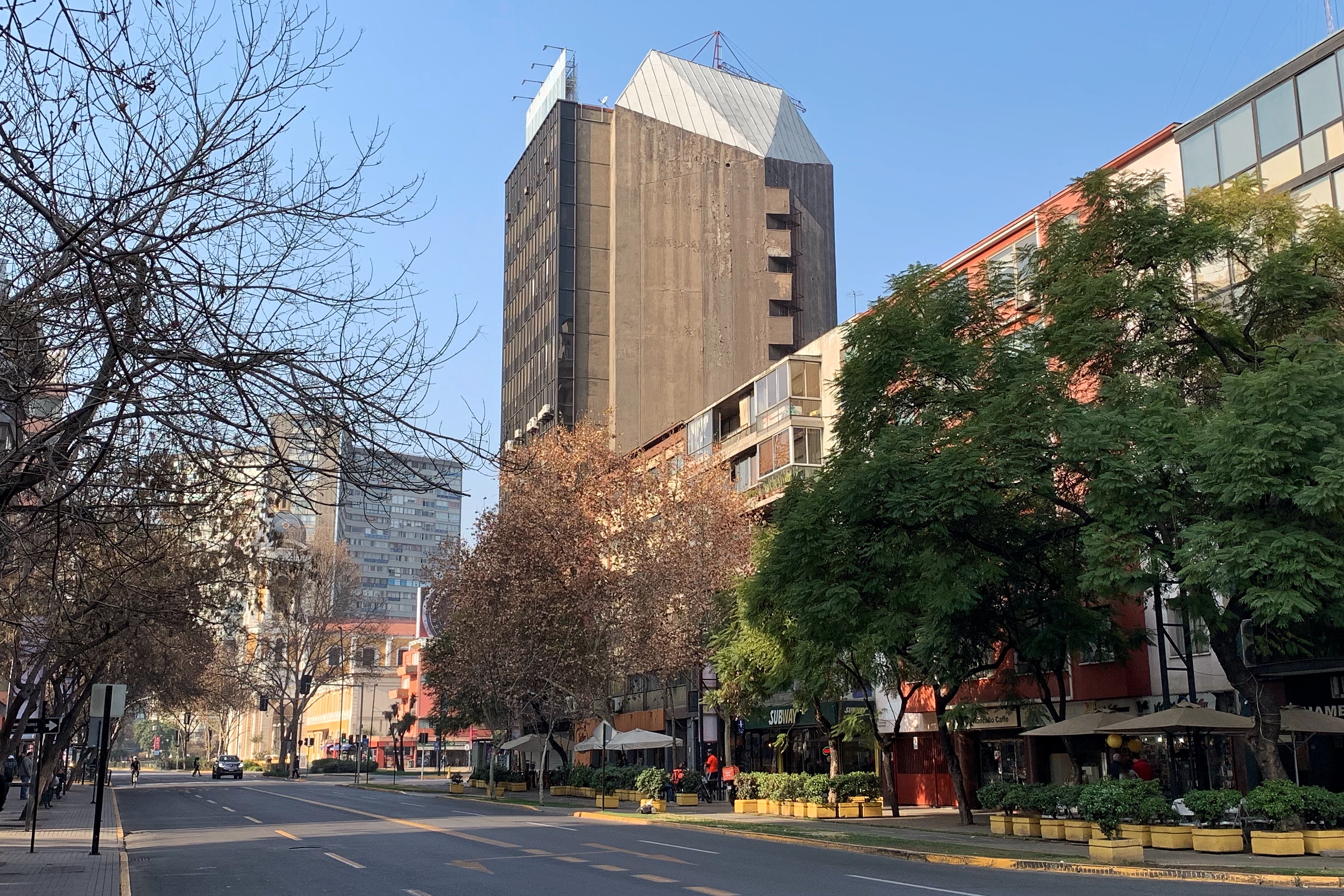

Window-less bank wall looks like something from an alien invasion

With siesta time approaching, we quickly hoofed our way back northeast towards La Burguesía before they closed at 4PM for the afternoon (to open again later for dinner at 7PM). Larger and more crowded than we expected, a host greeted us and added us to the wait list, explaining that if we made it in, we might need to order quickly so the kitchen could accommodate us. We happily agreed and ended up getting a table in about 10 minutes.

We placed our order and enjoyed the atmosphere of the place. Like us, all the beers were imported, including Goose Island’s 312. Then they started playing Chelsea Dagger on the radio, so we strongly considered just heading down Madison to the Blackhawks game after we finished eating. Speaking of the beers, we did like the amusing 500ml beer glasses that appear comically large, but aren’t much different than a pint.
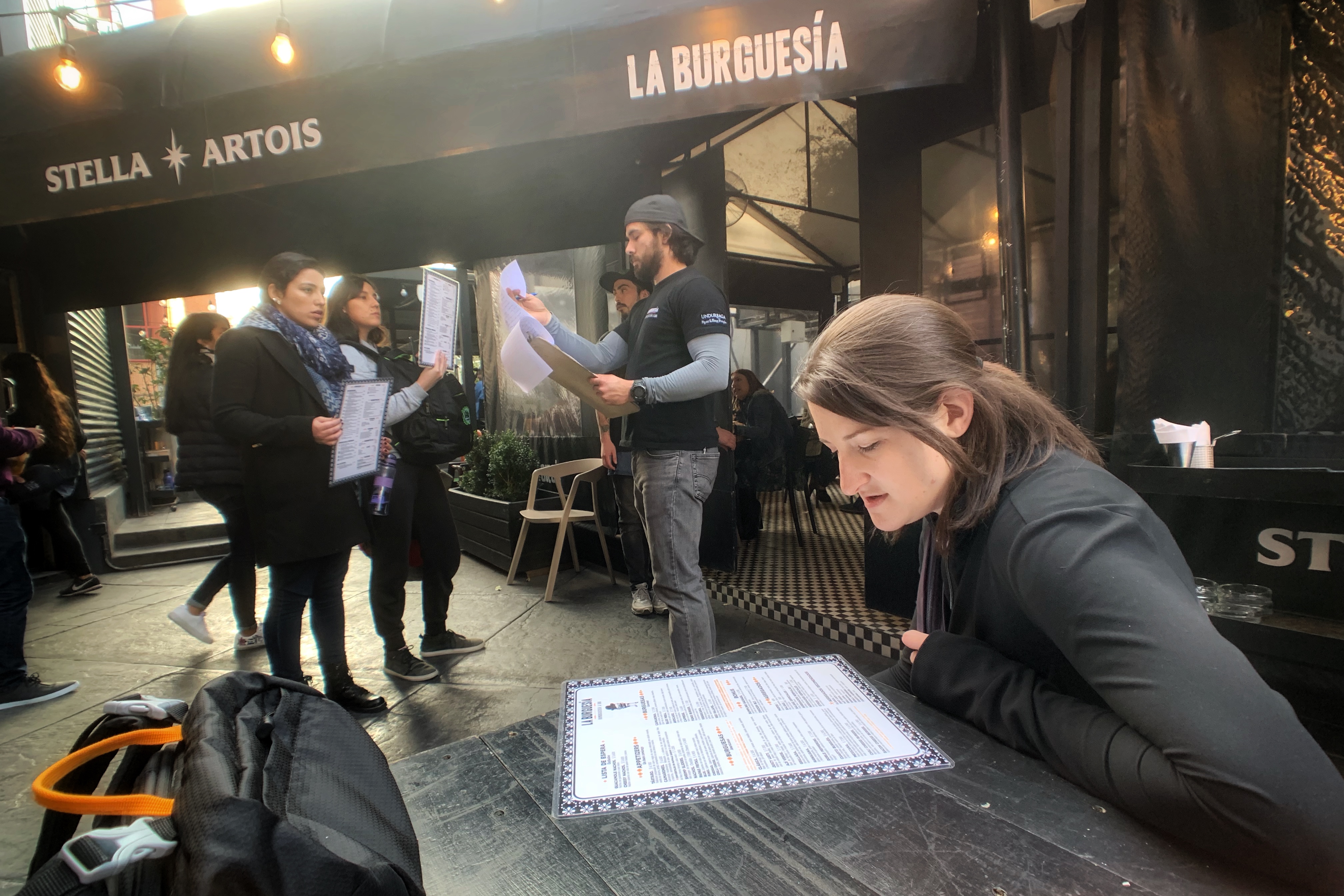
La Burguesìa is very popular


Roberto was right


“This my friend is 500ml”

With a little more time to wander Santiago, we stopped at a street market and almost successfully avoided buying anything. The chocolate-infused tea was too good to pass up. A good way to kill some time, spend some pesos, and come home with a treat.

Chile actually runs on Dunkin’

Santiago does a great job of keeping their streets clean, and in doing so, it really cuts down on our ability to find dropped and discarded coins. Instead, we found other items, such as a series of painted white ants on the ground (which was clearly a marketing ploy). With time on our hands and curiosity peaked, we followed these little insects into a mall and a candy store. Not tempted by the sweets, we continued to explore the mall and window shop the unique stores.

By now, most places were closed, so we made it back to the hotel to retrieve our bags and relax before going to the airport. The front desk called a cab for us and we were back at trusty SCL in no time. It was a good thing we heeded LATAM’s three hour suggestion this time. It took about an hour to get our boarding passes and check our bags, plus another half hour to get through customs and security. While some aspects of flying in Chile are slow, such as people re-packing their entire bedroom closet at the baggage counter, other parts are super efficient, such as the nifty automatic tray collection gizmo at the security line.

Time to go


Does YOUR suitcase have a suitcase?

At the gate, we ate the extra burger we ordered to go from La Burguesía and discovered it included grilled shrimp and a creamy cheese topping – which was a welcome Chilean preparation surprise (and just as tasty as the bacon and avocado burger we ate earlier)! With our hunger satisfied, we soon passed through the final check points and boarded the plane.

Santiago weather is glorious, can we bring it home?


Back to the USA

All that’s left is our eight-hour flight to Miami, a two-hour layover, and another three- hour flight back to Chicago. Thanks Chile for an awesome two weeks! We’re already planning how to get back someday (heck, we’ll even save our extra pesos).

Day 14: Santiago

Other than the Santiago airport Holiday Inn (and it’s not really fair), we have done quite well with views from our hotel rooms on this trip. Today we awoke to a nice and sunny view looking northwest from our top-floor corner suite at Solace “€ including a visual of our target destination for the day, San Cristobal Hill. But first, we had important things to do, such as catch up on more sleep.

San Cristobal Hill shortly after sunrise

When we finally woke for real, we went downstairs to grab the buffet breakfast (no pancake press, but the fresh mini-donuts were amazing), then back upstairs to check the views from the rooftop bar (empty). Finally, we returned to our room to watch the end of Stage 7 of Tour de France and prepare and our plan of attack for the day.

Setting off by foot toward San Cristobal Hill, we first passed through a public sculpture garden a few blocks from the hotel with a nice collection of large installations and a handful of locals enjoying the park (and dogs, of course).

Other than the smog rays off Sky Costanera, it’s great weather!

There is a long gondola ride to the top of the hill, but we were happy to walk and enjoy the crisp sunny weather along the way. The path allows all modes of transportation – including pedestrians, cars and bikes. By walking, we were able to see a wide variety of activities, including a few guys with a death wish barreling down the hill at crazy speeds on skateboards and three-wheelers. There was also a playground with Inca-inspired climbing pyramids, giant xylophones, and a couple of jugglers who looked like they were ready for prime time.

These guys have their act down


View of Santiago metro area


Meeting the wildlife along the way

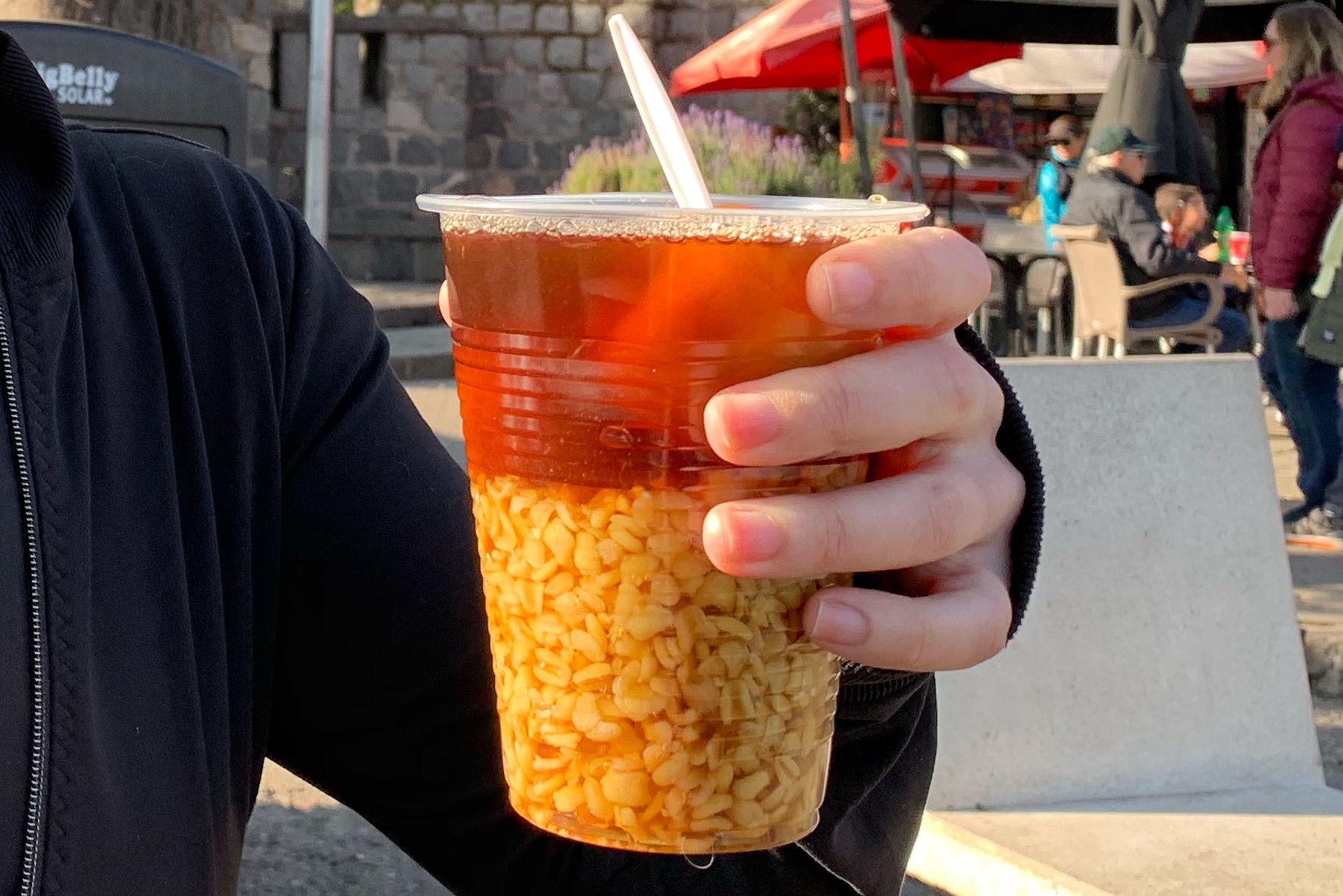
After about 45 minutes, we made it to the top and found the statue of the Virgin Mary, inside the Sanctuary of the Immaculate Conception. We walked around the grounds for a while and enjoyed the views of Santiago with the Andes mountains in the background. We ate a sandwich (thanks, Explora!) and a handful of peanut M&Ms for lunch, before also trying a local Chilean drink, the mote con huesillo. Made of peach nectar, whole dried and rehydrated peaches, and cooked husked wheat, the drink looks quite interesting. But, as one might expect since nearly everybody else was drinking one, it is delicious and refreshing.

In the Sanctuary atop San Cristobal Hill


We made it to Mary!


Really, really good

As we left, we chuckled at the length of the line to get on the funicular to go down the hill. Happy to continue the walk rather than stand and wait, we successfully found the trail that passed the Santiago zoo and deposited us into the Bellavista neighborhood.

Down the north side of San Cristobal Hill


3D map which includes (most of) our day’s route

Imagine an artsy Wrigleyville, and you’ll have a rough approximation of the Bellavista barrio “€ home to Pablo Neruda’s house as well as many cafes, restaurants, bars, clubs, and street art. If you want to party until 4AM, this is the place for you. Since we don’t, we walked around the streets and admired the murals.

Bellavista mural


Another Bellavista mural


A mural on a rare linux gym/carwash establishment

Pablo Neruda‘s house is a particular point of interest because it has been transformed into a museum and probably is very cool if you appreciate his poetry. However, with only an hour before it closed, we satisfied ourselves with viewing the portions of the house we could see from the streets. Turned out that was a great choice because we happened to pass by the Modern School for Music and Dance next door, where we saw a group of people practicing a dance in the street. They were so dedicated they didn’t even stop as cars passed through.

Artwork out side La Chascona


Casa Lehuedé

The intersections in Santiago have a couple of different walk signals. One model shows a green man walking, then walking faster and faster until he turns red, indicating you need to stop walking. The other type is not animated. The green walking man blinks faster until he turns red. In either case, red really means stop. There is no grace period where you can still run across the street with time before the light changes. When the walk signal turns red, the opposite light turns green.

Alarmed hydrant if you try to cross on red


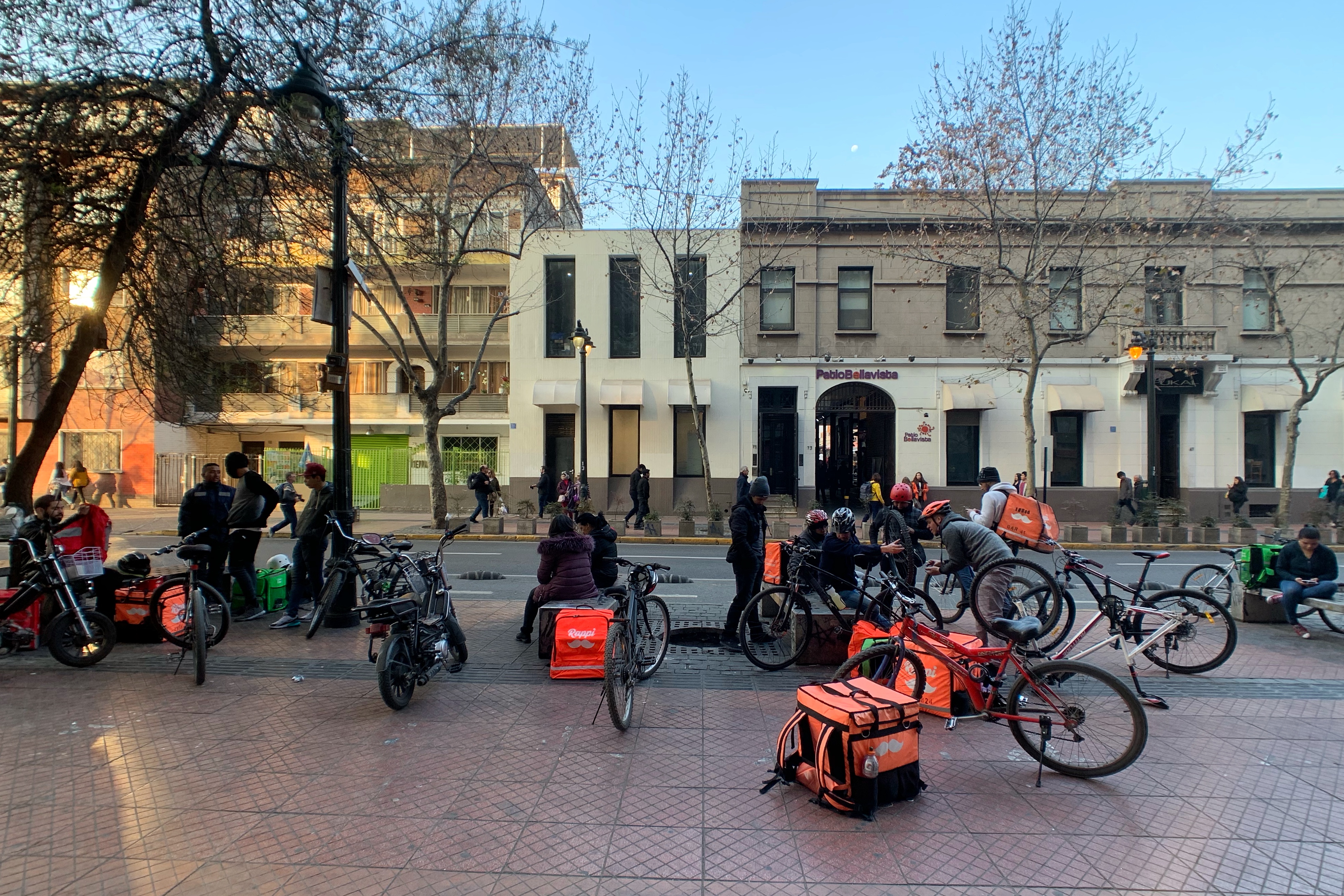
Army of bike delivery guys prepare for Friday night


Ready to join the Grand Circus of Invierno

After walking around and not getting hit by cars, we were hungry for a snack and found a bar with a great beer and “empanaditas” deal. The beer was delicious. The empanaditas were more like microwaved cheese ravioli. But they satisfied our hunger. As a result, we have a goal for tomorrow: find real empanadas (apparently, empanaDITas are NOT empanaDAs). Hanger averted, we took a pleasant stroll back to the hotel for the night. The night skies were clear and the city views from the rooftop were great.

Santiago skyline at night


Nighttime view (with San Cristobal Hill) from our hotel

Tomorrow, one last bit of Chile before flying back home. As well as our empanada quest and finding the burger place Roberto told us about.

Day 13: Rapa Nui/Santiago

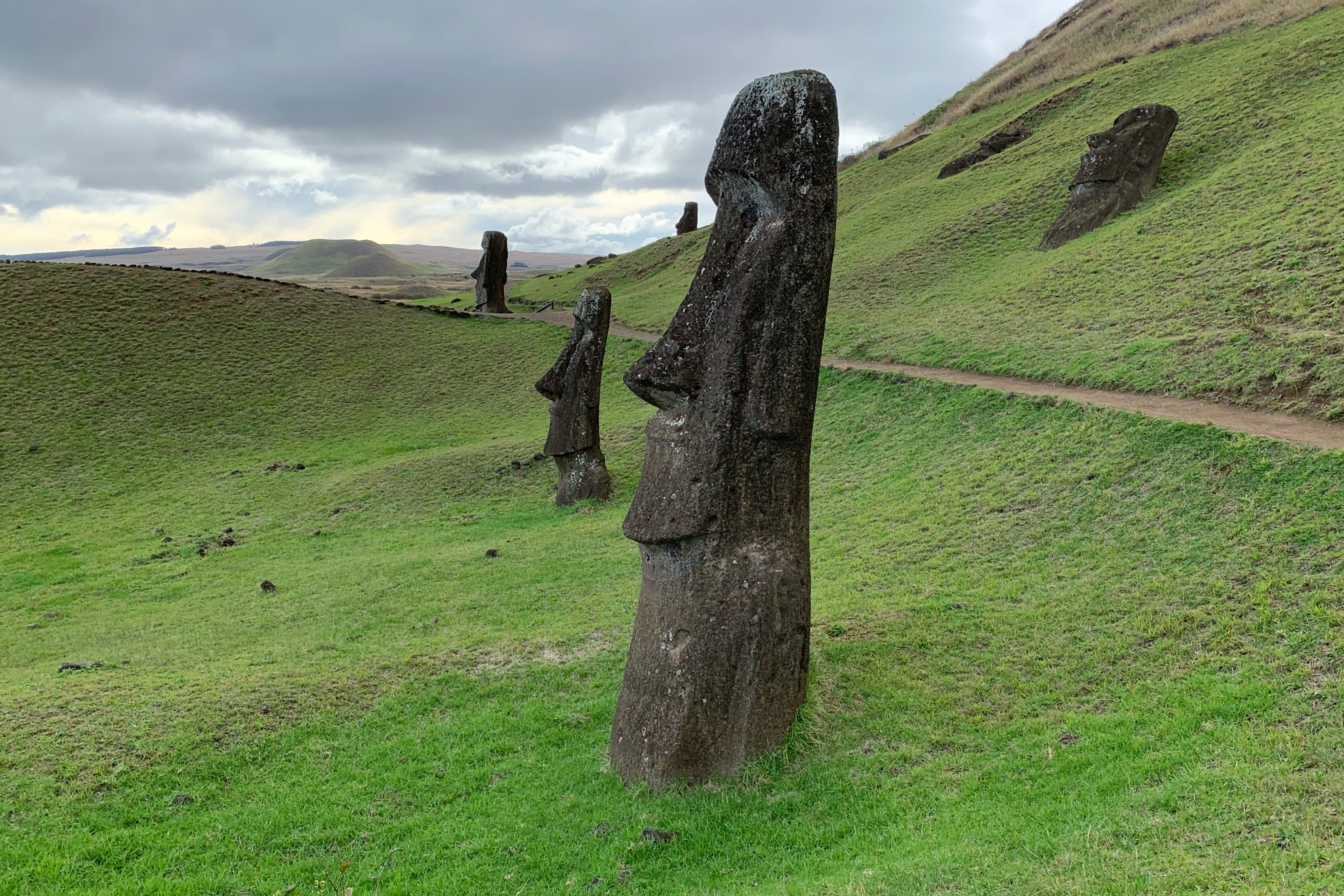
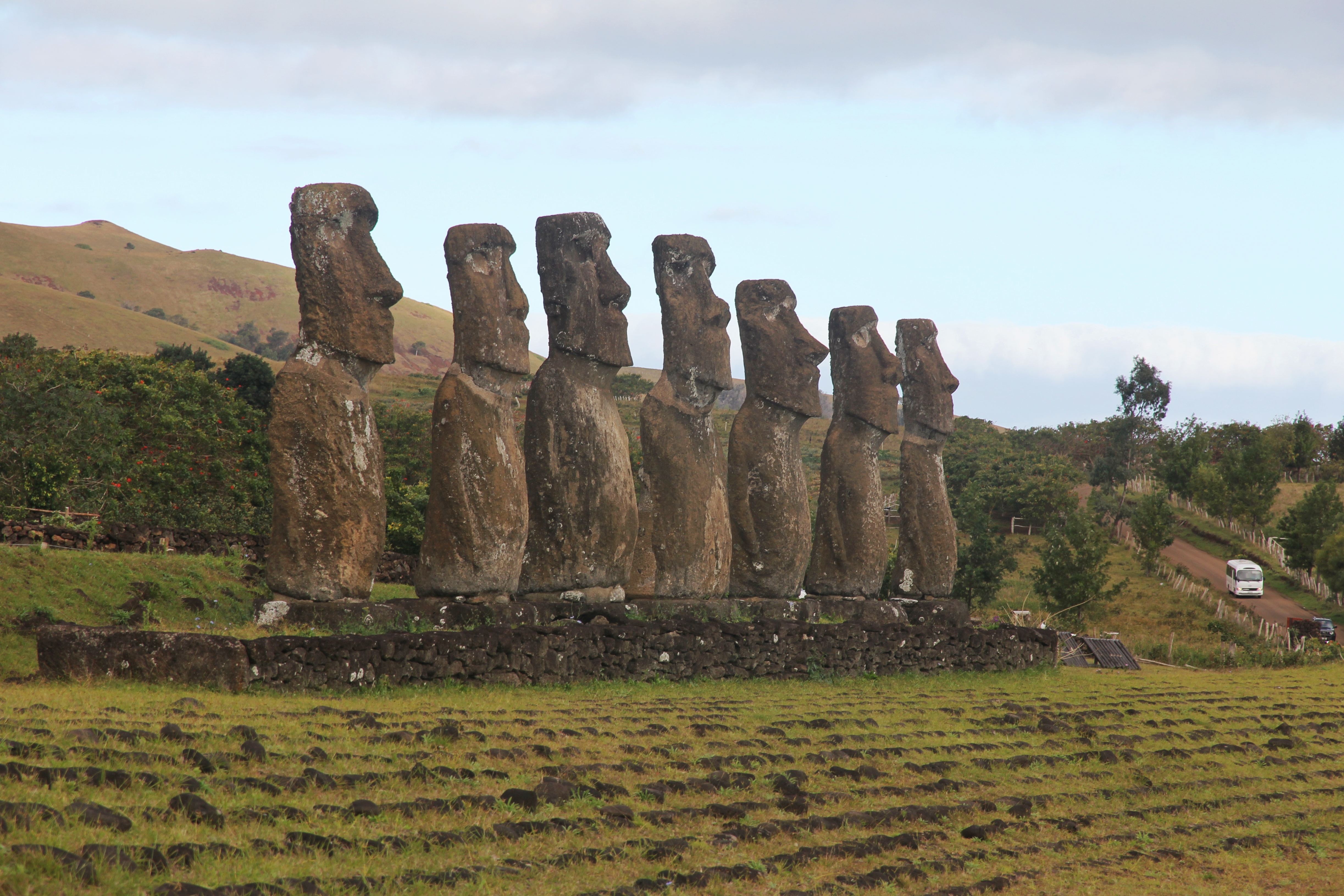
Today we woke up and jumped in the Explora van by 7AM (while it was still dark out) in order to watch the sunrise over Ahu Tongariki – a very recognizable row of 15 maui on the east end of Easter Island (or, if that doesn’t ring a bell, the ones in the picture at the top of this blog).

Putting the early AM cappucino machine to work


Ahu ticket booth opens early

We found a good place to set up the camping chairs (hooray for another excellent opportunity to use ‘em) and patiently awaited the sunrise. Eventually, the sun rose (as expected!), but it began to “dawn” on us that the clouds were not planning on cooperating (thank you, please tip your waiters, we’ll be here all week).

Lights! Camera! Action! Sunrise???


Waiting for today’s sunrise is ruff

Likely because Ahu Tongariki is very close to the quarry, the moai at this location are larger than others on the island. Along with the picturesque rocky coastline right behind them, they look pretty darn majestic. Although direct sunlight didn’t make an appearance this morning, we enjoyed a peaceful hour of taking in the view while chilling in the tropical island breeze and hanging out with a couple of dogs.

Please do not tell the moai to “talk to the hand”


Look left


Look right


The quarry is nearby (left side of hill)

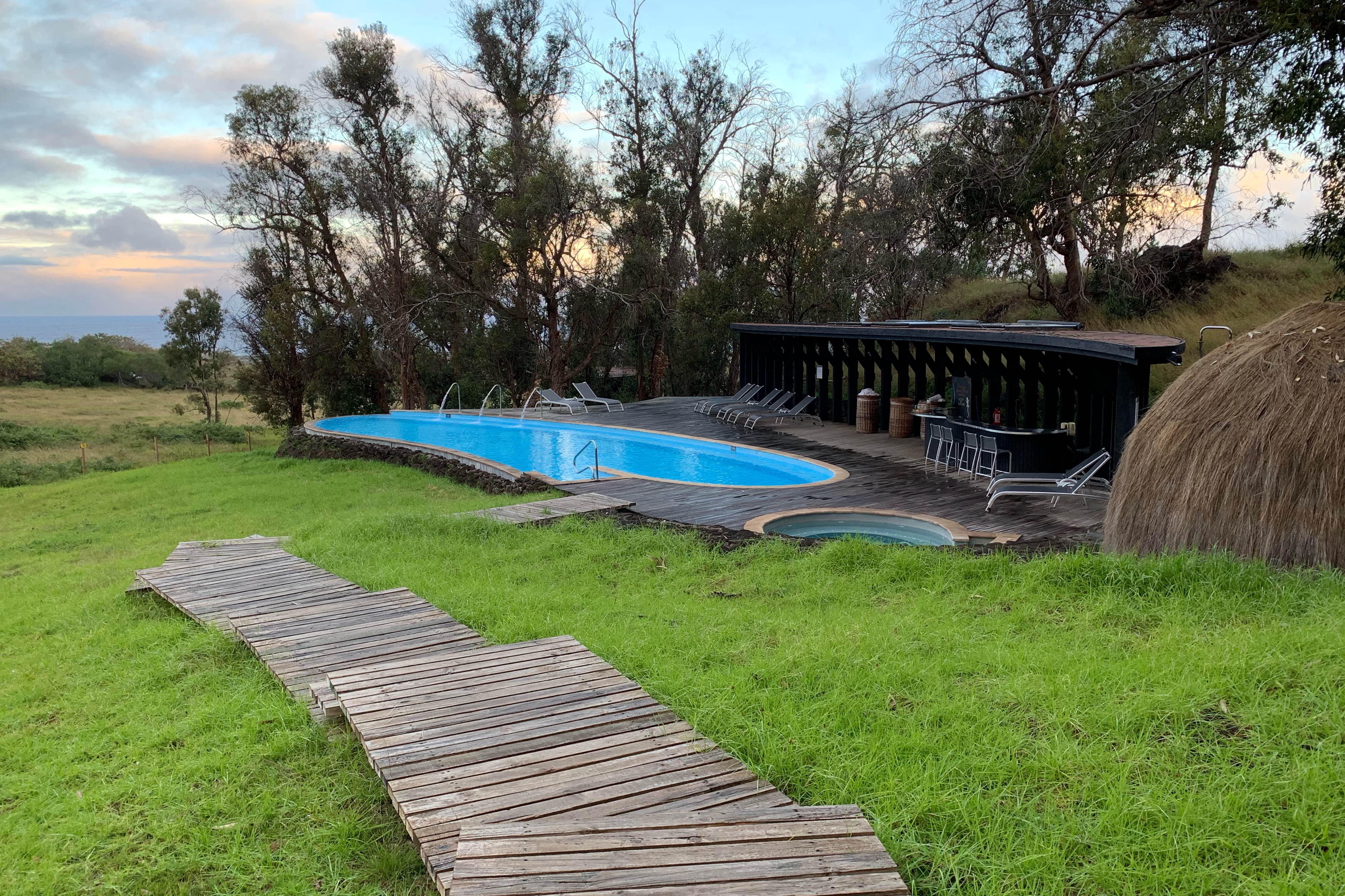
Upon our return to Explora, we ate breakfast, drank more coffee, and returned to our room to pack our bags. We had plenty of time to peruse the gift shop, order a steady supply of pineapple sours from the bar (bringing the total number of sour varieties tasted on this trip to five – along with calafate, passion fruit, pisco, and amaretto), and enjoy the view from the hotel before heading to the airport. As a surprise, we were gifted traditional Rapa Nui shell necklaces when we departed – which are said to have the mystical power to “call you back” to the island someday (won’t argue with that).

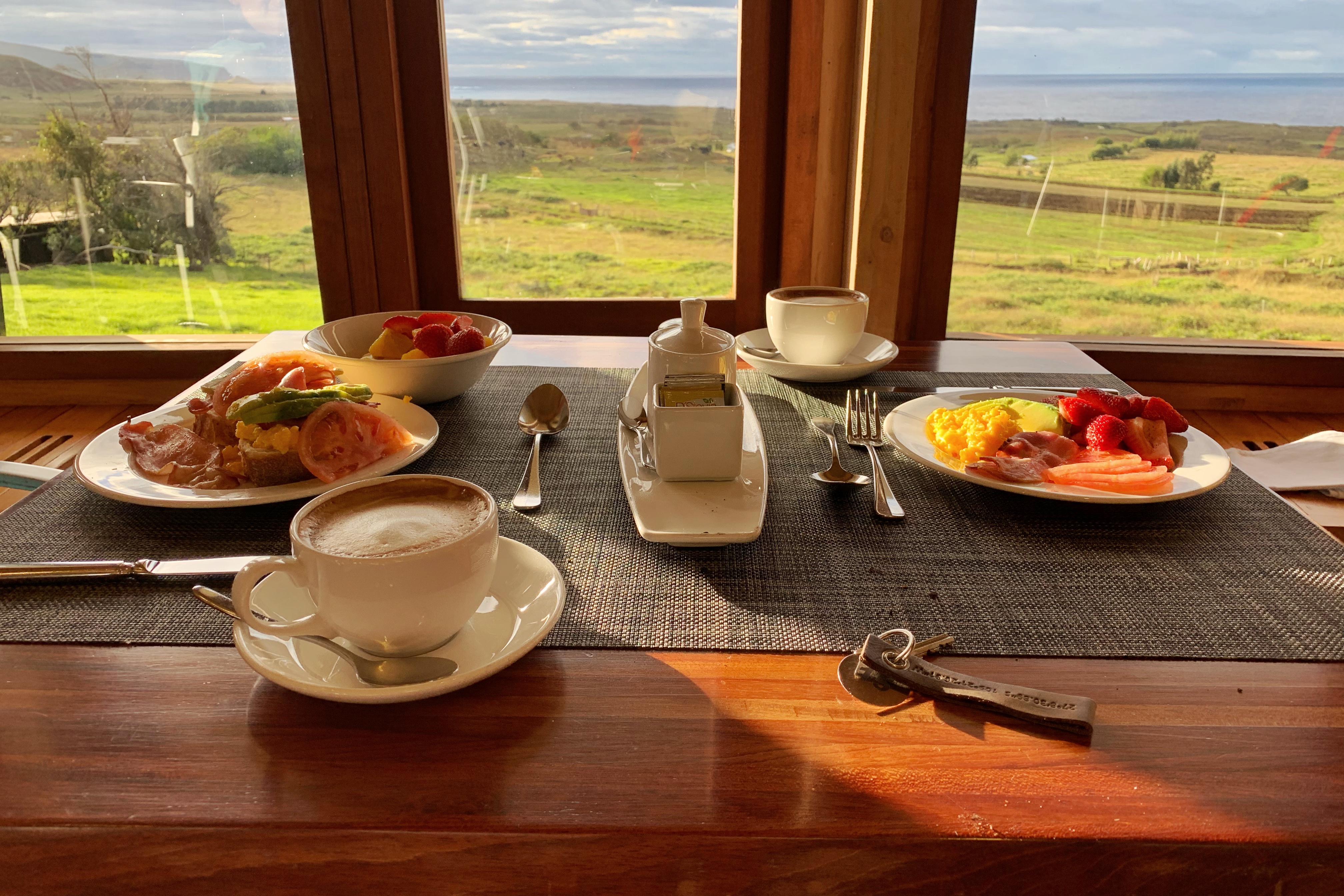
Breakfast with a view

Once more into the van

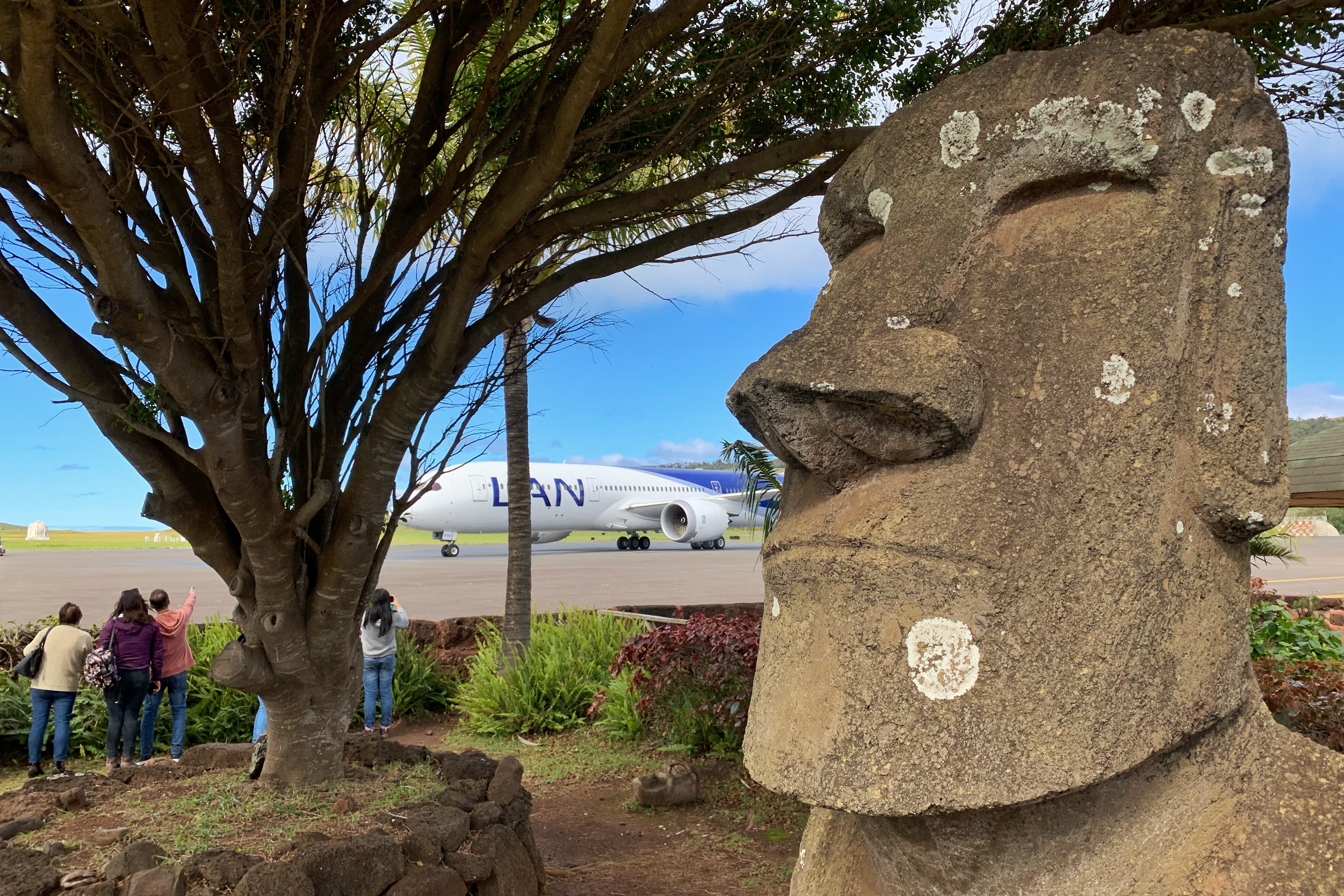
At the airport, we scanned our bags for contraband (successfully proving we did not have any sand, rocks, fruits, moai, etc), checked them, and received our boarding pass indicating gate one (of one). When the immigration/security line opened, we passed through and waited in the most awesome terminal ever. Sitting outside in sunny, 60-degree tropical weather while waiting to board your plane makes the whole flying thing much more pleasant.

Hanging out at Gate 1


Even boarding lines are more tolerable outdoors

The flight went smoothly, and when we landed, we successfully fended off the barbarians at the baggage carousel, who apparently don’t mind getting up in your personal space while waiting for their luggage. Plus, there was a very large school/church group of teens on our flight, which made the baggage area feel like a mosh pit at a KPop concert (unless that’s mixing two things that do not cross, in which case we plead old).

Back to the mainland


Charge! Purple shoes established exact position about 5 minutes ago, lady.

To get to our hotel in Santiago, we attempted to order up an Uber until the app payment method failed (some sort of dollars vs pesos credit card issue, maybe) and beyond that, a police officer lady told us they are illegal at the airport (or at least that’s what it sounded like she said). Anyways, we took an official taxi instead. We arrived in no time, checked in and decompressed. The room is an awesome, top-floor, corner room with a great view because we decided to live it up and go for the huge $7 upgrade option at the time we booked (which we had forgotten about until we got on the elevator). Yep, we are definitely high rollers now.

Day 12: Rapa Nui

The morning sunrise continues to both amaze and awaken us. We have our breakfast routine down pat and even had time for a much-needed second cappuccino. It took us to our last full day at an Explora hotel, but we finally achieved “private tour” status by being the only ones on both of today’s explorations.

Easter Island sunrise

We met our guide Nico at the map and drove west to Ahu Tahira, a moai platform where the statues are made from basalt, and even feature a female moai. Nico explained the key influences that changed the culture of the island in the 1700s when European explorers made first (recorded) contact with the Rapa Nui people. Nico showed us the uniform shape and clean lines of the platform which is why some people believe this particular ahu was made by the Incas (but Nico doesn’t really buy that theory).

Moai hide and seek


Top knots are the new pot of gold

From this platform, we started our hike towards Rano Kau crater. We had a little rain to start, but the weather soon cleared. After all, Nico said it is “rainbow season.” We had a great view of the coastline behind us and didn’t see any other people on the way.

Good thing the animals aren’t this nimble


Hiking up to the rim of the crater

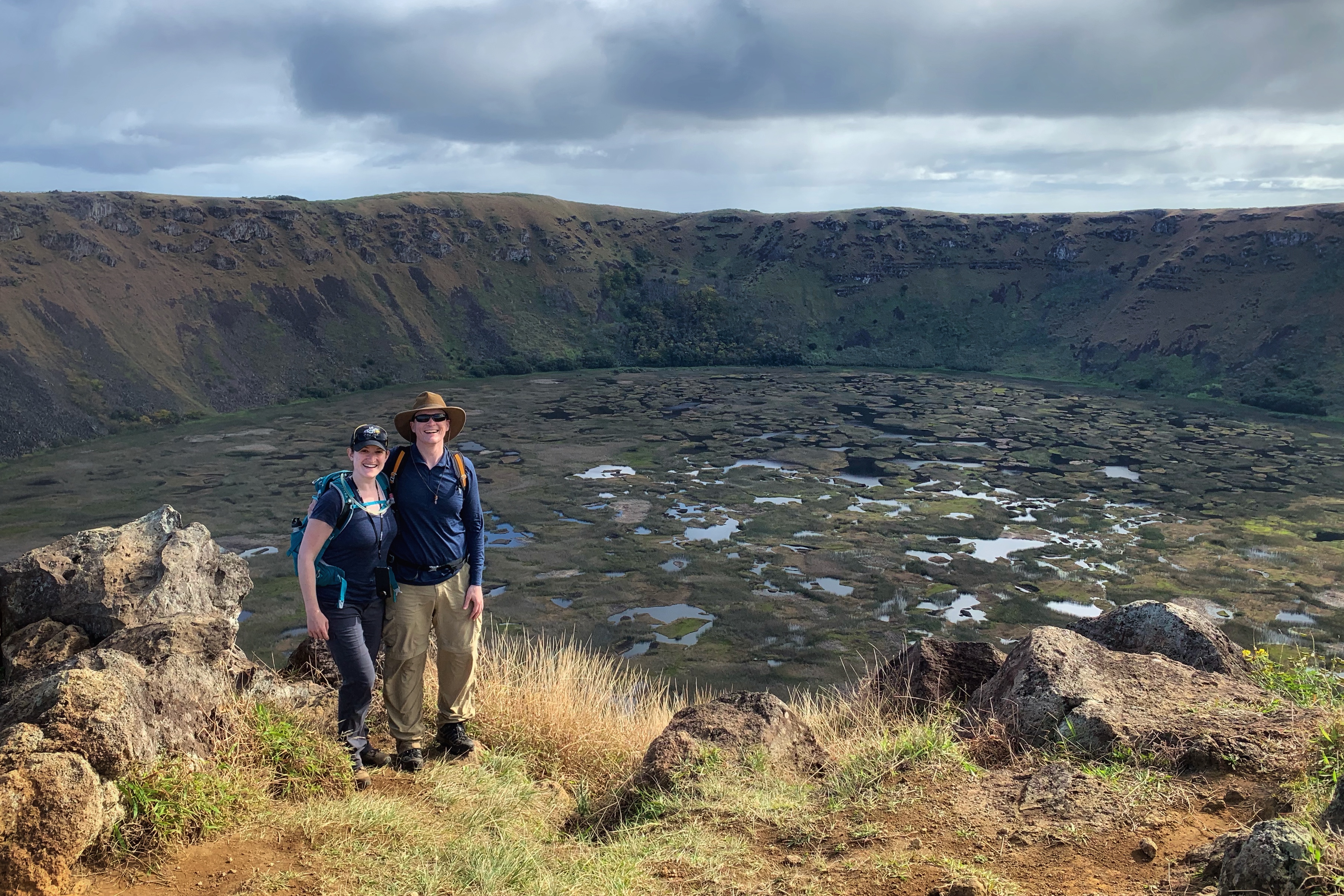
When we reached the rim of the crater, we had a stunning view. We could see the entire rim, the lake within its basin, and the tiny islands off the coast. We circled the crater and ended up in Orongo, the ancient ceremonial village where the Birdman competition took place.

The Birdman islands from the rim of the crater


Reached the top


Steep walls keep most things out of the crater… or in it


We found a use for the fisheye lens!


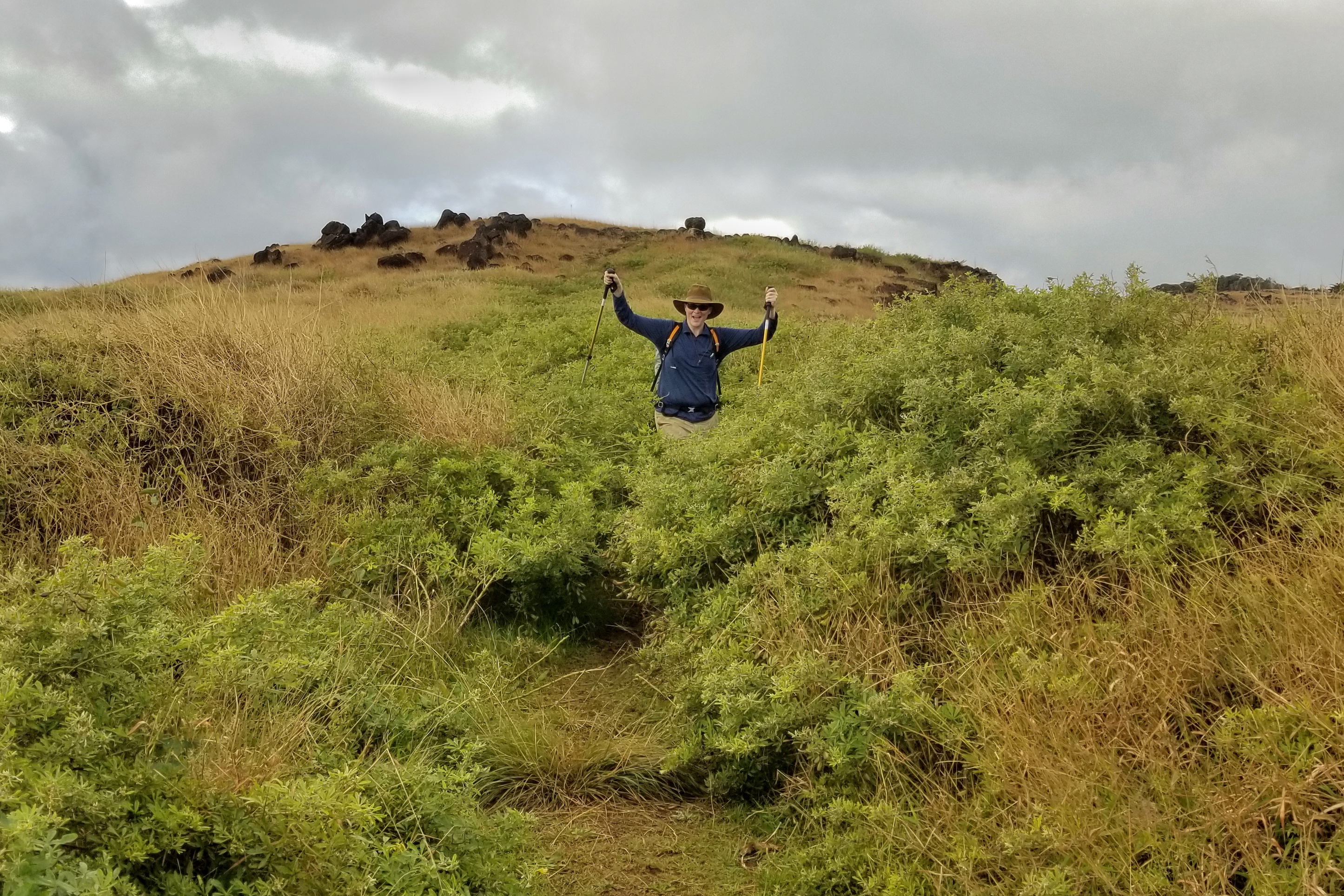
Navigating the aggressive vegetation


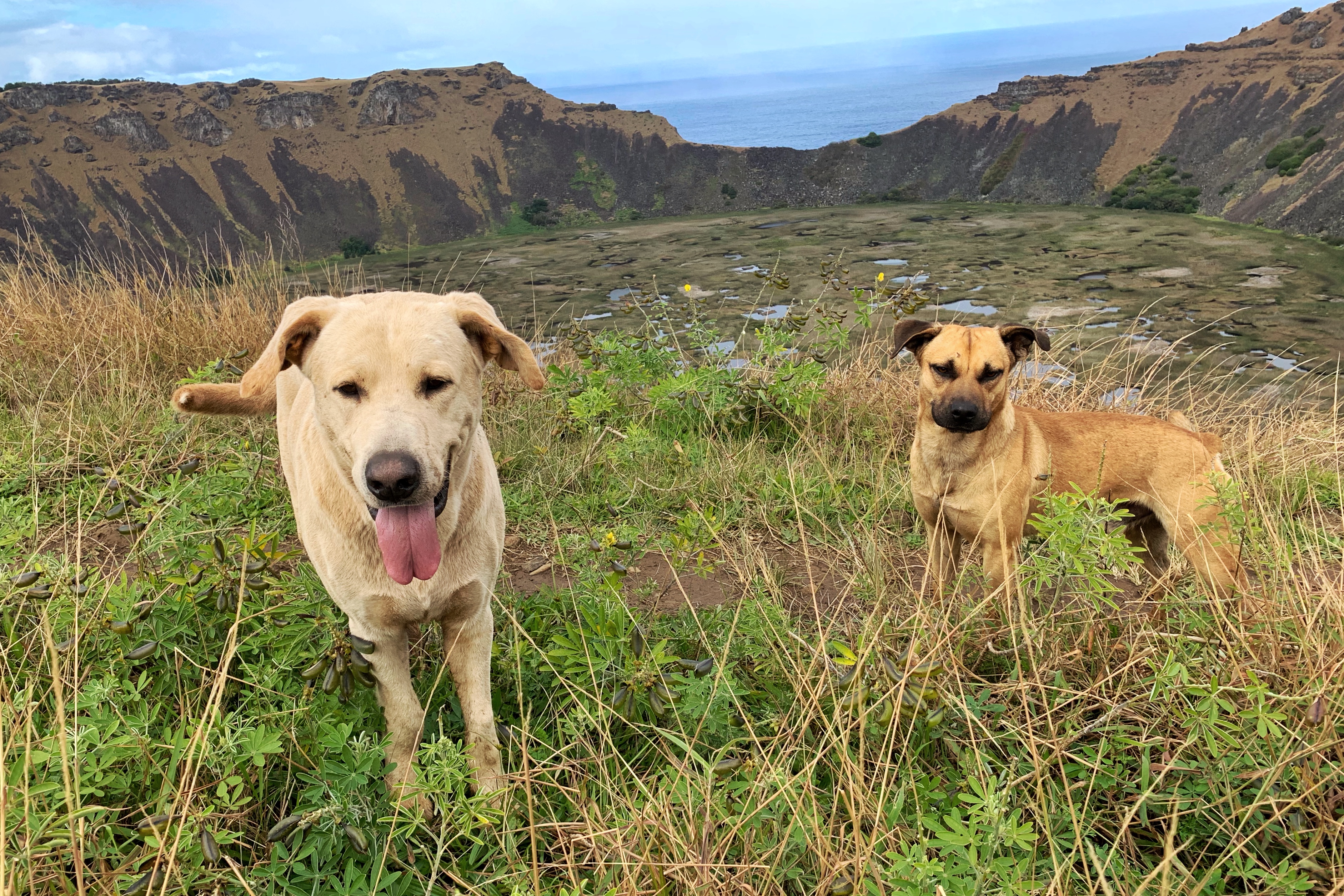
Island crater life is ruff

For almost five centuries (until the 1860s), the Birdman competition took place once a year, during the first two weeks of September. One tribute from each district (aka villages) would climb down the side of the crater, swim nearly one mile to the far island, climb up the rocks of the island, and wait for a Sooty Tern to lay an egg. They would then gather the egg, tie it to their head in a reed basket, swim back, climb back up the steep, rocky cliff face on the main island, and present the egg to the elders. If he succeeded, his tribe’s leader would become the king for the next year. A few years ago, Red Bull came to the island to scope out the route to potentially host a Birdman-inspired competition, but finally determined that it was WAY TOO dangerous. That’s right, Red Bull – the company that condones people going off Niagra Falls in kayaks – found it too dangerous.

Bird-inspired carvings in Orongo


Tight quarters but you’re paying for the location

We returned to Explora for lunch and a quick break with delicious cocktails, including what can best be described as a tropical Moscow mule (obviously not the official name). For our afternoon exploration, Sebastian was our guide (same as Monday), and we headed to Rano Raraku, the quarry where the moai were cut and carved. Our approach to the quarry followed one of the three moai transport routes the Rapa Nui used to move the statues around the island. Legend has it the moai “walked” to their platforms, much the same way a Weeble would. Statues often fell in transport and were abandoned, as this loss of mana, or spiritual power, was not covered under the warranty.

Impersonating the rare face-up fallen roadside moai


Nice hands, but not meant to be

As we walked around the quarry with a few other tourists, we got an up close and personal look at moai in various states of construction. The quarry itself has some of the most iconic images when you think of Easter Island. The many moai heads that are buried in the ground are full statues (with bodies and all) that were intentionally moved down the hill into cup-holder type pits so the carvers could work on detailing their backs. When the tradition of carving moai ceased, the statues remained in their pits, which filled in over time, leaving the buried statues we see today.

Moai in various stages of completion


Demonstrating the hidden bodies of these moai


The strong, silent type

Many of the statues at the quarry have more details than the ones we see on the platforms. Some have red body paint, tattoos, and/or ear piercings that match the person the statue represents. We also learned that the word moai literally means statue, and is the proper term to use before it reaches the platform. Once they make it, the true name is aringa ora o koro, meaning “the living face of our ancestors” as they now embody the spirit of an important, deceased, tribe member. The quarry also holds a few ginormous statues, that were apparently too large to move. Somebody obviously bet a carver that they couldn’t make a Godzilla-sized moai and the carver had to prove him wrong, but didn’t say anything about moving them.

Carved from the right tuff


Leaving so soon?

The park closed and we made our way back to the hotel for a sauna and jump in the cold pool to refresh. We enjoyed dinner and have every intention of going to sleep on the earlier side so tomorrow we can see the sun rise over Ahu One Makihi, a platform with 15 statues, before we head to the airport and fly back to Santiago.

Day 11: Rapa Nui

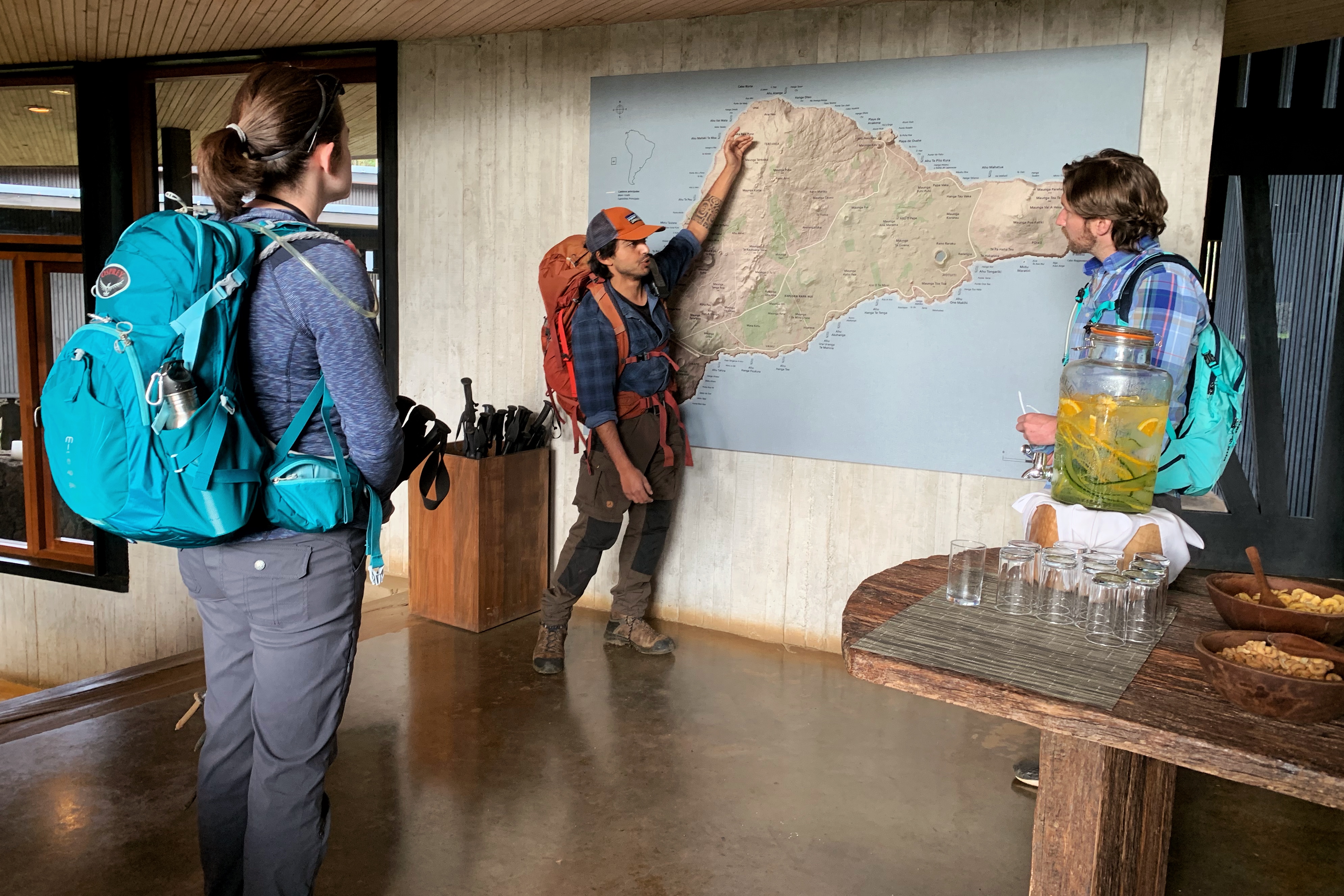
Now that we are further north on the globe, the sun rises at around 7:30AM, which means we are greeted by the Easter Island dawn as we woke for the day. Thanks sunshine! At breakfast, we were expecting the dining room to be crowded (like last night), but everybody already cleared out and we had the place to ourselves. We grabbed our packs, and met our guide Estefan in the lobby along with Chase, our hiking cohort for the day.

Receiving the morning briefing

We drove northwest to our starting point near Ana Te Pahu (the lava cave system we saw yesterday) and started the hike by taking a quick detour to another cave Estefan wanted to show us if we were up for it. Well, since there were just three of us on the hike, we pretty much told Estefan we’d gladly see all the secret menu items he might not usually include for a larger group… and he did not disappoint.

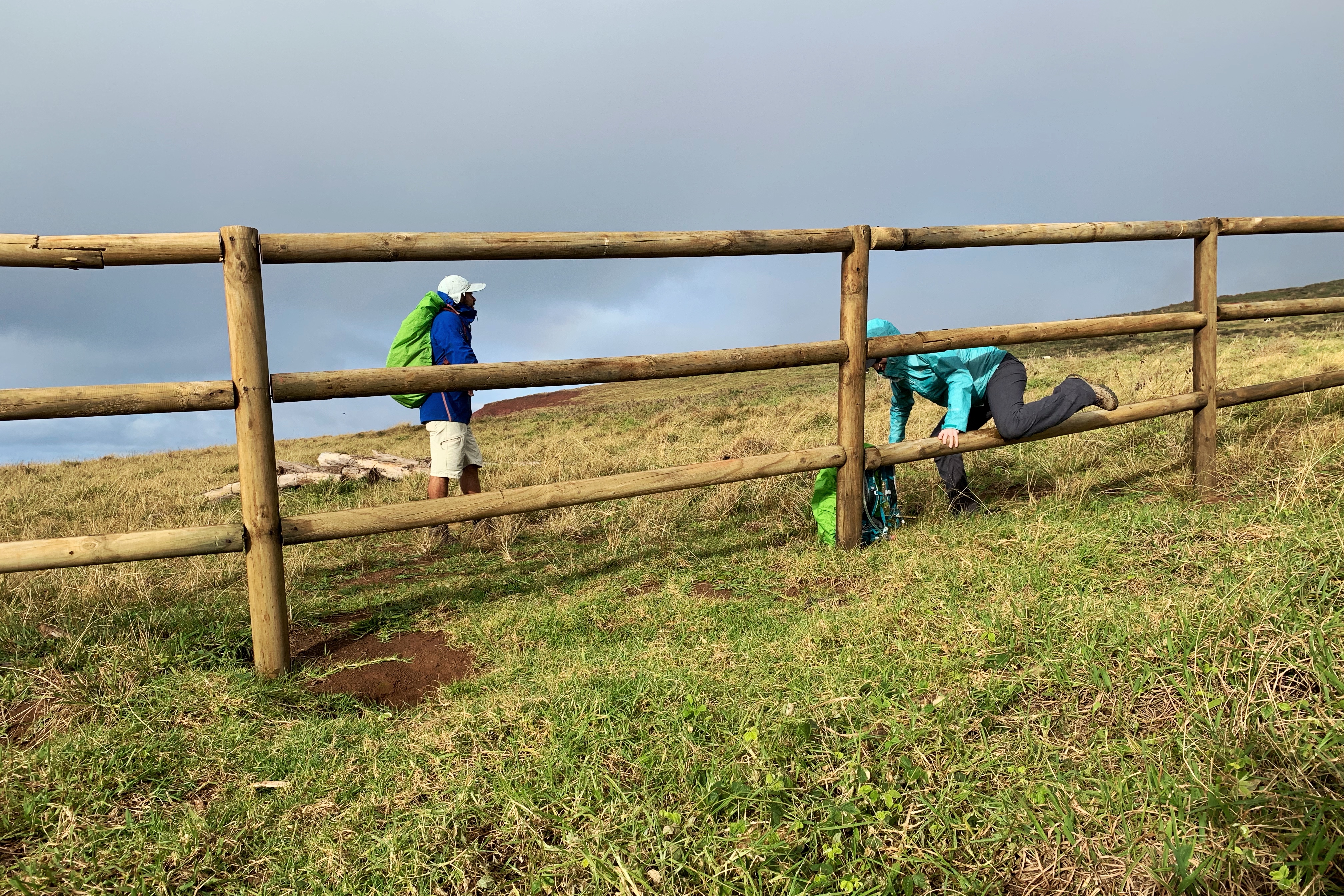
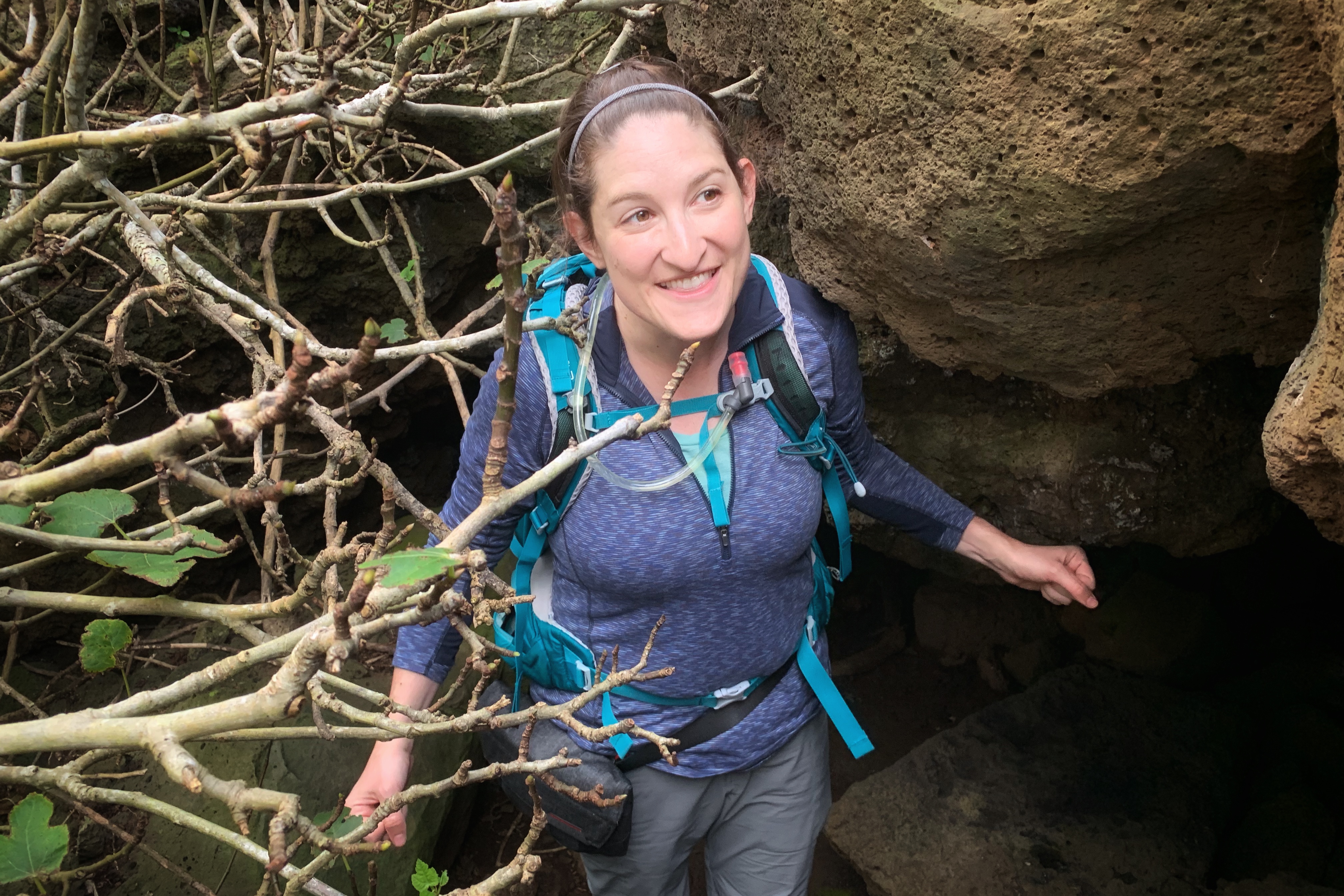
Starting with the cave, we climbed our way down from the surface, past a couple feisty tree branches, and into a small section with a natural water reservoir – the like of which the Rapa Nui people would use to get fresh water.

Jo fights a tree to get into the cave

Then we went even further into the cave, through a narrow and short tunnel, emerging into a larger opening with a pool of water. This new area was pitch dark. With only our cell phone flashlights available for light, we oriented ourselves by the sound of dripping water coming down through the ceiling, and the splash made when Estefan threw a rock in the general direction of the deep pool of water.

Venturing deeper to the underground pool

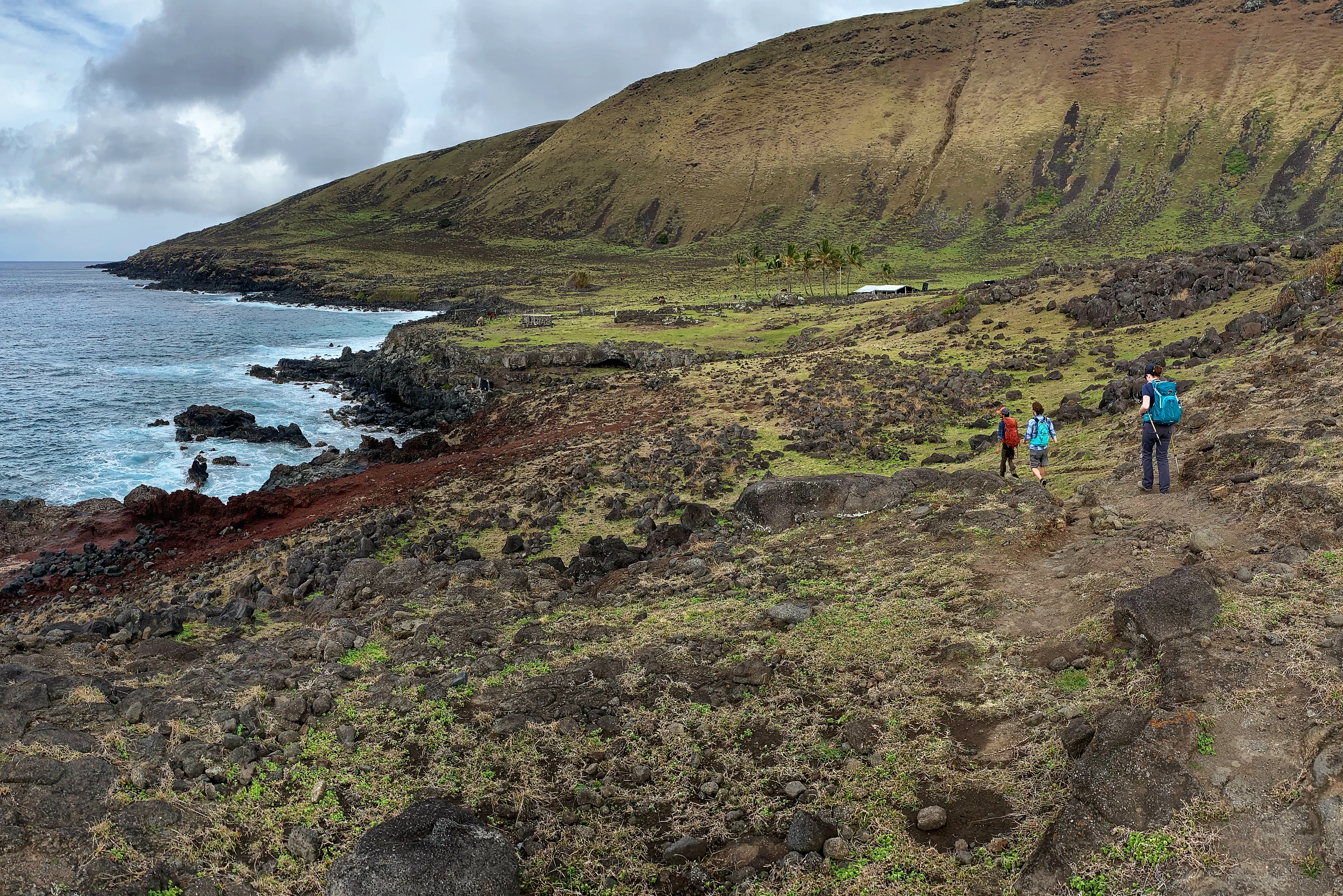
Crawling back out of the cave, we returned to the path and started the “official” hike, which follows the island’s north coast for about 10 miles through areas that once belonged to the Miru, the most powerful tribe in Rapa Nui. The area is not visited by many tourists and we only saw one other “wild human” on the trail the entire day.

This kind of horseplay will get you killed

There may not be many people, but the area is an archeological paradise. Most of the moai we saw on this hike were on the ground, probably because they were knocked down by tribal fighting, fell down by accident in travel, or were worn down by erosion and the weather. However, a few moai we saw were still “standing” because they were essentially turned into building blocks in platforms built to put new moai on top of them.

Moai down


Weathered moai


Moai upon moai (back on the right)

One way the Rapa Nui people kept their belongings safe was using caves as storage rooms. We were able to explore one of these caves (“we” being Jo) with a very small entryway, but once inside, it opened into a nice little space.

Temporarily a mole person

It is relatively easy to tell when each moai was made. The oldest moai are smaller and primitively carved. Many of the older moai are also cut from different stone, such as basalt. The newer moai are bigger and carved with more detail. We saw a variety of moai from different generations along the trail, featuring different sizes and material.

Fallen moai covered in rocks

Having found a nice space on the high cliffs with a fantastic view of the ocean, we stopped for lunch. We’ve been hauling these backpacking chairs all the way from Chicago, and were finally rewarded with the perfect opportunity to use them. We may have even convinced Estefan to get one.

Backpacking chairs for the win

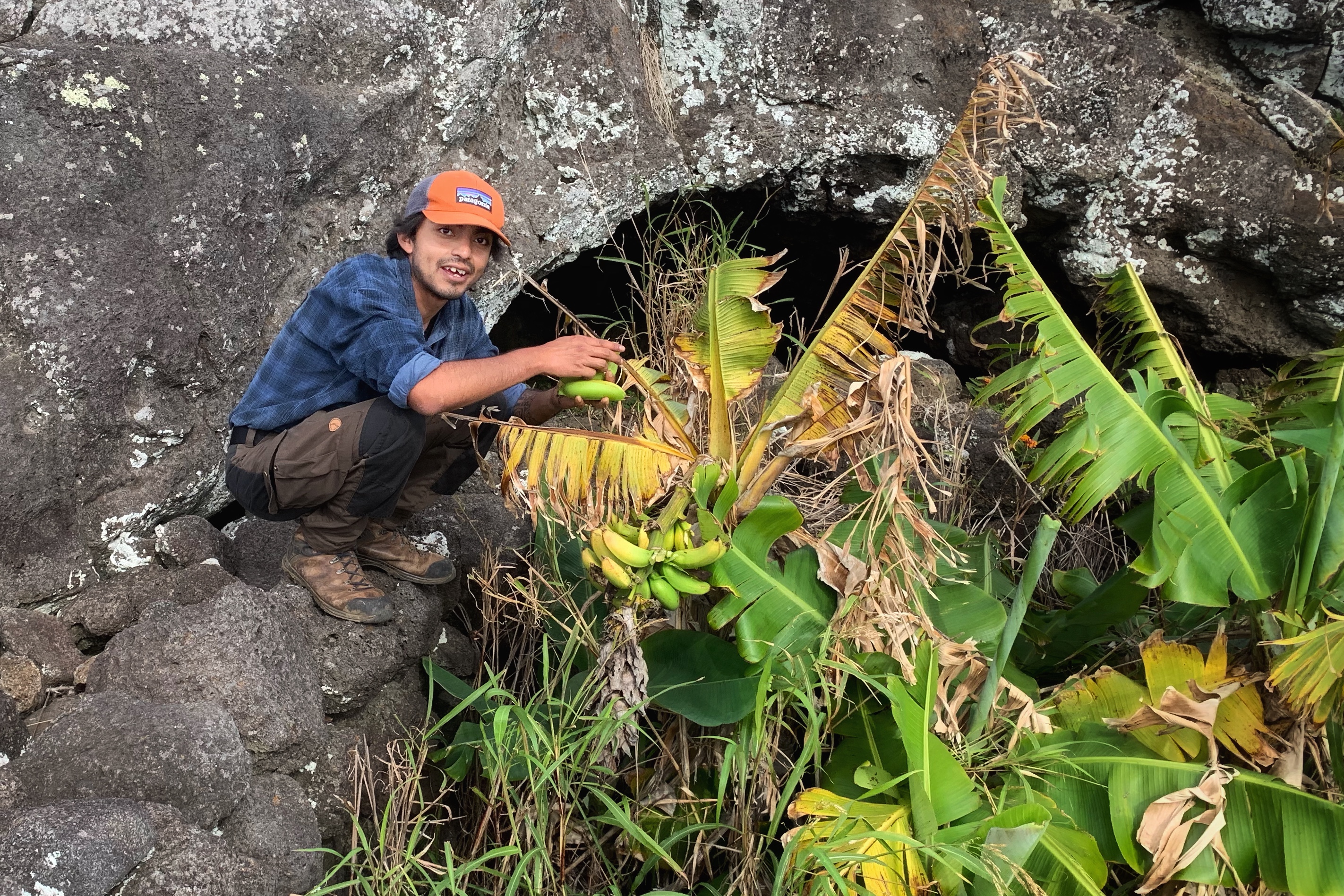
After our hearty lunch, we continued on with the hike. The caves make fertile ground for banana trees, and Estefan spotted one with a few ripe enough to become tasty hiking snacks. Next we saw a giant ramp (Ahu Atanga) at the northernmost part of the island that probably was designed to resemble a boat, given that the area was once the main fishing hub/port of the Rapa Nui people.

Get your fresh bananas here


Somewhat mysterious stone ramp

The Rapa Nui have three types of burial grounds. The most commonly seen is the basic flat platform with the moai on top. The second is a mountain-shaped structure that rises to a high point in the middle. The third is a wide, steep slope with a small moai at the top. This kind is rare and little is known about it, hence, Estefan joked this ramp is the best evidence of aliens having visited Easter Island.

Basalt moai

We continued eastward and saw a variety of notable archeological items, including a cave with hieroglyphs on the ceiling, carvings in the surrounding rocks (such as turtles and tuna), and additional platforms possibly used to denote tribal boundaries. We also saw the coastal walls of a half-crater, and inquired about the colorful vegetation.

Passing thru the Hanga Oteo crater along the north shore


Coral tree and lupine flowers


Too much lupine makes the horses sick

The final location of the hike was Anakena beach, one of two sandy beaches on the island. The area was once the capital city for the royal family (literally translated to “King’s Landing” from the Rapa Nui name). There are several restored moai on a platform near the beach that were well-preserved by the sand.

Approaching King’s Landing

These moai (Ahu Nau Nau) have red-ish top knots (carved from different stone), representing hair worn in a bun on the top of the head, also known today as a “man bun.” Since they were built around the year 1100, one might say the Rapa Nui were pioneers in this hairstyle. The moai were first built in the year 880, so these are among the most recent. It is clear to see how much more detailed the carvings are. They even started adding decorations such as pierced ears, back carvings, and the top knots.

The evolution of the man bun


Three moai at Ahu Nau Nau


Island beach life is ruff

After spending a while looking at the moai at the beach, and sharing some delicious ceviche Chase ordered from the roadside cafe, we returned to the hotel. Wanting to relax in the jacuzzi after the hike, we learned it is not heated in the winter. But hey, the jets worked wonderfully, and it was refreshing.

Maybe slightly warmer than Lake Pehoé

Tomorrow, we’ll start the day with a hike to the rim of a crater and we’ll learn about something called the Birdman competition (which we don’t believe has anything to do with Michael Keaton). In the afternoon, we’ll check out the quarry where the moai were made, and where the majority of the statues remain today.

Day 10: Santiago/Rapa Nui

Our alarms woke us up at 5:30AM today, giving us time to get ready, eat breakfast, and walk across the street to the airport terminal in the ballpark of LATAM’s aggressive “arrive 3-hours ahead of your flight” suggestion.

Pancake press

Although Easter Island is a part of Chile, flying there is treated like an international flight. First, unlike our other flights within Chile where we had to pay to check a bag, each passenger gets two 50 pound bags included. Because Easter Island is so remote, people take this opportunity to pack and transport essentials you can’t find on the island such as bottles of olive oil, coolers of meat, mini automatic fireplaces, and of course, boxes of Dunkin’ Donuts.

Maybe Dunkin’ gets your name right in Chile

Second, in order to fly to Easter Island, everyone has to complete a form with essential traveler information, where you are staying, and for how long. You then go through immigration, give them your form, and get a stamped immigration document that gets handed over as you board the plane. Without this form, you cannot board, although it is possible to reach the gate by going through the regular security line, which would be bad.

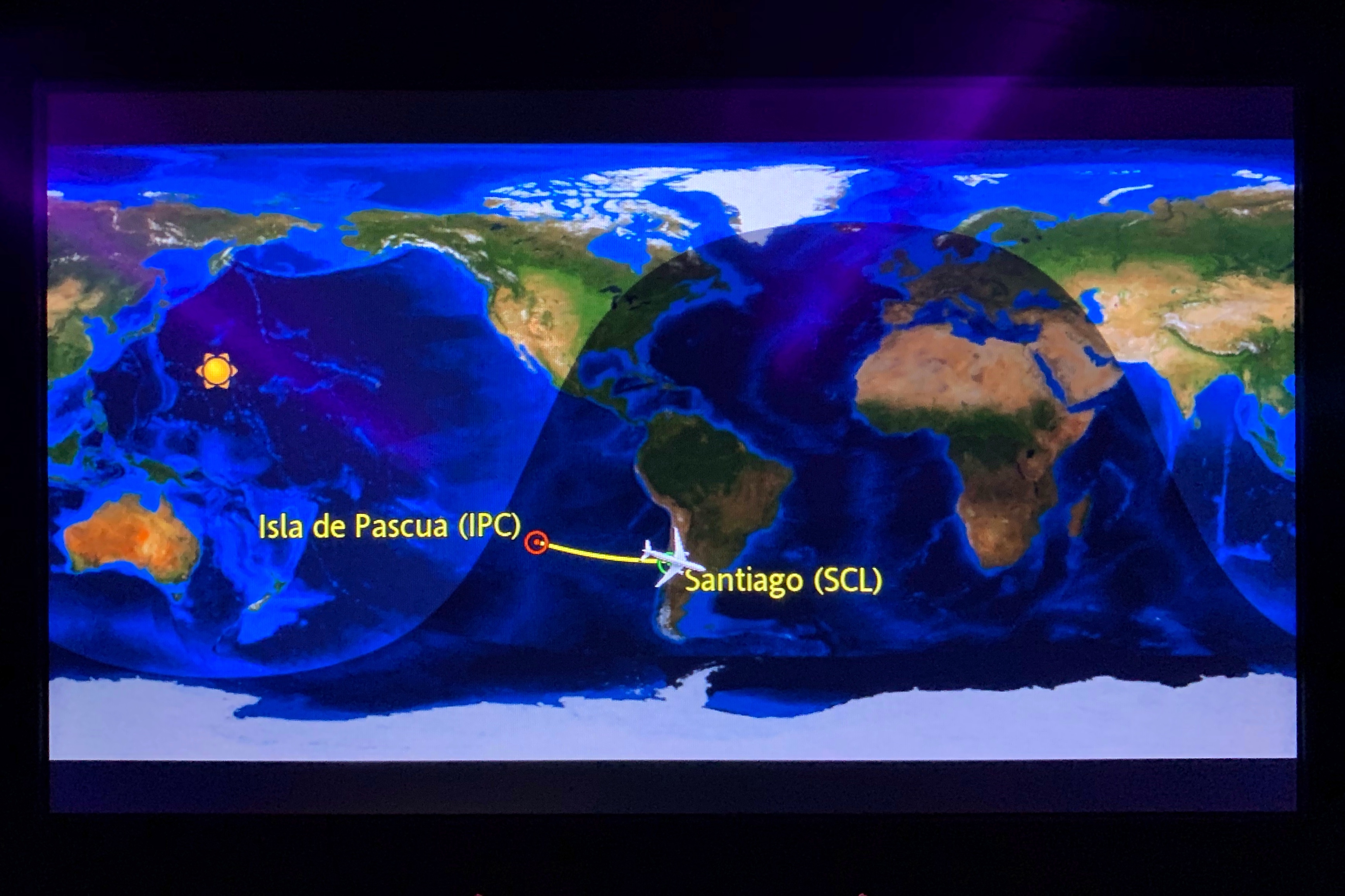
However, do not fear, because we followed the directions properly and boarded the 787 Dreamliner with ease. The flight, though five and a half hours long, went smoothly and gave us a chance to watch some movies and nap. Somehow we even ended up in the nicer seats with a few extra inches of legroom.

Airport? Or tiki bar?


We got lei’d

We arrived at the tiny airport in Hanga Roa, waited patiently for our bags, and met the Explora folks outside. Looks like we will not be the only people in the hotel this time, as there were four other people in the van with us, and a few family groups back at the hotel. We received our welcome introduction and tour where we learned about the “Big 5″ areas to see on the island – encompassing Rapa Nui culture and the creation of the moai – and had an hour or so to grab a drink and eat lunch.

El Yorgos are delicious


I can’t believe it’s not moai!

After lunch, Sebastian took us on a quick afternoon exploration to three different stops. The first was Ahu Akivi, a platform of seven statues which are very special because they are further inland and face the sea. The statues were built as protectors and watchers of the villages, so all moai faced the villages. The only reason the maoi here face the ocean, is because there used to be a village in between the platform and the ocean. Mystery solved.

First moai sighting


These moai were restored in 1960

Next, we took the van down the road to Ana Te Pahu where we wandered thru a cow pasture and climbed down into a lava cave. The island is volcanic – but dormant – so viscous lava and hot gasses once flowed below hardened lava, then cooled, leaving underground caves that are very fun to explore.

The light at the end of the tunnel


Jo likes lava tubing

Our final stop was a beach with three maoi platforms. One of the maoi still has the white coral eyes in tact, and features a top knot, indicating this statue is among the most recent ones to be built. The other platform on the beach had six “seats,” but only five statues. Nearby, you can see that sixth statue which made it all the way from the quarry to the shoreline only to fall and crack meters from the platform.

Our guide Sebastian describes the scene


Ahu Tahai (foreground) and Ahu Orongo (distance)


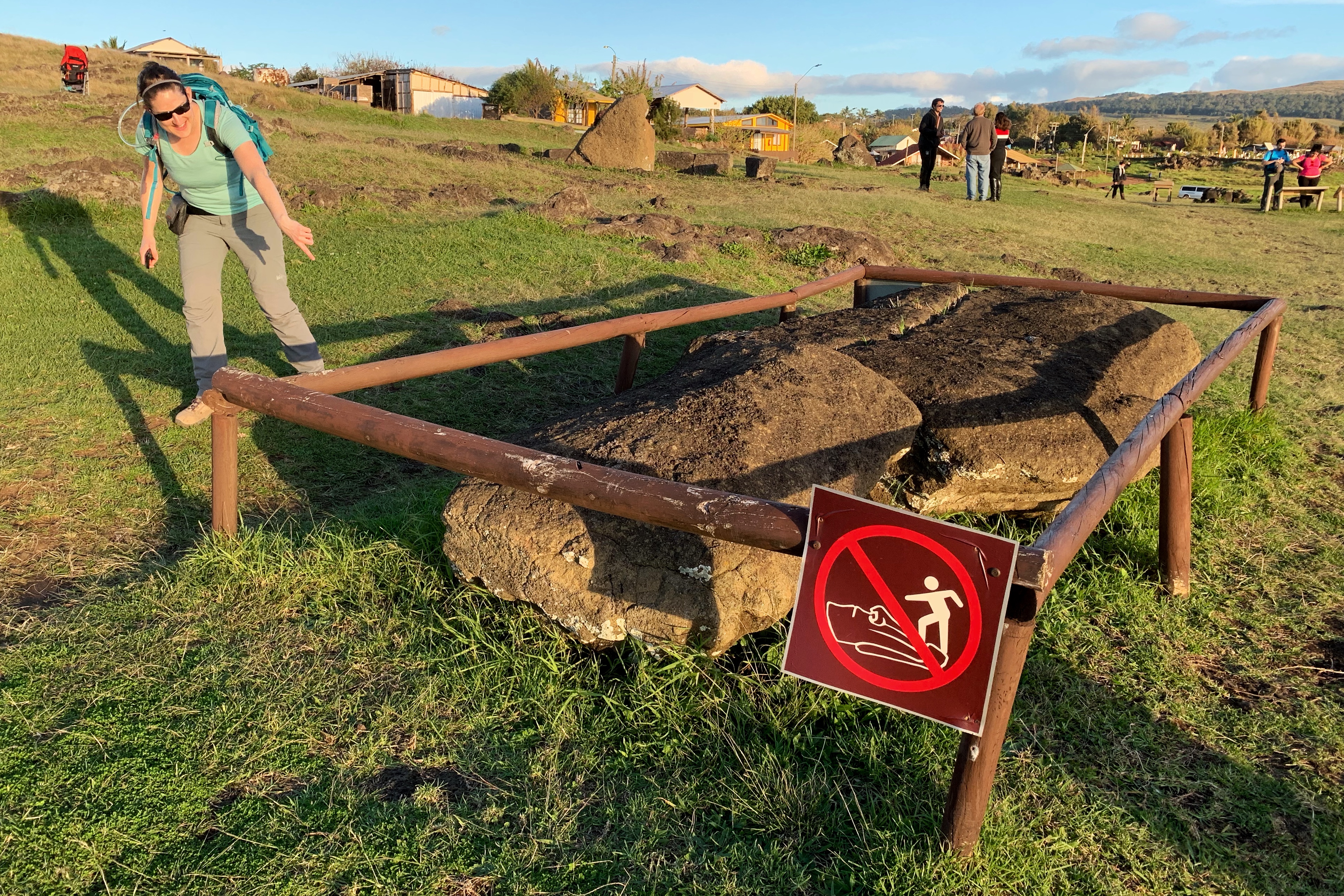
Please don’t kick the moai when they are down


Ahu Akapu (left) and Ahu Tahai (right)


Ahu Akapu in the setting sun


Island life Is ruff

With the sun setting, we headed back to the hotel to make our plans for tomorrow and relax before dinner. With more people at the hotel, the guides have to coordinate a bit to ensure that there are enough guides and drivers for all the explorations. We decided to go on a full day hike tomorrow on the north side of the island to the Anakena beach spotting more moai on the way.

The open air Explora hotel is very refreshing, but chilly after the sun sets. Thankfully, the night shift guy, Vladimir, helped us move one of the patio heaters to the table with the working WiFi where we finished the blog before getting some sleep.

Day 9: Santiago

With no set plan for the day, we slept in and convinced ourselves to get up primarily in order to make it to the breakfast buffet before it closed. Turns out Holiday Inn has a pretty good breakfast, featuring entertaining and delicious attractions such as a single-button pancake press with a cartoon-like conveyor belt and honey straight from the comb. Plus, they had all the fixins’ necessary for our traditional meat and cheese pile sandwich-making operations, which were subsequently put in motion.

Breakfast? Great! Room window view? Not Patagonian

Following breakfast, we walked thru the bar area and discovered an opportunity for another vacation tradition – watching the Tour de France! (Looks like the Belgians are trying very hard on the early stages this year to impress the home crowds.)

Lotto Jumbo wins the TTT

Rather than lounge around all day (which had a non-zero chance on the list of our potential activities), we decided on an exploratory adventure into the city. After gathering the necessary intel from the front desk, we ventured into the airport and found the small counter that sells the particular SIM card we wanted (mostly for maps) “€ and communicated a bit in Spanish to get the card active. As loyal readers know by now, completing the SIM card challenge is another trip tradition.

Everything works!

Next we found the Centropuerto shuttle bus from the airport to the city (with a few stops in between). It is very conveniently located just outside the hotel. We bought our ticket, found some seats, and rolled out of the terminal toward downtown Santiago.

Very convenient and very blue

From the Los Héroes bus stop, we walked northeast towards the Museum of Precolumbian Art. Along the way, we passed the Moneda Palace (sort of like the Chilean White House, although no longer a residence) and the biggest flag I have ever seen.

Palacio La Moneda


Big flag needs big wind

Turning north on Bandera street, we encountered a heavily-decorated pedestrian street featuring colorful street and wall murals, which paired with the newer glass construction certainly helps liven up the generally-drab colors of the neo-classical stone buildings.

Mario Kart Rainbow road


Tetris road


Colorful underpass


Bolsa de Comercio

Soon we reached the Museo Precolumbino. Before entering, we stopped in the courtyard outside the museum to have lunch. We noticed many dogs along our walk, that appear to be stray, but also have little sweaters on. Turns out, the people of Santiago take it among themselves to care for the street dogs. Many people feed them, give them clothes, take them to the vet, and even house them. They also seem to know when to cross the street. We met Rambo, who was very friendly, and must have been well fed as he wanted no part of the apple we offered him. The pigeons on the other hand were all about our bread crumbs.

Rambo says hi!

Inside the museum (which was free today, bonus!), the rooms display art from the different civilizations and cultures of South America dating back thousands of years. They also had a small interactive section (designed for kids but highly-enjoyed by these adults), where you could learn more about the ancient cultures. We learned how to count using a system of knots, and followed a traditional native dance.

Cool Pre-Columbian Museum entrance staircase


“Before Chile was Chile” exhibit

After looking through each of the sections of the museum, we ventured east through the Plaza de Armas with vendors, people statues, real statues, and found the National History Museum. Smaller and with no English translations on the plaques (although fun to interpret with limited knowledge of Spanish), this visit was pretty quick. Also, the Museum’s last room abruptly ends with a series of newspapers from September 1973 and quickly sends you to the exit. Probably need to go to the Museum of Memory and Human Rights for the rest of the story in the immortal words of Paul Harvey.

Propaganda posters on display at the National History Museum

Next we walked to Cerro Santa Lucia in the Barrio Lastarria district, a small hill with gardens and Castillo Hildago, a castle built in 1816 to protect the city. It is now a popular lookout spot (and event center). We went up the hill and climbed the uneven stairs to the very top where we had a view of the whole city (as the hazy air allowed).

View to the southeast


Santa Lucia Hill rocks! (with San Cristóbal Hill in distance)

Once we found our way down from the maze-like paths of Santa Lucia Hill, we followed Alameda road west all the way back to the bus stop. After paying for a couple ~$3 bus tickets, we enjoyed our dinner sandwiches and a smooth ride back to the hotel. Figuring out the public transportation systems in new cities is quite satisfying. With a couple hours to relax, we’ll be asleep soon and ready for our early flight to Rapa Nui in the morning.

Day 8: Torres del Paine/Santiago

Since we were the only guests leaving the hotel today, we were able to push our departure time back one hour to 9AM. Yay for more sleep! Plus, it doesn’t hurt to be sharp at breakfast when in the vicinity of Oxford and Cambridge academics.

For example, we overheard one gentleman (Steve) speaking with Roger (the head of the Oxford astrophysics department who spoke last night) and expressing his doubts with the theory that heavy elements are formed during the collision of neutron stars. Dr. Davies politely disagreed. Not sure Steve is going to win this one, but he does have a strong suit for details… he was the one who, after reading the captions by several photos on the walls in the hotel, jokingly recounted at least four of his favorite inaccuracies for his buddies.

Steve isn’t buying Roger’s neutron star theory


But he’s 100 percent right about the famous French bounty hunter Charles Darwin

When we were finally forced to leave, we met our driver, Rodrigo, who took us all the way back to the Punta Arenas airport. As consolation, we saw the sunrise over the Paine massif on our way out. After leaving the park boundary, nearly the entire route is estancias, or ranches, so we saw all sorts of animals. Notably… horses, dogs, guanacos, emus, llamas, lots of sheep, and even flamingos.

Sunrise


Gaucho morning


Ok, you win this round of Agricola!!!


Cómo te llama?


Some of us more sleepy than others

We made a pit stop at the same small restaurant and hotel (Rio Rubens) that we stopped at on the way in, ordering a final tasty meal from Explora and a couple sandwiches to go for later. We tried the black label Austral beer, and it was good, but maybe not the stout we heard about from the guides, so our search will continue on that front.

Ahhh… warming up by the stove

Back on the road, we passed thru a couple immigration checkpoints (any time a road from Argentina split off, basically) and made it back to the airport with plenty of time to spare. We checked in with ease – given there is only one security line and three gates – which was not surprising. We killed some time shopping at the gift shop and watching the start of the Chile vs. Argentina soccer match.

Keeping tabs on Argentines, probably


You bet!!!


Hard to imagine the NFC and AFC Championship Game losers playing for 3rd, but here ya go!

On the LATAM flight back to Santiago, we had a chance for one last surprise viewing of Torres del Paine National Park, as our flight path cruised just to the west of Paine Grande massif.

An overhead view of the entire “W” circuit

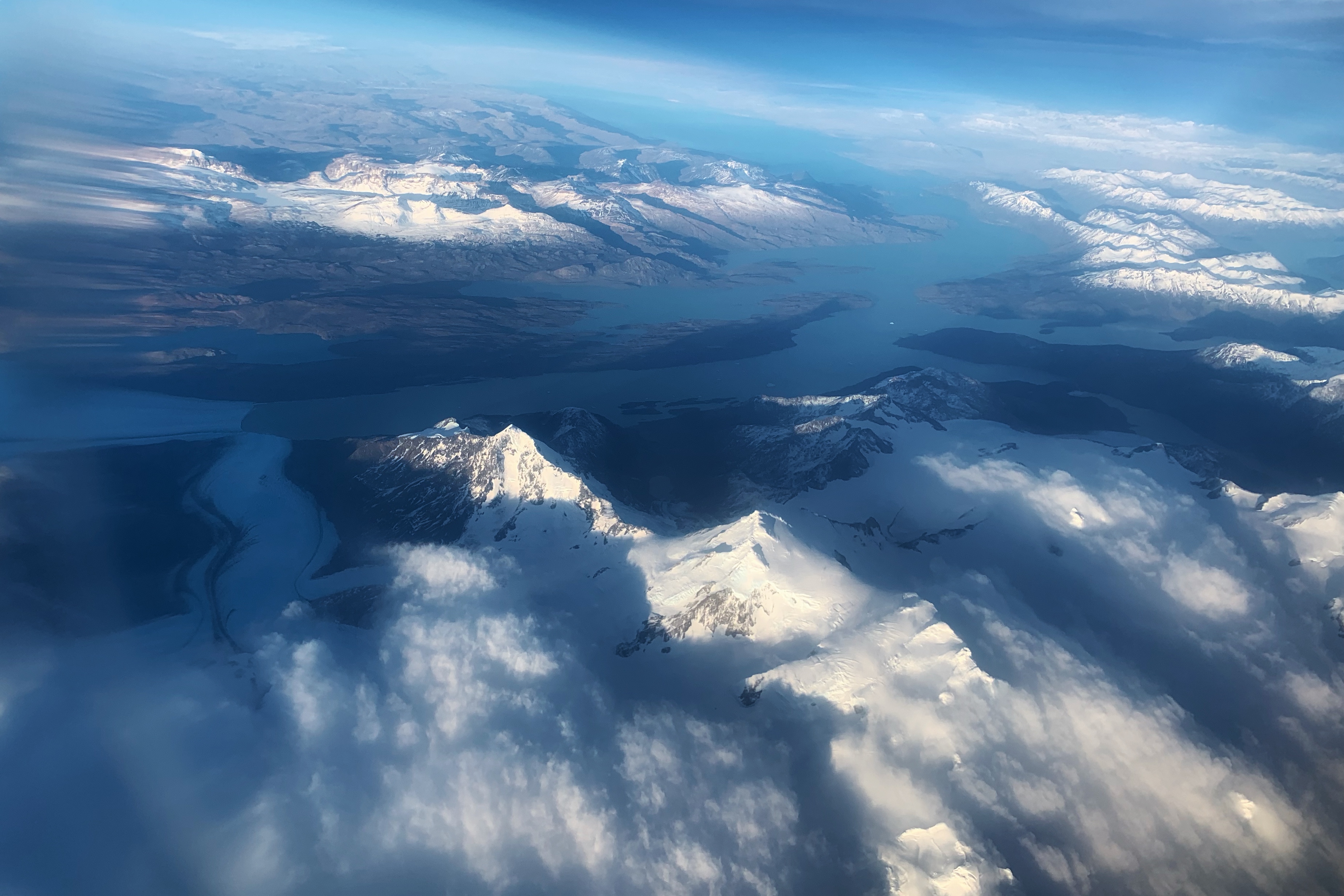
A few minutes later the flight path also took us just west of Los Glaciares National Park (which is in Argentina), and it looked pretty grand as well. Maybe we should go see that park next.

Mount Bertrand and Argentino Lake (Fitz Roy just out of frame to the north)


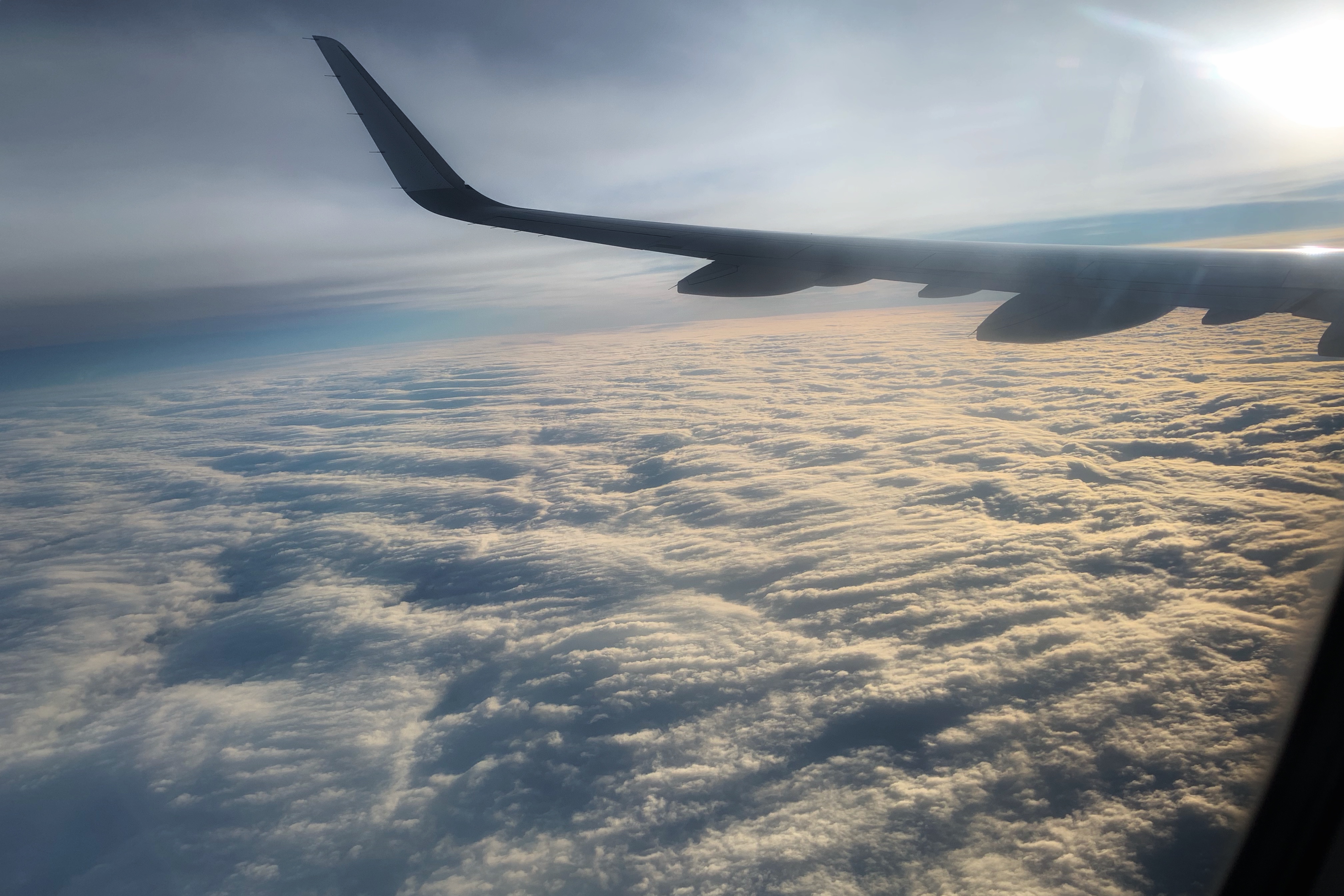
Looking west as clouds behave like fluid over Patagonia ice field

Nothing much to report after the flight, because we grabbed our bags and crossed the street to check in at the airport Holiday Inn. Quite a test to see if we get used to these regular old hotels again. We ate our sandwiches for dinner and flipped through the TV channels to see if anything was in English. We discovered Argentina beat Chile, MTV Chile doesn’t play music either, and one memorable car commercial featuring T-Rex skeletons. Then we found Ratatouille and the Dark Knight Rises on the movie channels and dozed off while working on the blog. Good news is that we don’t have to get up for anything tomorrow.

Day 7: Torres del Paine

Our last full day in Patagonia was pretty great. We completed our usual morning routine of eating breakfast, strapping on our our hiking gear, and meeting in the lobby for the mission briefing. Roberto was our guide again, and we were joined by just one other guest from the hotel – a friendly gentleman by the name of Ed, the owner of the travel company that organized the trip with the Oxford and Cambridge folks.

Roberto explains our route

We drove about 10 minutes south of the hotel to the starting point for the full-day Alto de Toro hike and the Lake Toro lookout. The route starts with a rise in elevation up the ridge, through a pass, and flattens out into highland terrain. The wind was strong but the sun was shining and the temperatures felt slightly warmer than the last few days.

Heading up the ridge


Wind howls over the landscape…


Creating mesmerizing patterns on the semi-frozen lakes

Other than burned trees and hearty bushes, the other main plant that thrives here is grass. First, gauchos figured out the native grass was delicious sheep food. Then they realized the grass is so tough it wears away sheep’s teeth after three years (at which point they go from wool-producing to leather and mutton). Roberto explained the unwritten social agreement that, during Christmas time or other big holidays, local Chilean families with less means can “steal” a sheep for their Christmas dinner, so long as they leave the hide behind for the gauchos.

As the wind whipped through the lakes and trees, the hike continued with a few ups and downs and some tricky stream crossings. Unlike the last two days, we actually passed another group of hikers (gasp!), who also reported not seeing any pumas. (To be honest, we don’t really care if we see one, the mountain views work just fine for us.)

Surviving a treacherous stream crossing


Viewing the massif


Slightly zoomed

We eventually made our way to a tree-covered section of the forest for refuge from the wind, and stopped for lunch “€ featuring the delicious soup, sandwiches, coffee, and dessert (you know, everyday hiking food).

Picnic lunch

Turing back to the west, we headed toward Mirador del Lago Toro. This area is home to numerous condor nests, and we saw a few along the way. We hiked up the lookout which provided a panoramic view of Lago Torro, and a 360-degree view of the Torres del Paine National Park. The only catch was the crazy wind which battered the exposed peak and made it hard to stand! Apparently, strong winds are less common in the winter, but typical (and stronger) in the summer. Score another point for visiting in the winter.

Sunny and snowy trail


Condor spotting


Altocumulus lenticularis (aka. UFO clouds)


Blown away


Rio Paine empties to Lago Toro with Andes in the distance

The remainder of the hike was a very steep decline down the ridge to the van. We arrived back at the hotel with plenty of daylight remaining, and time for another visit to the spa (where we totally didn’t lose a plastic champagne glass to the wind). This time, we both decided to jump in the freezing lake. The Cambridge alums watching from their jacuzzi thought we were nuts but cheered us on.

Downhill skiing on rocks


One more afternoon view from the room

As mentioned yesterday, the head of the astrophysics department at Oxford University, Robert Davies, presented his talk, “From galaxies to life” to the guides, the guests, and any of his fellow travelers who wanted to hear the talk for a second time. We thoroughly enjoyed the talk and speaking with the other attendees.

Sweet bonus lecture


Jo and Oxford mathematician Les (in Darwin’s tree of life t-shirt) enjoy lectures their own ways

After dinner, we relaxed by the fireplace before heading to sleep. We leave early tomorrow morning for our four-hour drive back to the Punta Arenas airport and our flight to Santiago. It’s hard to imagine we could have had better luck at Torres del Paine National Park than our past week. We saw everything we wanted to see, we had great weather, and we were dubbed “real Patagonians” by Roberto for jumping in the river. We will definitely miss it.

Day 6: Torres del Paine

This morning we started with our (now) usual scrambled eggs and bacon breakfast and gathered in the lobby at 8:45AM to start another adventure. Our guide for the day’s first activity was Mercedes and we were joined by John and Angela, a couple of friendly Kiwis who arrived at Explora last night via an overland drive from Argentina. After a 40-minute van ride to the eastern sector of the park, we embarked on our hike along the Aonikenk Trail with clear skies and brisk morning air.

Important puma safety information


Did you not read the sign?

Our route was a one-way, 7km path that runs south toward Lake Sarmiento “€ often right along a fence that separates the National Park from private property (owned by a couple of Croatian bros). This natural pampas area (fertile lowland) is known for having a variety of wildlife and beautiful views of the Paine massif from the southeast.

Different perspective of the Paine massif


Heading towards the caves (those elevated rock formations in the distance)

We hiked to a series of conglomerate formations that rose above the landscape in the morning light. Here, we could see a few of the 4,000 year-old cave paintings left on the rocks by the Anoikenk, the original aboriginal people of Patagonia who were nomadic hunter-gatherers.

Atop the conglomerate rock formations


I think it says “condor, puma, hand”


I’m lichen these rocks

We enjoyed a quick snack while checking the rocks for other ancient cave paintings, and then continued walking towards Lago Sarmiento. Plenty of guanacos roamed the landscape. Mercedes told us that guanacos travel in families, but one guanaco will usually act as a lookout “€ watching for pumas “€ as the rest of the family eats.

From Lago Amarca, to the caves, to Lago Sarmiento


The guanaco beaches are currently frozen


Guanaco family and their trusty lookout

We also spotted a gray fox. It looked interested in catching a bird at first, but realized that might be kinda hard, so we watched as it stealthily approached a bush and pounced on a mouse instead “€ a delicious afternoon snack.

Fox is hungry. Birds are hard to catch.


Mouse is easier and tasty!

As for pumas “€ the prime wildlife attraction in the area “€ we saw plenty evidence of their presence (many guanaco bones and puma prints), but no actual pumas. When we got back to the van, our driver, Raul, showed us a photo he took of some pumas he saw while we were on the hike.

Now we saw pumas!

Back at the hotel, we had time for lunch and prepared for our afternoon horseback trip at the Explora stables. We suited up and headed out to meet the horses once again (we each had a new horse today). This time, we rode south through the pampa where our horses had space to spread out. The views during the ride were spectacular. Afterwards, we warmed up by the stove, continued increasing our tolerance for mate, and still could not win the gauchos’ ring toss game.

Gaucho Alexis leading our ride


Roberto approves of the view…


…we agree!


Domesticated pets (except this gaucho cat) are not allowed in the park. So look! More “wildlife”


Gather round the wood-burning stove to warm up and drink mate

Yesterday’s spa visit was pretty great, so we returned for some more outdoor jacuzzi time. Many of the guides have suggested jumping into the river for a cold dip (some more seriously than others). After spending a few minutes in the sauna to heat up, Matt was adventurous enough to try it.

Back to the hotel from the spa

Refreshed and rejuvenated, we headed back inside to pick tomorrow’s exploration and attend the nightly talk, this time about geology. We have been joined by 14 new guests at the hotel tonight. But do not worry! It turns out they are a group of Oxford and Cambridge University alums who were up in La Serena for the eclipse a few days ago. They asked the Explora guides if there were any astronomy-related talks (which we asked about earlier to no avail) and when they found out not so much, the group jokingly suggested they could give the guides a talk. We immediately chimed in and told them we would 100 percent attend. And with that, I believe the department chair and professor of Astrophysics at Oxford University (Roger L. Davies) was conscripted into giving us a lecture tomorrow night. Awesome!!!