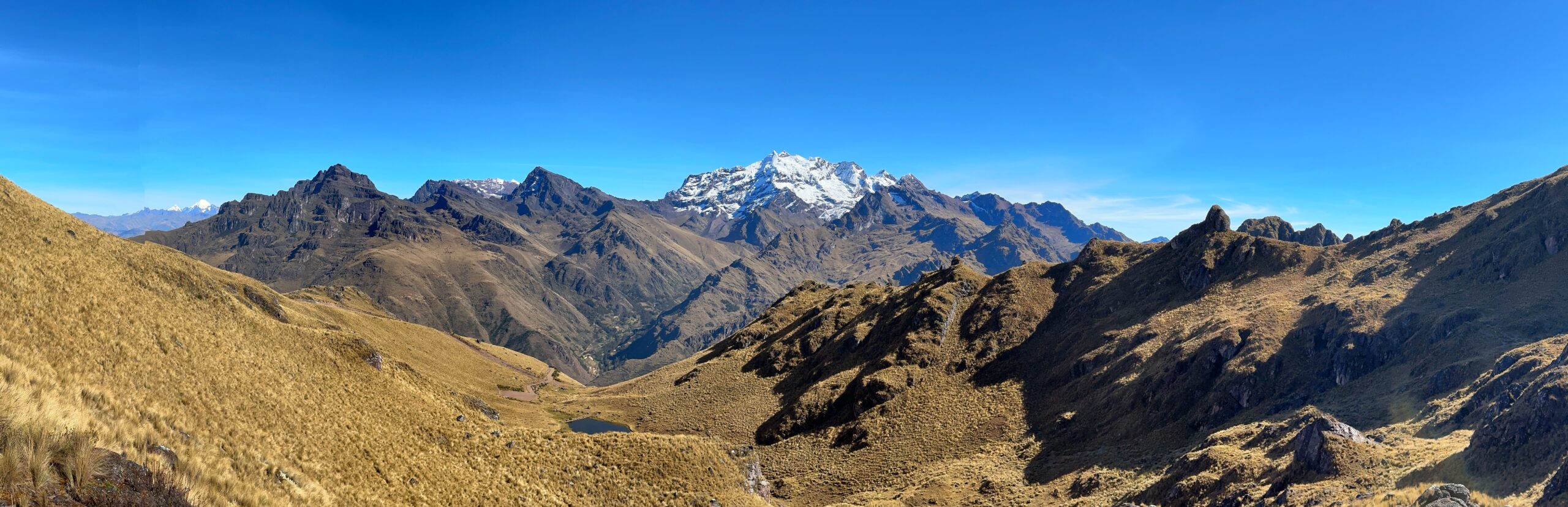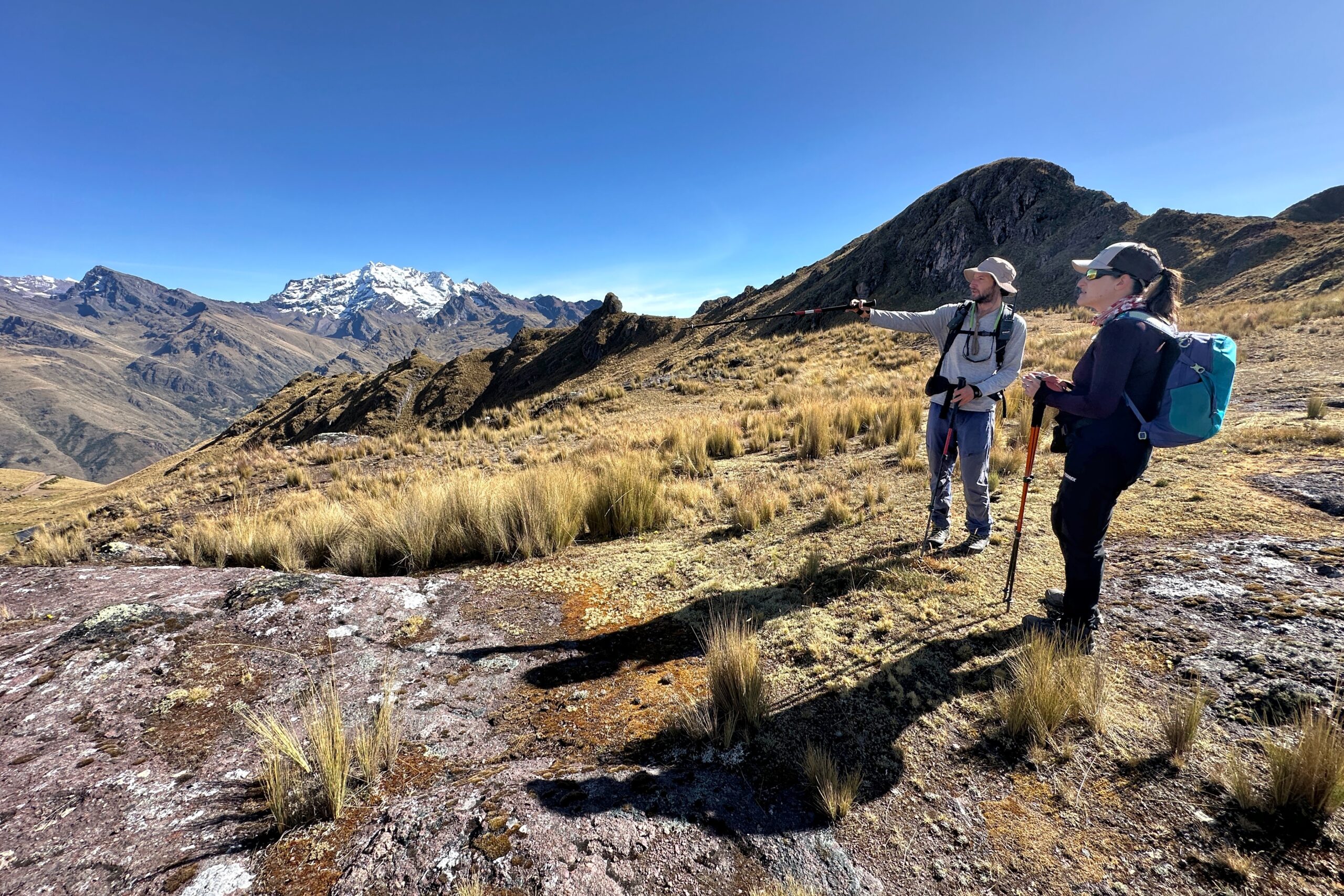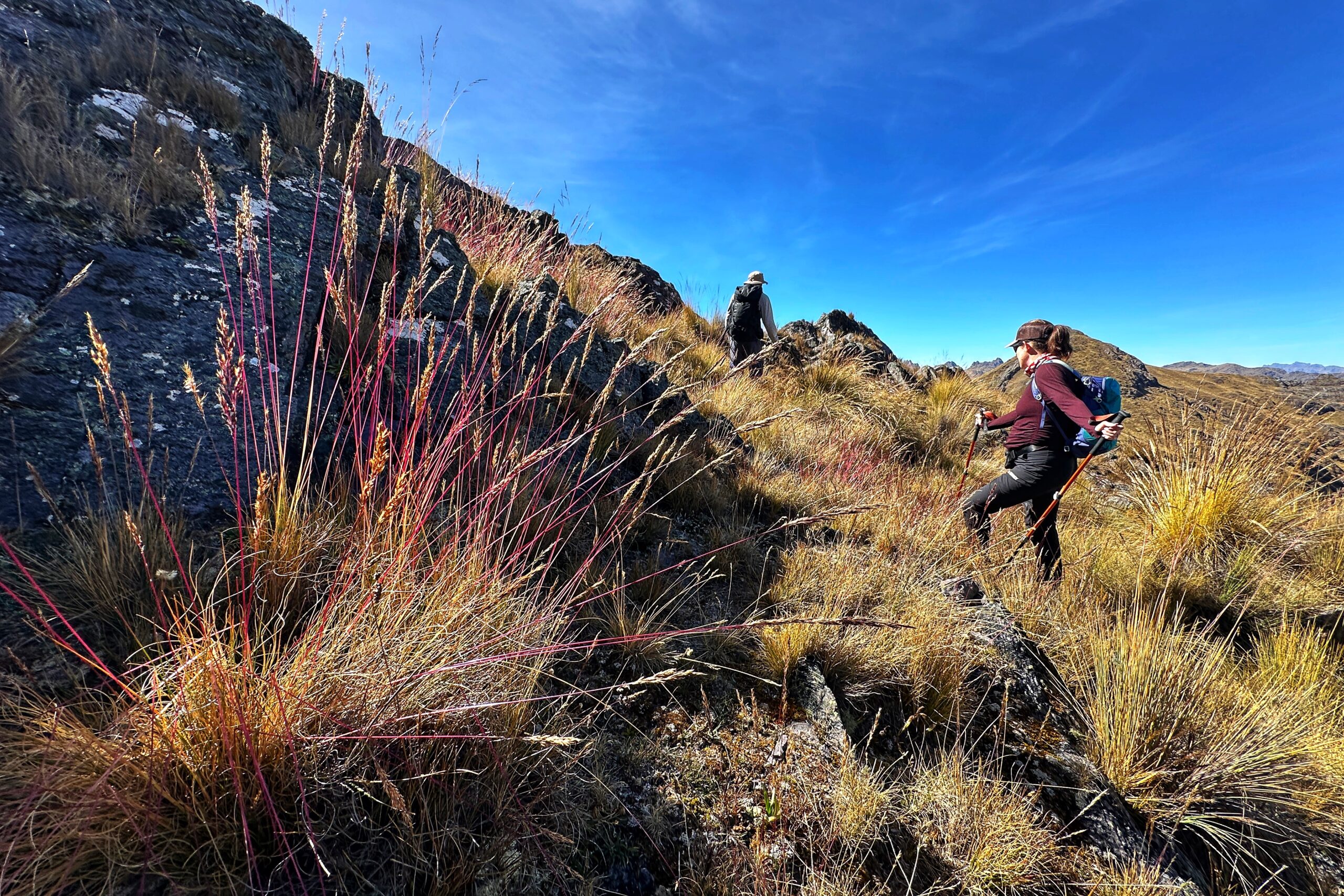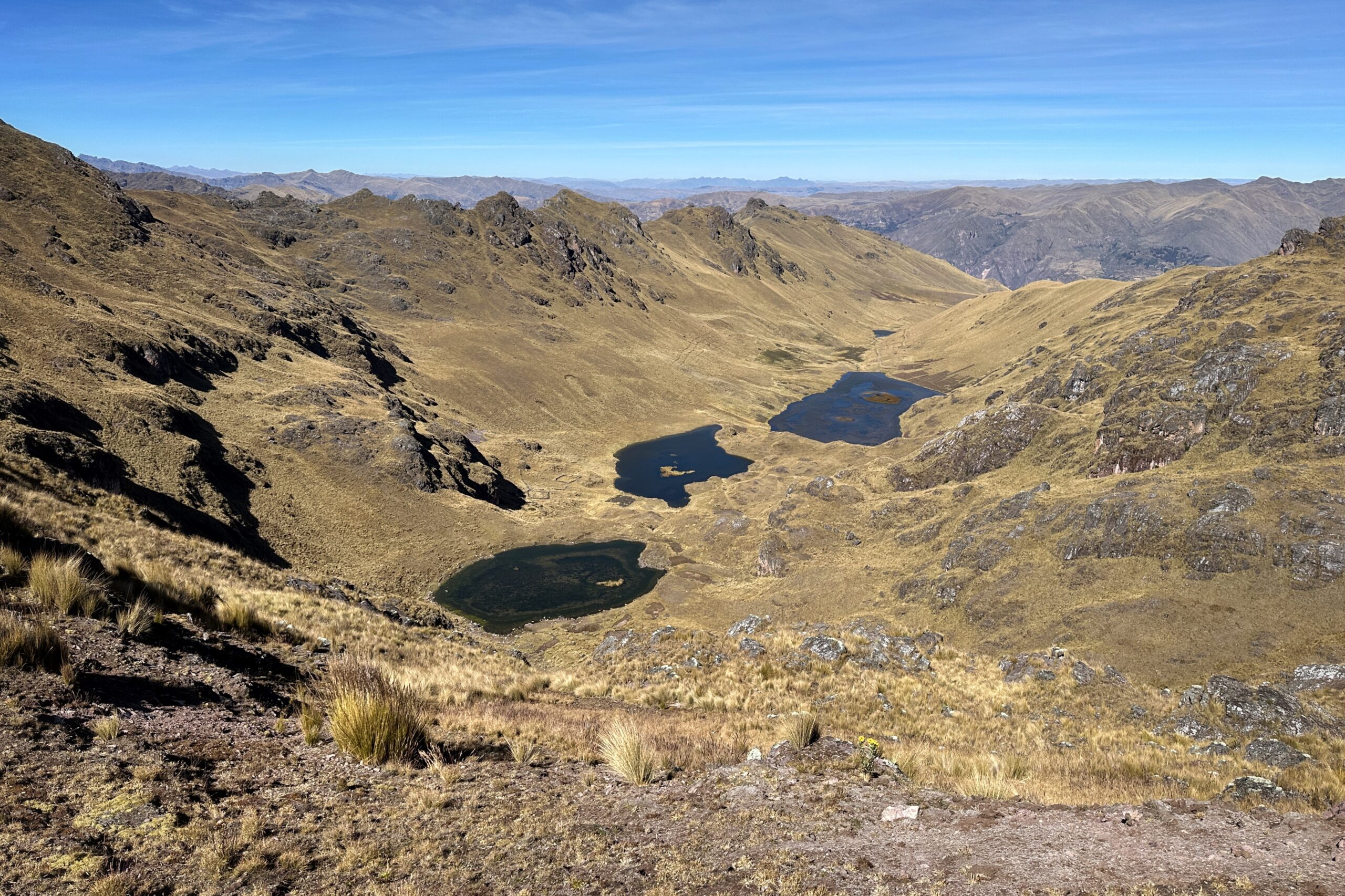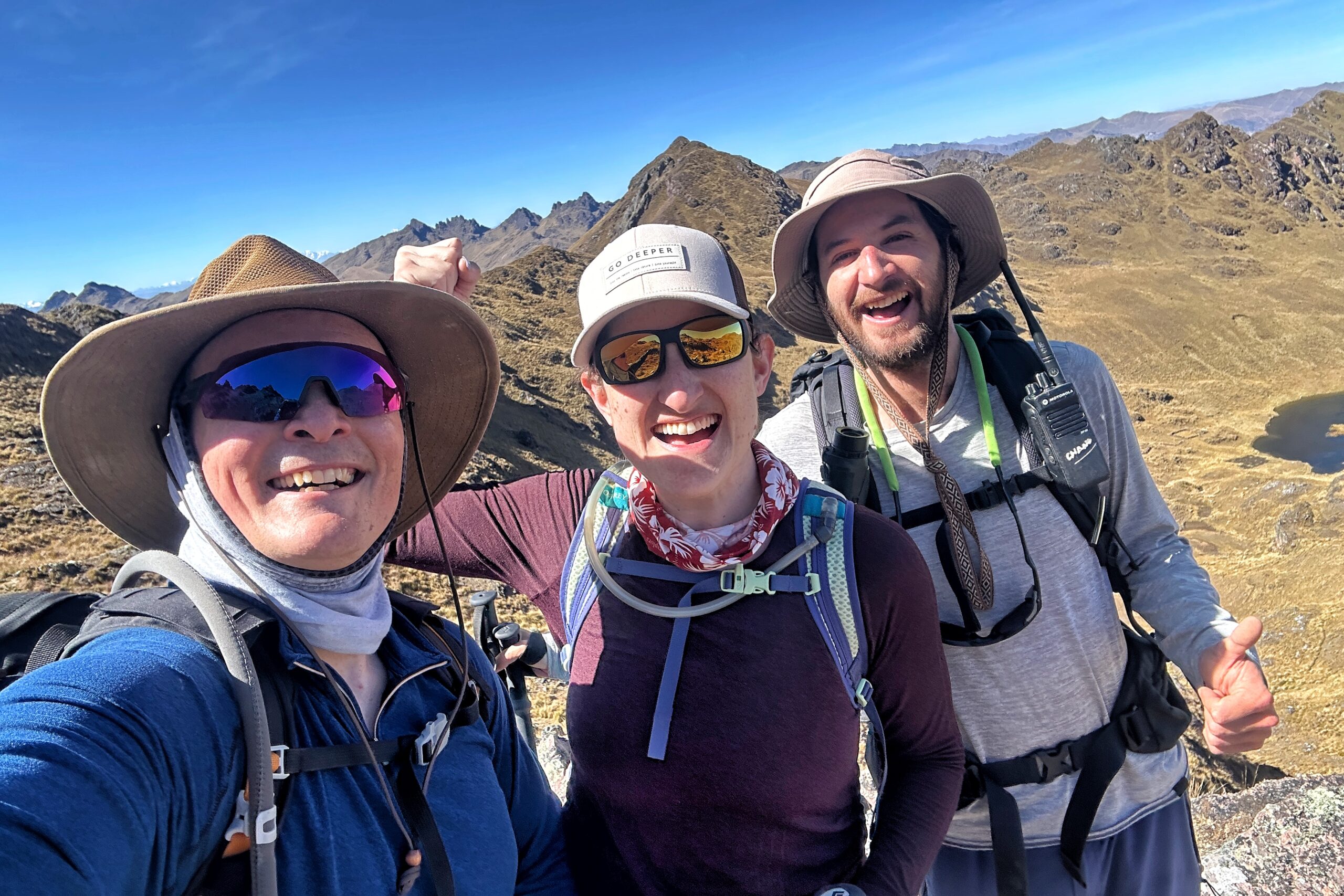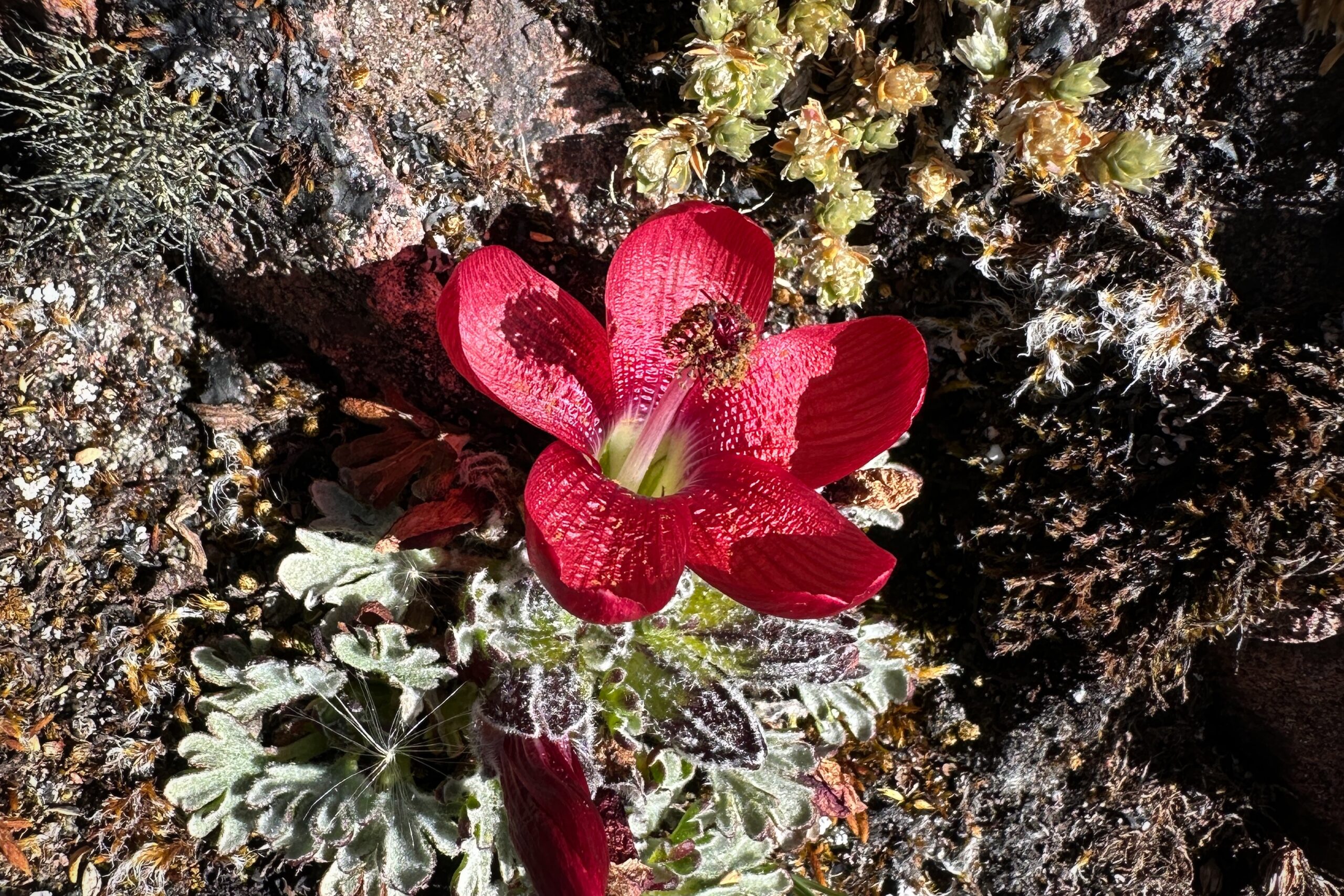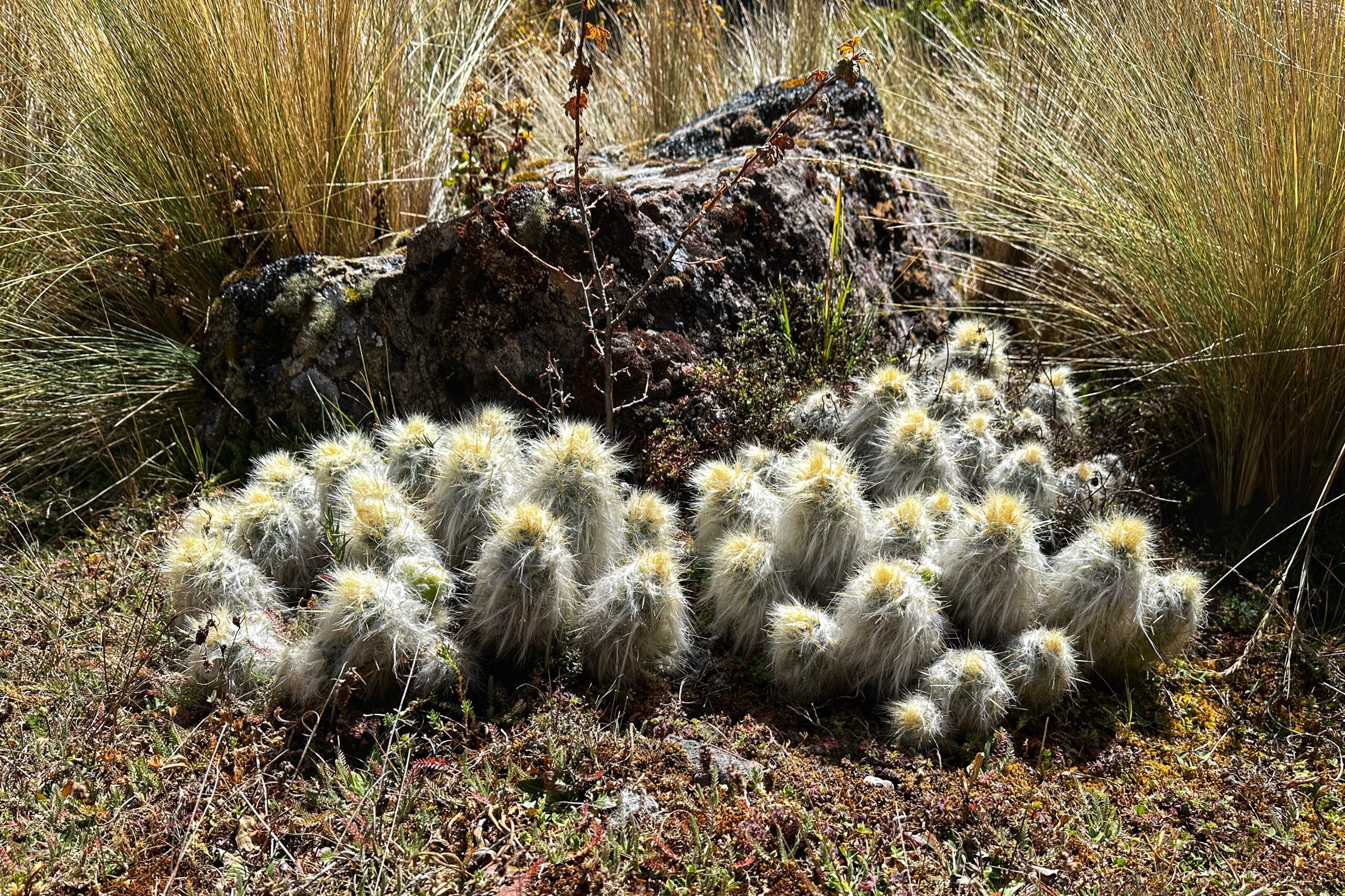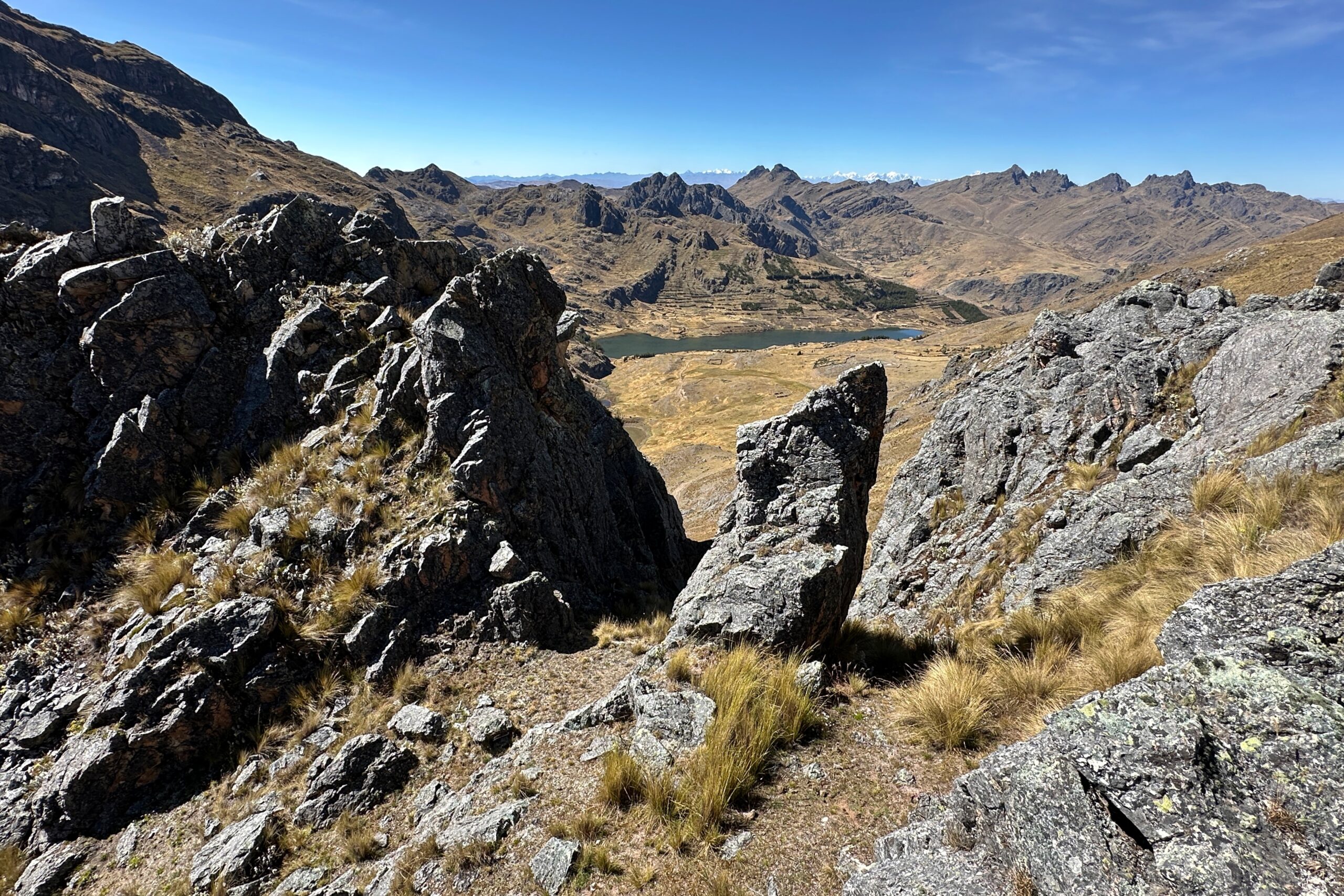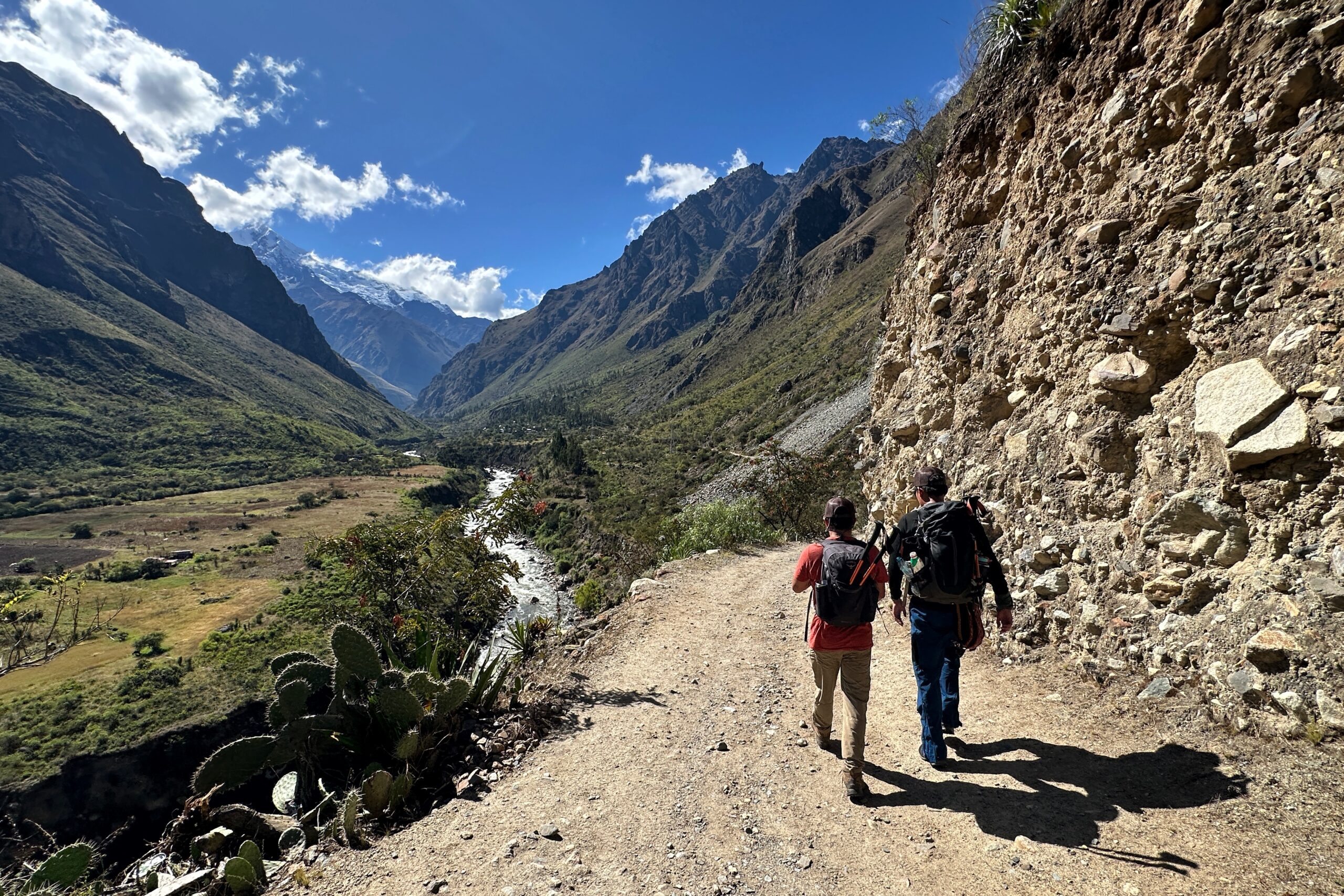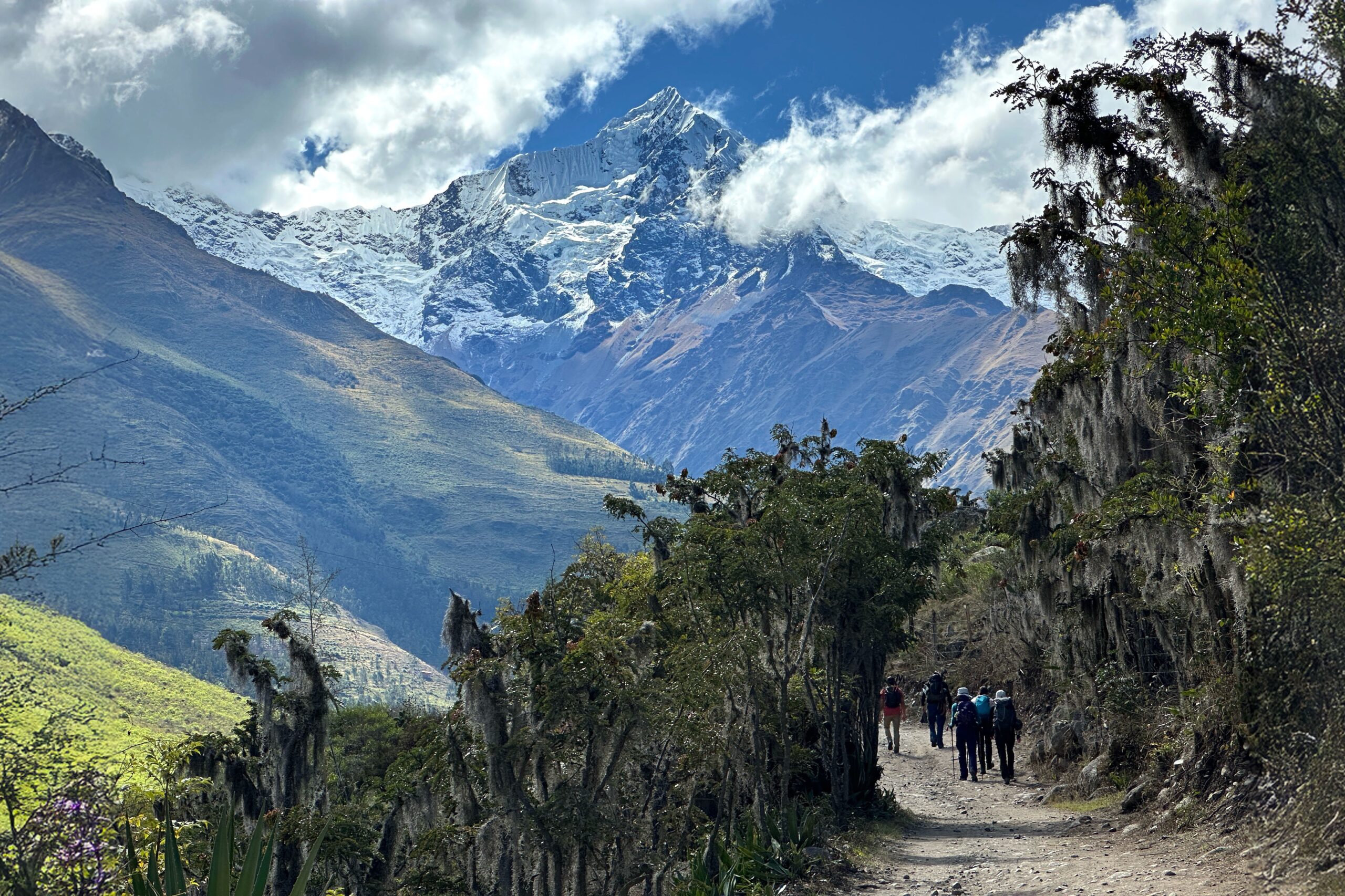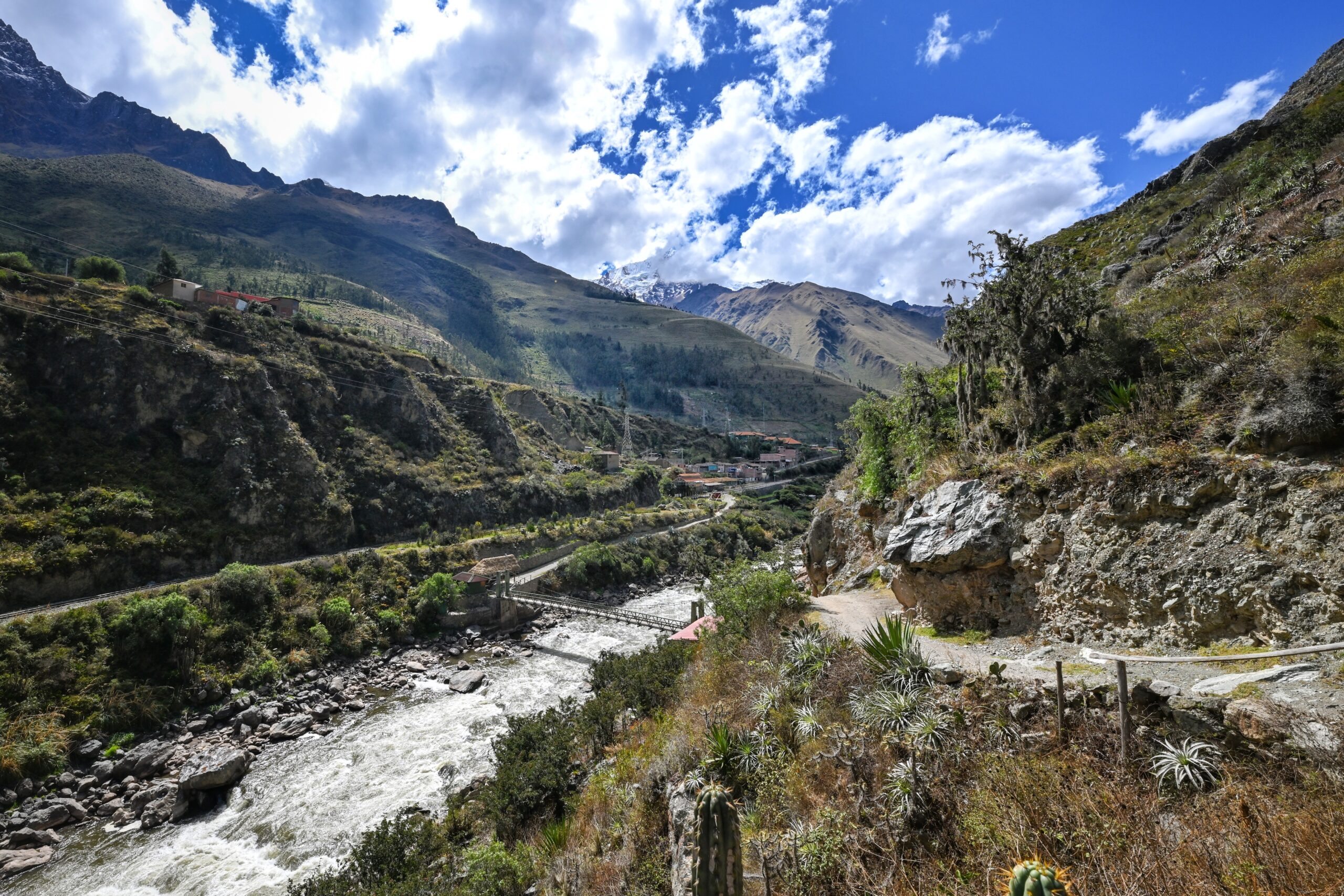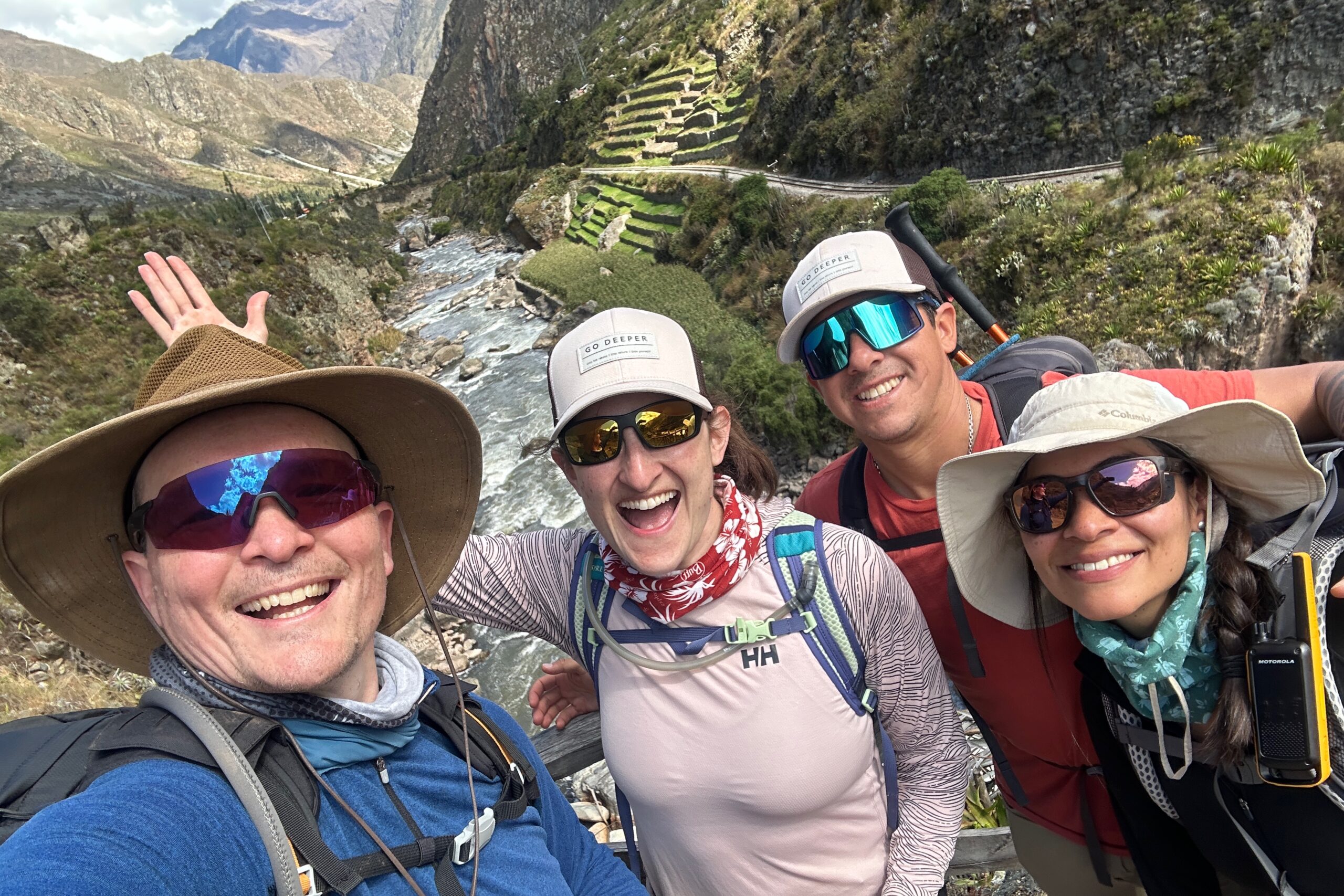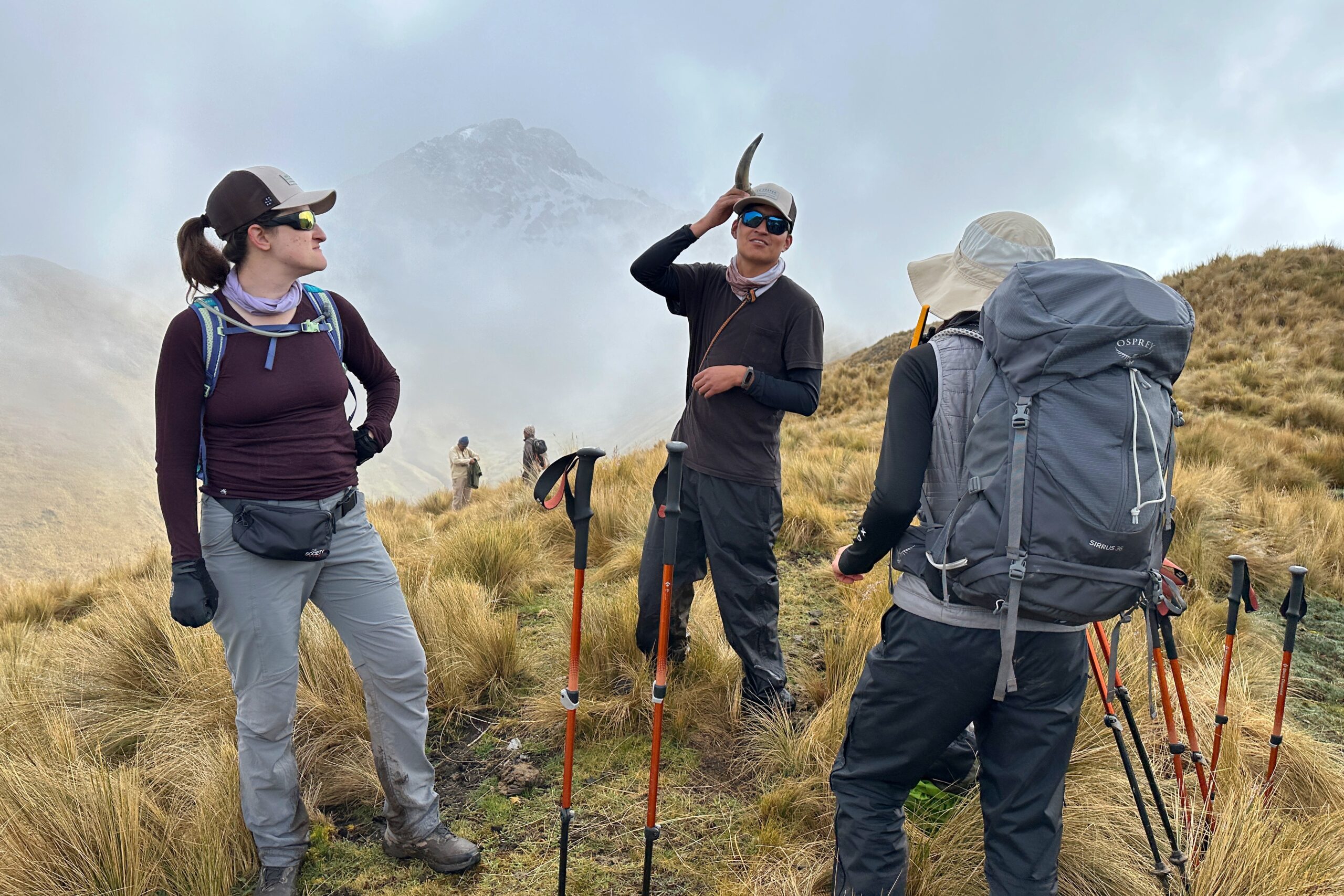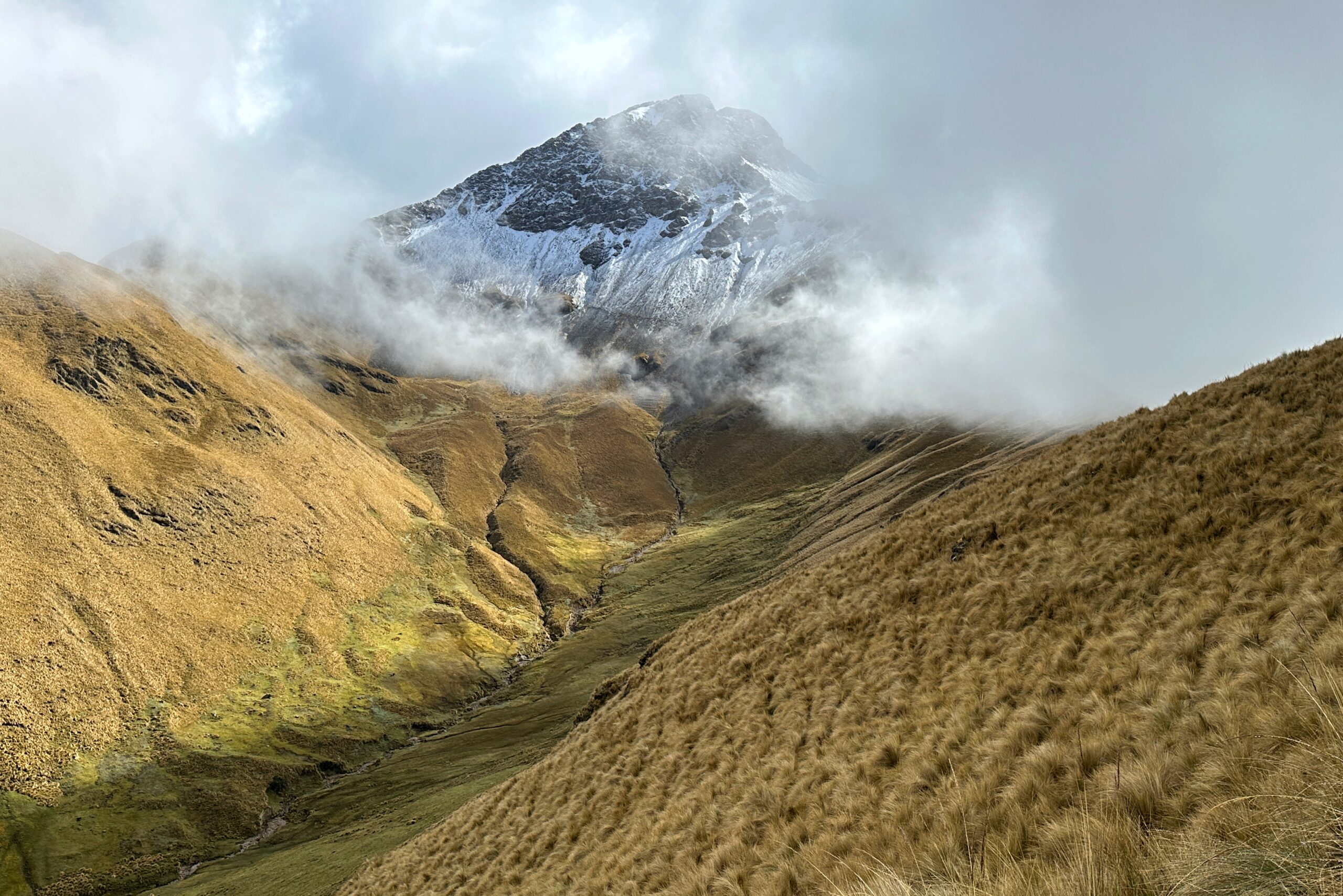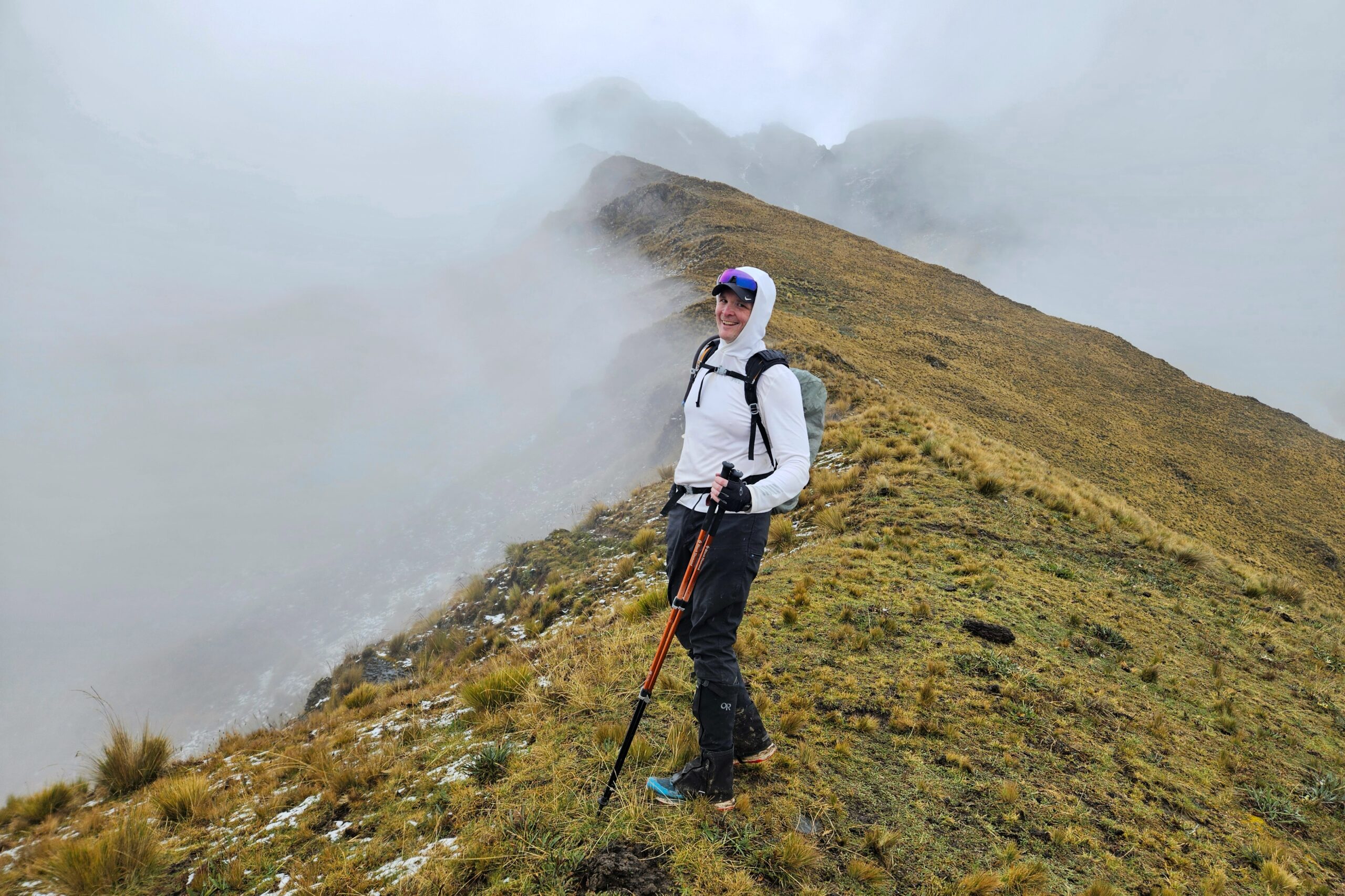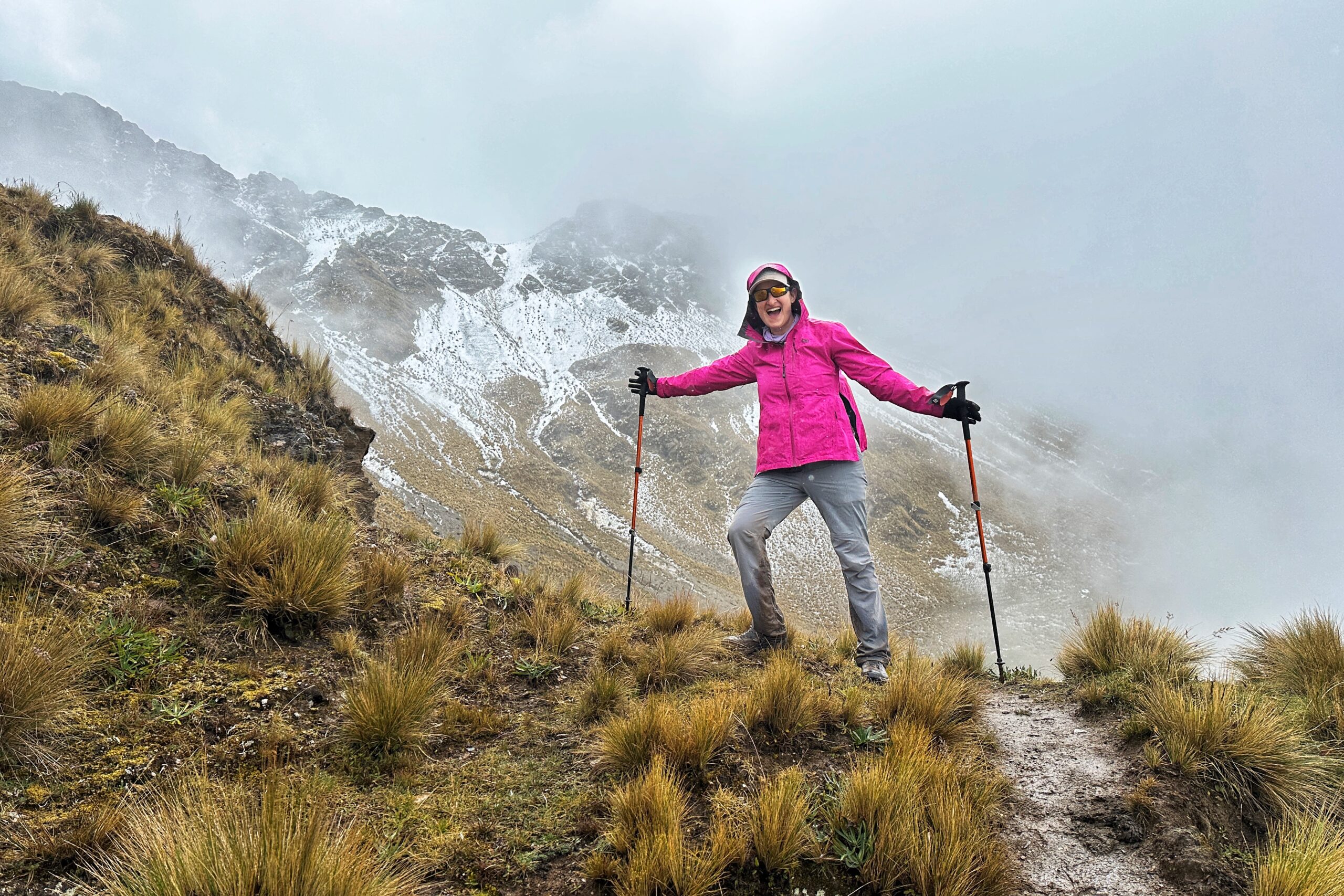
Day 14: Mirador de Achomani

The only item on our agenda today is a horseback ride, with a departure time of 11AM, right from the hotel. So no alarms today! Plenty of time to wake up naturally and bask in the morning sun while drinking espressos and birdwatching. The “peak relaxation” portion of this trip is well underway.
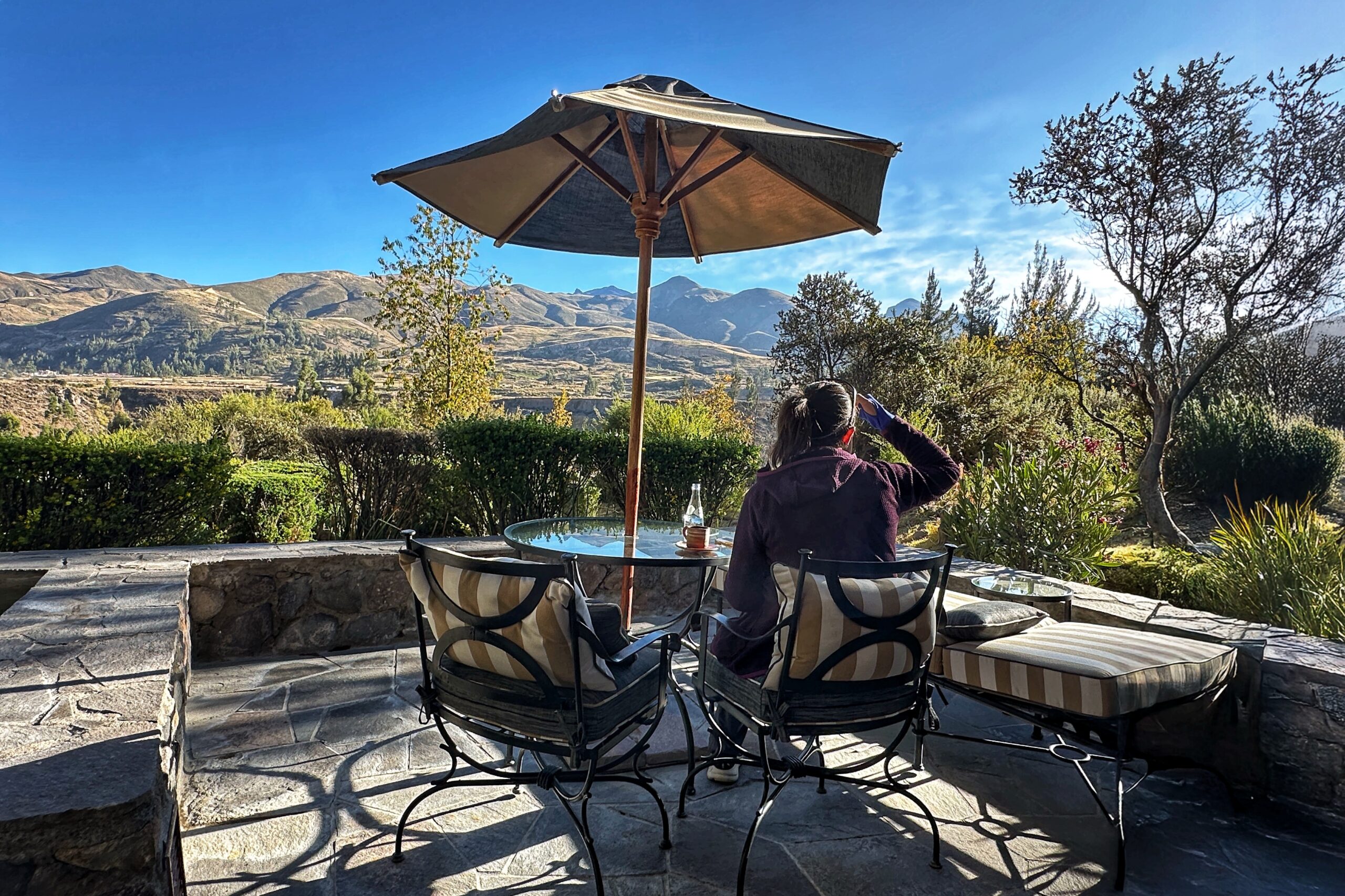
Good morning Colca Canyon

Heading up the walking path to breakfast, we were recruited by a groundskeeper to help feed a couple of the permanent residents — a 45-day old alpaca named Wida and a 4-month old llama named Misky. He handed us their bottles and we delivered. They were very cute and friendly. On the way, we also passed the fish pond, and they obviously needed some breakfast too, so we obliged.

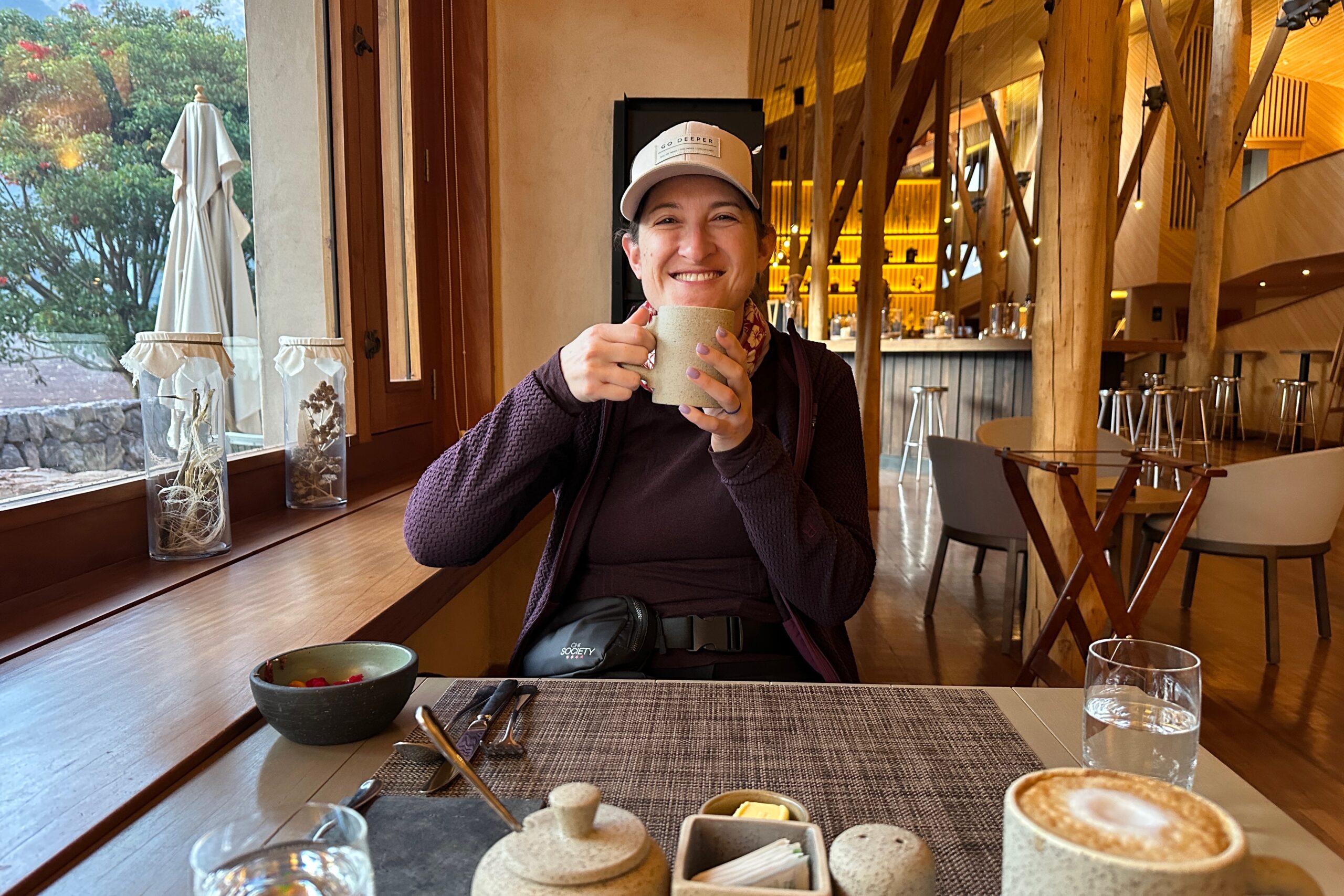
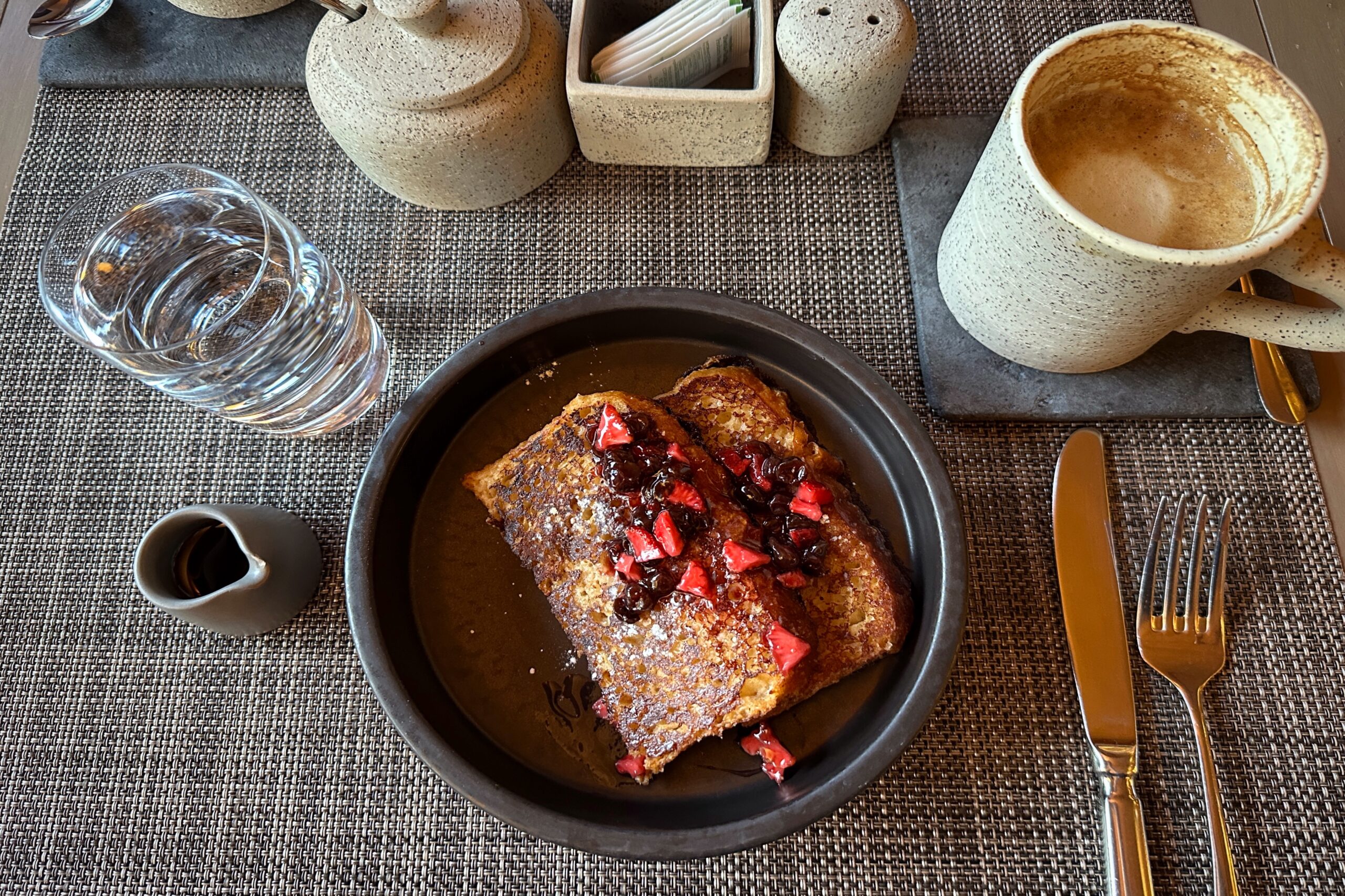
For our breakfast, we enjoyed the typical Belmond buffet options, along with some items from the kitchen menu. We couldn’t resist the eggs benedict topped with a local “spicy sauce” called aji de la casa. It was great — just don’t use too much. We also had a couple smoothie-bowls (veggie and fruit/honey) and an apple cider quinoa porridge, all of which were quite tasty.

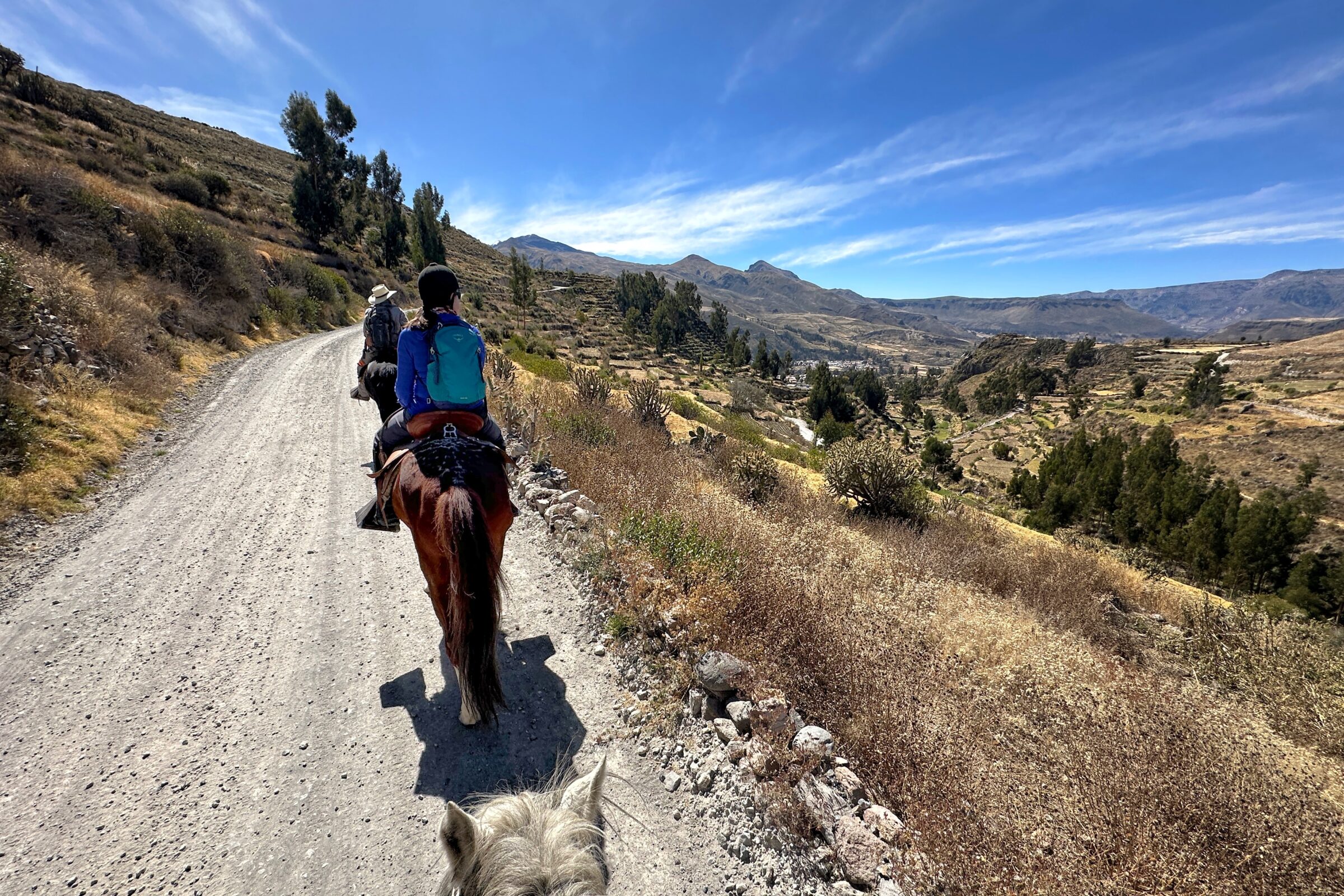
After breakfast, we geared up for our horseback ride. At the front desk, we signed our waivers, got our helmets, and met Pascual, our horse guide. Pascual does not speak much english, so the front desk agents helped with introductions until we were geared up and on our way. Matt was riding Cocoa and Jo was riding Bailarine (aka. Ballerina). Usually, when we sign up for horseback rides, they might give you a short lesson on how to hold the reins, how to control the horse, etc. Maybe even do a few laps. Nah! Not this time. Once we were on the horses, we were off! (Don’t worry, we had it under control)
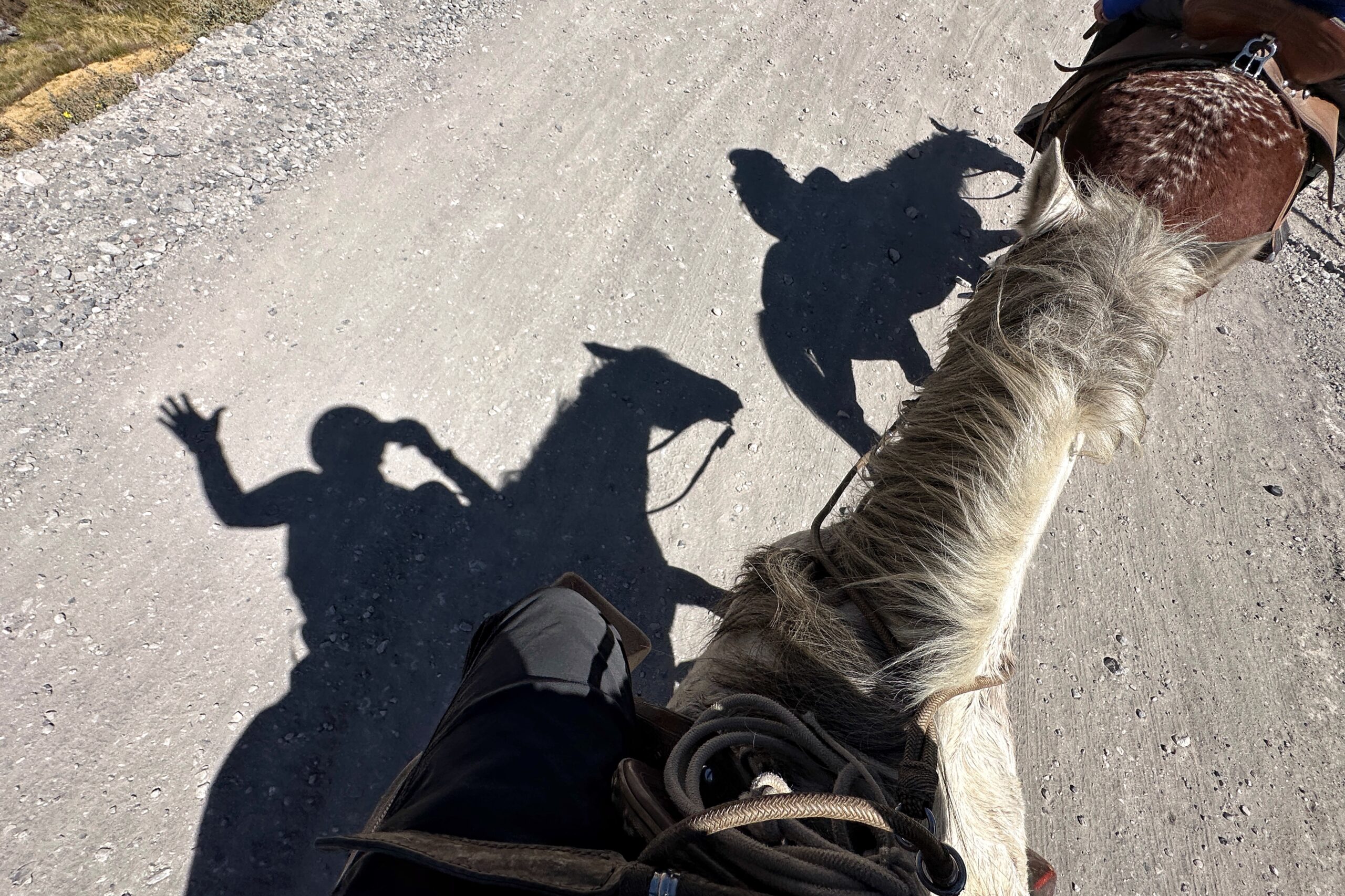
Suns out, Horses out!

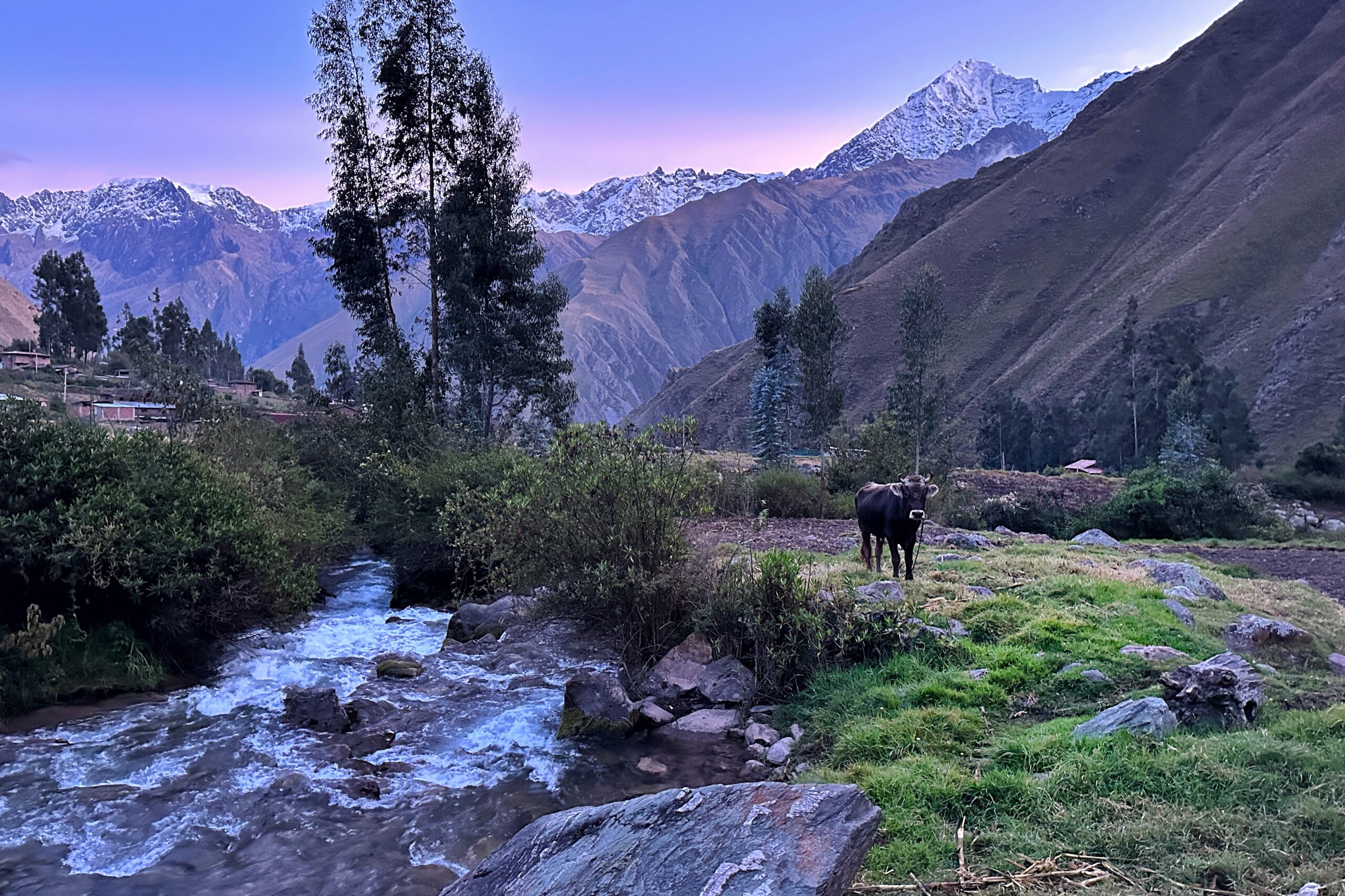
The first portion of the ride was up the Las Casitas “driveway” switchbacks to the main road. We then followed the main road west until coming to a path that meandered through farms with bulls and cows. That led us to a different road entering the small town of Achoma. We passed an elementary school, the university athletic field, and a town square with a few shops. After clearing the town, we continued up another set of switchbacks to the Achomani lookout.
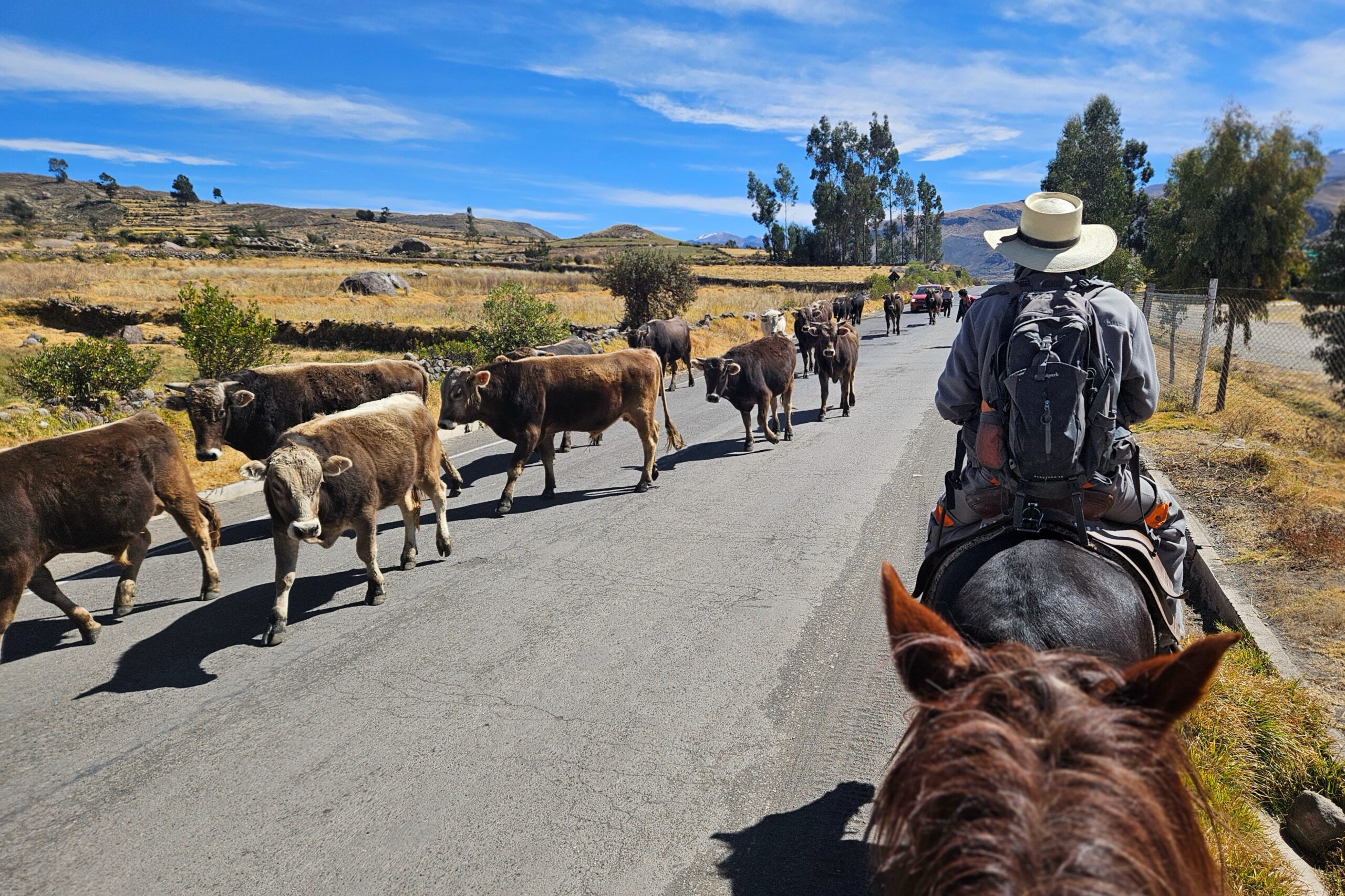
Achoma traffic jam

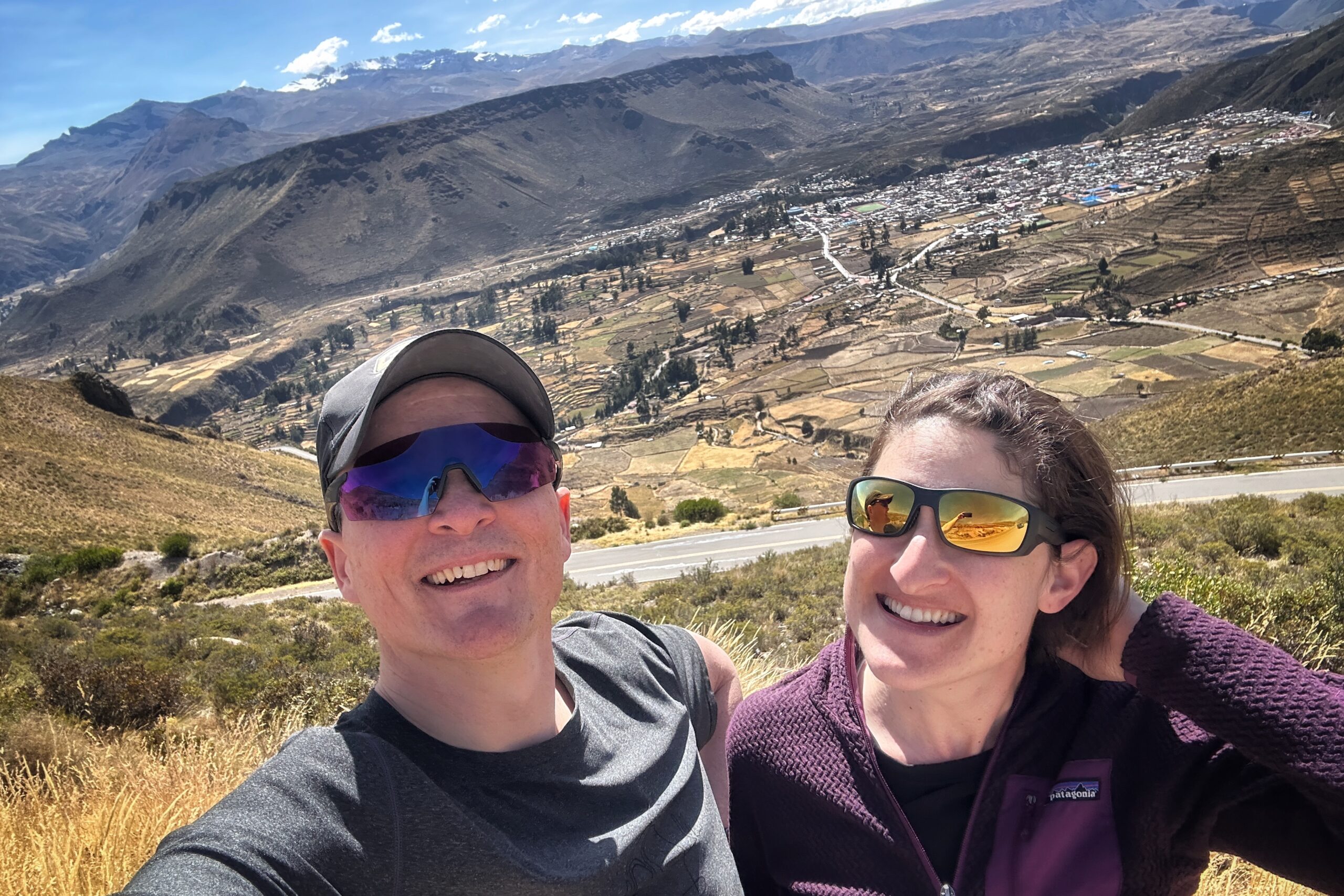
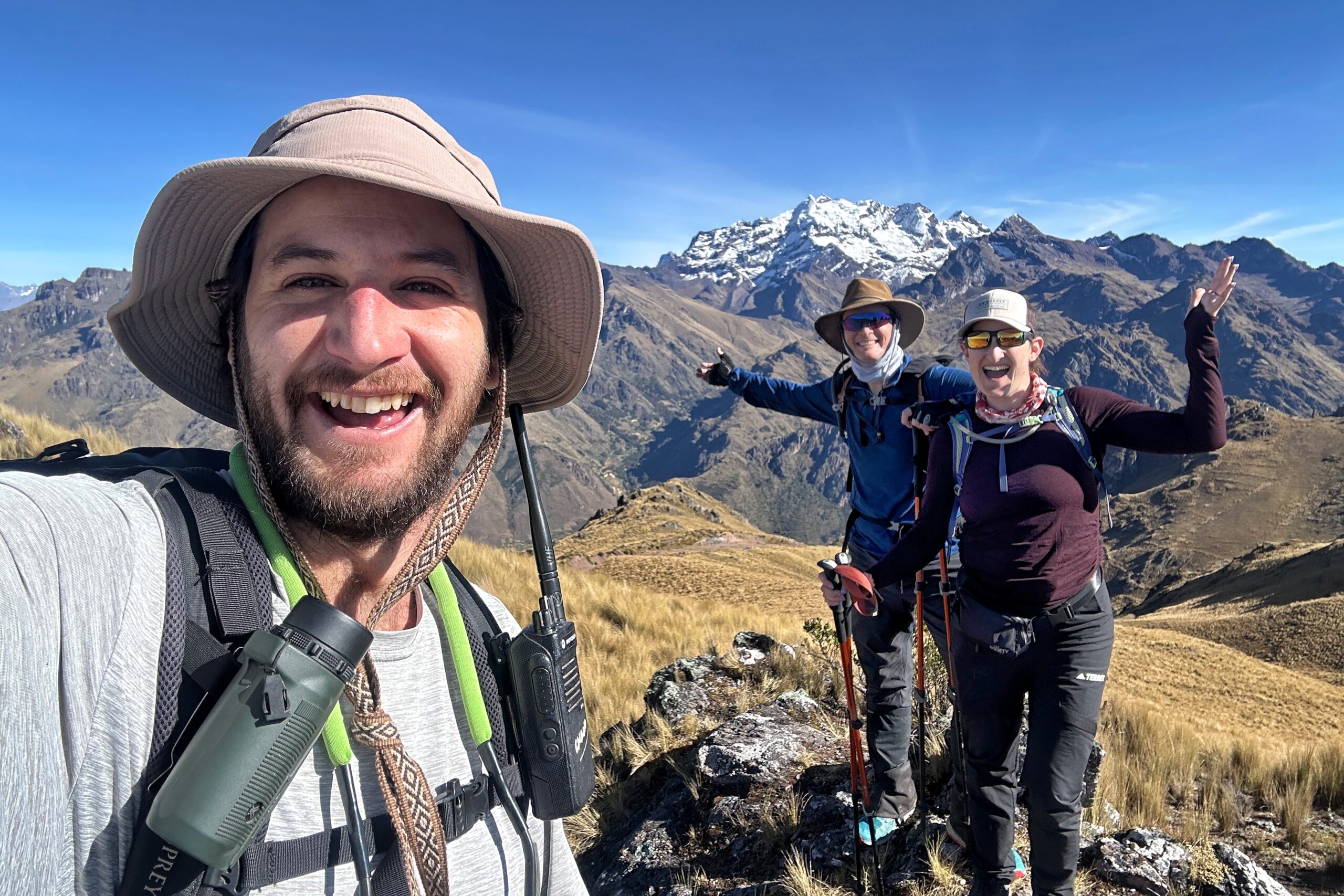
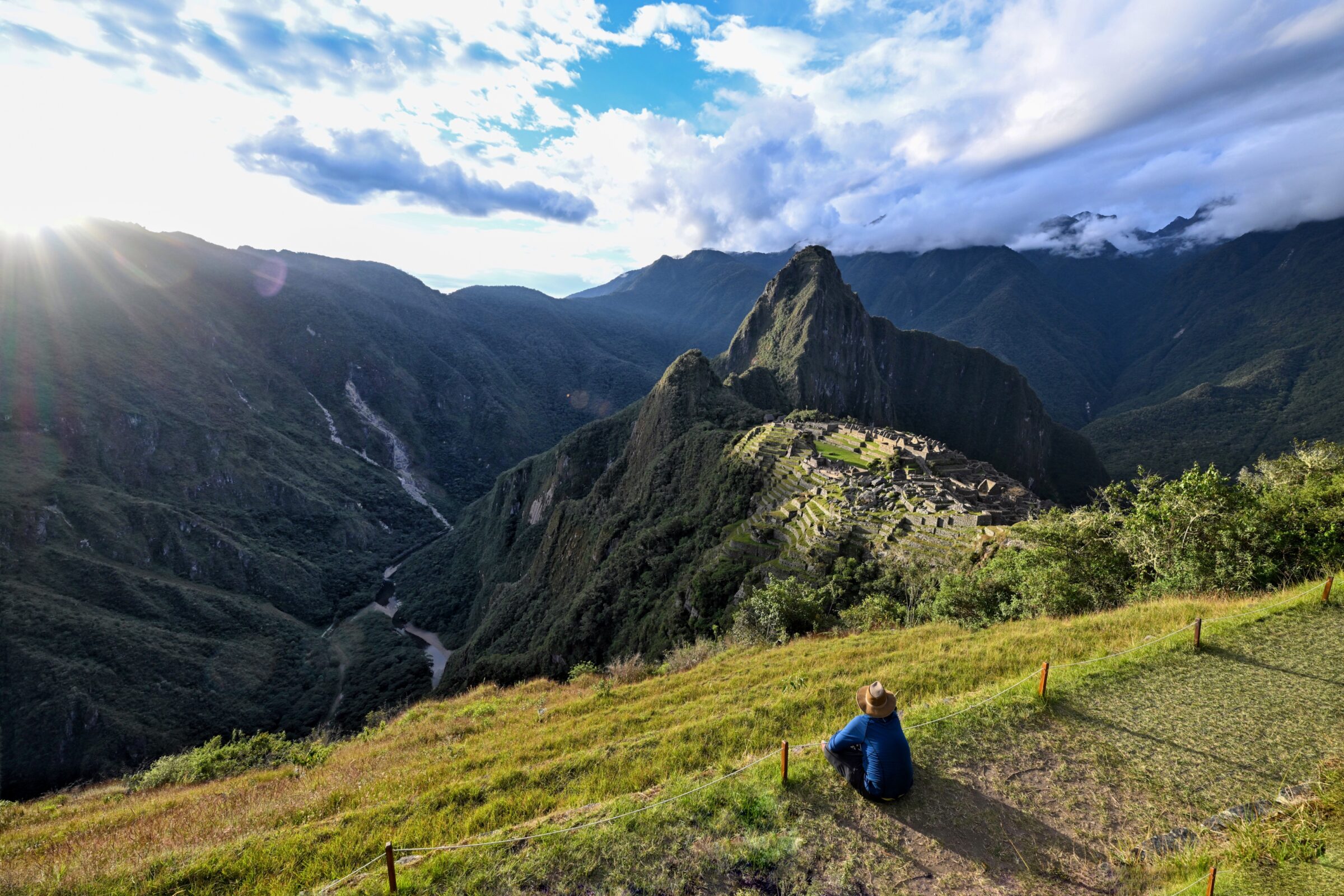
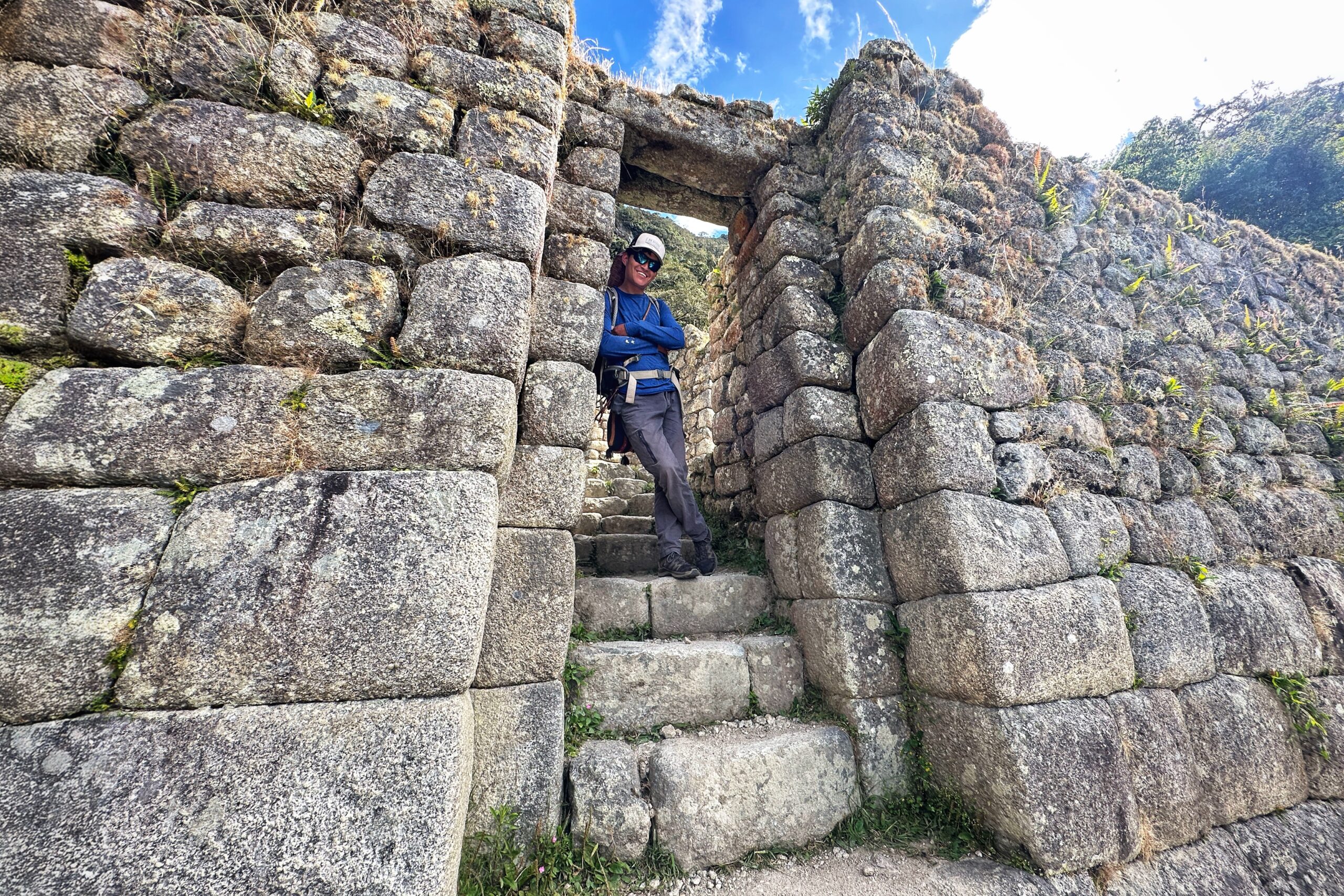
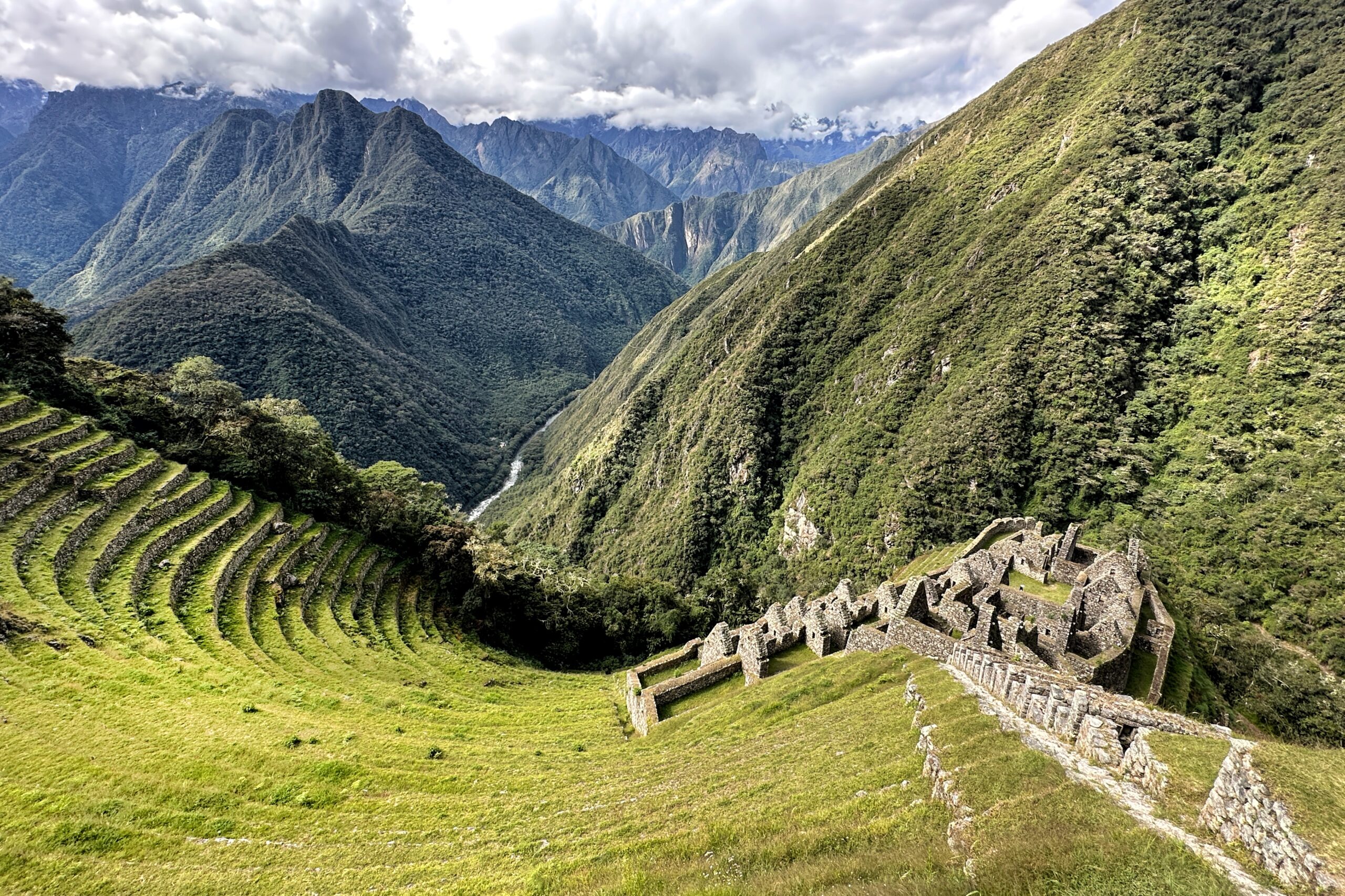
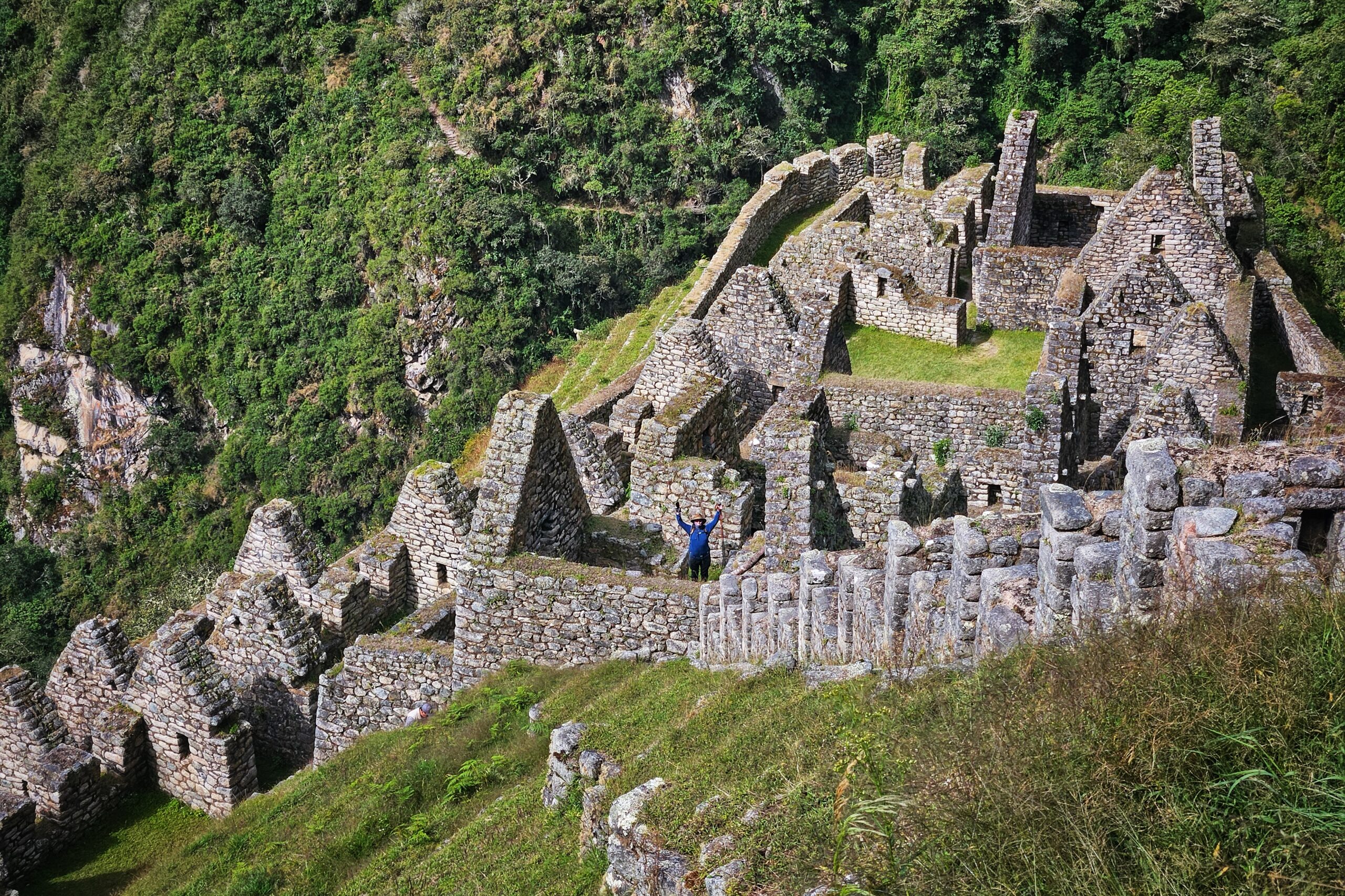
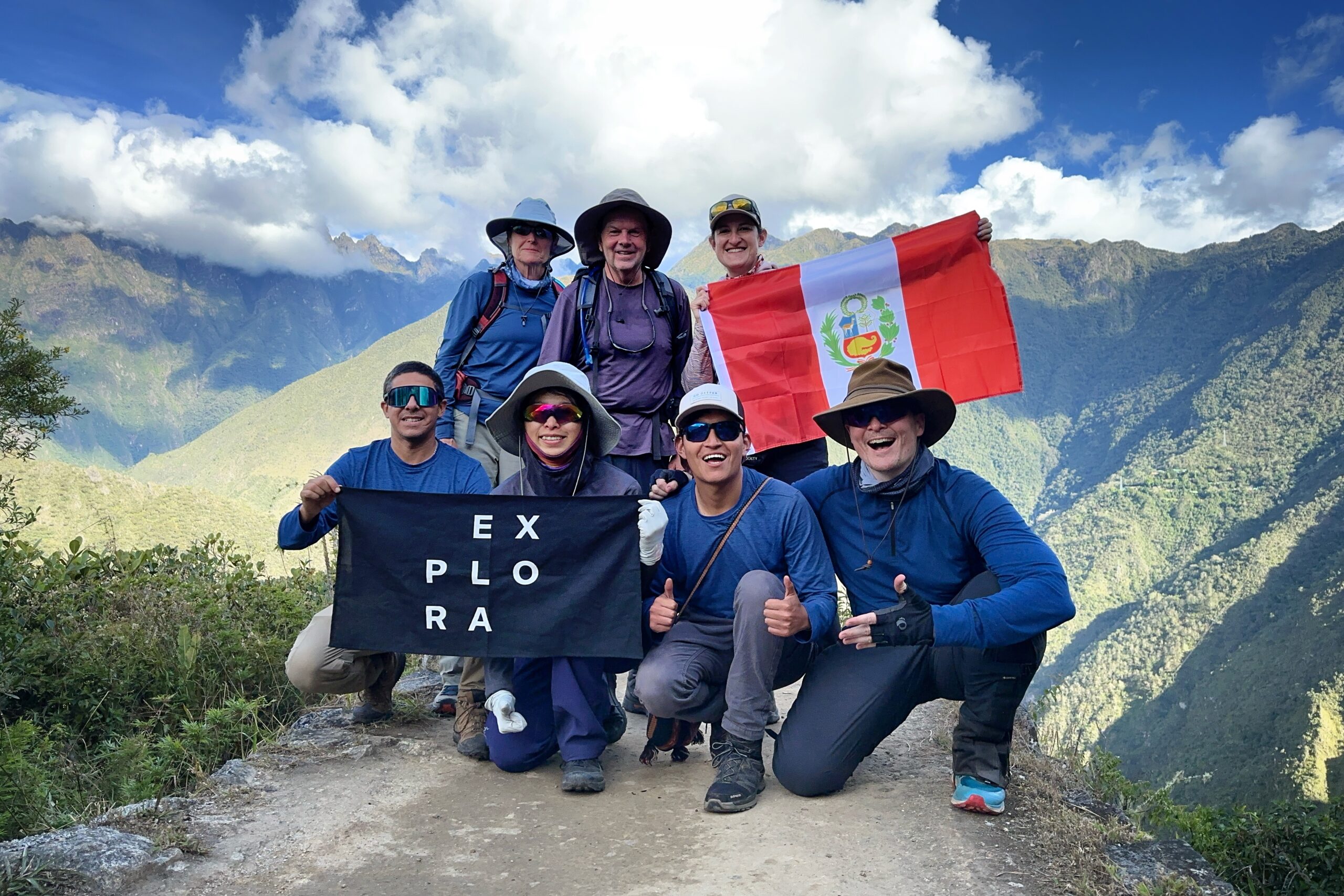
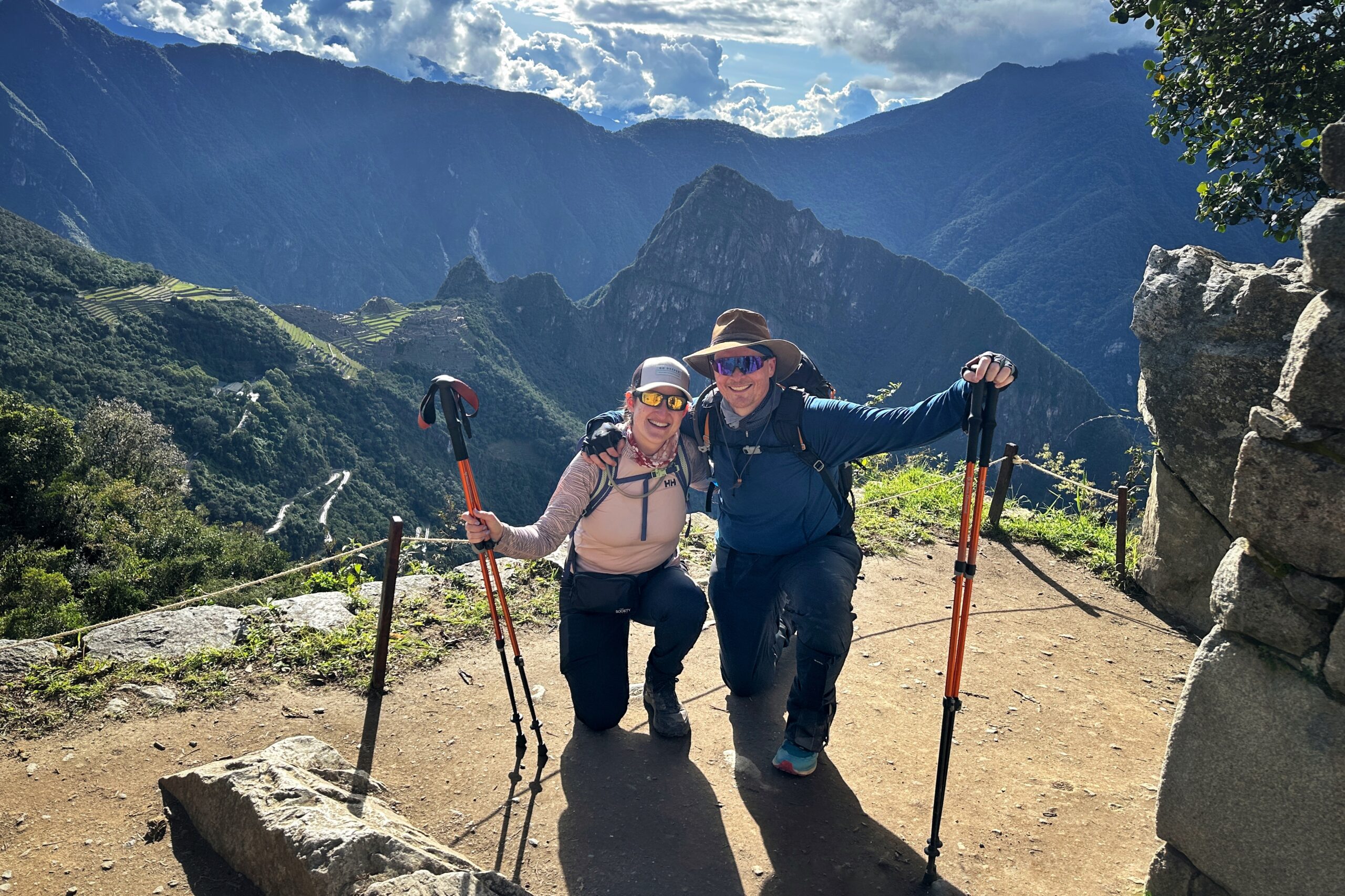
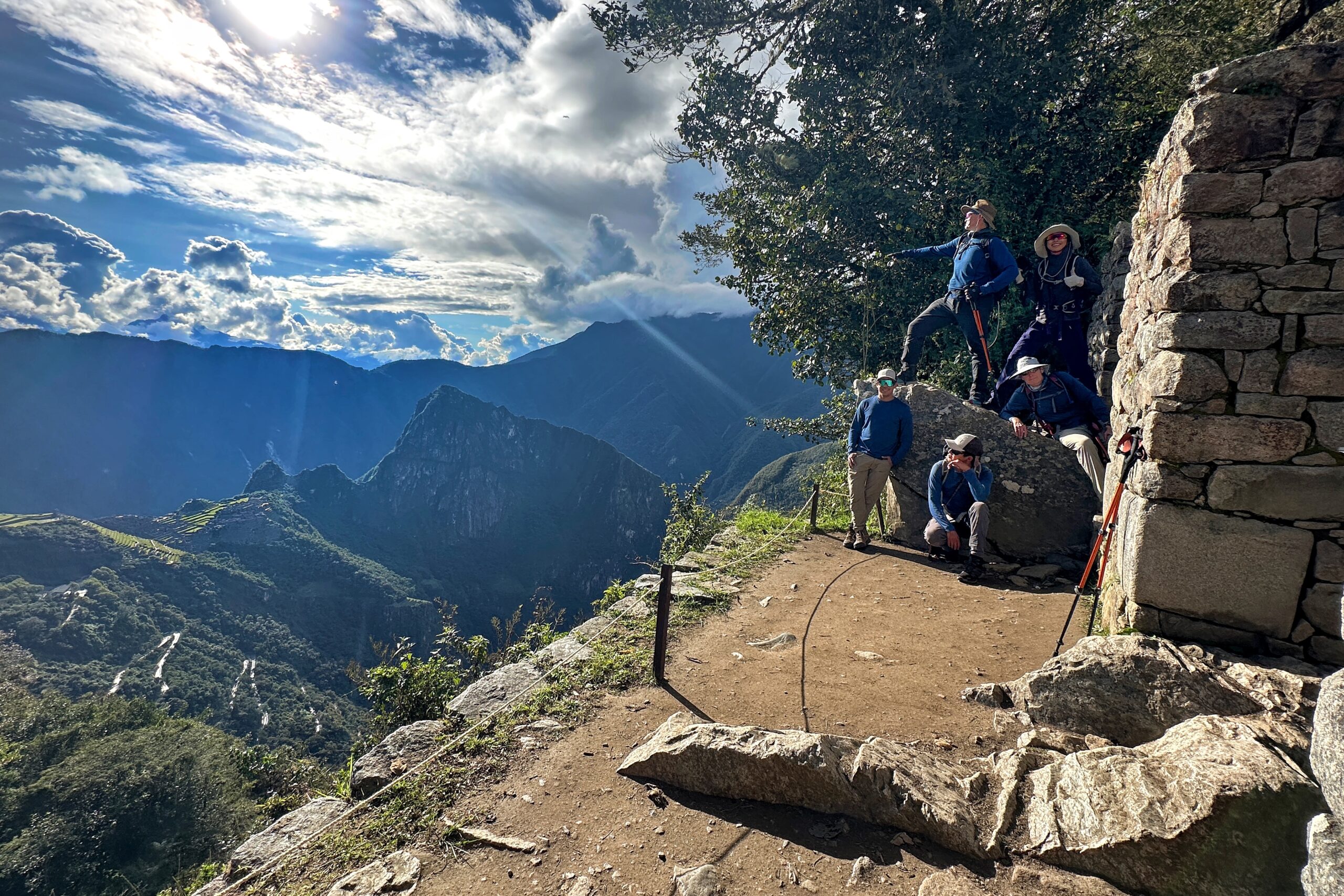
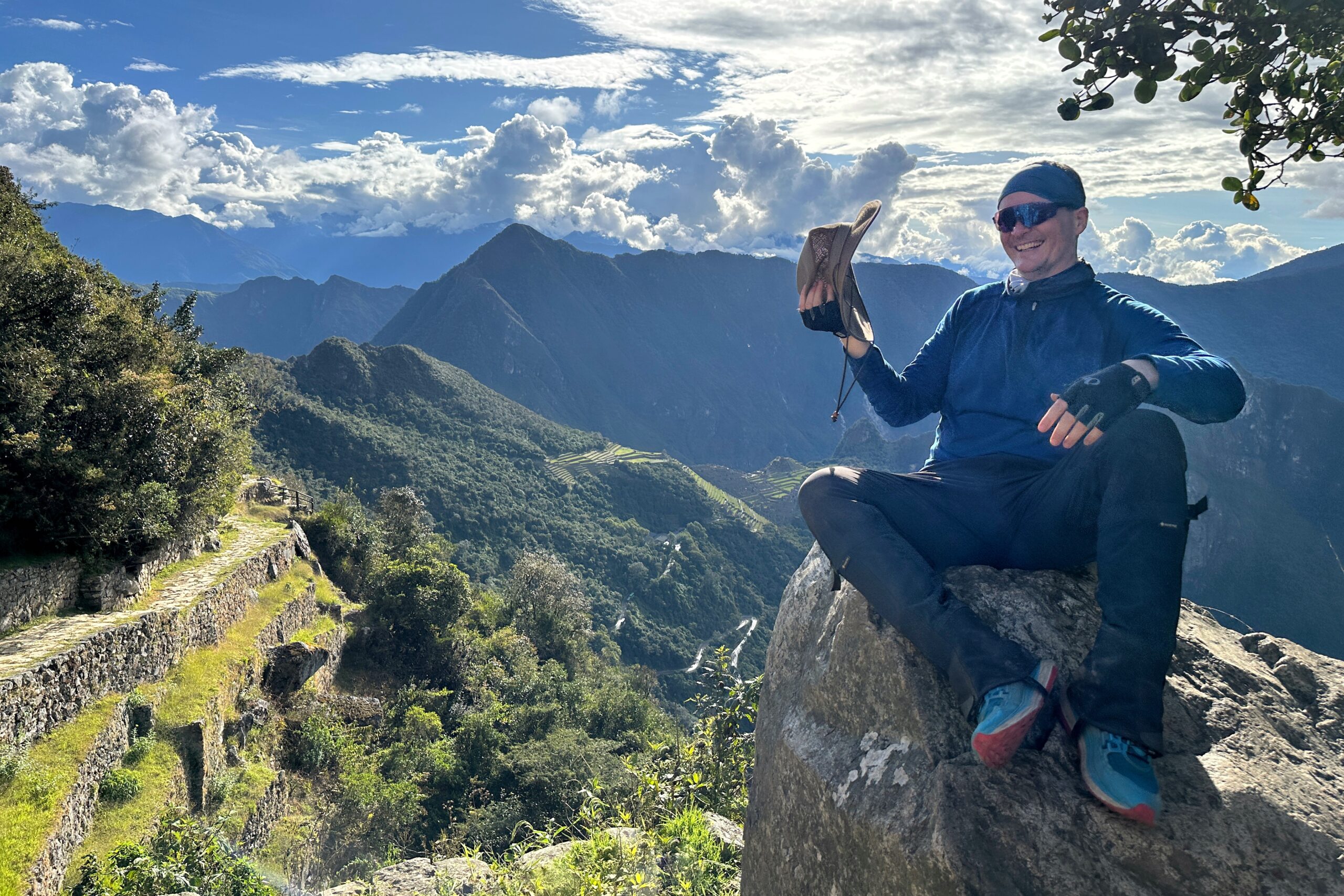
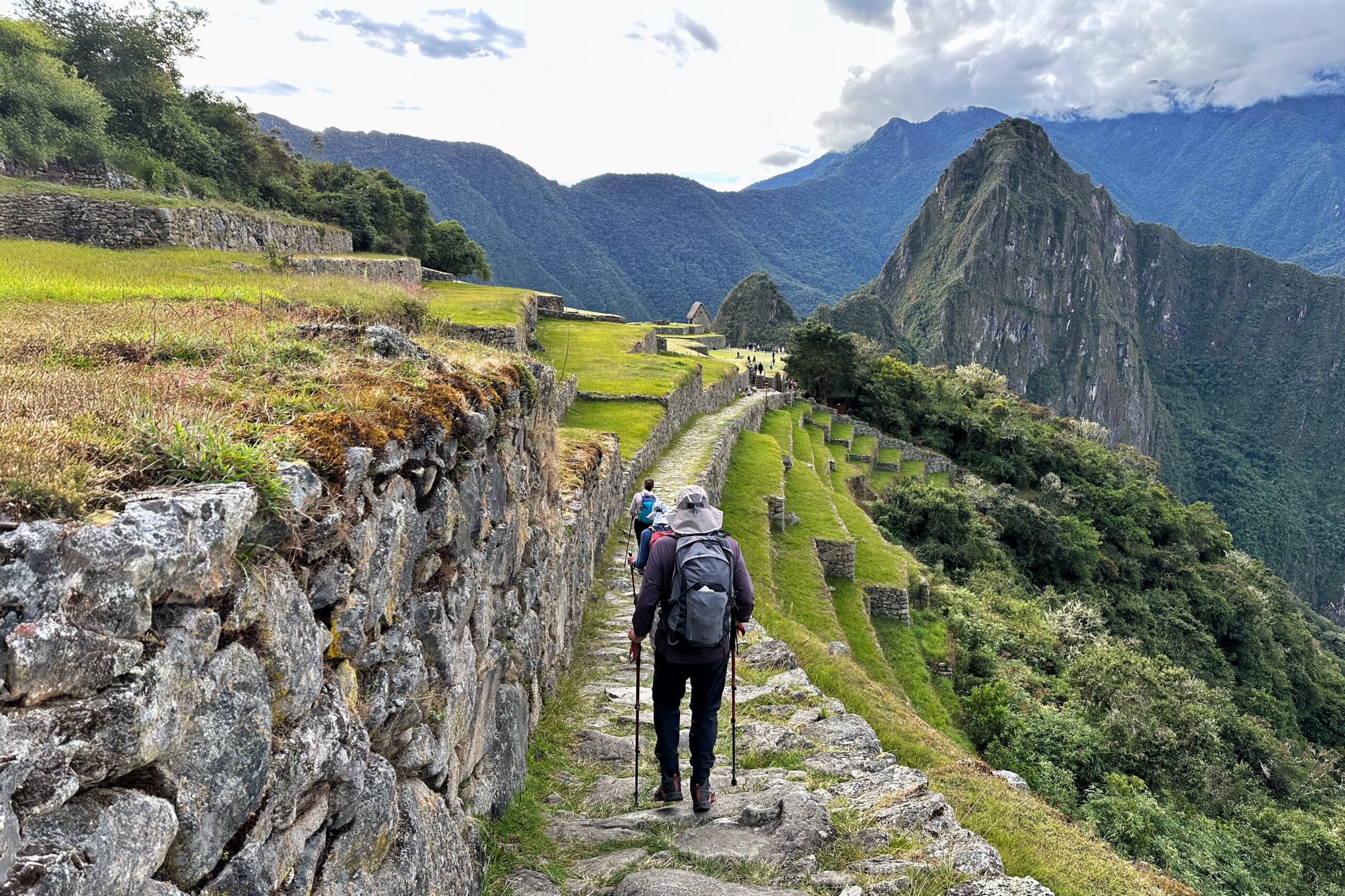
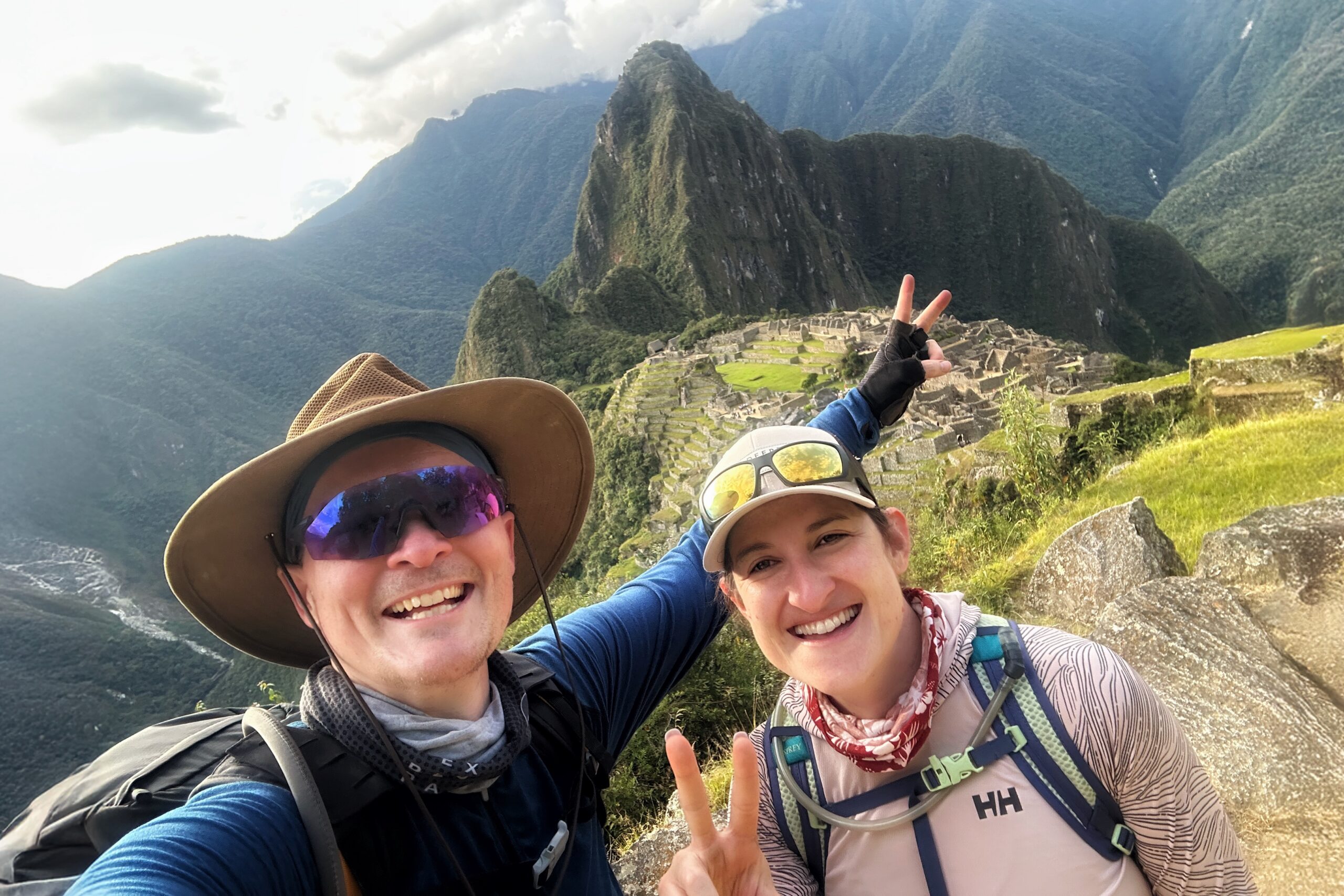
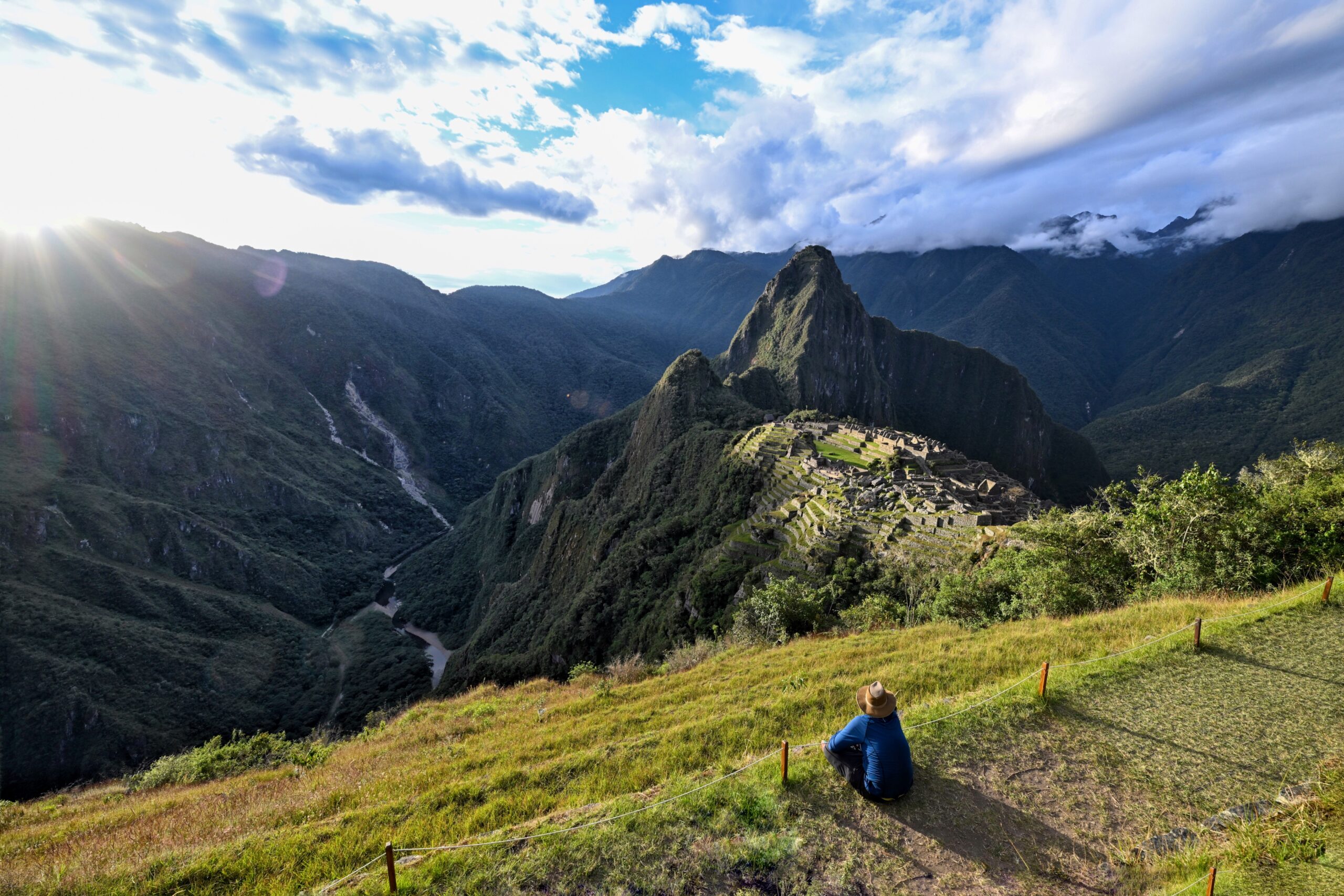
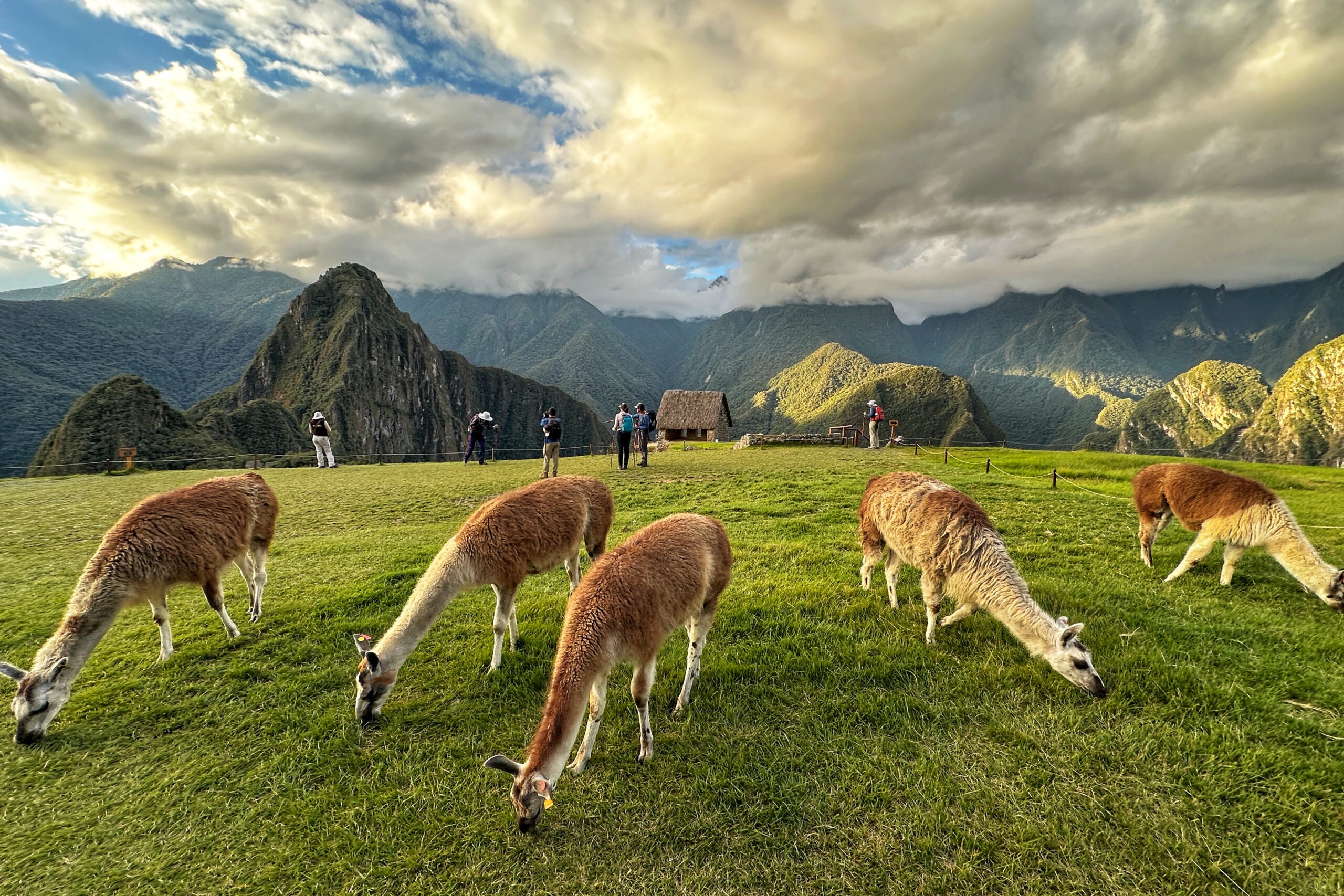
When we arrived, Pascual parked the horses and we walked up to the top of Mirador de Achomami, an Incan archaeological site that probably saw both residential and military usage back in the day. It’s currently in the process of being restored/studied, so there were several very chill archeologists milling about with digging and science equipment.
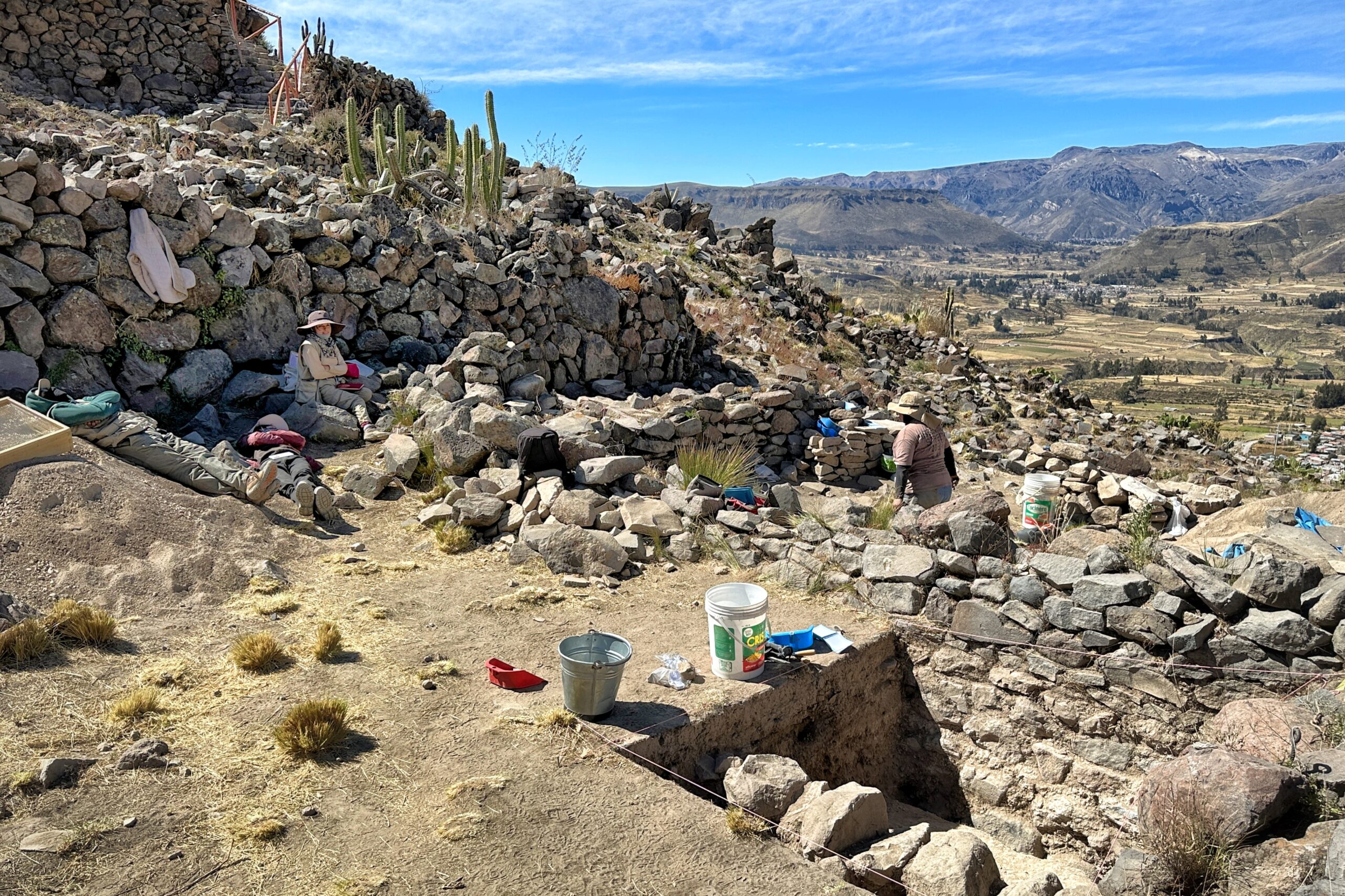
Archeology in action
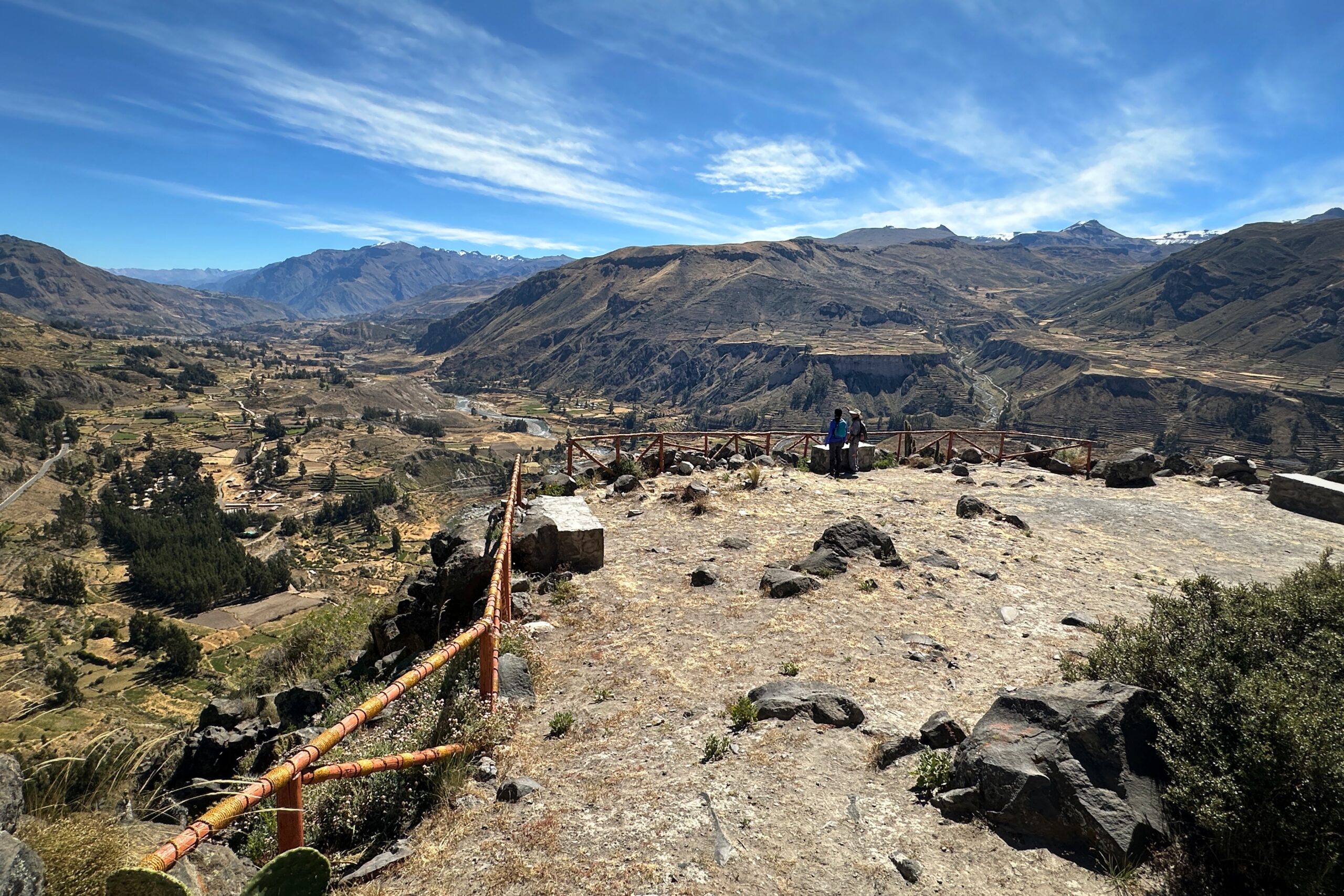
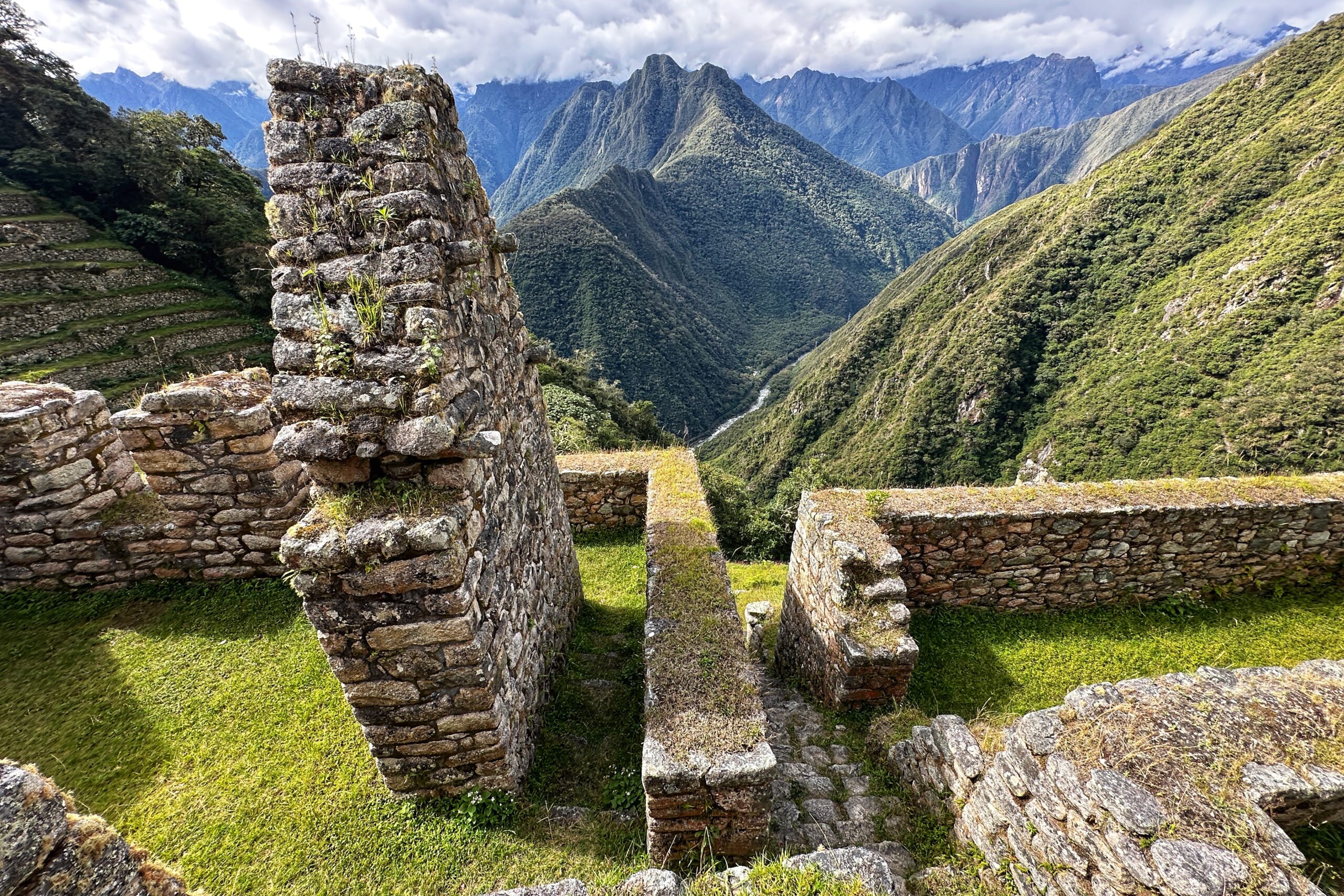
Mirador de Achomani
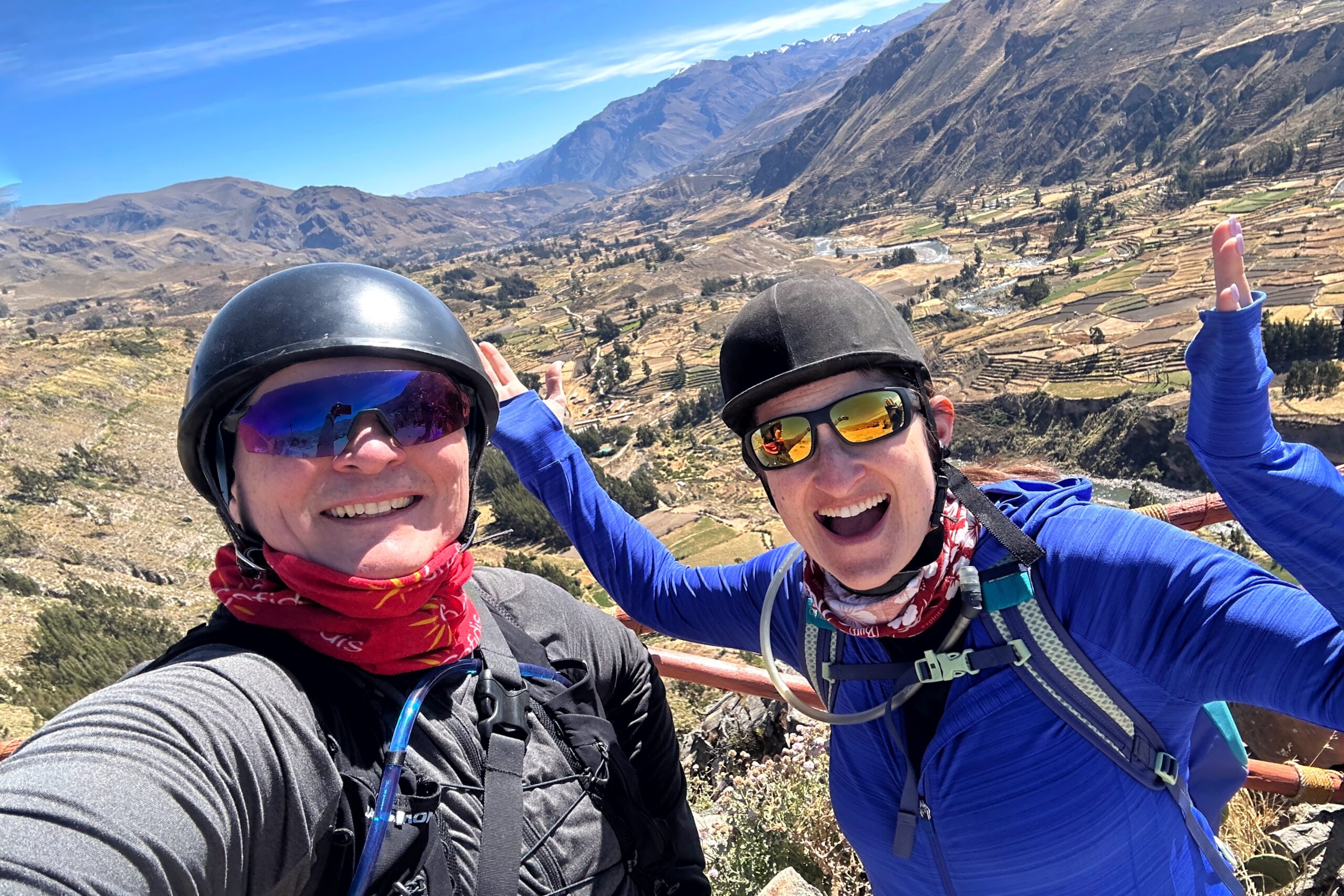
Colca Canyon to west of Achoma

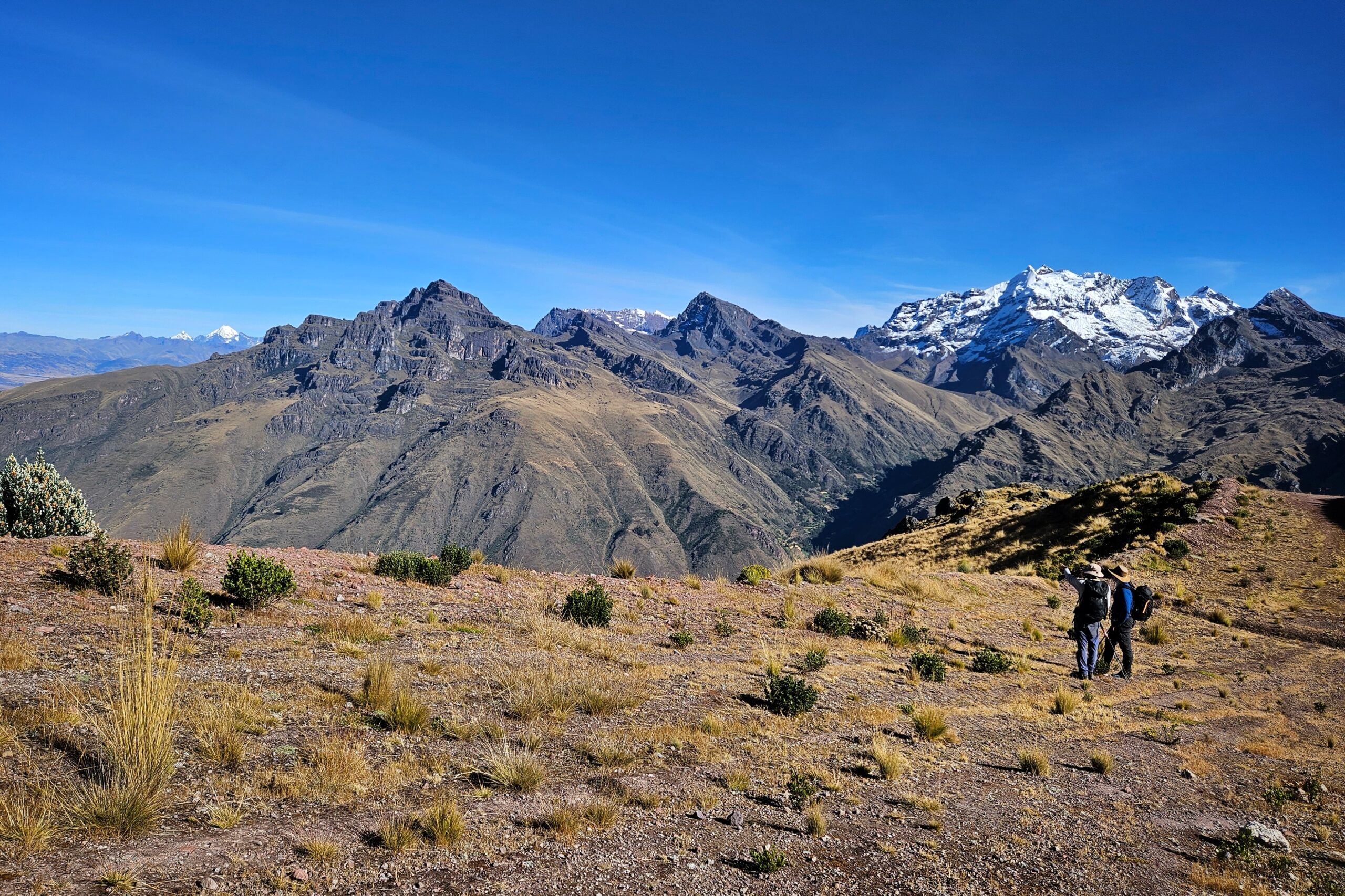
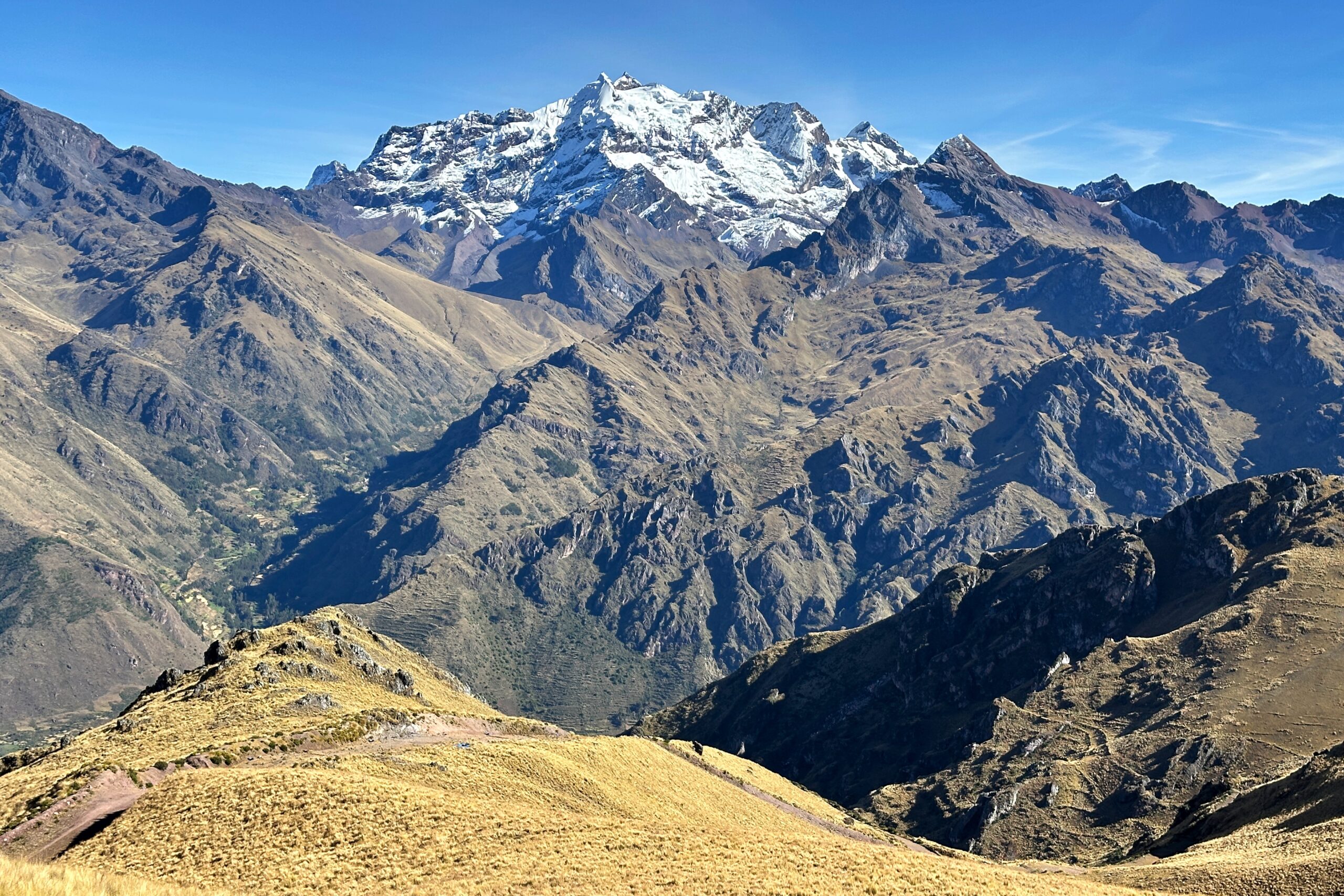
From this viewpoint, you can see up (east) and down (west) the Colca Canyon. To the east (from most distant to closest), we could see Chivay (the “entrance city” to the canyon, where we stopped yesterday), then Yanque (still partying for Inti Raymi until 2:30AM), then Las Casitas (our hotel, not a village), then Ichupampa, and finally Achoma right below us.
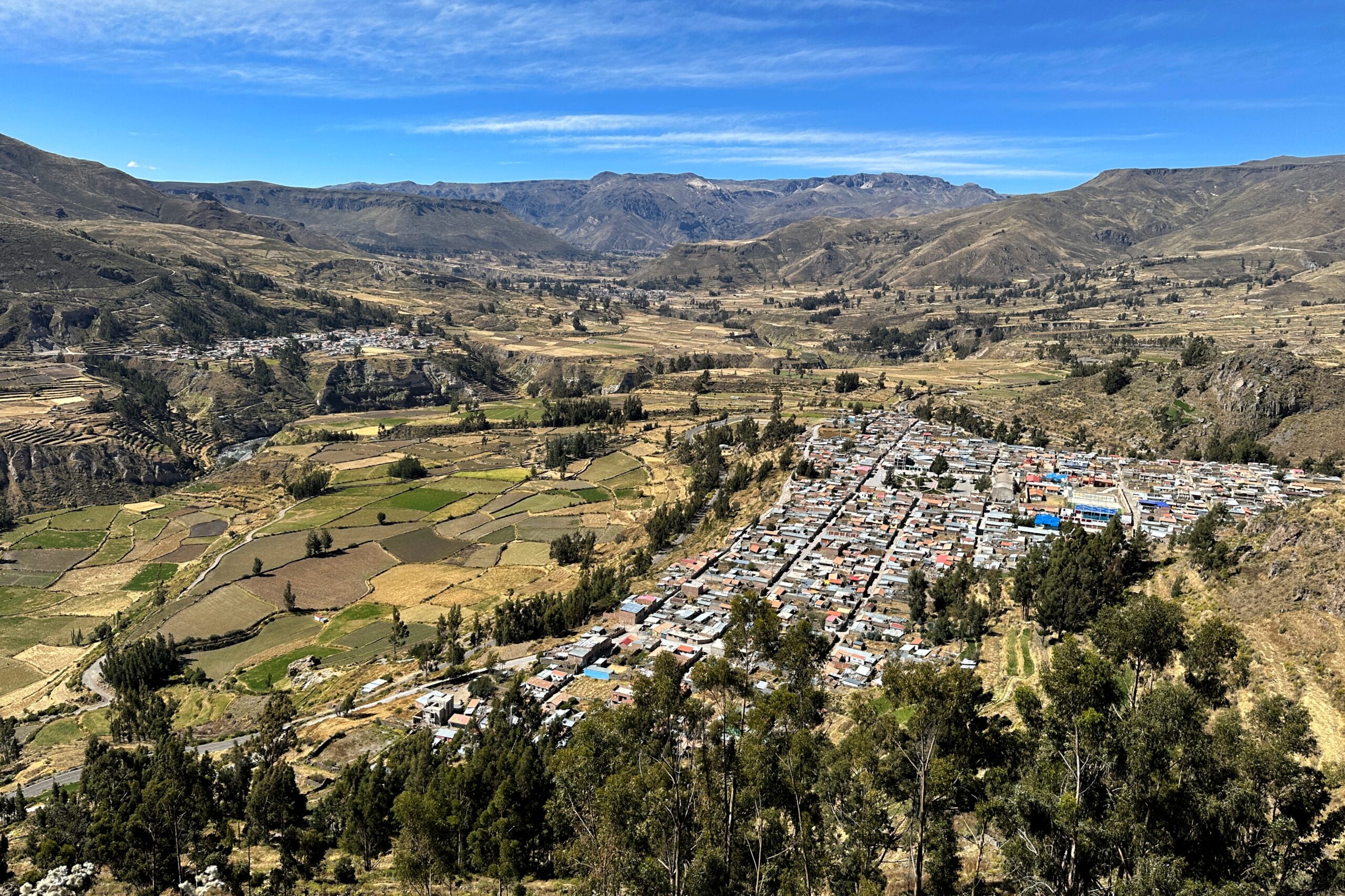
Looking east

To the west, we could see the town of Maca, followed by more distant villages of Lari, Madrigal, and Pinchollo. (Although at some point, the “villages” get difficult to differentiate from the terraced farmland.)
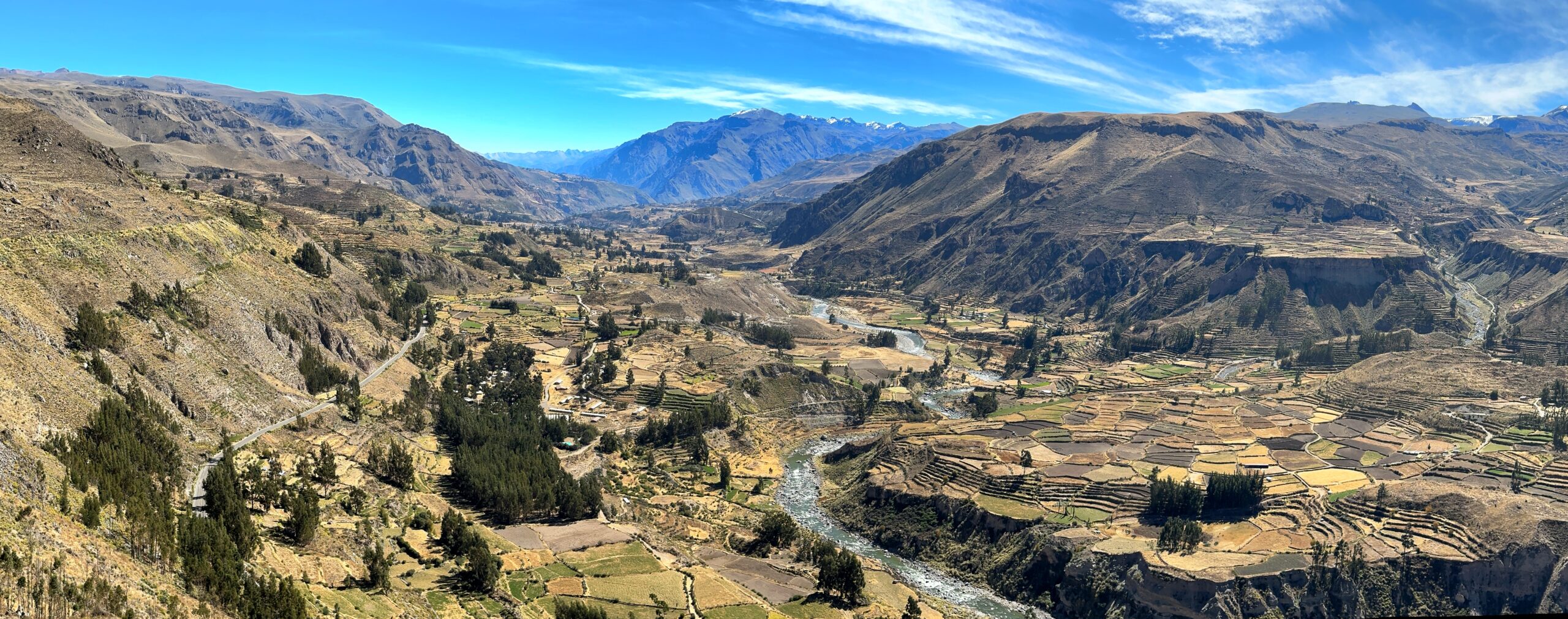
Looking west

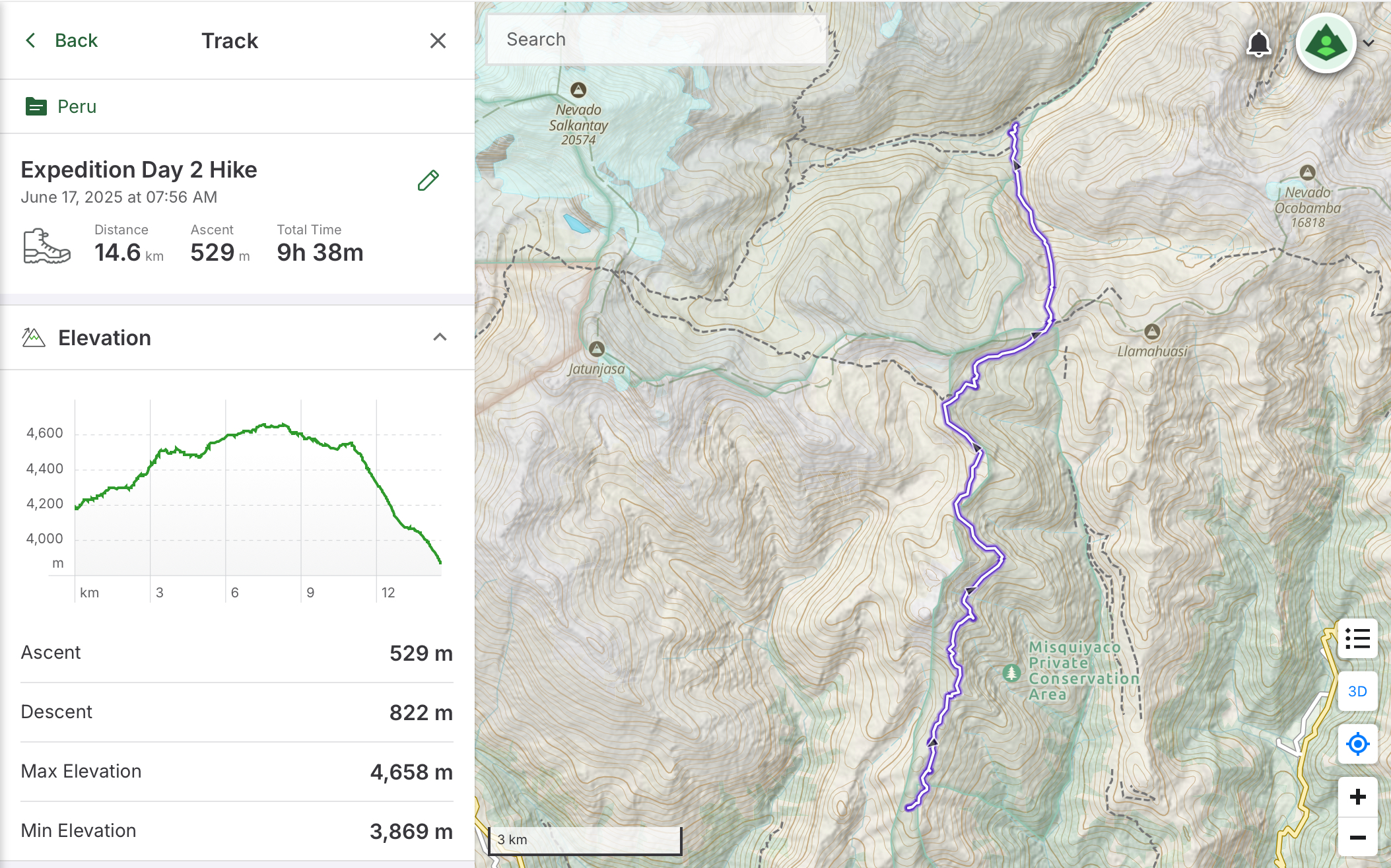
Once we finished taking in all the natural splendor visible from Mirador de Achomani, we fetched our horses and followed Pascual’s lead back down our 9km track to the hotel.
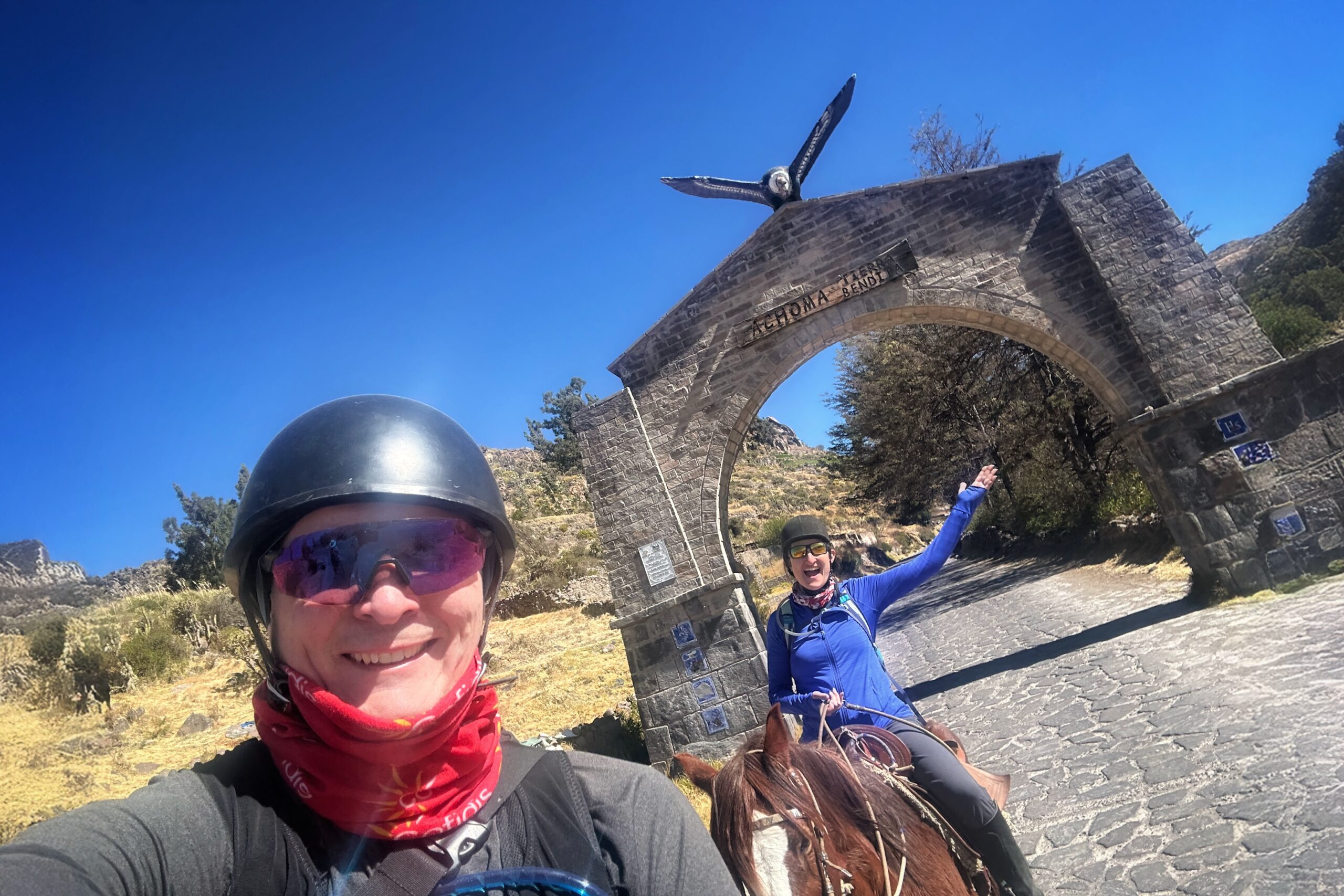
The Gates of Achoma

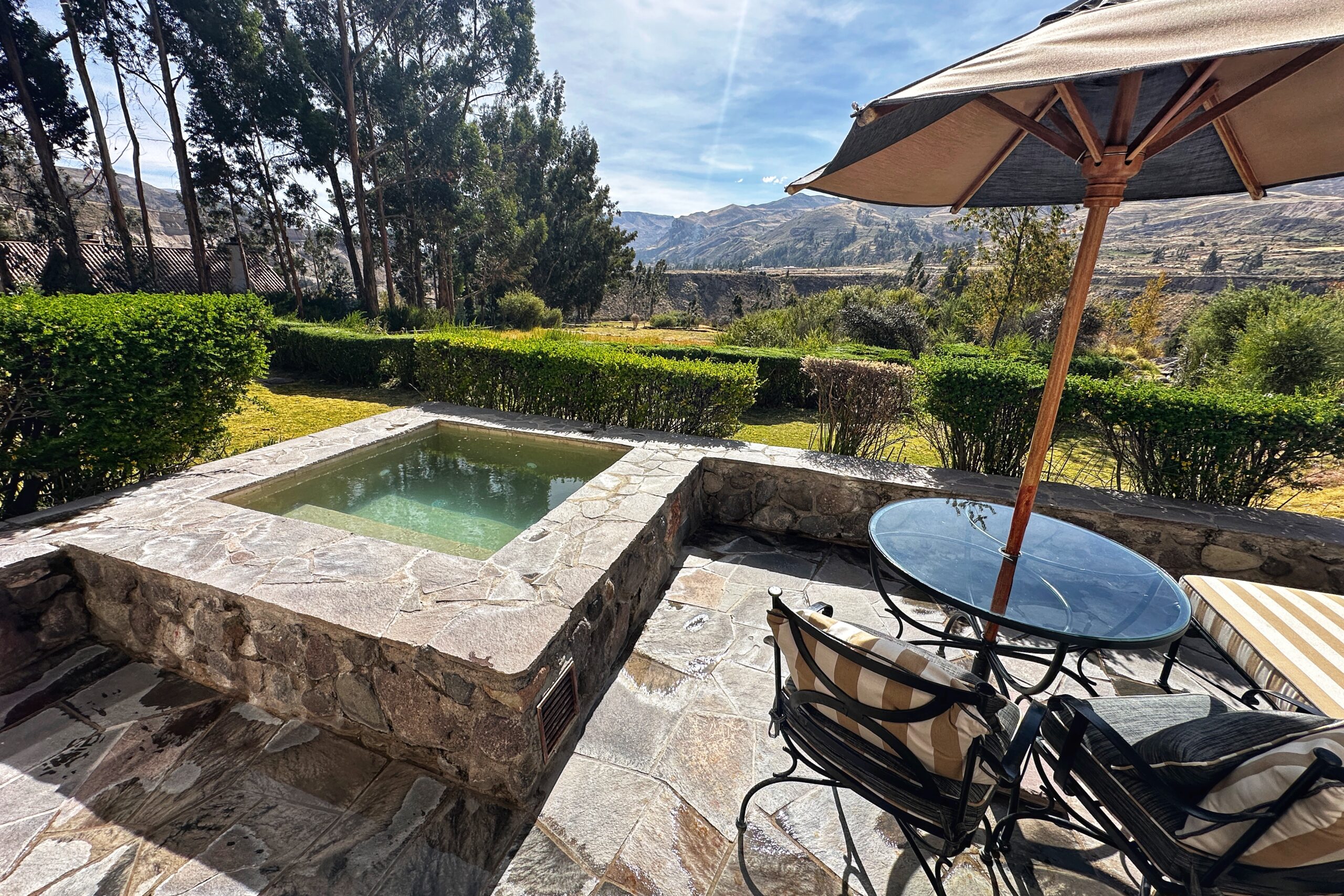
Upon our return to Las Casitas at ~2PM, we immediately returned to relaxation mode. The hot tub on our patio was calling our sore hiking muscles, and the bright afternoon sunshine was once again nap-worthy. We also discovered a fantastic cherry-flavored soft drink called Kola Escocesa (aka. “Scottish cola”) which bears that name because some Scottish guy/company started making it in Arequipa with local mineral water in the 1950s.
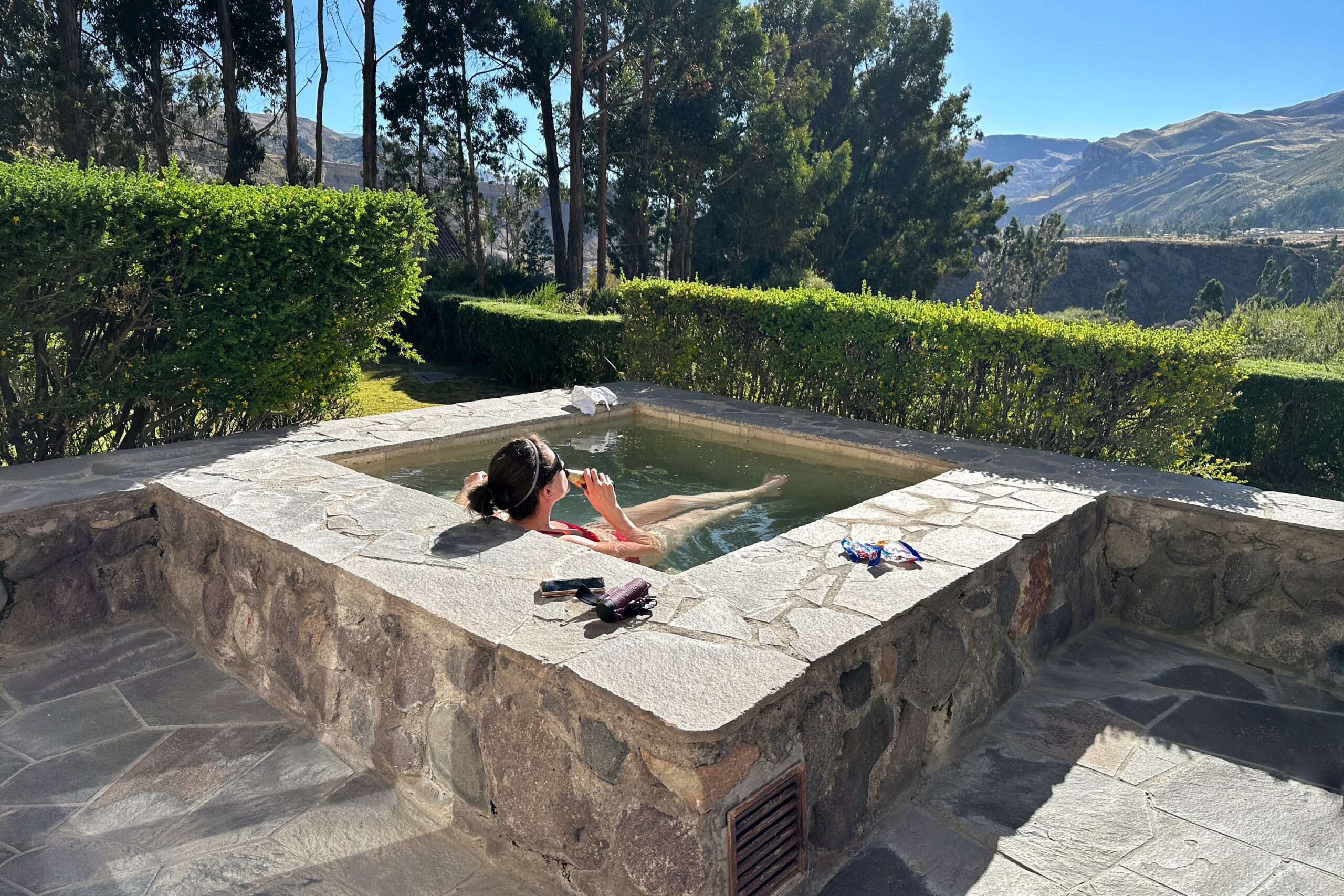
Goodbye sore muscles
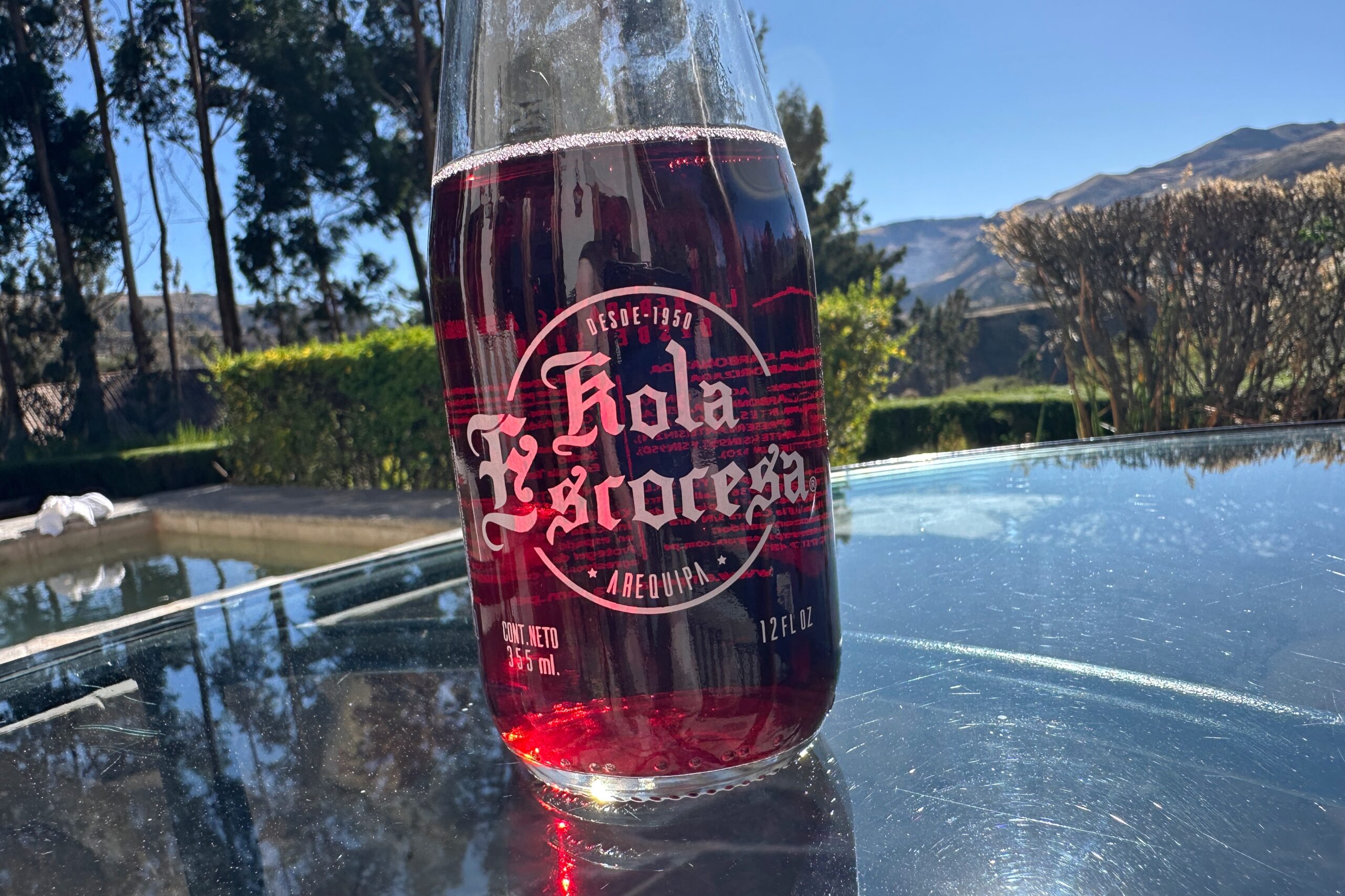
Delicious
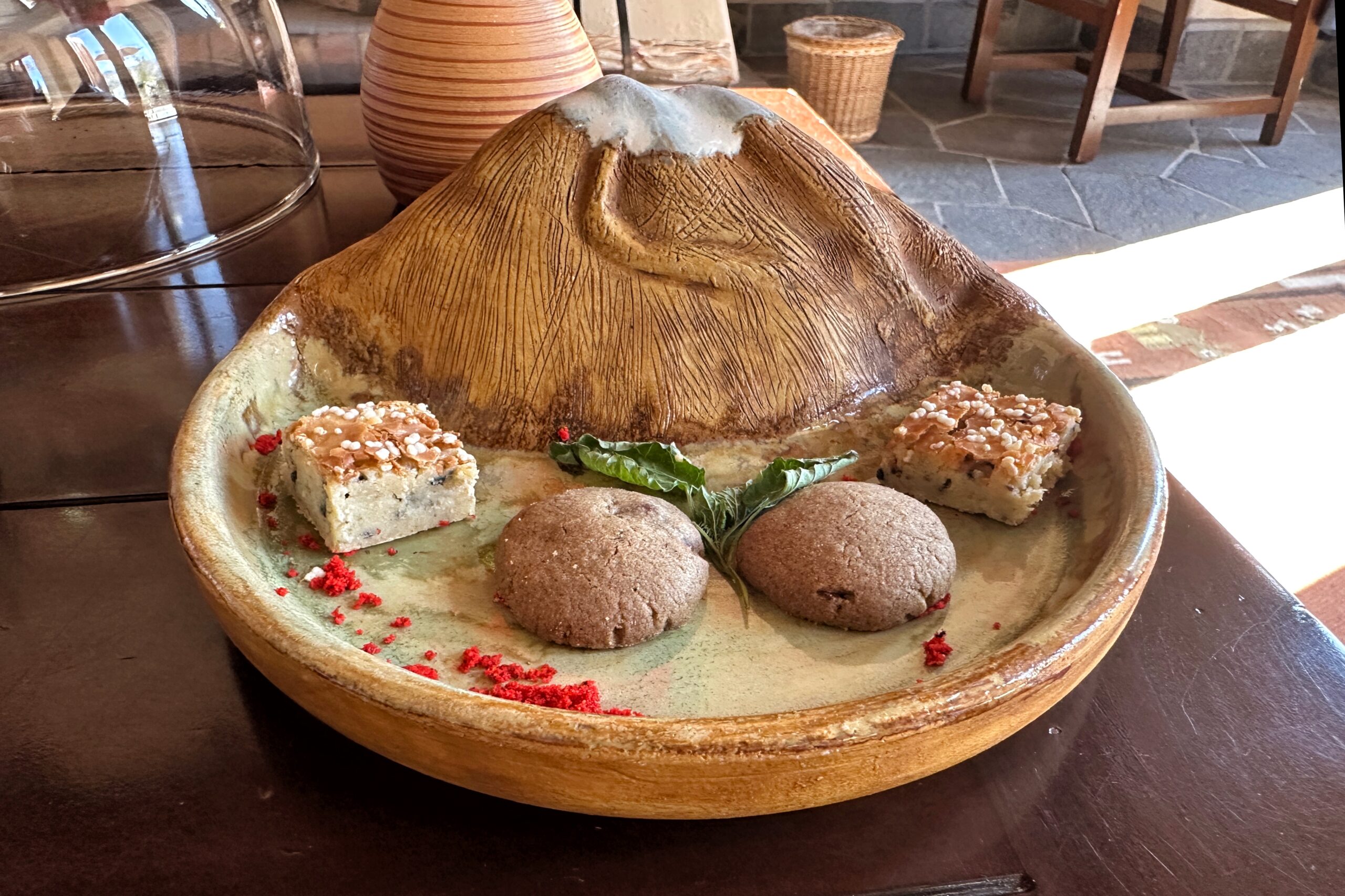
Decorative stonewear

Tonight’s free Belmond activity before dinner is canapés and drinks on the restaurant terrace. Fancy! We donned our headlamps and walked over. The staff had just stoked up a cozy fire pit on the terrace. We were the only ones in attendance (we think the other guests checked out), so we grabbed two seats and settled in for some pre-dinner blogging. The very attentive server staff brought us red wine and a Colca sour — made with pisco and cacti fruit. They also brought out fried potato appetizers — similar to a small falafel ball served with guacamole.
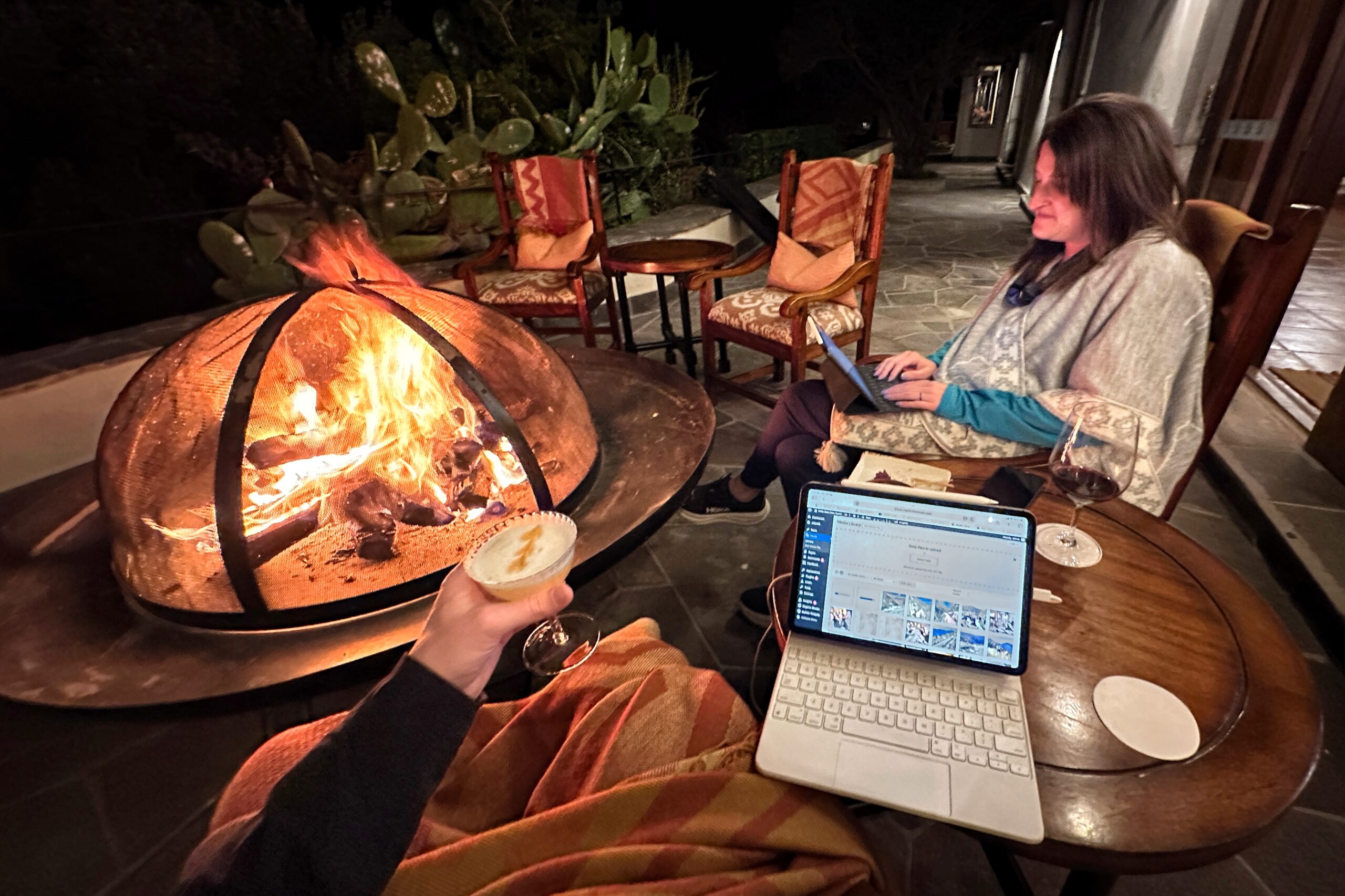
Colca sours are also delicious

When the tasty appetizers were finished, we went inside for dinner. For starters, grilled eggplant salad and shrimp chowder. For mains, rosemary sea bass and aji de gallino (with parmesan cheese as per Luis’ recommendation). And for dessert, apple pie and ponderaciones, a traditional Peruvian dessert that “has been making people happy for the past 400 years” according to the menu. It is made with crispy dough dipped in chocolate. So yeah, we’re happy.
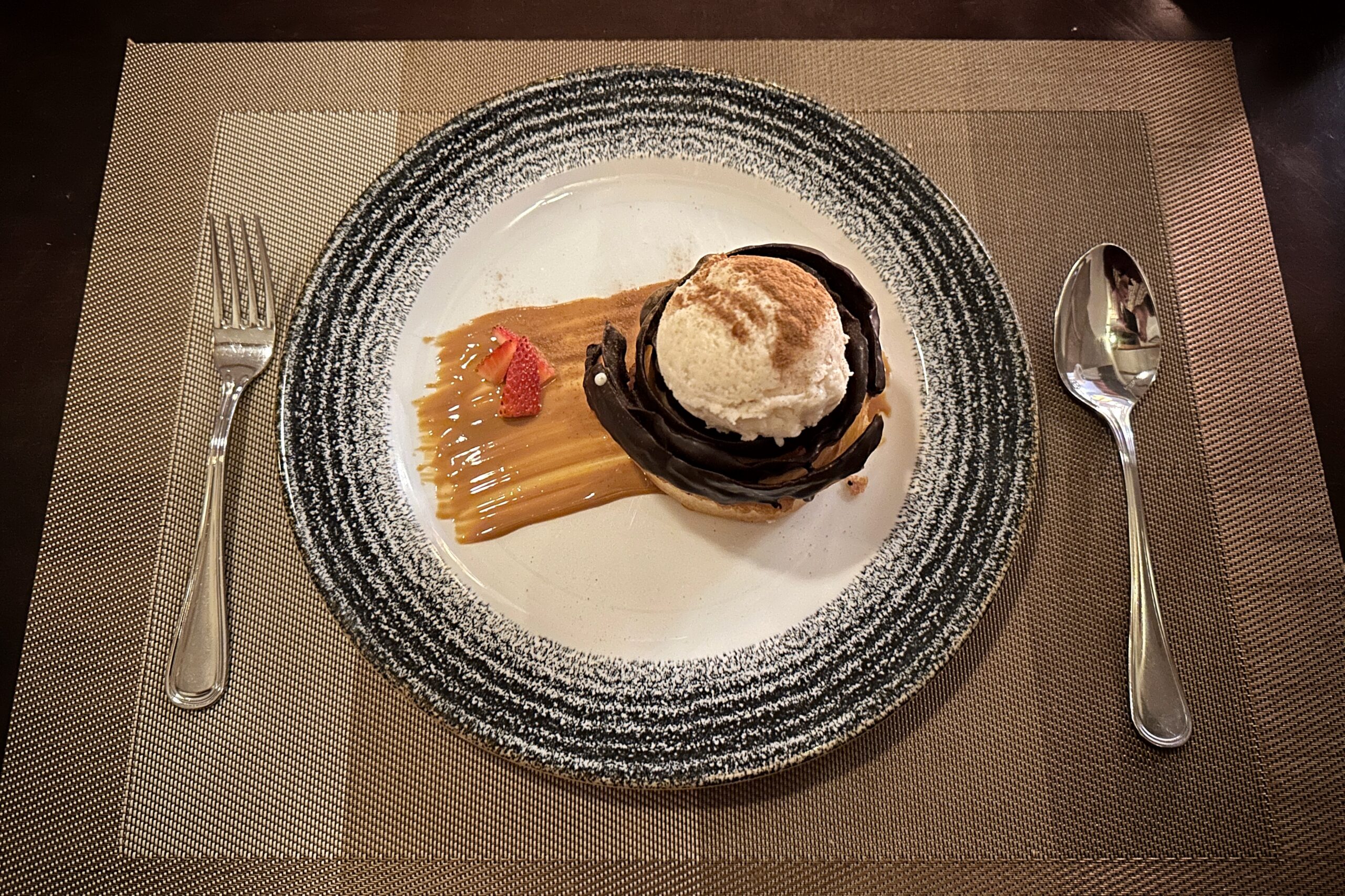
Making People Happy CONFIRMED!

Random observation… in the dining room they play Andean music, which has a lot of flutes. But we both stopped and did a double-take when an Andean flute music cover of Kansas’ Dust in the Wind started playing. A few other songs seemed vaguely familiar, but they might have been actual Andean songs.

After dinner we briefly pondered not signing up to do anything tomorrow, and going full lazy/cheap mode. But thankfully, we came to our senses and stopped by the front desk to confirm our excursion to Mirador Cuz del Condor at 8AM in the morning. Apparently, this is THE spot to see multiple condors in the wild as well as an excellent view of the deepest part of the canyon.
Day 13: Cusco to Colca Canyon

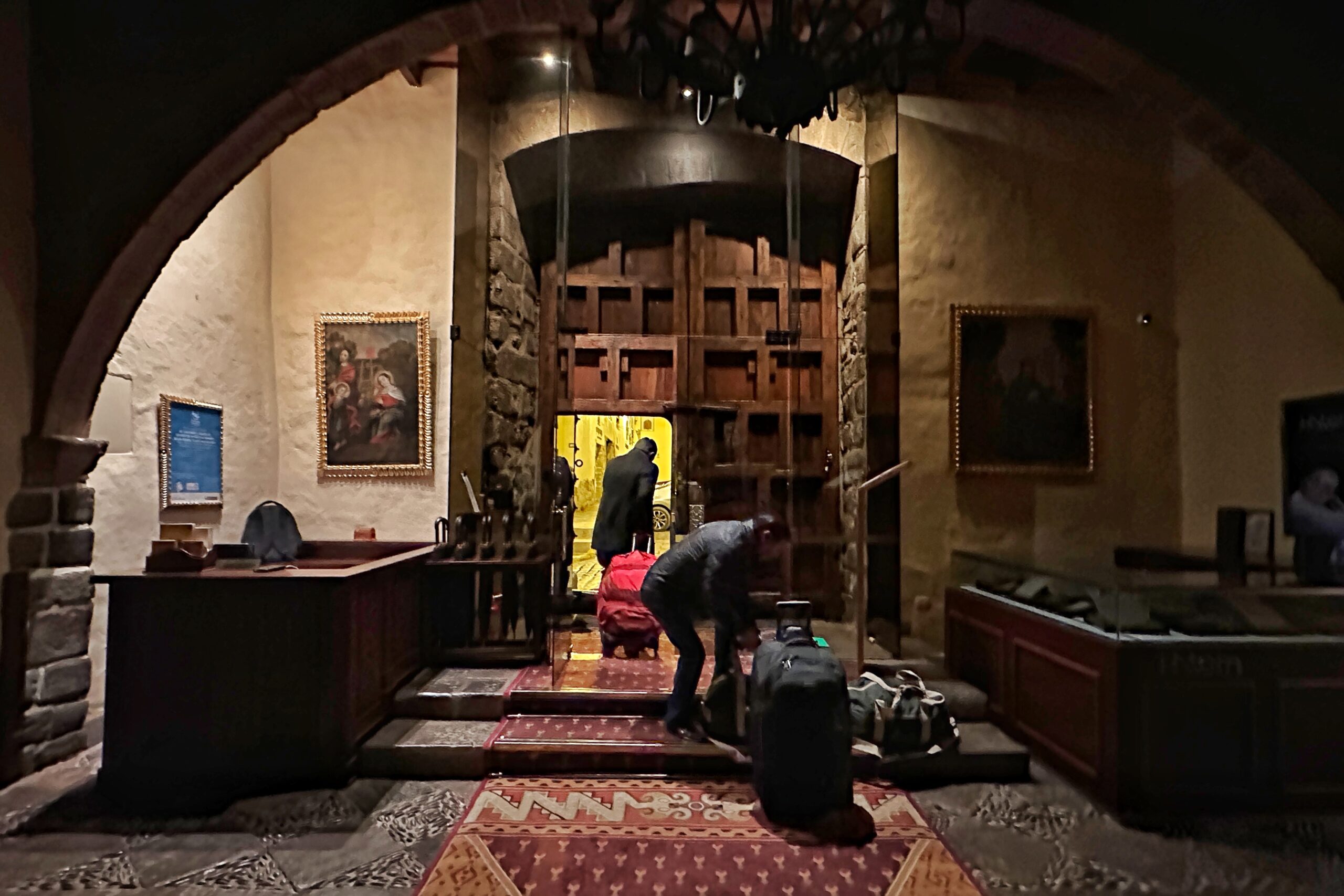
We are back on the road (and through the air) today as we depart Cusco and head to Colca Canyon via Arequipa. According to Google Maps, the trip from Cusco to Colca Canyon COULD be made in about 11 hours via bus, but we much prefer feeling like kings on LATAM, so… 4:30AM wake up call it is. In preparation, we completed our packing last night, so all we had to do was grab some breakfast of fruit and pastries from the buffet. Turns out 5AM is a bit too early for eggs benedict.

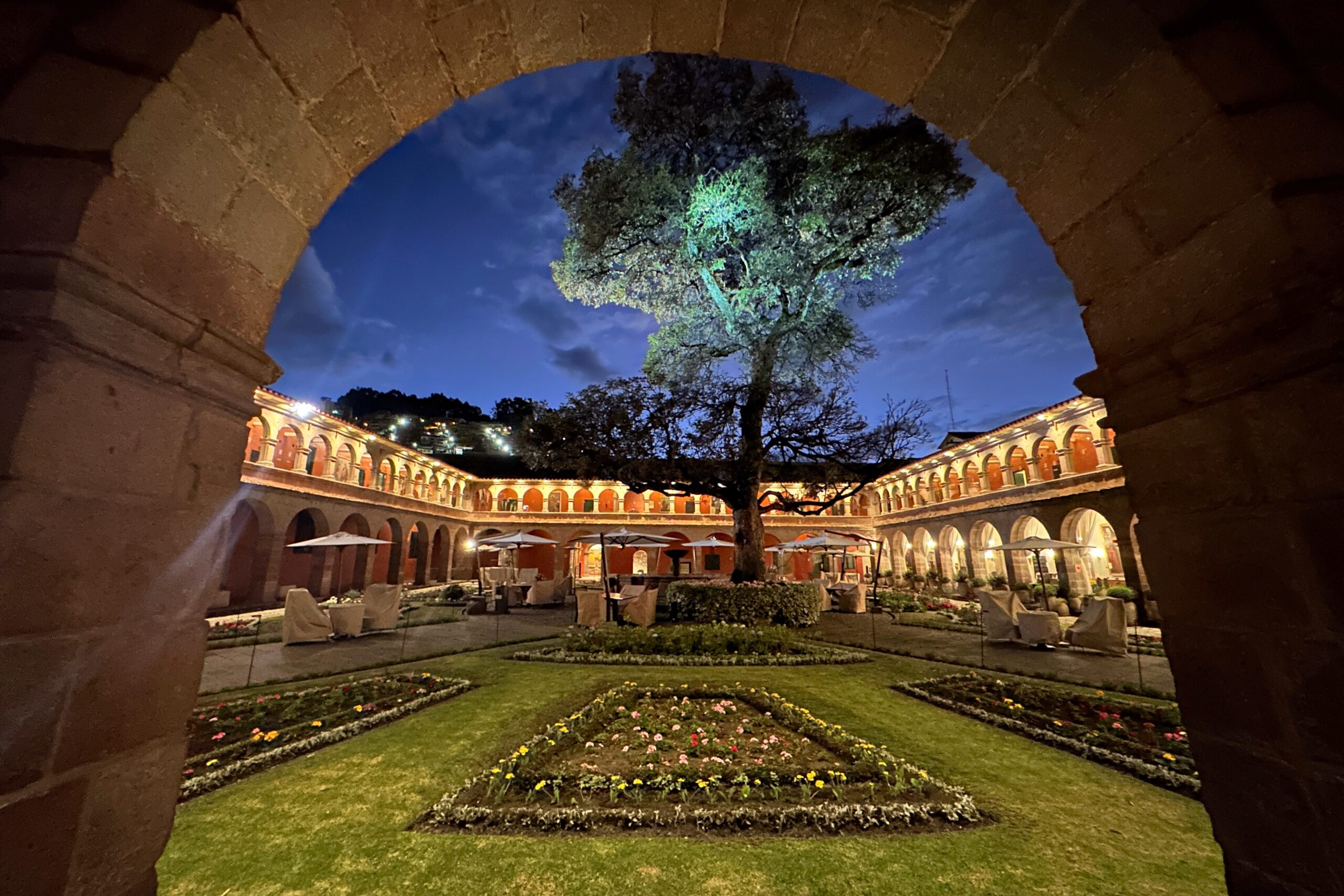
Early morning Monasterio Courtyard

We also arranged transportation last night, and the taxi was right on time at 5:30AM. With almost no traffic on the streets (everybody must still be passed out from Inti Raymi), we made it to the airport plenty early and checked in. A bus full of EF students arrived at the same time, but no problem, hello premium economy checkout line. Woo!

Out the quarter door

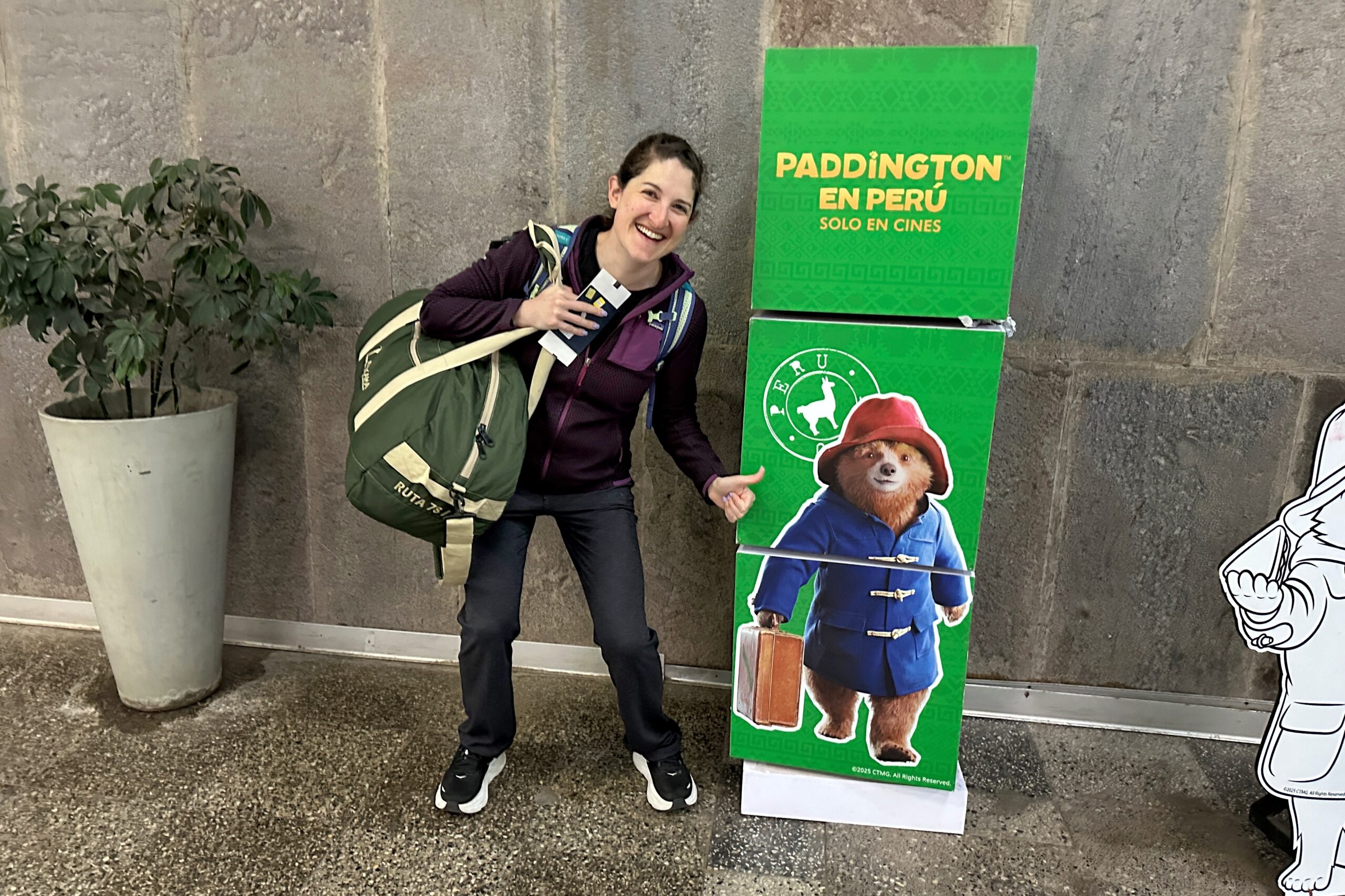
Only in theaters! And Peru!

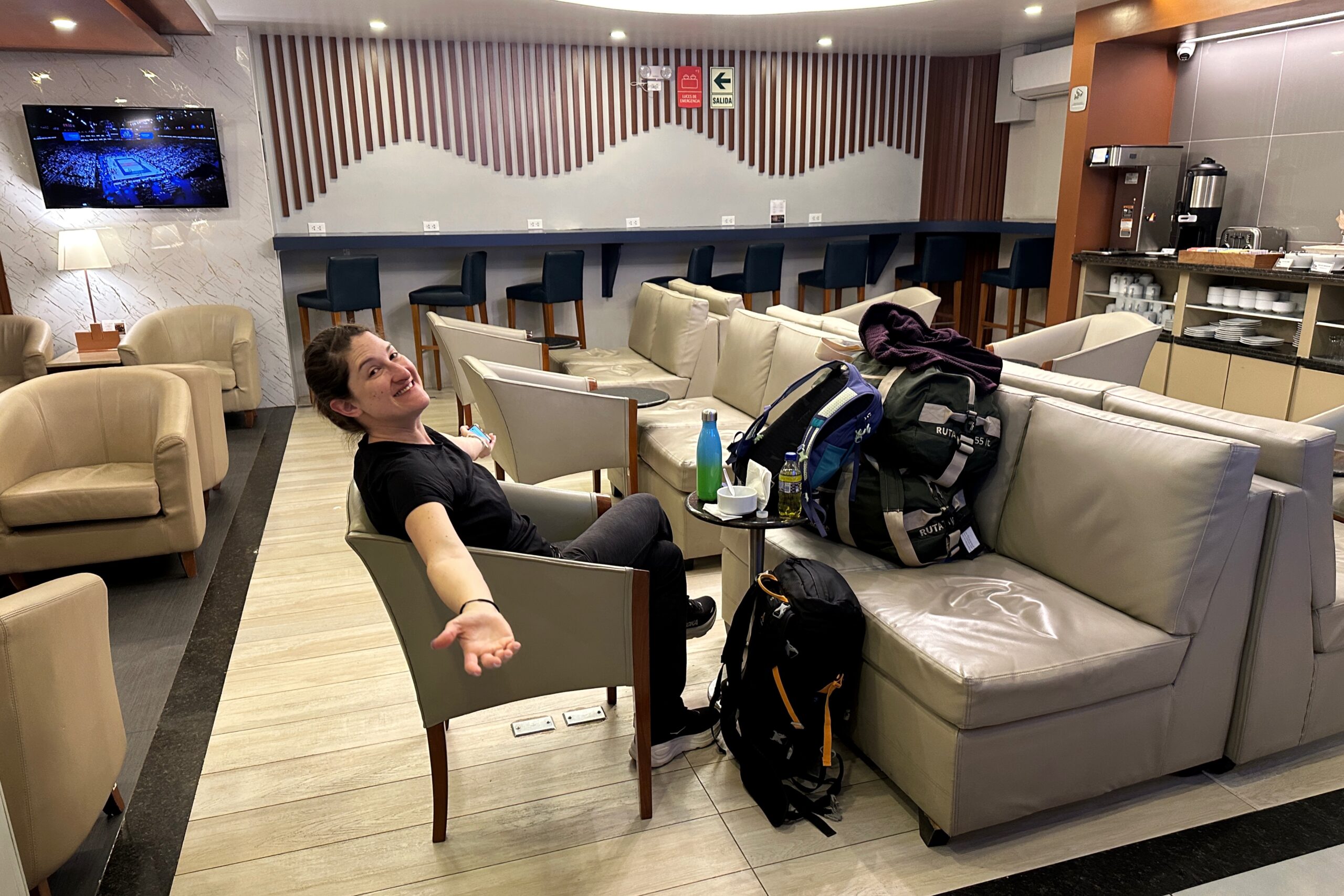
We cleared security and found a working Priority Pass lounge in the AQP. Everyone else in the room cleared out to catch an earlier flight to Lima, so we had the place to ourselves to grab some second breakfast. Heading to our gate, we each carried a backpack and duffle bag (as per the rules). For the first time, we were “asked” if we wanted to gate-check our bags, and when we declined, they made us “try” the luggage-size-checker. Don’t they know we are PREMIUM ECONOMY!?!? Anyways, our bags fit easily, duh. Left us alone after that.

We got the whole lounge

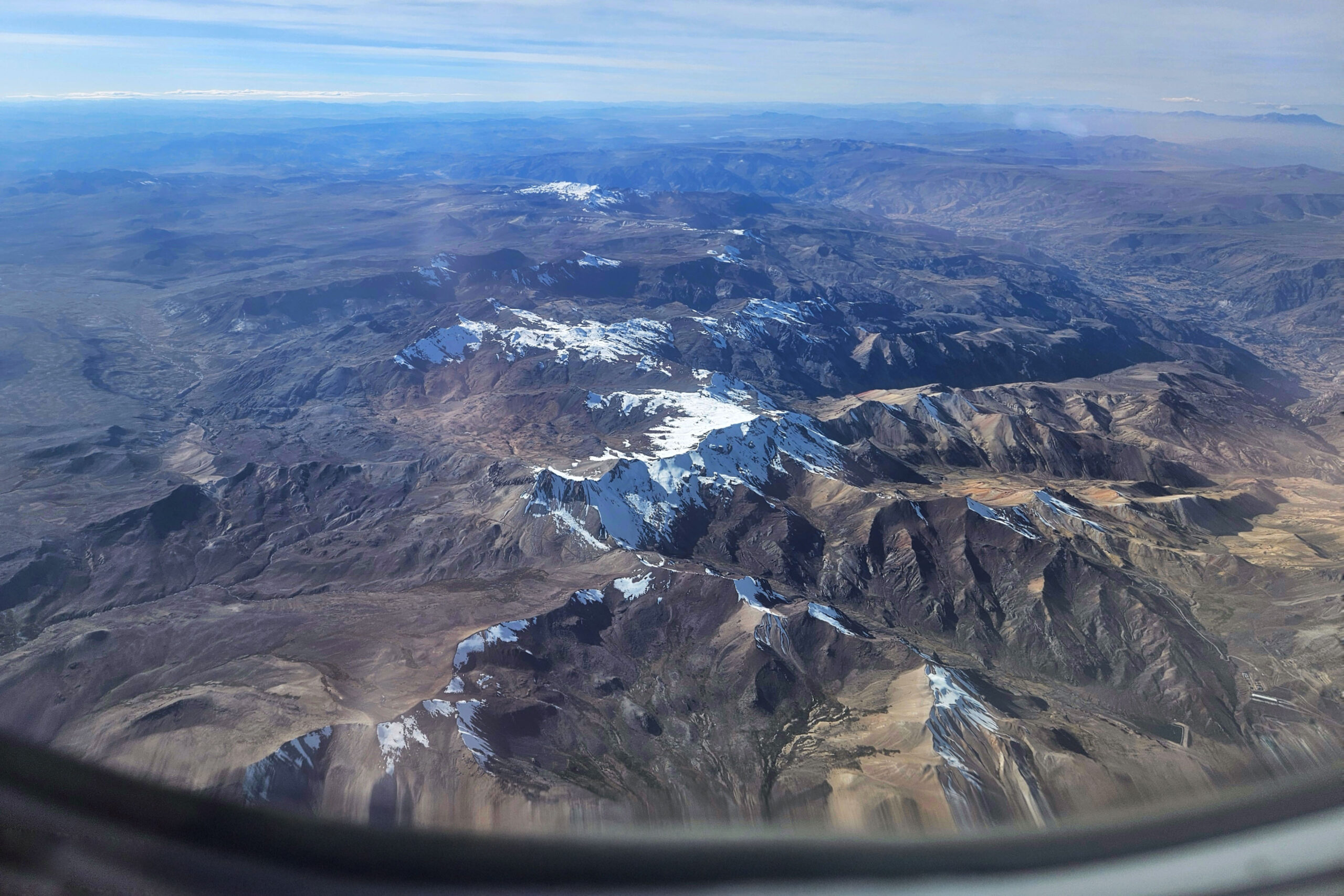
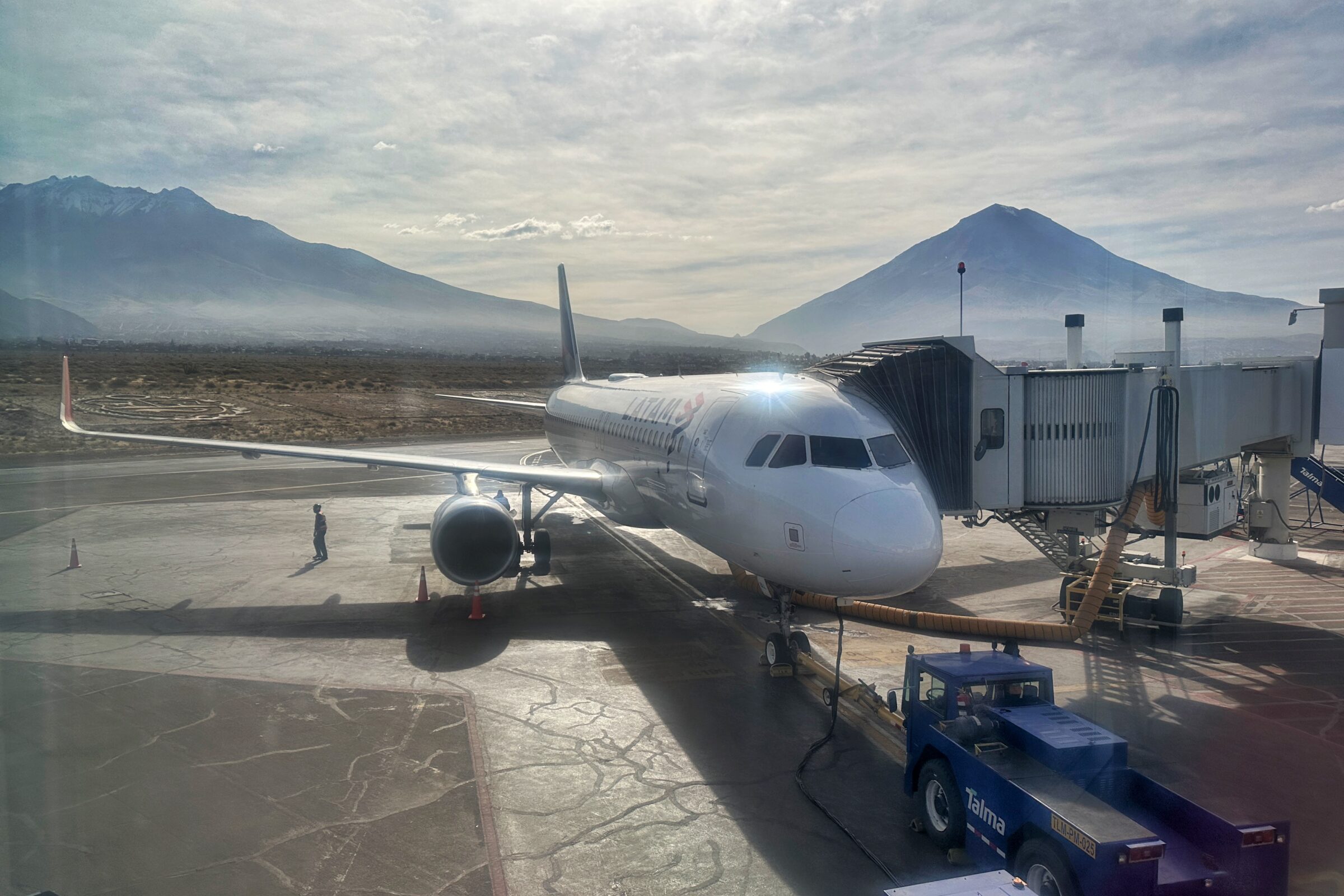
Boarding was a breeze (after all the nuns with military babies) and the flight to Arequipa was only about an hour. We also got some great views out the window on the way.

Looking canyon-y

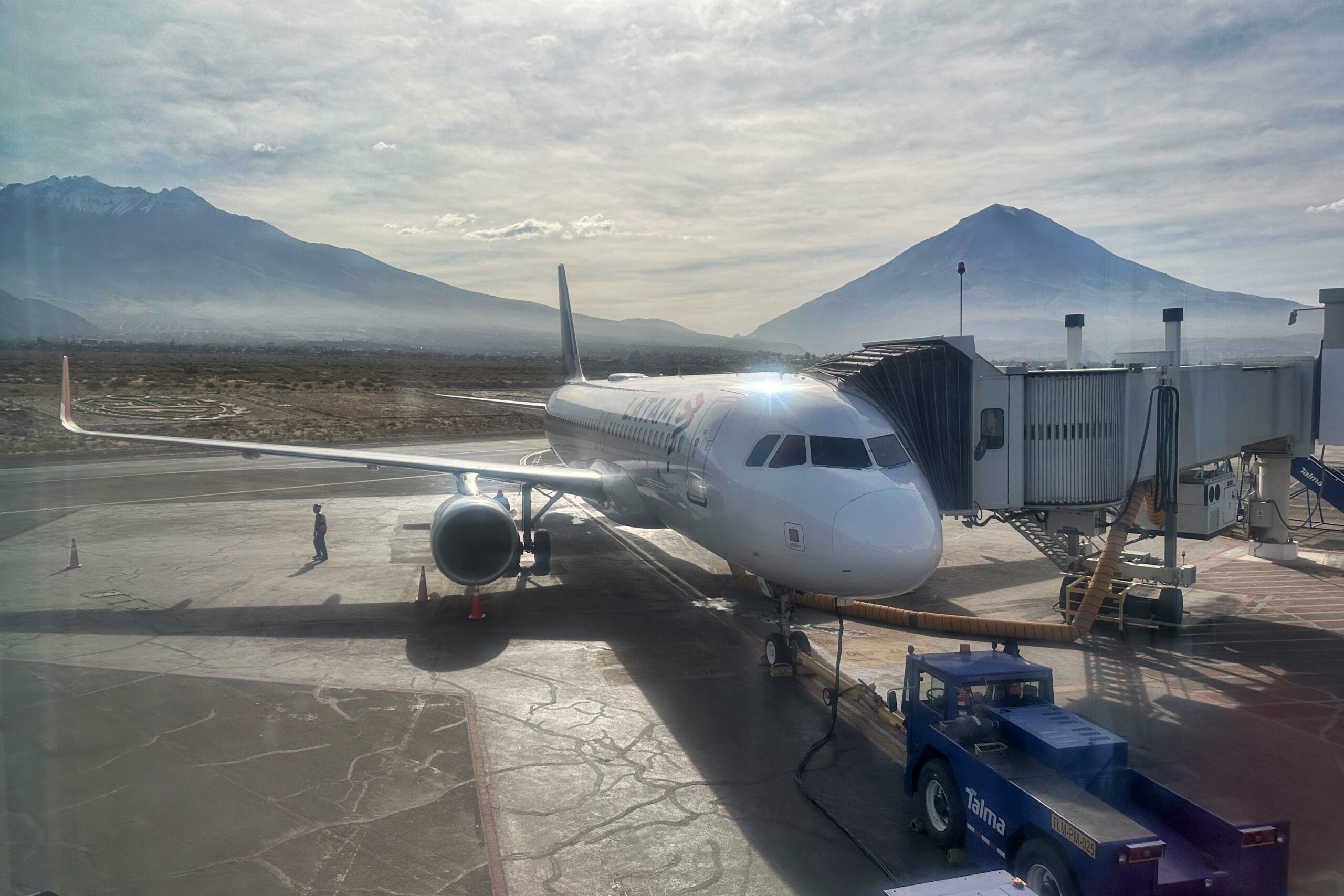
Volcán Chachani (left) and Volcán Misti (right)

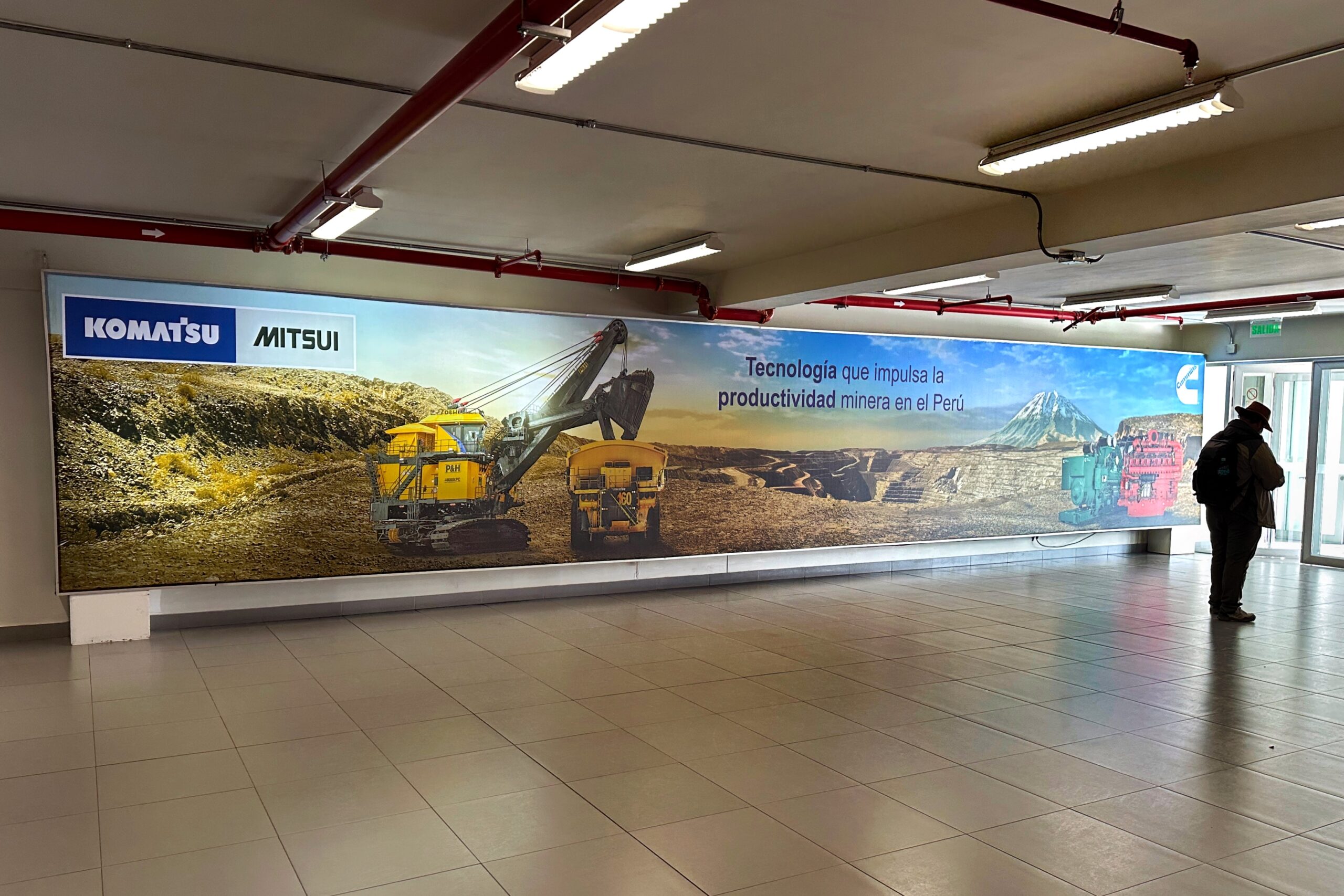
Mining is kind of a big deal here

Arequipa’s airport is pretty small, with only two gates. Our bags came out immediately (Matt’s was first and Jo’s was fourth). We strolled outside to meet our pre-arranged ride to Colca Canyon, four hours away. Froiland was our Spanish-speaking driver, and his co-pilot Jorge was our English-speaking guide who provided fun facts and information about the area along the way. There are many large volcanos visible from Arequipa, with a total of 98 in the entire region. Of these 98, 16 of them are active, and eight of those are extremely lively these days. It’s no surprise the stones used in the White City area of Arequipa are made of volcanic tuff and pumice.

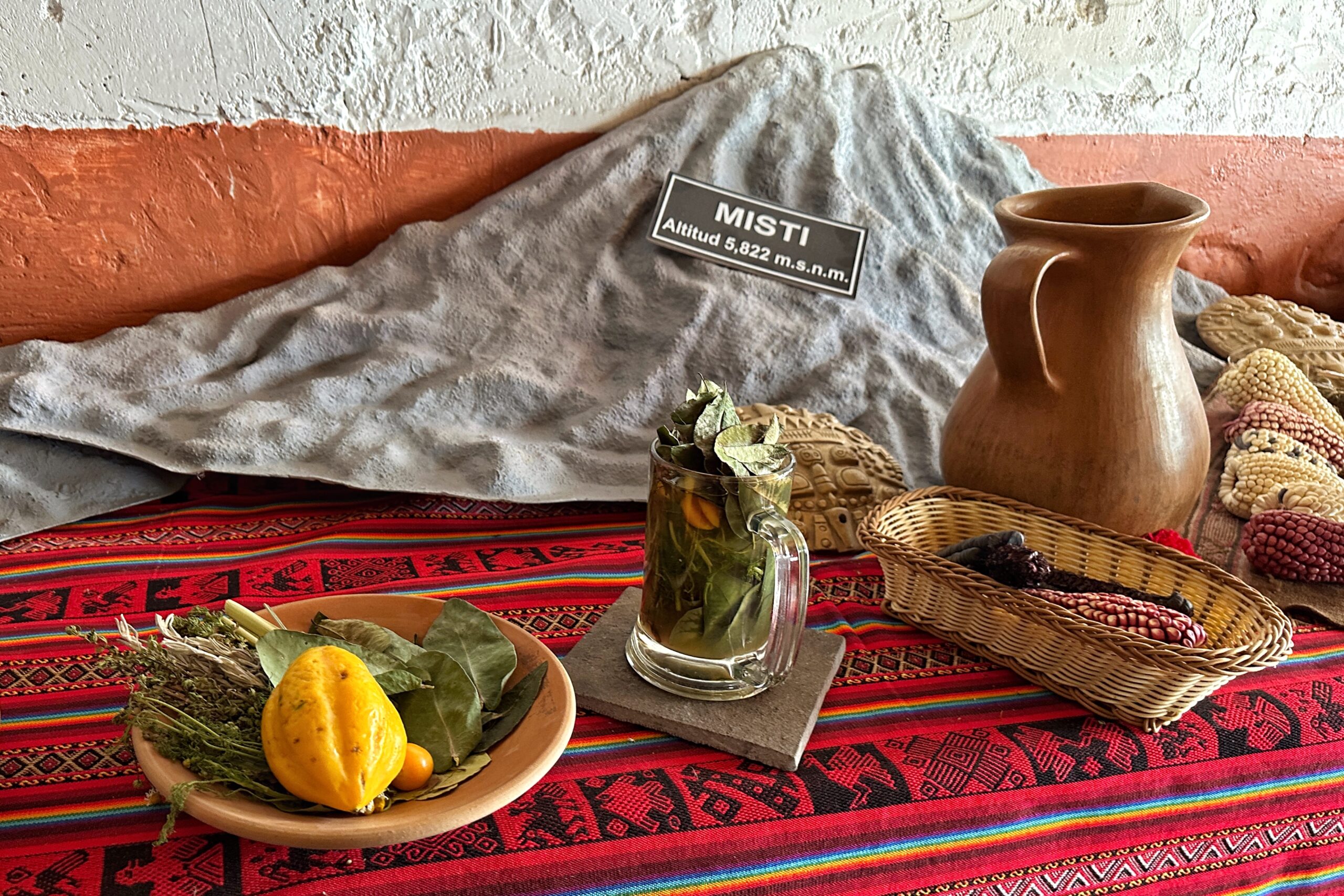
Pausing at a shop at the outskirts of Arequipa, we finally caved and bought a bag of coca leaves to try later with Jorge. We continued onward and gained elevation into the Andean dessert region with vicuñas grazing in the vast open spaces along the side of the road. After a couple hours, we stopped at a roadside cafe/tourist trap and drank some very delicious mates with seven different herbs (and spices) including coca, muña, lemongrass, and a cherry tomato.

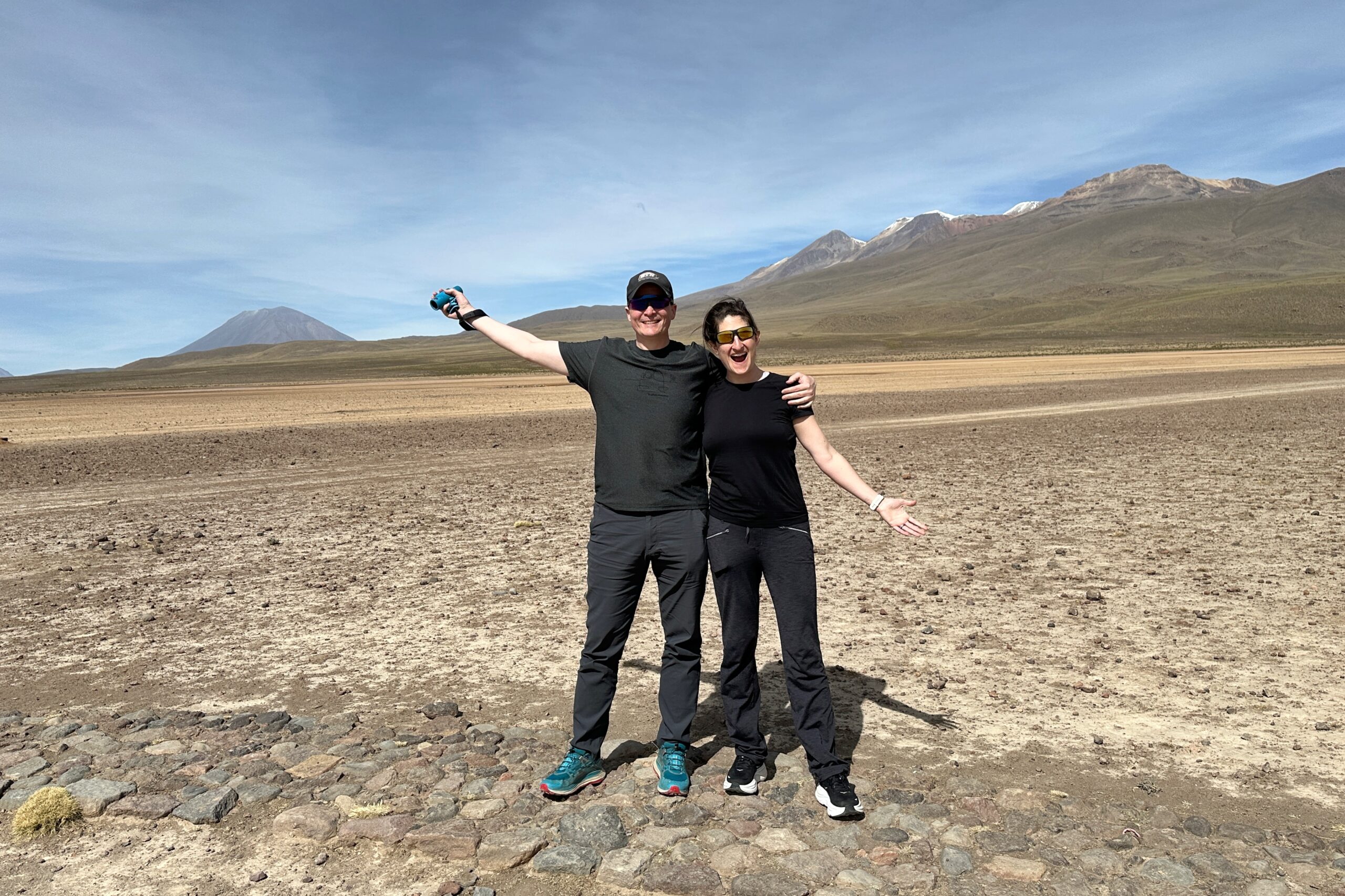
Andean desert

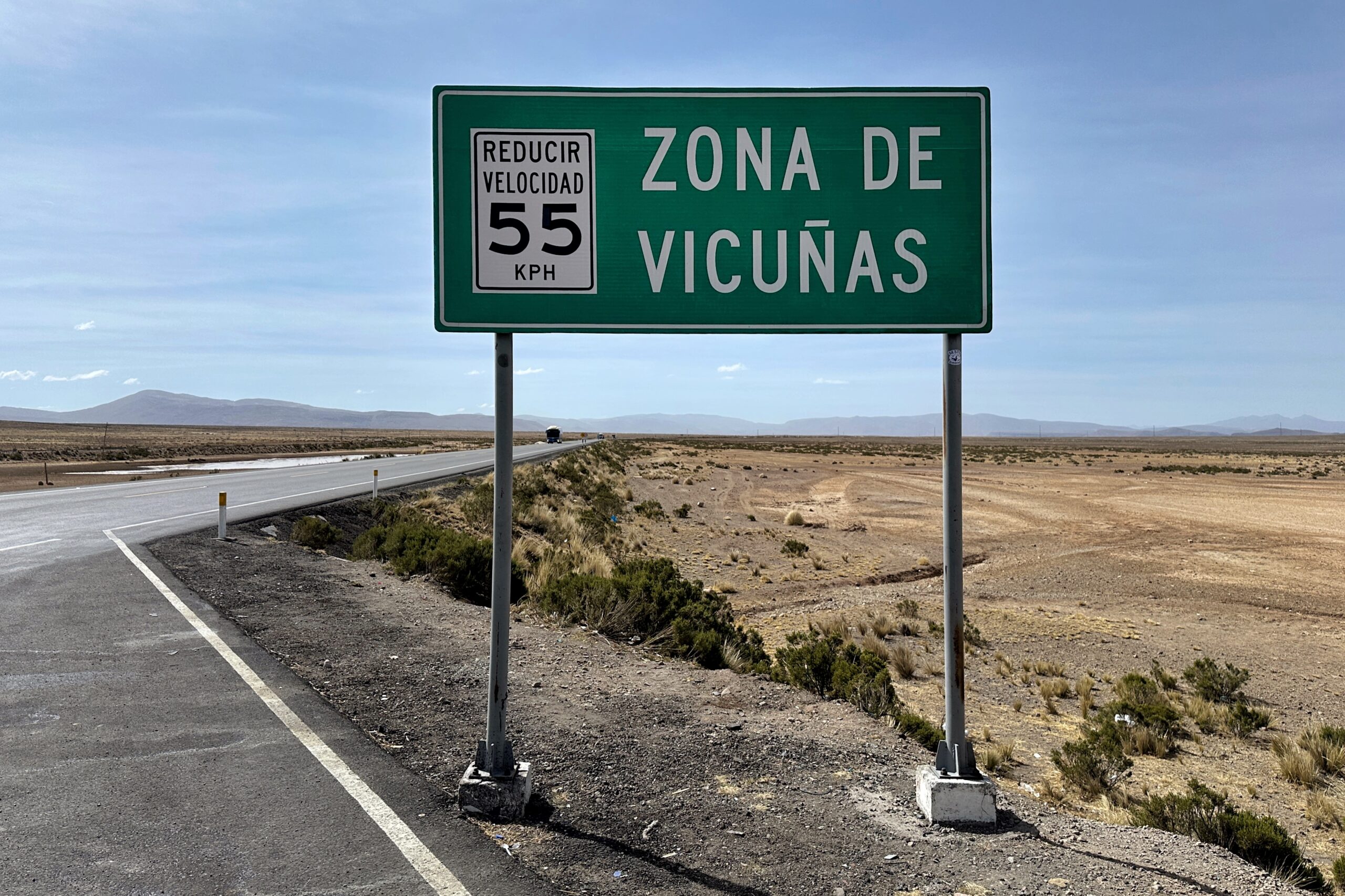
Vicuñas can drive 55

How to make the Misti mate

Got the Andean desert blues

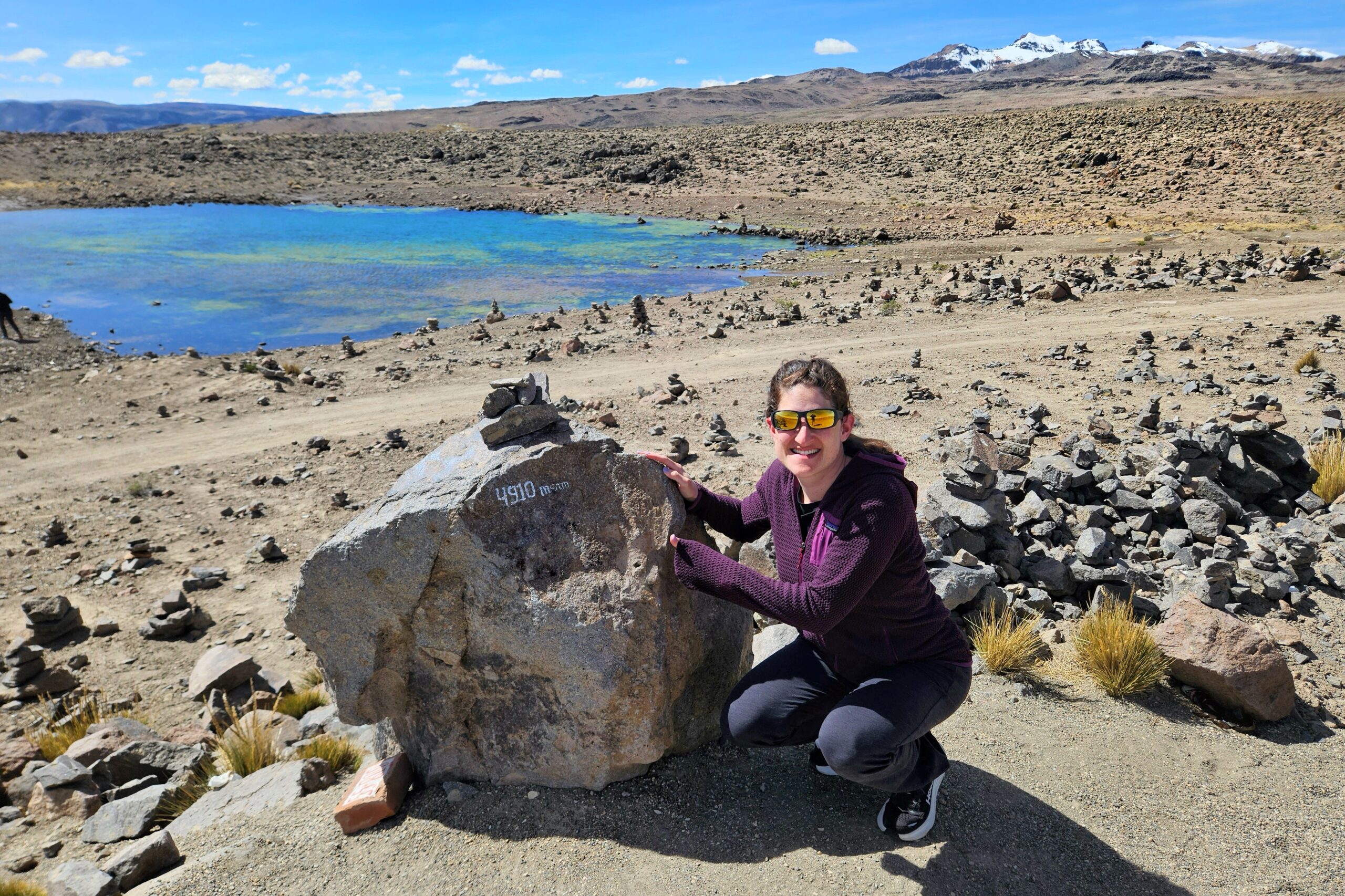
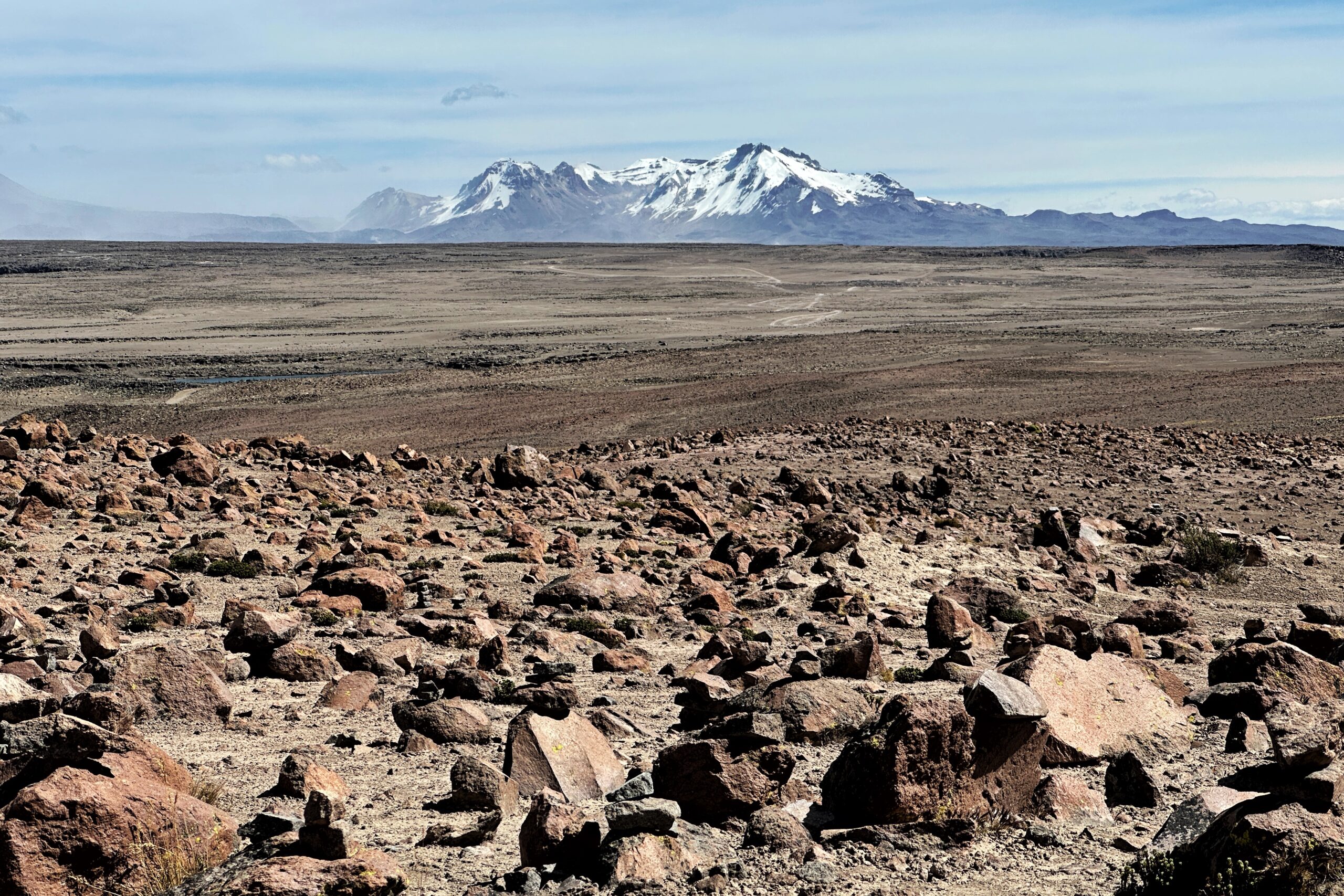
The drive continued up to the high pass at 4,910 meters (about 16,000 feet). We determined now was a good time to try chewing those coca leaves. Spoiler alert! We’re not huge fans. Unless you want a numb tongue… then they’re great! Not even that sweet coca buzz was gonna keep Jo from falling back asleep for a good portion of the remaining drive. To be fair, Froiland’s musical preference was some serious easy-listening, put-you-to-sleep music.

A real high point of the drive

Lunar Landscape

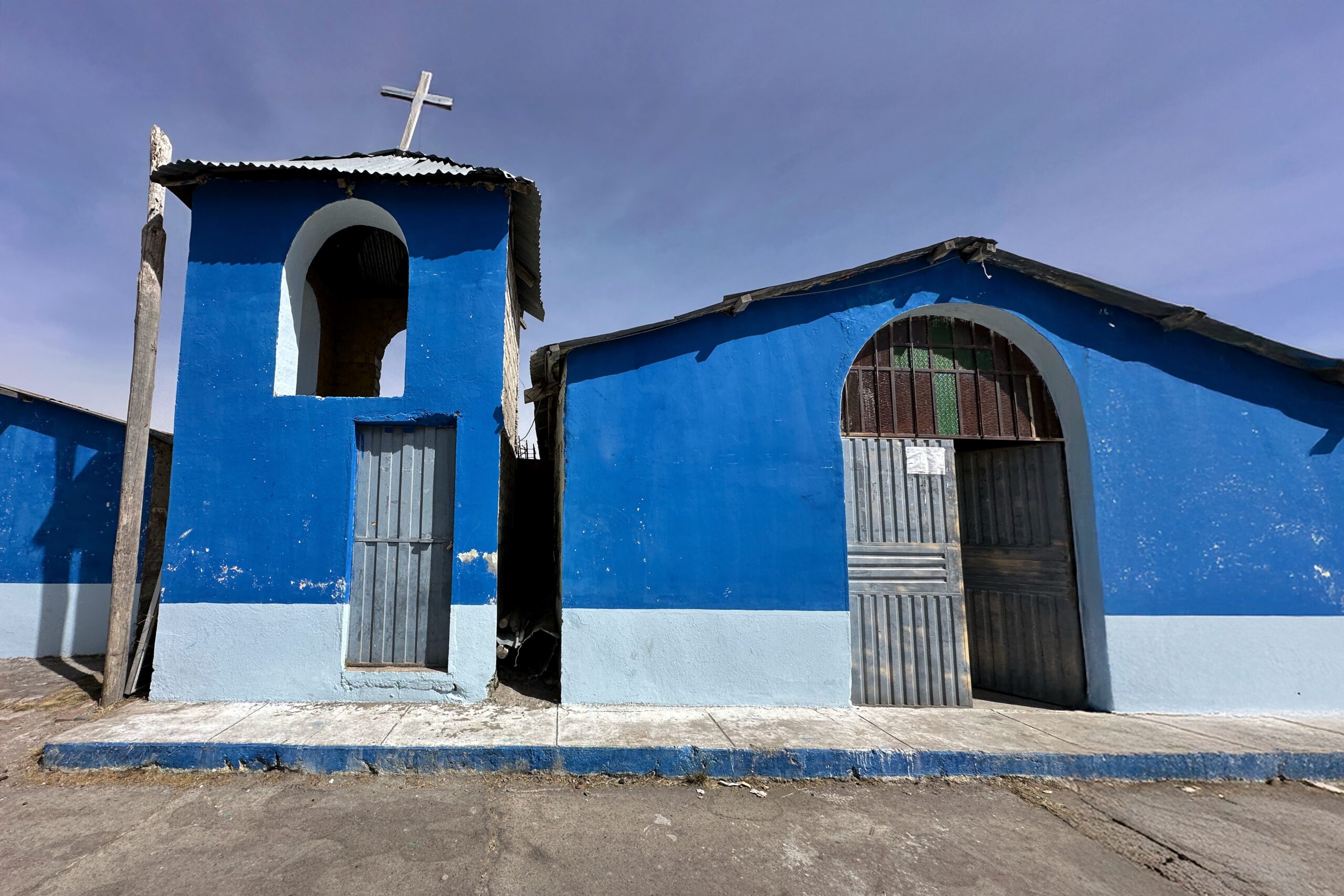
After traversing the pass and several more volcanoes, the final portion of the drive descended into Colca Valley toward the city of Chivay. We stopped at the town square and Jorge pointed us in the direction of a shop that sells legit 100% baby alpaca products. With a few soles still burning a hole in our pockets, we tried hard to find something, but no luck… for now.

Hey Hey Chivay

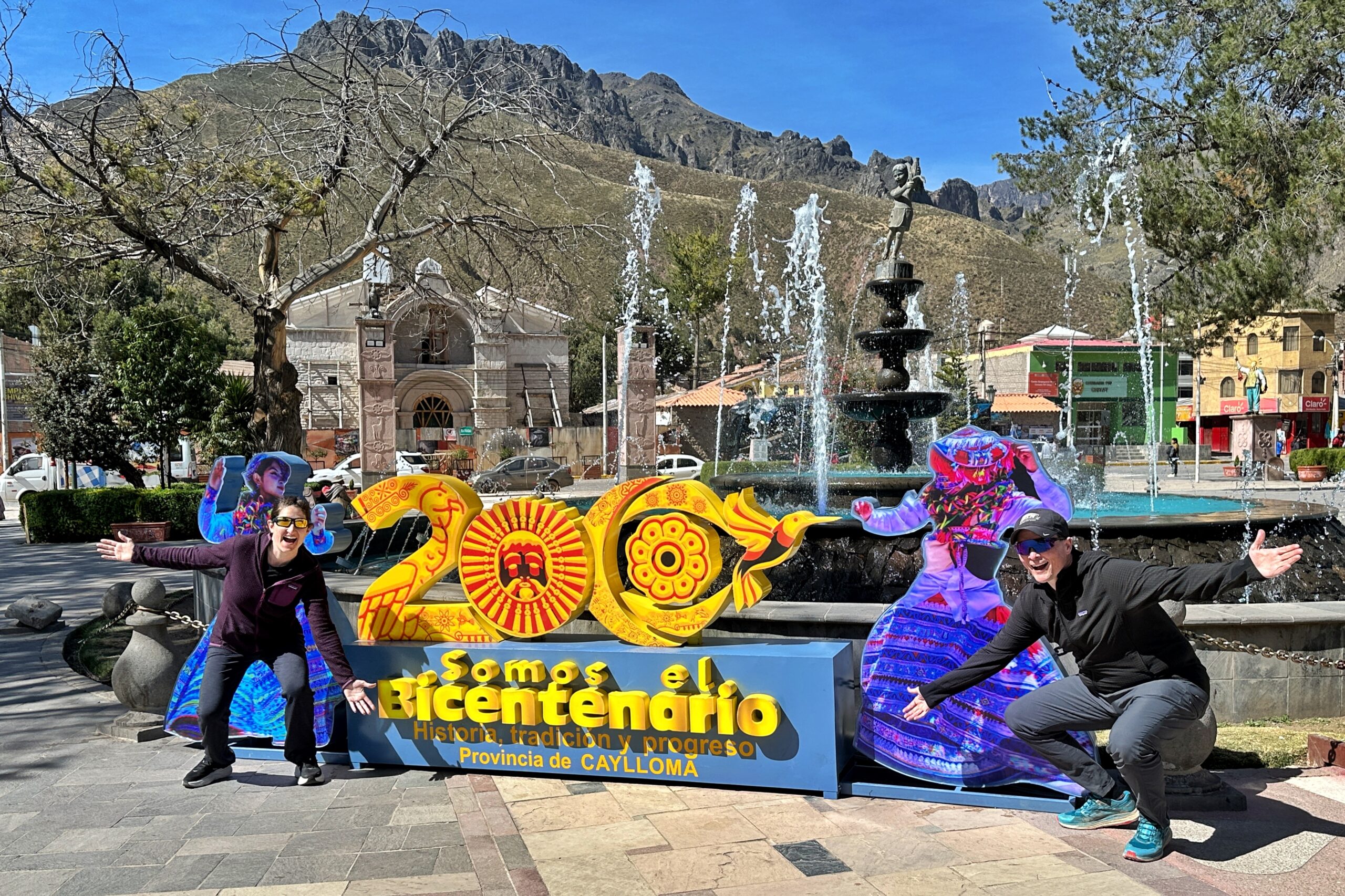
Caylloma Province Bicentennial was June 21, 2025

From Chivay, it was only another 15-20 minutes to our final destination for the day — Las Casitas: A Belmond Hotel. Upon arriving via the narrow switchback gravel driveway, we said farewell to Jorge and our driver (until Saturday), and were whisked off to the reception building via a golf cart that travelled maaaaybe 30 feet. Lol. This place is definitely our vacation from our vacation.

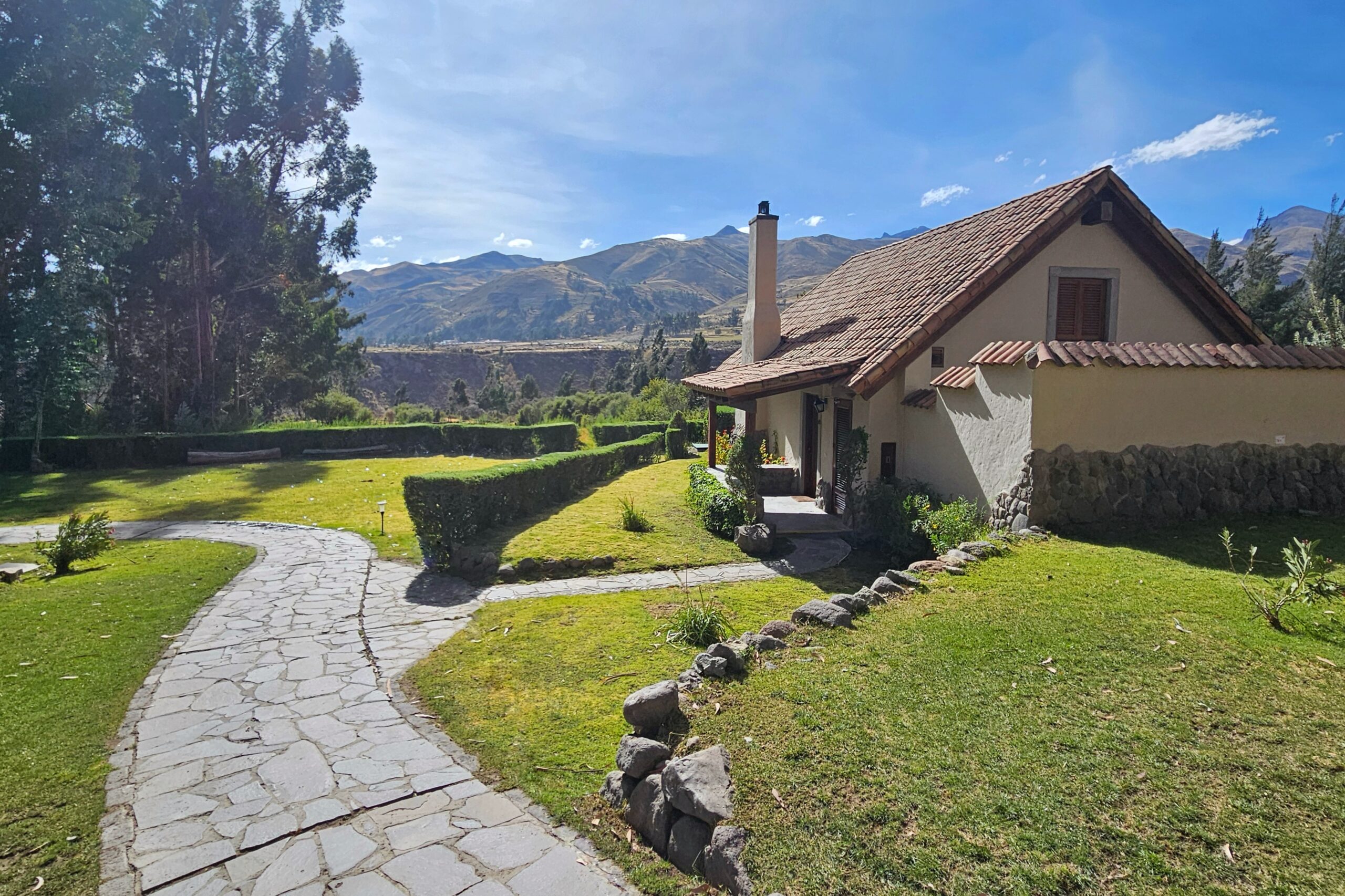
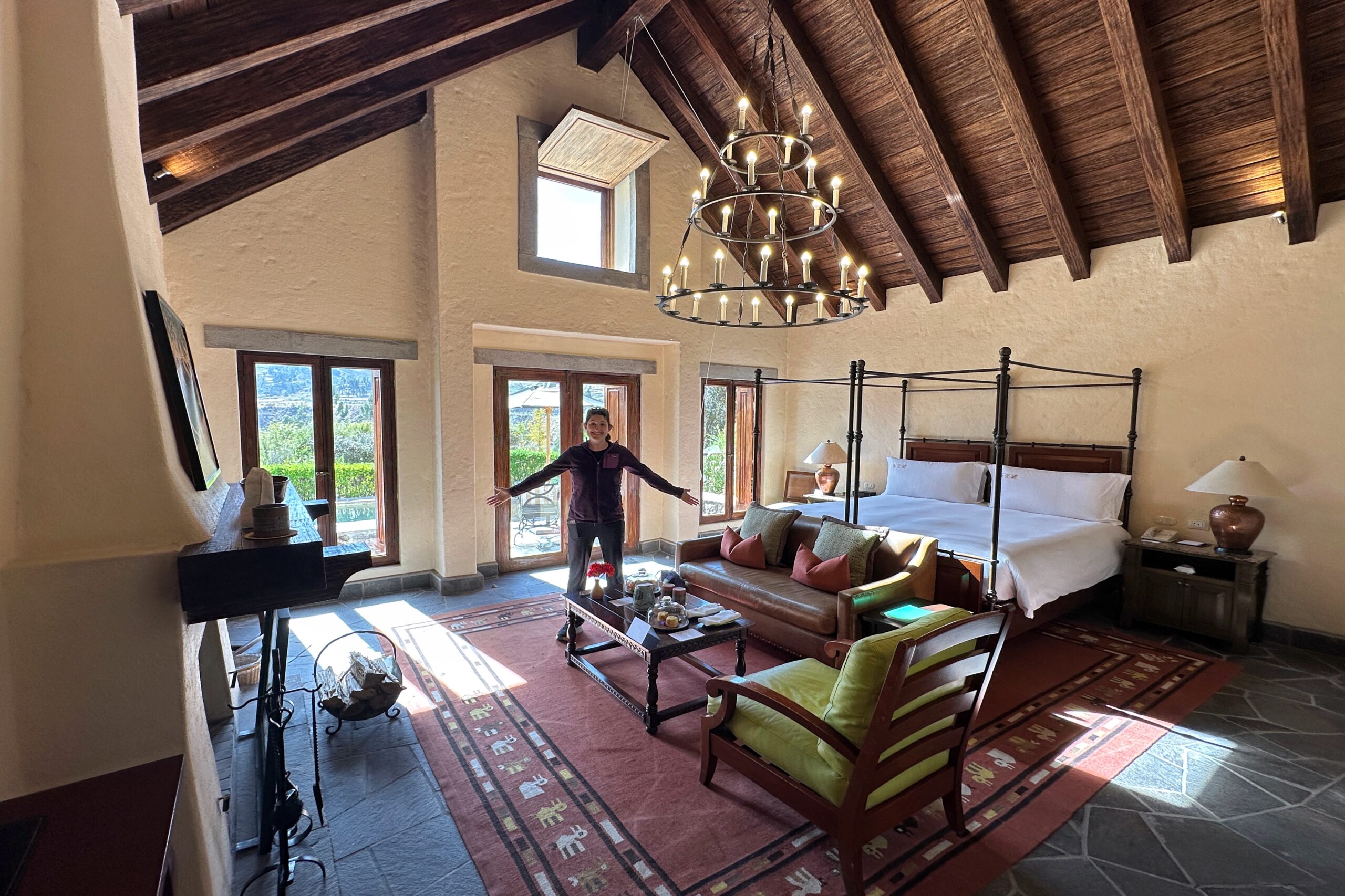
The hotel is called Las Casitas because each room is actually your own little house, complete with a fireplace, porch, plunge pool, and an entire bathroom wing. On the way to our Casita, we passed the pond where you can feed the fish, the pond where you can go fishing, and several grazing llamas and alpacas. We were shown about our new house and had the rest of the afternoon to relax with the complimentary minibar (again!).

La Casita

Vacation from vacation

The backyard

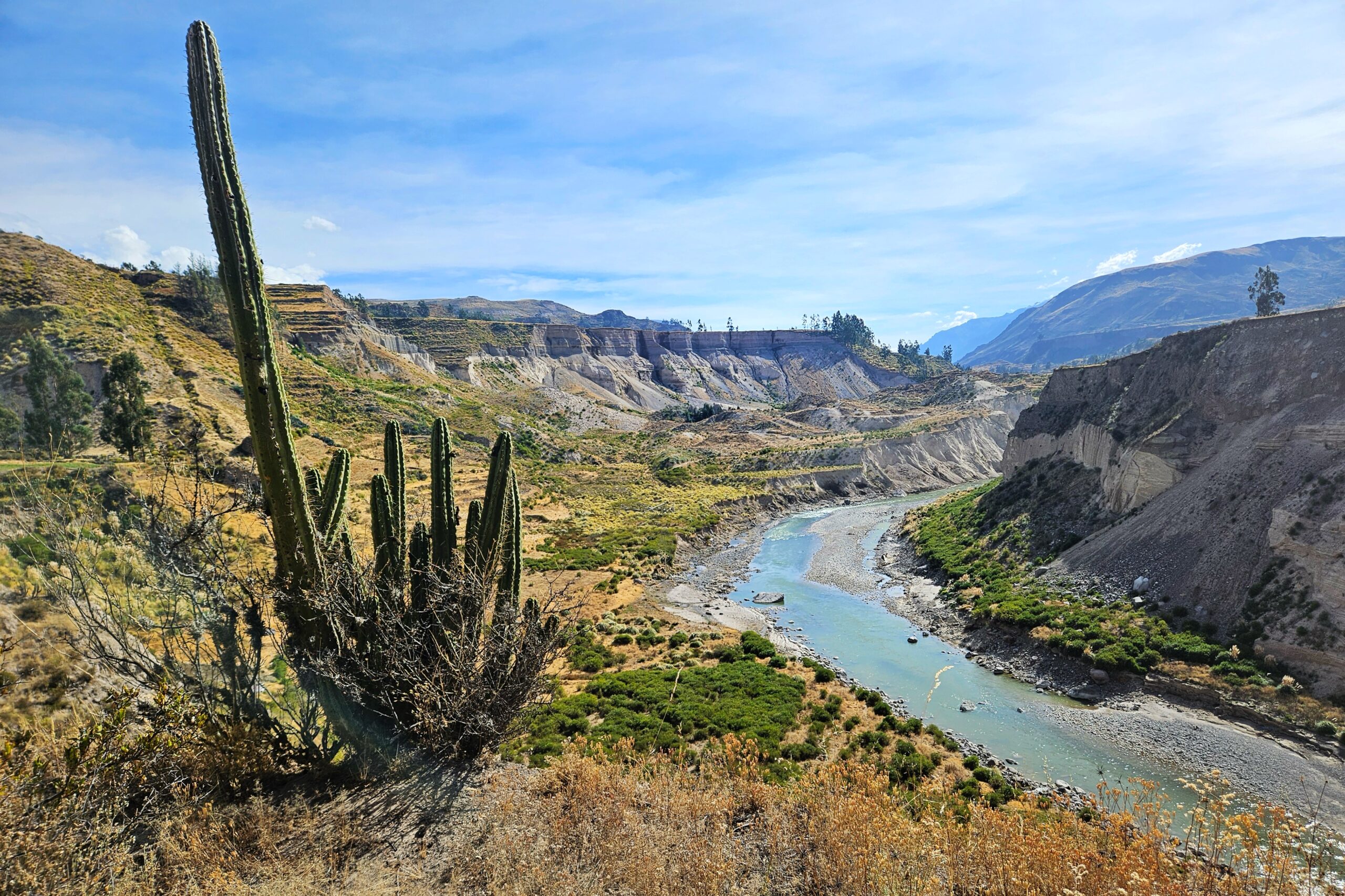
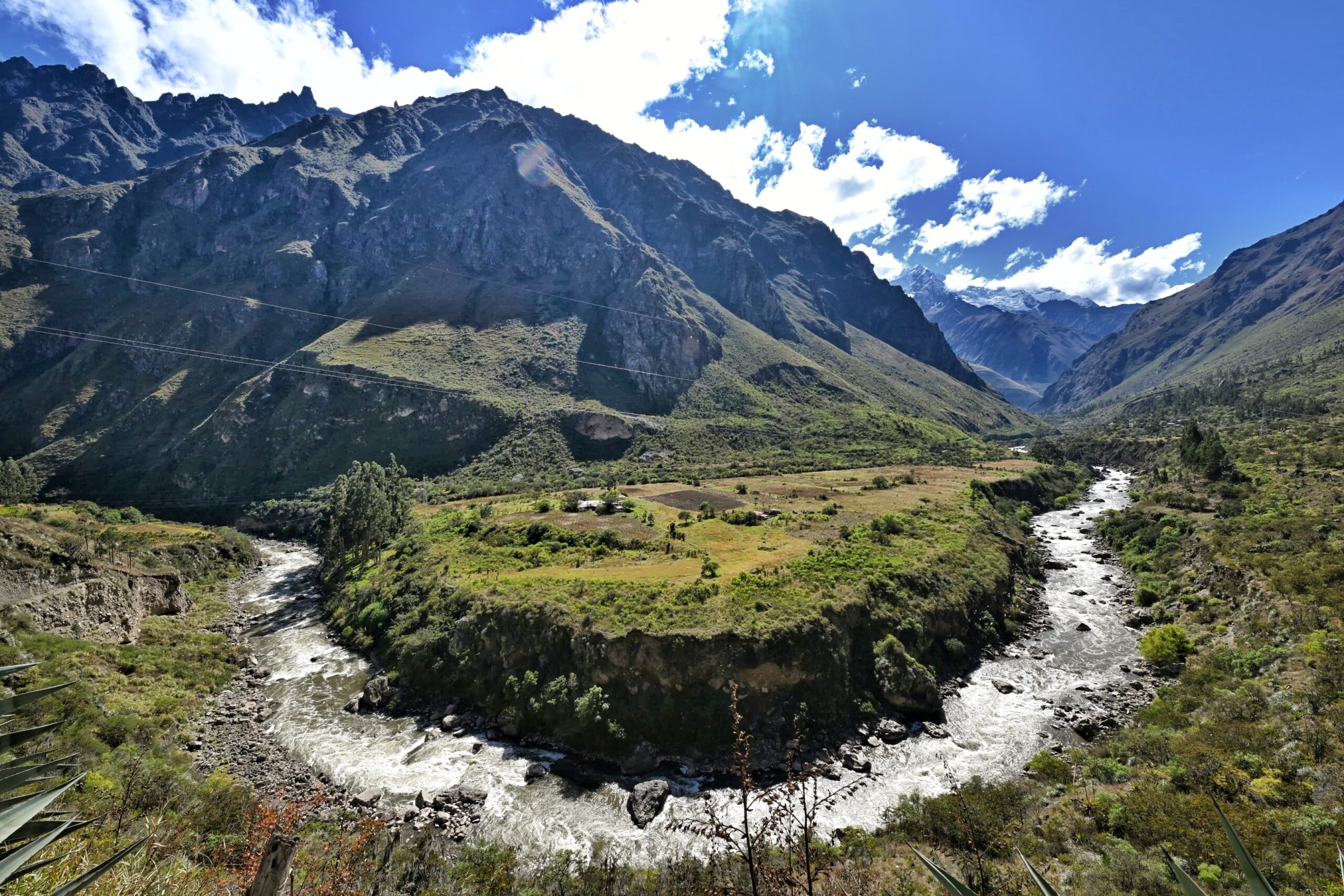
Taking it easy for the rest of the afternoon, Matt immediately dozed off for a nap. It’s June, so the locals act like they are freezing, but at 3600 meters with clear skies, napping in the midday sunshine is glorious. Meanwhile, Jo continued exploring the grounds — including the spa/pool, the working vegetable garden, and some walking trails that offered great views of the Rio Colca heading east into the Canyon. Later on, we both continued relaxing on the patio with our monoculars bird-watching. Very excited to unlock this new level of vacationing.

Rio Colca

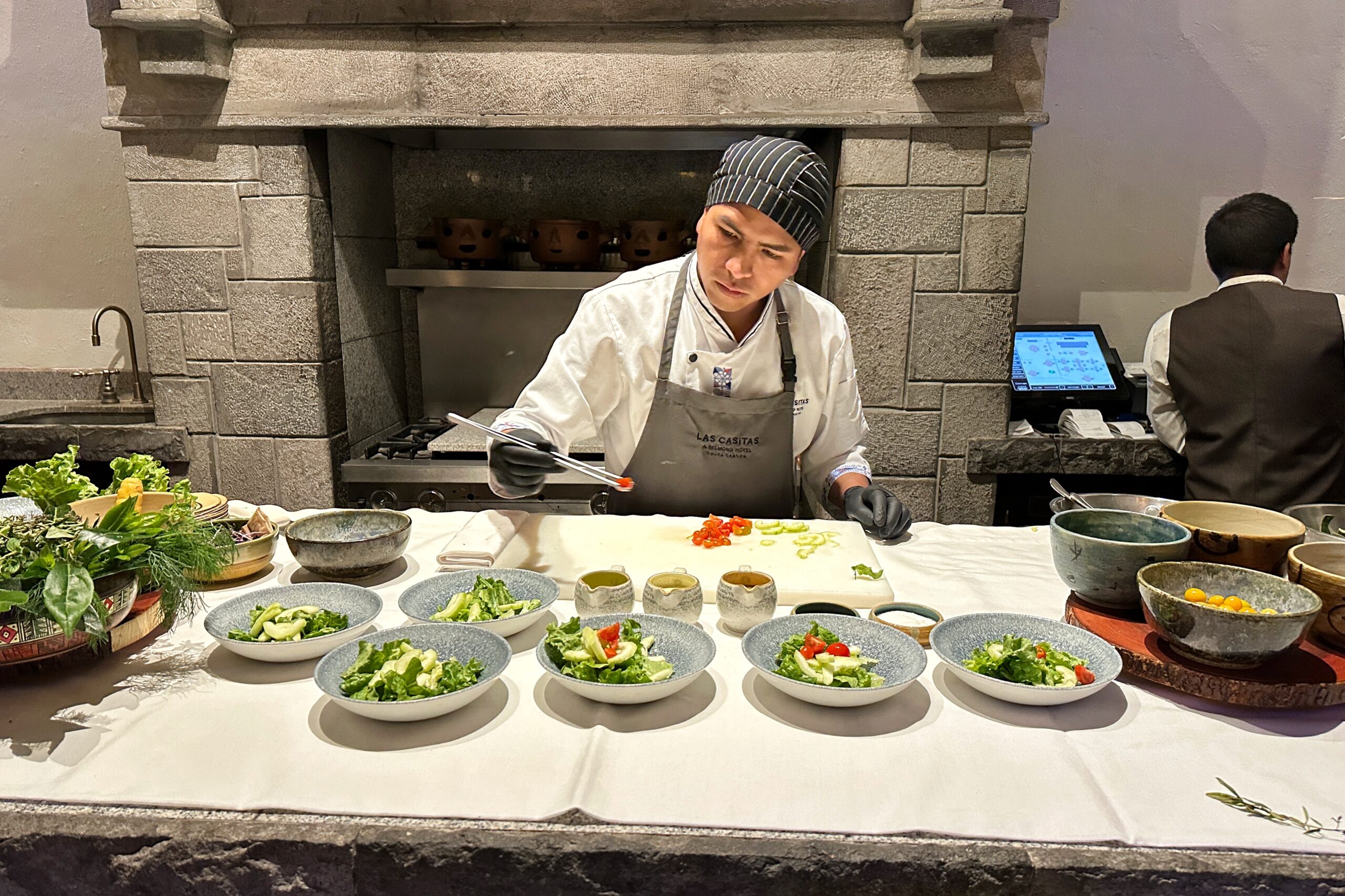
By 6PM, the sun had set, so we grabbed our house flashlight and made our way up to the restaurant. Prior to dinner there was a complimentary “cooking class” for guests, which was really just a salad preparation demonstration by Chef Mario. But that’s ok. Chef Mario constructed two incredible salads (wielding tongs with the precision of Mr. Miyagi) featuring fresh ingredients from the Las Casitas vegetable garden Jo was exploring earlier.

The first salad was lettuce, cucumber, and cherry tomatoes, as well as the herbs and a super delicious creamy lime dressing. The second salad was grilled eggplant and zucchini with a golden berry honey dressing. Both were amazing and we got the ingredient list to make the dressings at home. When Mario was done with the demonstration, we asked him what he recommended for dinner. He suggested the flame-broiled orange and pumpkin salad as a starter, and the slow-roasted braised lamb for the main course.

Super Mario salads

At dinner, Matt made sure to order those two dishes. Mario was spot-on. Both were great. Jo got trout and pineapple tartare in quinoa waffle cones (amazing) and rococo relleno (a traditional meat dish stuffed in a rococo pepper). It was so tasty and the right amount of spicy. We somehow managed to save room for dessert. Jo got the chocolate lava cake (obviously) and Matt once again asked for Mario’s recommendation. It was the carrot cake, and Mario proceeded to go three-for-three.

After dinner, we strolled back to our casita and quickly went to bed. Tomorrow’s adventure is horseback riding!

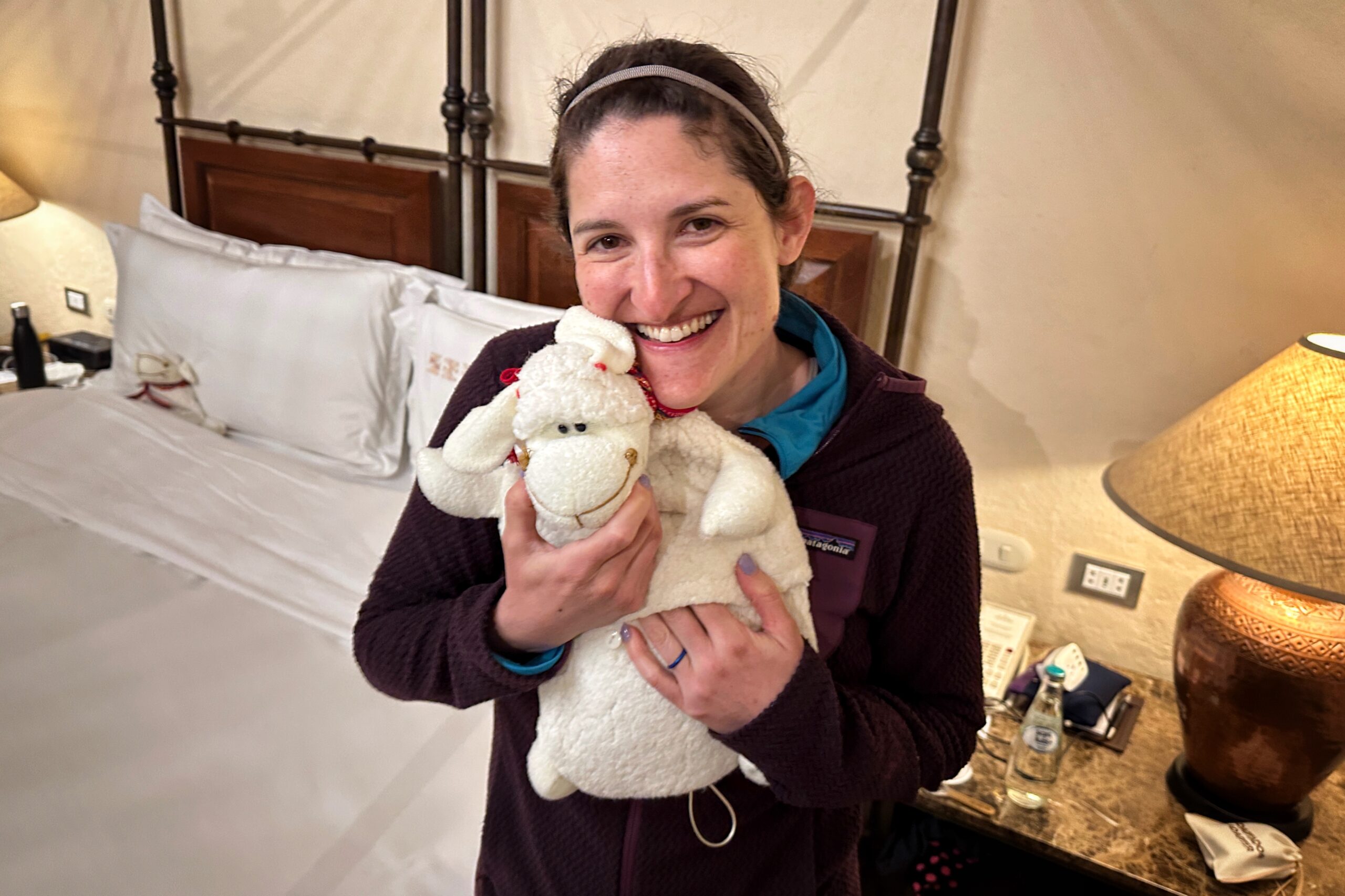
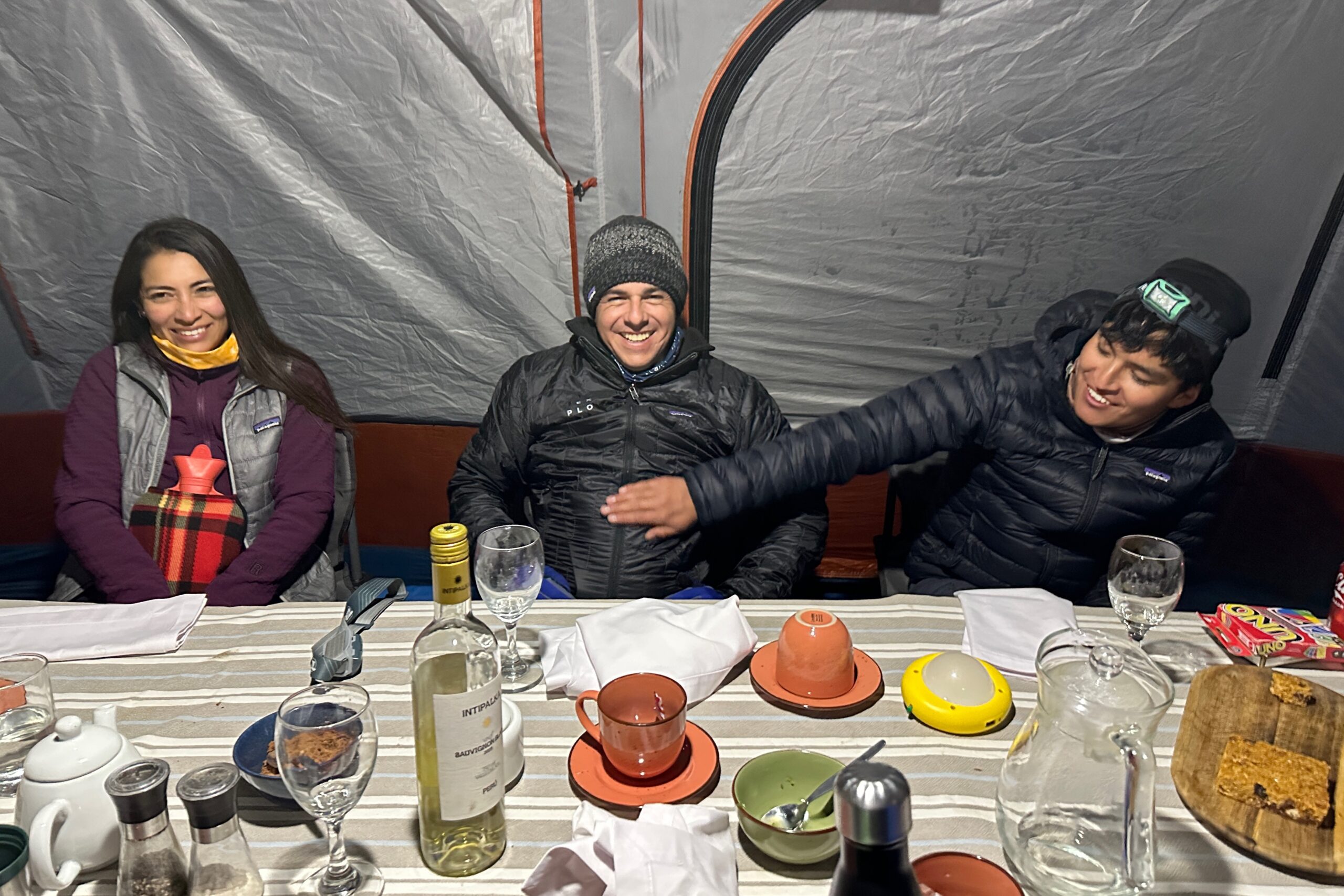
Hot-water bladder Alpacas if you are cold

Day 12: Inti Raymi Cusco

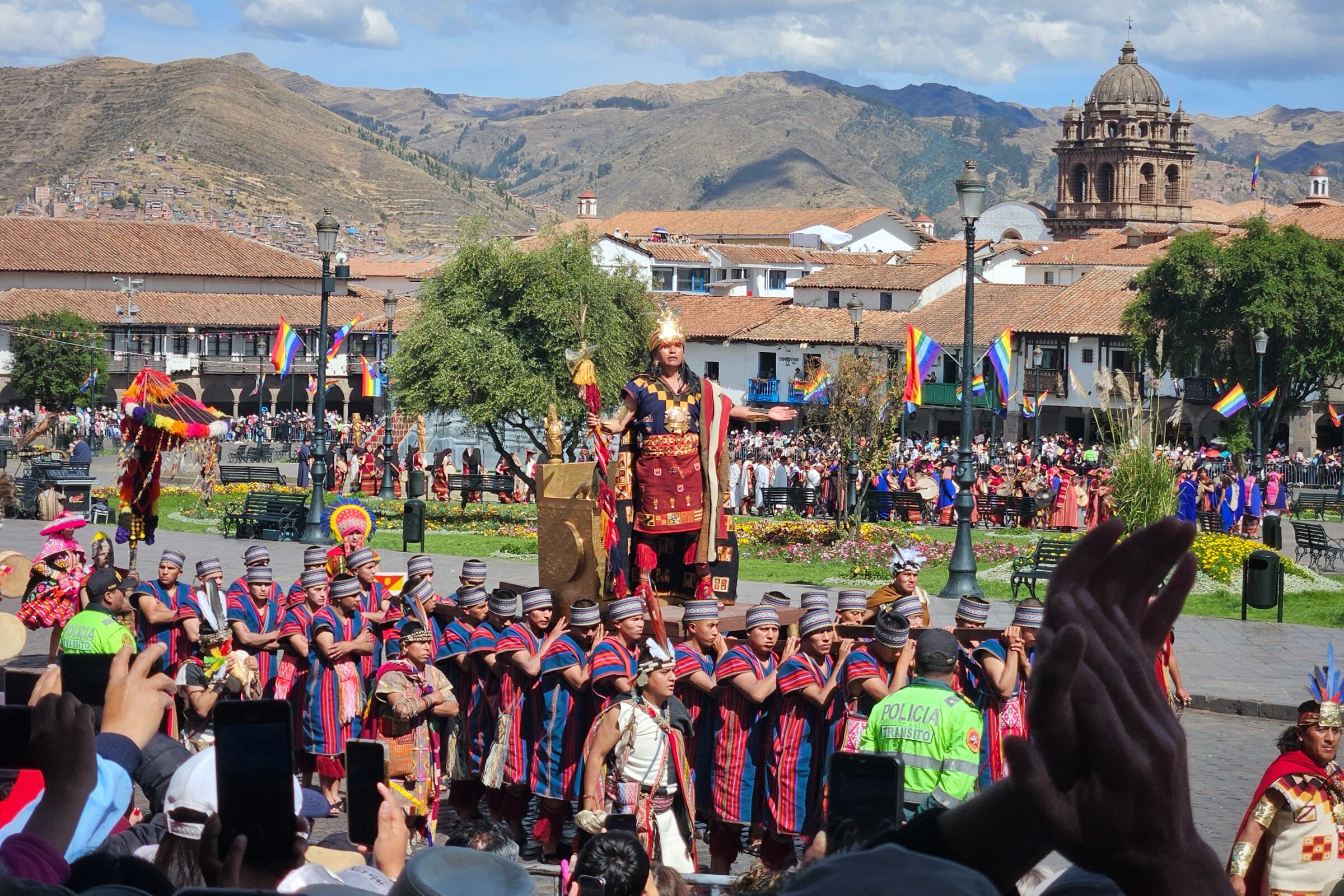
Today is Inti Raymi, the traditional religious ceremony of the Inca Empire held in honor of the god Inti (which is the Quechua word for “sun”). Historians say the OG Inti Raymi ceremonies took place from 1412 to 1535, at which point the Spanish put the kibosh on it (too subversive!). But since 1944, indigenous actors have been putting on a theatrical re-creation of the ceremony each year in Cusco on June 24th.

And whaddayaknow… we’re IN CUSCO on June 24th! We did not actually plan to be in Cusco for Inti Raymi — because our trip dates were dictated entirely by the Explora expedition — but once we learned the biggest festival of the year was going down at the same time we’d be passing thru, we were IN! Even more fortuitously, we stumbled on this information the night before the Teleticket — aka. Peru Ticketmaster — onsale for 2025 Inti Raymi tickets. So at 8AM on Monday, April 7th, Matt refreshed his browser a couple times and scored us tickets to the hottest celestial deity bash in town.

Cusco’s Inti Raymi Festival is a three-part affair — the first part starts at 9AM at the Coricancha, the second part moves to the Plaza de Armas at 11AM, and the third (and main) part takes place at the Sacsayhuaman Ruins at ~2PM.

All the advice we read about the first part at the Coricancha said you better wake up and claim your viewing spot on the street by 5AM or earlier. But thankfully, we’re be rolling in with our Coricancha bleacher tickets, which allowed us to wake up at a normal time and enjoy our standard Belmond breakfast.

Yeah, thank goodness for those bleacher seats

Even though we had tickets, we still wanted to arrive early and enjoy the festivities. Apparently, we were still a little bit too early because the bleachers hadn’t opened yet. With tons of people already milling about on the street, it was hard to determine if there was a specific line for the ticketed folk. One obnoxious lady was certain she was in the correct line and was losing her mind yelling at us. Yikes! When they finally opened the bleachers, it all worked out. We got great seats near the top and there was absolutely no rush. We ended up sitting next to a friendly couple originally from Mexico, who now live in Nebraska, and were actually at Machu Picchu three days ago as well. Go Cornhuskers.

At 9AM, the ceremony was underway. Hundreds of musicians, dancers, and actors in traditional clothes march onto the Coricancha grounds, representing the four different regions of the Tawantinsuyu. After the Incan general (aka. Sinchi) and his warriors secure the premises, the Incan king (aka. Sapa Inca), eventually appears to thank Inti (the Sun god) for the day and his good fortune, while also asking permission to continue the Inti Raymi Ceremony at the secondary locations. (Spoiler alert: It’s gonna be YES!)

Opening Act of Inti Raymi at the Coricancha

Next up, the show moves up the street to the Plaza de Armas. Some people skip the morning show at the Coricancha and camp out to secure their spot. There are no seats or tickets for this second part, so you have do brave the crowds. And holy crap, are there crowds!

Chill Cusco dog says, “you sure you want to go the Plaza?”

Extremely accurate sign at the SW corner of Plaza de Armas

We navigated clockwise around the Plaza thru the mass of humanity. We weren’t really trying to get a prime spot, as much as we wanted to be on the NE side of the Plaza when the second part of the show was over. It took about 45 minutes to walk three blocks. And then another 45 minutes to make it halfway around the Plaza. The entire place was basically a mosh pit. We followed a woman selling food out of a basket who did an excellent job of keeping the crowd moving.

Finally, it got so crowded, we couldn’t move anymore — guess this is where we’ll be watching the show! Our immediate neighbors were a group of Spanish-immersion high school students from Cincinnati. They were cool and brought some much-needed “concert crowd” street-smarts to the table, which seemed to be in short supply among many other pushy people who thought they were actually going get somewhere attempting to pass us in this crowd. We tried our best… “Yo, turn around! Cerrado! Cerrado! Cerrado!” But they’d try anyways, and fail.

Our final Plaza de Armas spot

WKRP in Cusco

In this second part of the Inti Raymi ceremony, the four different regions are once again represented. The Sapa Inca and the current mayor of Cusco meet up in the center of the Plaza. An Incan shaman steps forward and uses some coca leaves to determine if today is a good day for the ceremony (Spoiler alert: It’s gonna be YES!). Then some other dignitaries haul in their khipus (knotted-string Inca recording devices) and the main characters have a riveting accounting discussion in Quechua before they proceed out of the Plaza.

Second Act of Inti Raymi in the Plaza de Armas

Sapa Inca exiting Plaza de Armas

Following the procession’s exit from Plaza de Armas, the show now moves to the third and final location at the Sacsayhuaman ruins located on the hill north of the Plaza. Assuming traffic was going to be bonkers and the fact that Sacsayhuaman was only a 20 minute walk, we opted for the hike. This portion of the festival is ticketed with assigned seats, so we were in no rush. We followed the crowd and meandered our way up to the entrance.

Bienvenidos Saqsaywaman

Second intermission break for the performers

Our seats were in the orange section, which directly faces the stage. We also happened to be directly in the middle of the orange section (thanks Teleticket onsale!). As such, we were sitting RIGHT NEXT to the announcers and camera crew. (Ok, technically there was one seat between us, but the guy in that seat slept for most of the first half, then woke up and left, lol)

Performers start to make their entrance at Sacsayhuaman

The show was impressive. It included another two-plus hours of dancing, music, and rituals. The actors read their lines in Quechua, while the broadcast team narrated what was going on in Spanish, and then in English. In preparation for the show, Matt also found a script (and translated it into English) which was really helpful.

Here’s the Cliff Notes version… First, the band arrives (always rockin’!), then the dancers and the Chaskis (messengers), followed by the armies from the four regions of the Tawantinsuyu and the top general (Sinchi). The Sinchi calls out the Sapa Inca, who then asks each region how things are going. Collasuyu (SE) says bad. Contisuyu (SW) says not so hot. Antisuyu (NE) says great! Chinchaysuyu (NW) says really bad, plus lots of lying, cheating and Spainards. Sapa Inca tells team Antisuyu to perform a dance number to make everybody feel better. Four key ceremonies follow… including the Chica ritual, the Sacred Fire ritual, the Llama Sacrifice ritual, and the Sacred Bread ritual. Then (eventually) Sapa Inca concludes the show and everybody marches/dances off in reverse order.

Playing Where’s Waldo with the Vicuña actor

Inti Raymi Broadcast booth

It was sunny and warm all day, but during the final 45 minutes of the third act, the sun went behind some clouds and the temperatures dropped. People starting filing out of the stands like the Clouds were up 4-1 over the Incas in the bottom of the 8th. To be fair, there were about 3,000 people in the seats (and many thousands more sitting on the hill behind us), so they were probably just getting ahead of the post-game traffic.

We observed the announcers sitting next to us starting to wave and gesture to the actors on stage to get a move on. The english-speaking announcer said that the new actor playing the Sapa Inca was taking forever and really milking the part. Lol. Britt told us later that the actor who previously held the role for nine years tripled his price, so they went with a new guy. Maybe this new guy was just method acting and wanted to look a bit lost when the sun went away. What’s a sun god without the sun?

Sapa Inca exiting Sacsayhuaman

Despite the chill in the air, we definitely opted to stay until the very end. Sure, the Clouds held on for the win, but that didn’t stop people from running onto the field and joining the band on the main platform as they played themselves out with a rocking beat. So we jumped in as well, taking the opportunity to snap some photos on stage and warm ourselves by the remnants of the sacred fire. After security gently nudged us off the stage and out the exit, we made the hike down the hill back to our hotel. Took about 15 minutes — significantly shorter than the hour or so it would’ve taken in a vehicle.

Inti Raymi stage rush

This guy does NOT break character

You don’t have to go home, but you can’t stay here

Tomorrow, we have an early flight out of Cusco to Arequipa. So upon our return to the Monasterio, we spent some time packing and getting ready to go. We also opted for a snack and minibar-palooza for dinner (plus leftover pizza!). We are fancy, for sure. By the time we finished packing, Nan and Britt returned from dinner and we met up with them at the bar for a goodbye drink. We all decided that Inti Raymi was an amazing experience that everybody should do once, and that once is plenty enough. Quite a day. Farewell Cusco and farewell Nan and Britt!

Day 11: Cusco

Having no concrete plans for our first full day in Cusco, we happily slept in for the first time on this trip. However, we did rise in time for the breakfast buffet (ending around 10:30am). Our traditional Belmond breakfast is fresh fruits, colorful pastries, and eggs Benedict (plus cappuccinos, obviously). Just for the fun of it, there was also a barista sampling different regional coffees and bottling fresh cold brews to go. Whatever we decide to do today, we’re gonna be awake for it.

Coffee time!

Fully amped up, we gathered our things and ventured out the Monasterio’s giant wooden doors to walk around the city. The hotel is located in the Historic District, just a couple blocks to the east of the Plaza de Armas — which appears to be the epicenter of all Cusco’s pre-Inti Raymi festivities. A large grandstand near the cathedral featured booming speakers and a PA announcer shouting excitedly as a constant parade of groups, bands, and dancers passed by the dignitaries and the rest of the crowds lined up along the streets.

24×7 party here in the Plaza de Armas

Following the source of the parade to the south, we exited the Plaza de Armas and turned left onto the Avenue El Sol, where the endless line of parade participants continued. On this jam-packed street, everybody was getting organized, warming up, and preparing for their big turn into the Plaza. Each group was hundreds of people strong, decked-out in their team colors and festive outfits.

Getting in formation

Warm up the shells

After successfully navigating the crowds and moving at least two or three blocks away from the Plaza, we ducked off the main street and took a couple smaller alleys to reach our primary location of interest for the day — the Coricancha.

El Sabor del Perú!

The Coricancha was the most important temple in the Inca Empire, located at the epicenter of the Tawantinsuyu (which is the more correct Incan terminology to describe their realm, aka. “The Four Regions Together”). Three real quick facts… (1) The temple was dedicated to the Sun God (Inti); (2) Gold was the top interior design preference; and (3) Eventually the Spanish showed up and plopped their Church and Convent of Santo Domingo right on top of it. Rude. And that was after they stole all the gold. Anyways…

Coricancha and Church of Santo Domingo mashup

Coricancha courtyard with symbolic Incan landspacing

We found the entrance and were quite pleased to learn the Coricancha/Convent was open for visitors today (including Nan and Britt, whom we ran into as they were leaving, right outside the gate). After purchasing our tickets and entering the museum, we found plenty of interesting stuff and spent the next couple hours taking it all in — including Incan art, modern art, textile displays, archeological restorations in progress, a wide variety of ornate wooden doors, and even a bell tower to climb.

Santo Domingo Courtyard

Bell tower

View of Coricancha from Bell Tower

Staff putting Inti Raymi props into place for tomorrow

Inti-Inti stare down

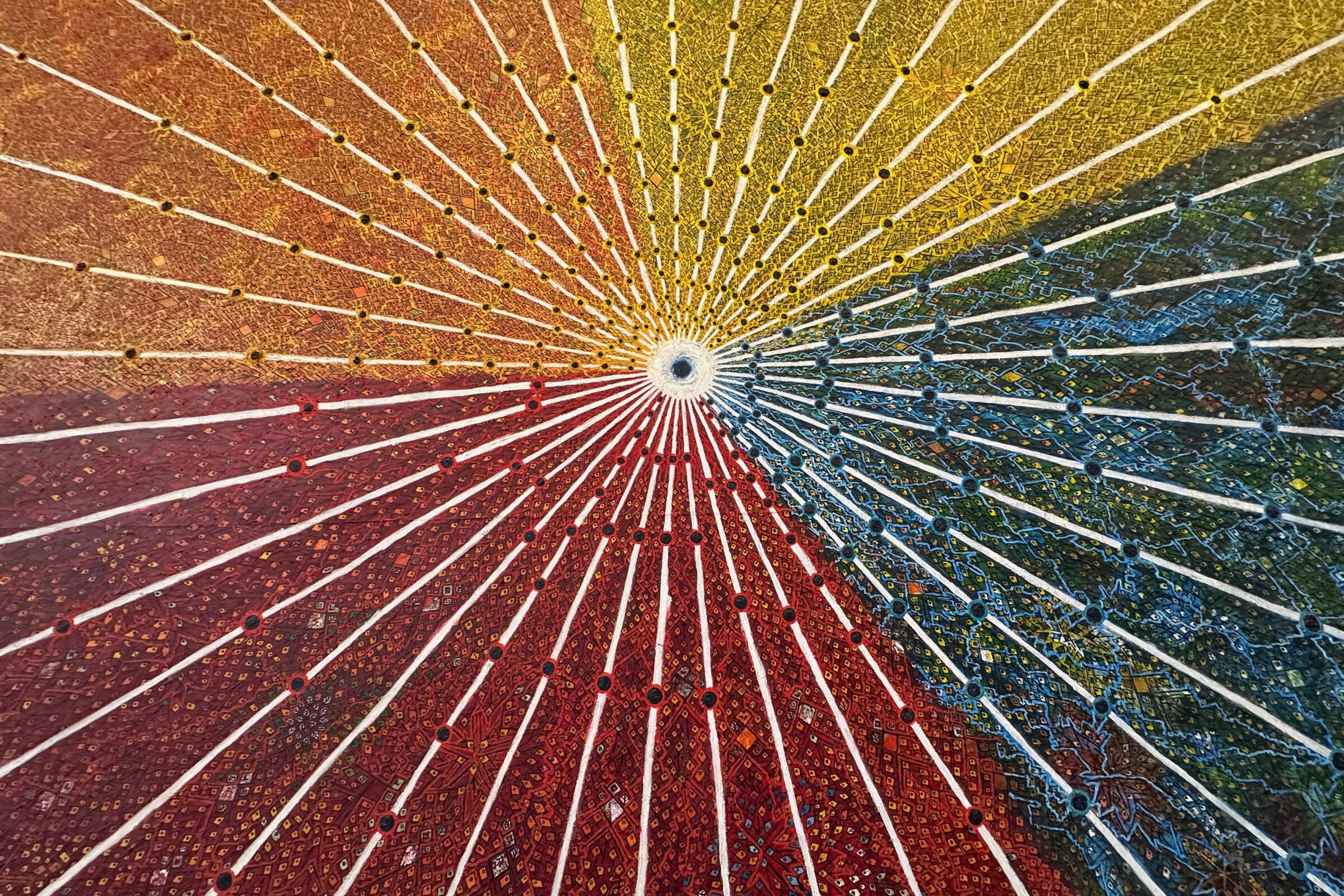
One particular item Matt wanted to see in the Coricancha was a modern art piece by Miguel Araoz Cartagena depicting the Seqe System of Cusco. The Seqe System was a series of imaginary lines (“seqe” means line in Quechua) that radiated out from Cusco and “connected” various important shrines, temples or objects called wakas. Think Incan Trip Advisor with 41 different itineraries to check out 328 cool things to do around the empire!

Aside from the fact the painting is cool, the main reason Matt wanted to see this piece is because it’s also the cover art for the “A History of the Inca” podcast by Nick Machinski — which Matt listened to in full prior to the trip. If you are considering a trip to Peru, do yourself a favor and give this excellent podcast a listen as well!

Thanks Nick! Your podcast was awesome!

After our quite enjoyable visit to the Coricancha, we ventured back out to festive streets of Cusco. Jo was on the hunt for an alpaca shawl, with fridge magnets and Christmas ornaments on the shopping list as well. One store took care of the magnets, ornaments, and even a pair of Machu Picchu wool socks for Matt. We also were looking for a Cusco flag (which was surprisingly hard to find). There were lots of little paper flags along the parade route, but even those were elusive.

IMPORTANT! We did find the Chocolate

We continued to walk up and down the streets, shopping and parade-watching. The folks representing the wheat and quinoa farmers team looked like they were having the most fun with their giant wheat hats and quinoa-inspired dance routines.

The Quinoa Shuffle

New Kentucky Derby hats just dropped

Navigating side streets to get around the parade crowds, we eventually found and negotiated for the perfect shawl, as well as a Cusco flag. Mission(s) accomplished. Then we crossed thru the Plaza de Armas to get a closer look at the ceremonial props for tomorrow’s Inti Raymi Festival. It appears Inti is currently shrouded in a Cusco flag until the big reveal.

Band needs a breather

Plaza props are ready for tomorrow

Plaza de Armas parade entering 300th hour (probably)

We considered going to the nearby Inca Museum next, but we stopped by the hotel to recharge (ourselves and our phones) first. It was about 3:45PM when we were looking up information on the Inca Museum to see if it would be worth going, only to find out it closes at 4PM. Well then! That makes our decision easy — hotel pool it is!

Back to the peaceful Monasterio courtyard

All hotel rooms should be double-level rooms!

Technically, the Monastario does not have a pool, but their sister hotel right next door does. The concierge said they needed to call over to make sure there was availability — and there was. When we arrived, we realized they had ALL the availability — we were the only ones there, lol. We forget that people here think it’s cold this time of year (about 70 degrees). But it’s darn-near perfect.

Available to pool

The Monastario offers a free art tour every day at 5:30PM. We quickly changed into some art tour-worthy clothes, grabbed some beverages from the minibar, and joined the fun. Our guide talked about the original paintings hanging along the walls of the hotel from the monastery days, primarily in the Colonial Renaissance style. She noted that Europe was probably sending over mostly JV-level painters to support the cause, so the technical expertise wouldn’t be quite the same as your traditional European Renaissance works (ie. perspectives, body proportions, and lighting effects are sometimes wonky).

But what these artists lacked in skill, they made up for in superb messaging to convince the Incans to adopt Christianity. (Hey Incans, you like family? We do too! Here’s a bunch of paintings depicting the Virgin Mary’s parents! You know, Mary’s parents, Mr. and Mrs. ummmm… Joaquin and Anna! Anyways, Christianity!) Other noticeable Andean influences in the paintings include big earrings, big hair, jungle scenery, and feathers being heavily emphasized with angels.

Weath of knowledge on Monasterio art collection

Classy art tour attendee

We ended the tour in the Chapel of San Antonio Abad to observe the architecture (walls are original, roof is not) and the additional art pieces. Nearly every painting in the chapel featured a cherub in the corner with a mirror (representing justice). But more importantly, each cherub has also been given a wild “staring-into-the-camera” expression. Like, “Get a load of this angel!”, or “Can you believe what this saint just said to that demon?!?”

We worked up an appetite during the art tour, but rather than searching for a sit-down dinner place, we opted to find a nearby pizza place that would let us order takeout. The place we found had a Cubs game on TV and we chatted with some other similar-aged travelers who raved about the benefits of being international teachers. We returned to our awesome hotel room and enjoyed our fantastic pizza and minibar dinner.

Easier to watch the Cubs in Cusco than Chicago

Tomorrow, we Inti Raymi!!!

Day 10: Parcco to Cusco

Plotting our trip itinerary a couple months ago, we figured today was simply a travel day at the end of our nine-day Sacred Valley expedition. Or better yet, a sleep-in and travel day! Either way, not much was planned, except Explora would bid us adieu at some point and drive us to our next destination in Cusco.

Then during our return to Explora last night, the staff asked us about our plans for today. They mentioned breakfast, a half-day exploration, lunch, our checkout time, and our transfer to… WAIT… did you say “half-day exploration”?!? Heck yeah! We can sleep-in when we are back in Chicago. As long as we are in Peru, let’s set those alarms and get after it. So we asked Brai for his favorite half-day exploration and inquired if Mati would be available as our guide. The exploration was good-to-go, but it was late and the Explora guest/guide speed-dating hours had concluded, so we didn’t hear back from Mati. Only (morning) time would tell.

Walking into the dining room at 6AM today, it was a promising sign when we saw a Patagonia R1-Air Hoody-draped figure sitting mysteriously in the corner like Explora Strider. He tried to make us sweat it out a bit, but we got our guy. “See you at the big map shortly!” Mati said. We’ve won the guide lottery and the day was off to a very good start.

Yapa Cappucino!

Speaking of incredible, Luis was spot-on about the French Toast

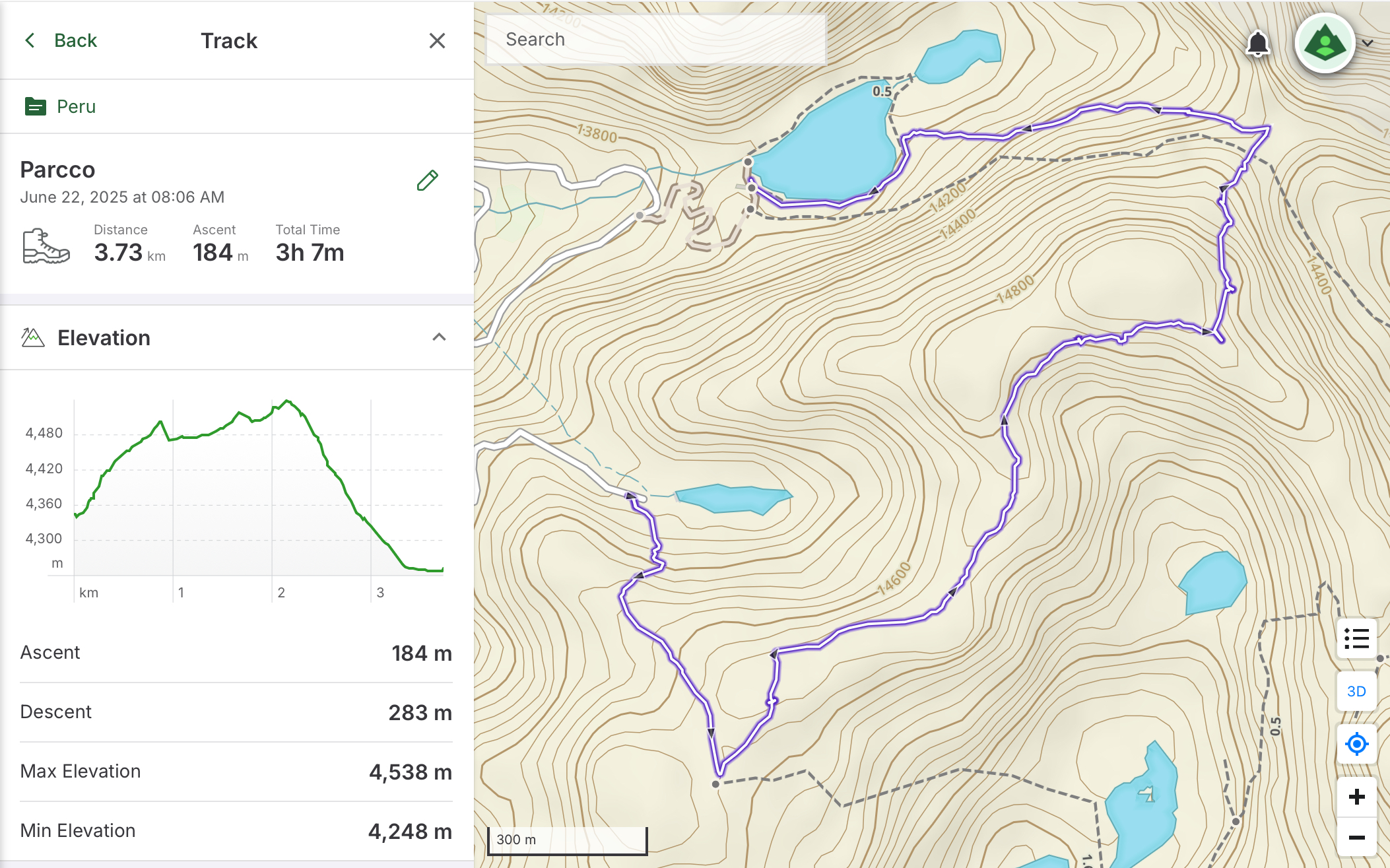
After stocking up on Sublime chocolates and stepping over to the big map at 6:45AM sharp, Mati filled us in on additional details about our hike for the day, called Parcco. The hardest part was the two-hour drive to get there, up windy dirt roads for the last 30 minutes. Jo got pretty car sick, and needed 5-10 minutes of fresh air, but recovered quickly and we were on our way.

Welcome to ACTUAL Peru Dry Season™

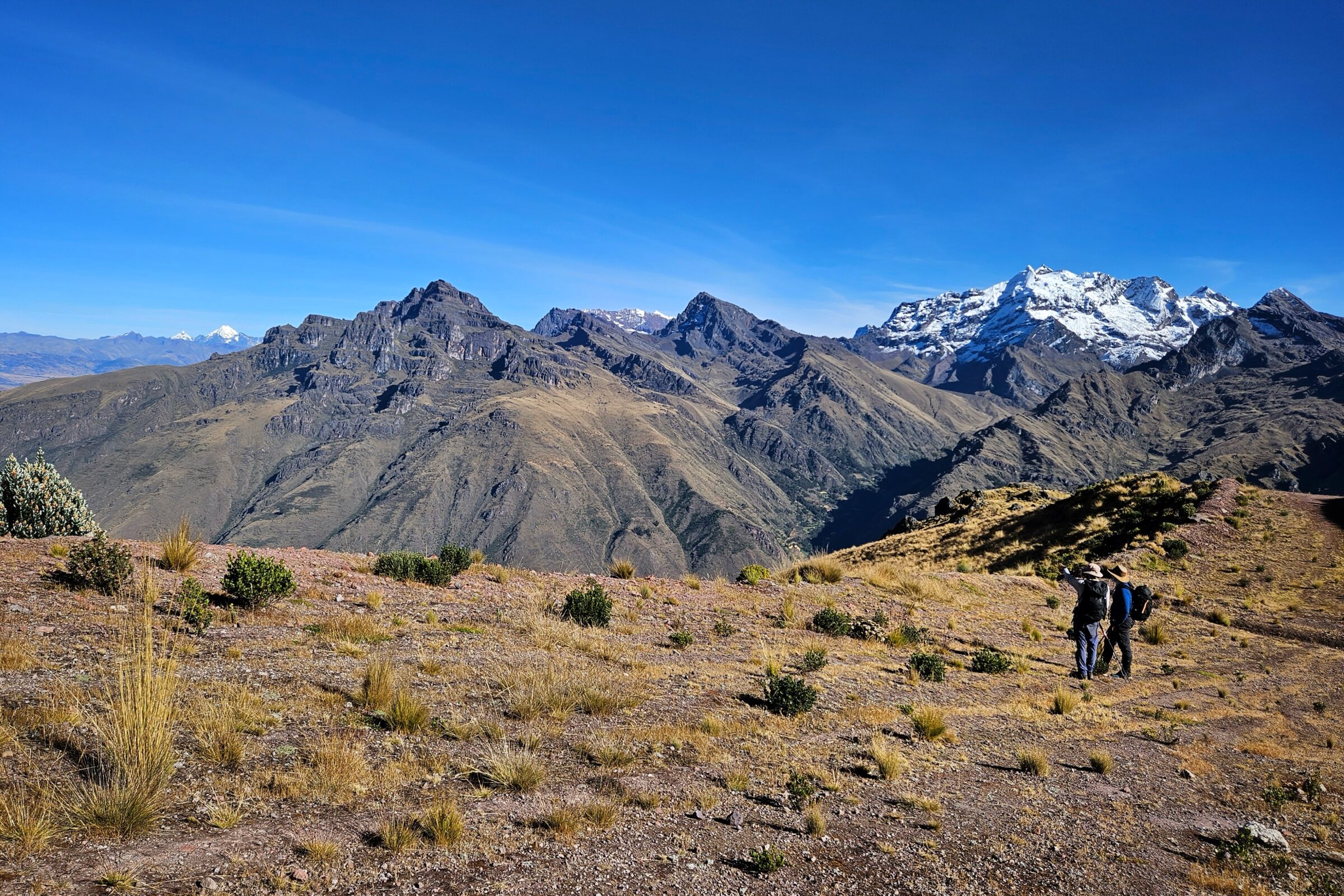
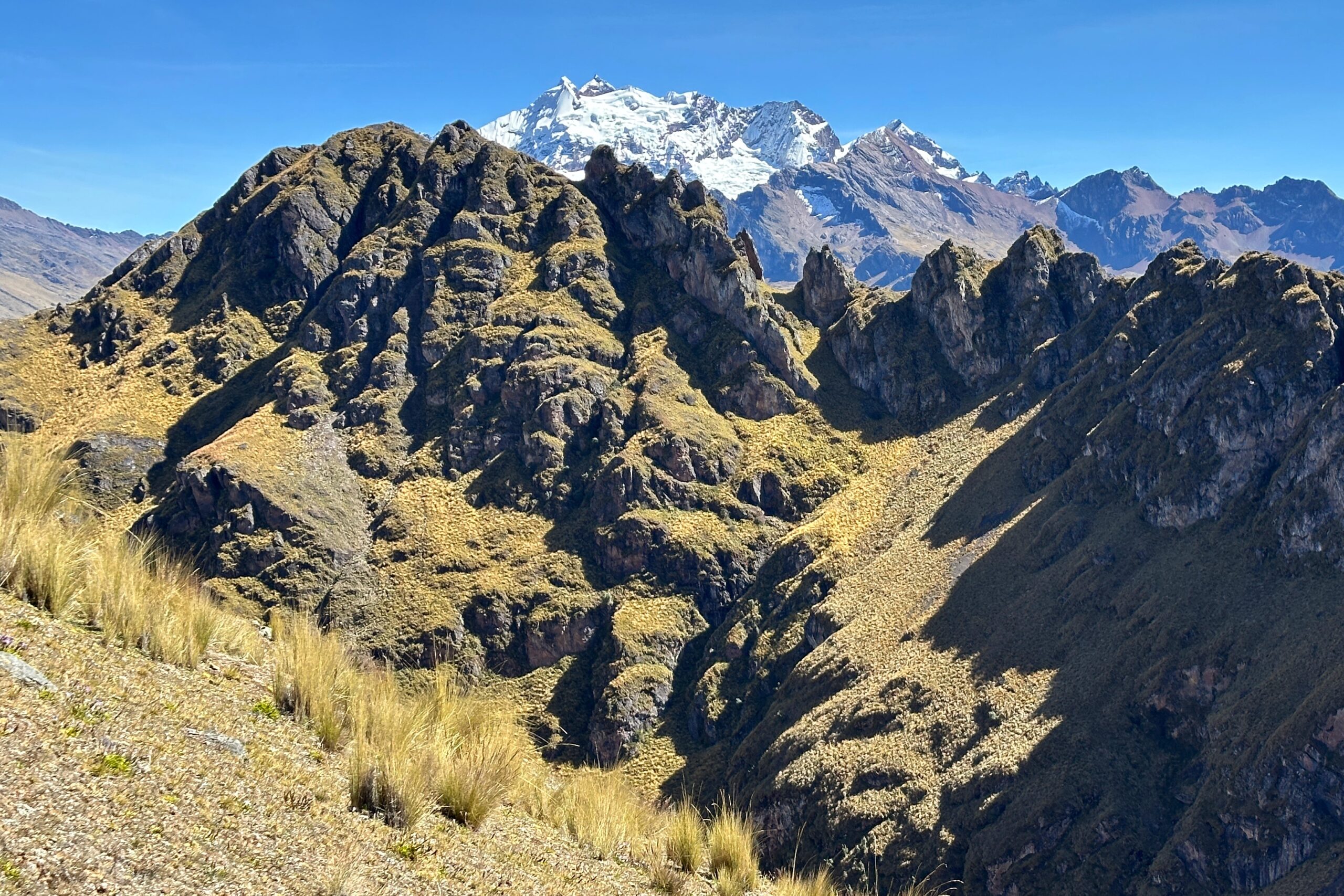
The hike started at over 4300m with a steep uphill over the straw/grass vegetation we’re familiar with in the Puna zone. Much easier to walk on without the snow. We walked along nature paths built by white tail deer (we saw one!) and pumas (we saw none) until we got to a high point with an unobstructed view all around us. There were zero clouds in the sky and visibility forever. We had a better view of Salkantay on this hike than we did from the Salkantay trail.

Explora guide lottery winners

Picture-perfect Sahuasiray

Picture-perfect Panorama

We continued to hike, walking along a ridge until we reached another high point. We saw more great views of the surrounding hills, mountains, and lagoons. To the south, Mati pointed out his favorite full-day exploration called Huchuy Qosqo (we’ll have to do that one next time). To the west, we could see the Auzangate Mountain Range, quite a distance away. And while Explora’s official “Five Lagoons” exploration is not too far away from this location, we found a “Four Lagoons” version at our feet.

Pointing out future Peru hikes

Puna primary color palette

Hear me out… FOUR Lagoons Exploration

Perfect Parcco day with Mati

Mati remains a huge fan of botany, so he also talked about the various plants we found along the way, including the one that looks like the emoji flower on WhatsApp.

There is definitely a resemblance… 🌺

We grabbed a snack break on a flat section just below the high point and kept a lookout for pumas that have been known to wander and nap in this area. Given our luck spotting Pumas, we were completely safe. We took in one last 360-degree view of the landscape and continued hiking down the mountain, passing hairy cacti we made sure not to fall on. As we got close to the car, we opted to skip the picnic table of snacks and drinks and eat in the car in order to save some time. We weren’t in a complete rush, but we still had a lot to do back at the hotel before our departure at 3:30PM.

Don’t argue with these guys

No Pumas sneaking around today

One more for the calendar

Parcco hike details

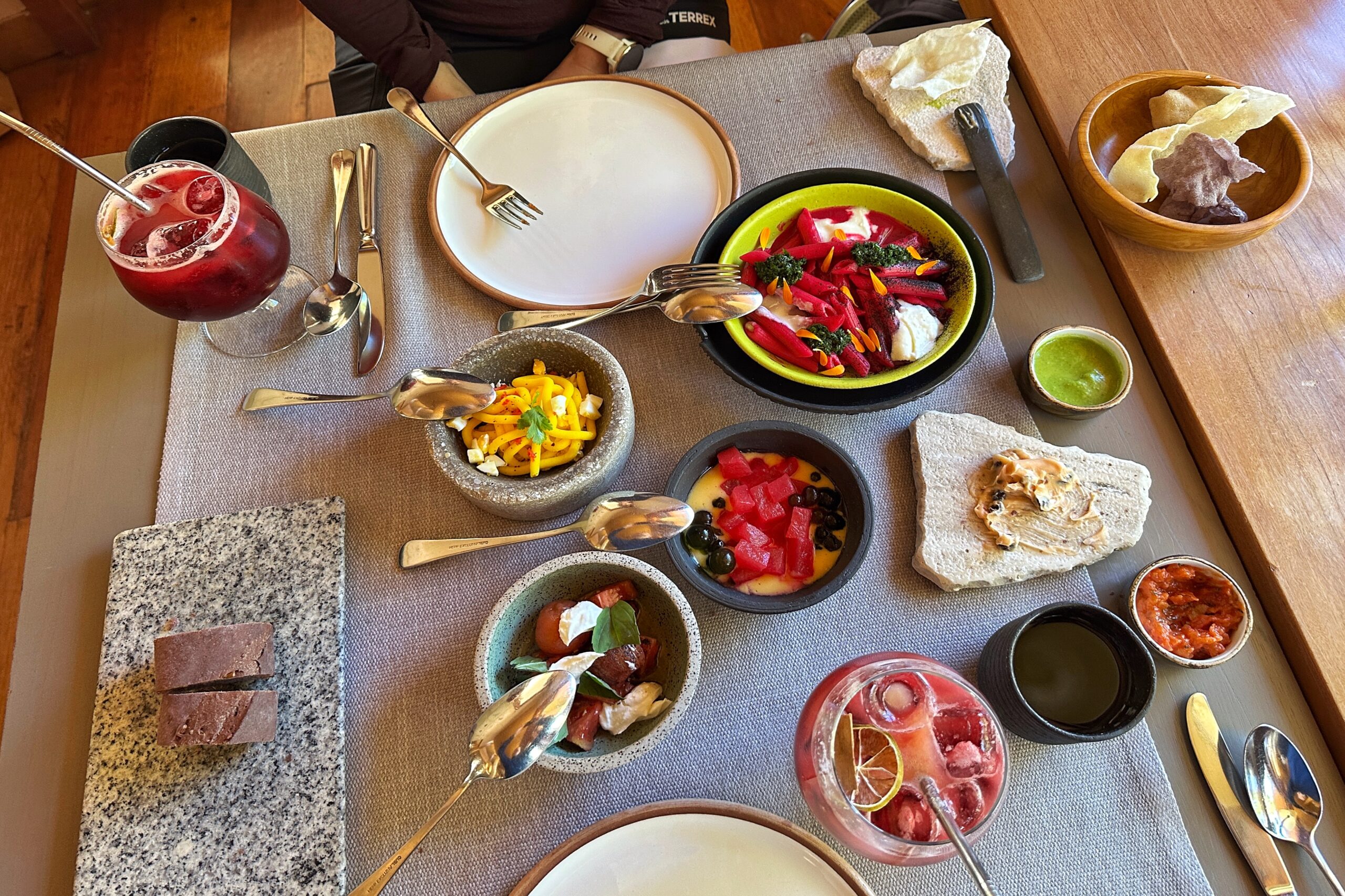
Fortunately, our ride down to the valley went much better and Jo did not get car sick. First order of business back at the hotel was using our gift shop credit for a collection of Explora t-shirts and a snazzy teal zip-up jacket for Jo. Second order of business was lunch! We started Explora with ceviche and we ended Explora with ceviche. It’s so good. The server also recommended sharing ALL the appetizers on the menu, and we gladly agreed. Beet pasta, causa de pollo, watermelon ceviche, and caprese salad were all amazing.

One more delicious Explora lunch

After lunch, our third order of business was a mad dash back to our room to pack up ALL of our stuff in time for our 3PM checkout. The later checkout was extremely helpful last night when we needed to go to sleep for our morning hike, but now we had about one hour to re-organize and re-pack. Thankfully, we made it just in time. The staff grabbed our bags, we gathered in the lobby, and awaited our transportation to the Montesario Belmond Hotel in Cusco.

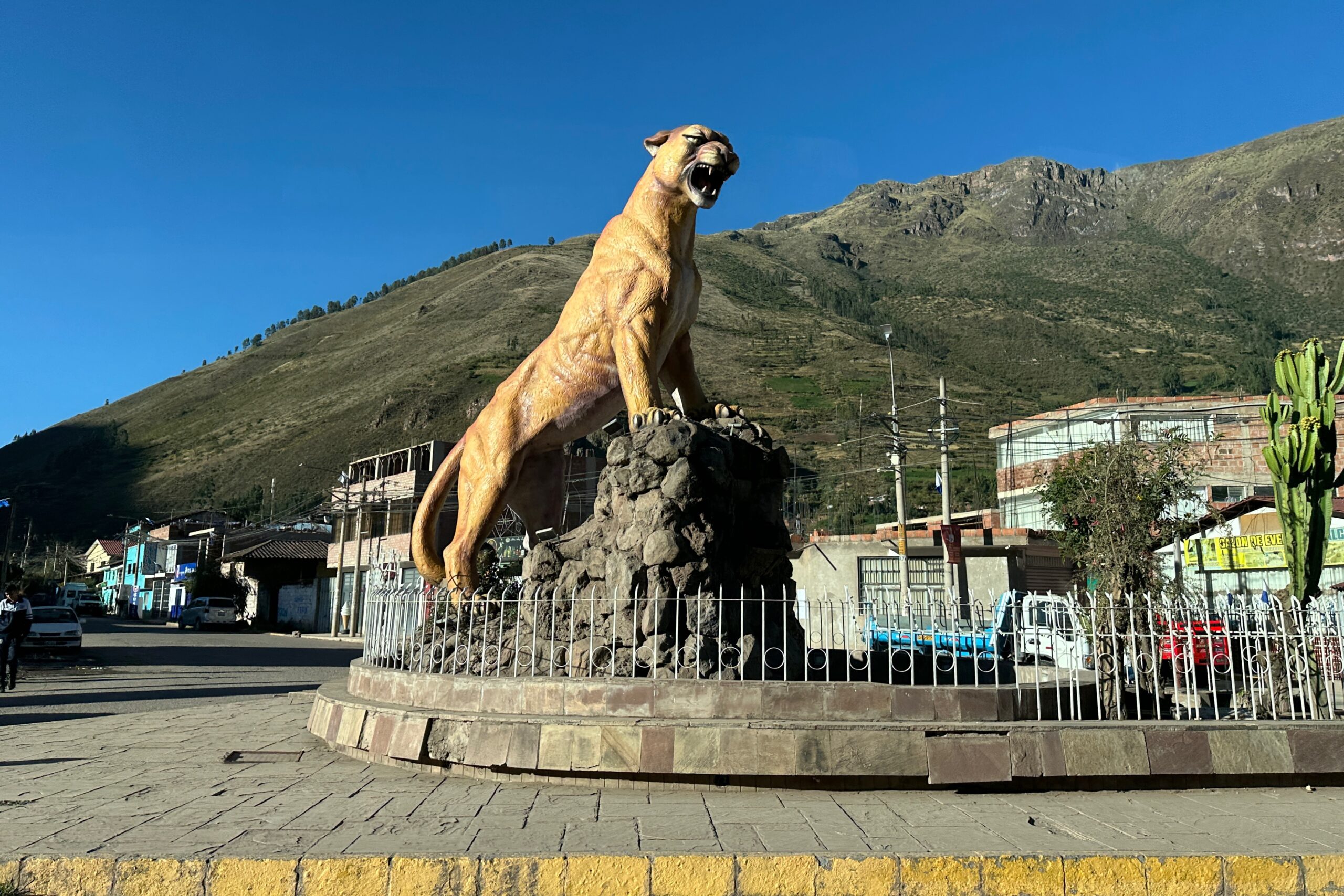
Only Puma we saw today… on our way thru Calca

Leaving Explora is sad, but there is some great news! In a complete coincidence, Nan and Britt are also travelling to Cusco for the next several days AND they are also staying at the Montesario Belmond Hotel. What are the odds?! So, in addition to sharing our ride to Cusco, we’ll get to spend a couple more days with them (if they don’t mind).

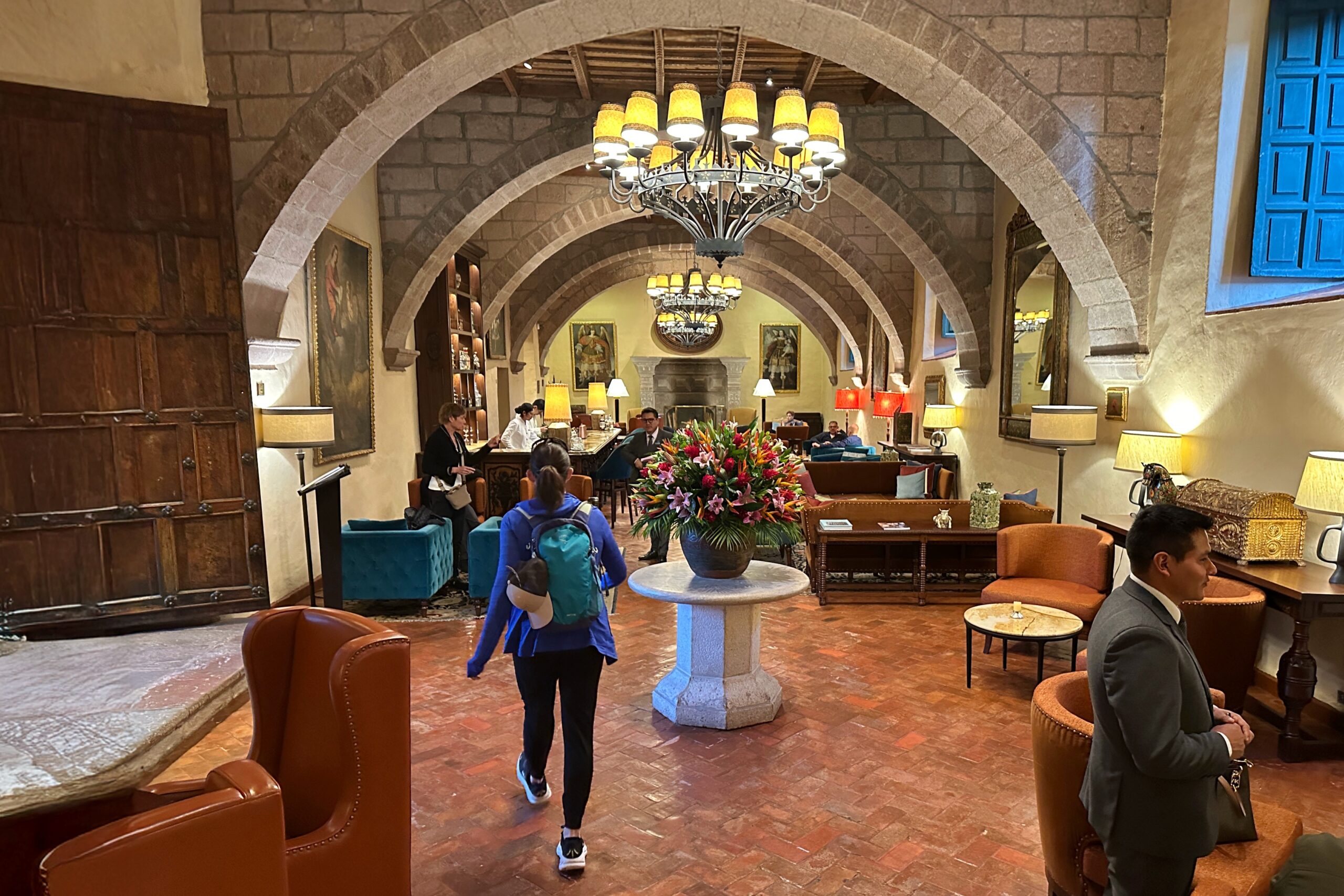
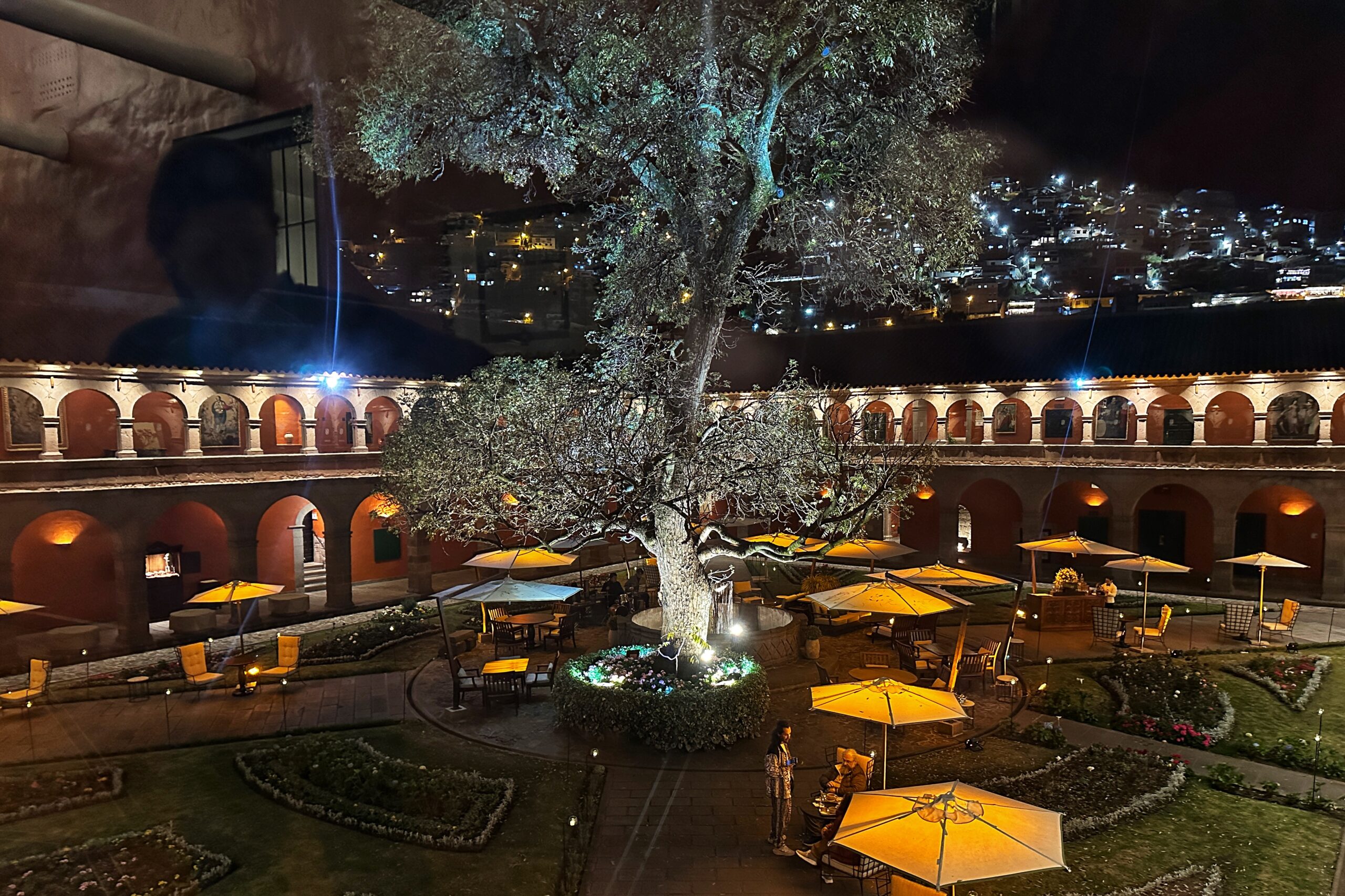
Upon our evening arrival to the Montesario in Cusco, we bid our Explora diver farewell and we checked in to the new hotel. As the name implies, it is a refurbished Baroque seminary built in the 17th century on Inca foundations. So yeah, the place has plenty of character. They even presented our room keys in a tiny little treasure chest with a dramatic flourish. We somehow got upgraded two levels to a room with a lofted living room area, a nespreso machine, and a minibar with everything included in the rate. This is an excellent way to ease of pain of leaving Explora.

Montesario has character in spades

300-year old Andean Cedar is courtyard centerpiece

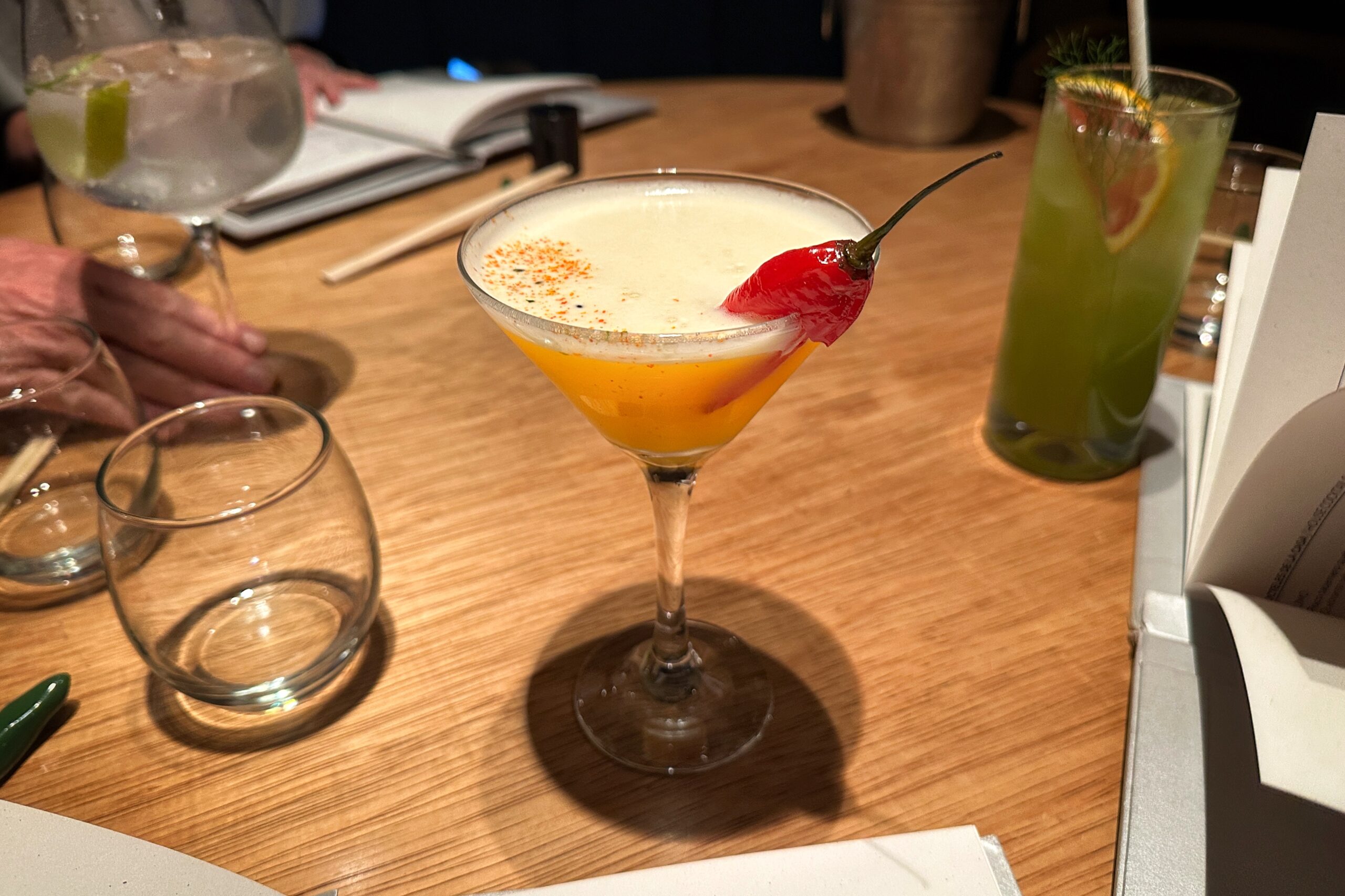
Nan and Britt had dinner reservations at Limo, a Peruian and Japanese fusion restaurant located on the Plaza de Armas, and invited us to join. The food was amazing — as was the company! — and, as a bonus, the restaurant overlooked a parade below. We already knew the city’s Inti Raymi festival was two days away. What we didn’t know was that the entire city has been celebrating for the last 12 days in preparation! We went outside to watch the parade for just a few minutes before heading back to the hotel and immediately falling asleep.

Quebranta tabernero pisco, togarashi ginger, passion fruit, and limo chili. YUM.

We’ve had a lot of early mornings, but tomorrow we have no set plan! Just eat breakfast before it ends, wander around Cusco and see if any of the places/museums we want to go to are open, and maybe catch a hotel art tour later in the afternoon. How relaxing!

Day 9: Huayna Picchu

When we signed up for this expedition, one of the main reasons we didn’t mind returning to Machu Picchu (besides the fact it is Machu-freakin’ Picchu) was that our second day here offered the opportunity to start early and climb Huayna Picchu — with our prized Circuit 3, Route 3A tickets!

Huayna Picchu is the taller mountain peak that is often pictured behind (aka. to the north) the classic Machu Picchu overview. It’s got plenty of steep steps, some narrow sections, and a decent amount of exposure to heights. Sort of like Peru’s version of Angels Landing. We never got the chance to climb it in 2022, but now we do!

Huayna Picchu? YES! (Britt you got this)

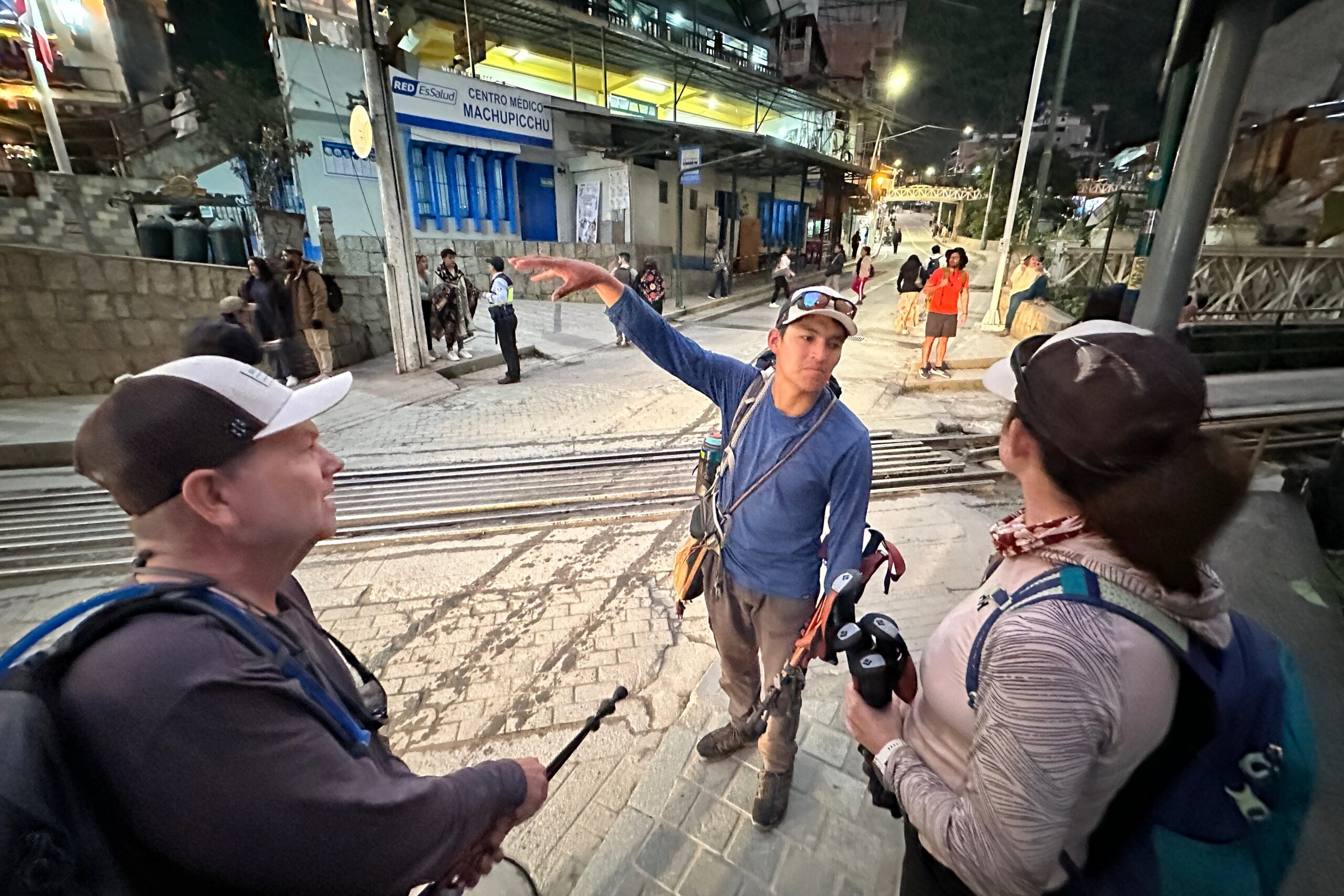
The plan for the day called for another early morning wake-up call at 4:30AM (in order to take advantage of our 7AM timed-entry tickets to Machu Picchu). We stopped by the hotel restaurant for a quick and hearty breakfast of eggs, fruit, and quinoa pancakes. The trick with your 7AM tickets is actually getting in line (much earlier) for the Aguas Calentes shuttle busses on Avenida Hermanos Ayar. Another trick is successfully convincing everybody to leave at 6AM (to meet our guides’ suggested 6:15AM departure), but even with these tricks, we still needed to be saved by Luis’ move to head over even earlier and hold us a spot in the very busy bus line. Huge MVP move!

So was it busier than usual? YES, ACTUALLY! We didn’t plan it this way, but today is June 21st, which is the Winter Solstice here in the Southern Hemisphere. And if there was ever a group of people that cared about what the Sun was up to, it’s the Incans who were hanging out at Machu Picchu.

Upon realizing this fortunate coincidence a few days ago, we mentioned it to our guides. Then we successfully convinced our expedition to add a SECOND top mission to today’s plan… get inside Machu Picchu and make a bee-line to the Temple of the Sun for the Winter Solstice sunrise — scheduled for ~7:22AM. (I think Nan, Brai and us were most gung-ho about this plan.) But could we pull it off?!?!?

7AM… We’re in!

7:18AM… Made it! Temple of the Sun above us. Let’s light this candle!

7:22AM… Hello Inti!!!

Our viewing location for the June 21st, 2025 Winter Solstice sunrise at Machu Picchu was on the terraces just BELOW the Temple of the Sun. This was dictated by the fact that our Circuit 3 tickets guide you on a restricted path via a lower route — compared to our Circuit 2 tickets in 2022 that gave us an overhead view of the Temple of the Sun.

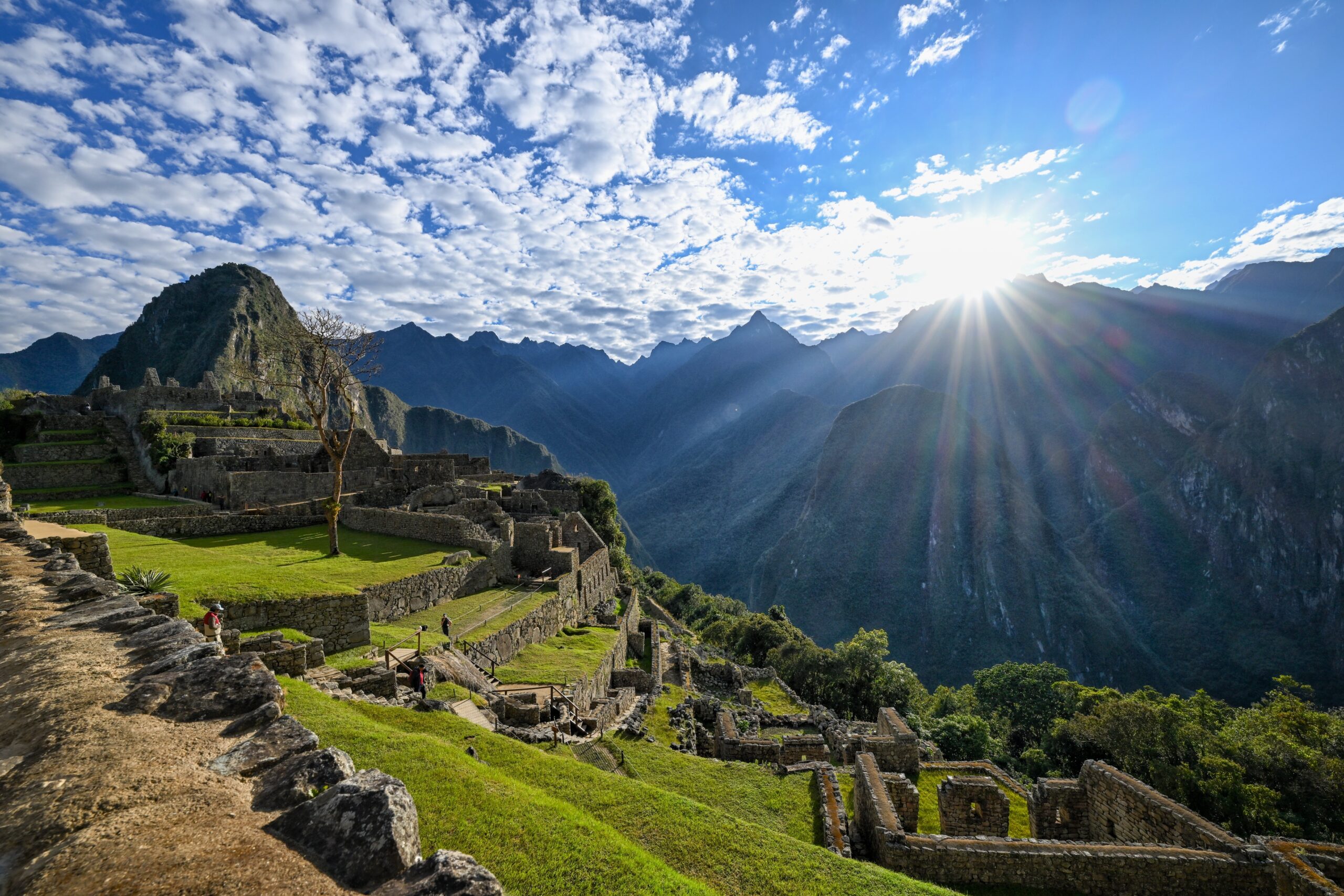
From this vantage point, we experienced the sun’s appearance above the peaks to the east and the corresponding shadows appearing on the walls. The mostly clear skies were extremely helpful too, which was a bit unusual for this rainforest region where there is usually some mist and clouds — especially in the early morning. Guess Inti feels bad for throwing a giant snowstorm at us a couple days ago. Huge round of applause to Brai and Luis who helped us pull off this mission on short notice!

LIVE LOOK inside the Temple of the Sun at 7:22AM (probably)

Confirming the astronomical observations

One task down, one to go!

Proceeding onward from the Sun Temple, Brai showed us around the Curcuit 3 route and explained the rooms and history along the way… Rooms with the best-carved rocks were the most important living quarters… Larger nearby terraces were used for agriculture… And smaller buildings were kolkas used to store the food. So on and so forth.

Eastern side of Machu Picchu

Close up of Temple of Sun and royal living quarters

Fun fact: In 1978, the king and queen of Spain came to visit and wanted to land their helicopter right in the middle of the Machu Picchu ruins (even though there is plenty of landing space on the grassy lookout areas right next to it). In order to make room, they removed a tall stone pillar from the site. They put it back after they left, but then in 1989, a group of Andean Nation leaders wanted to do the same thing. And this time, it broke. Well, duh. So now there is a grassy platform sitting there instead.

Shadows and former heliport shenanigans

Shadows and group photos

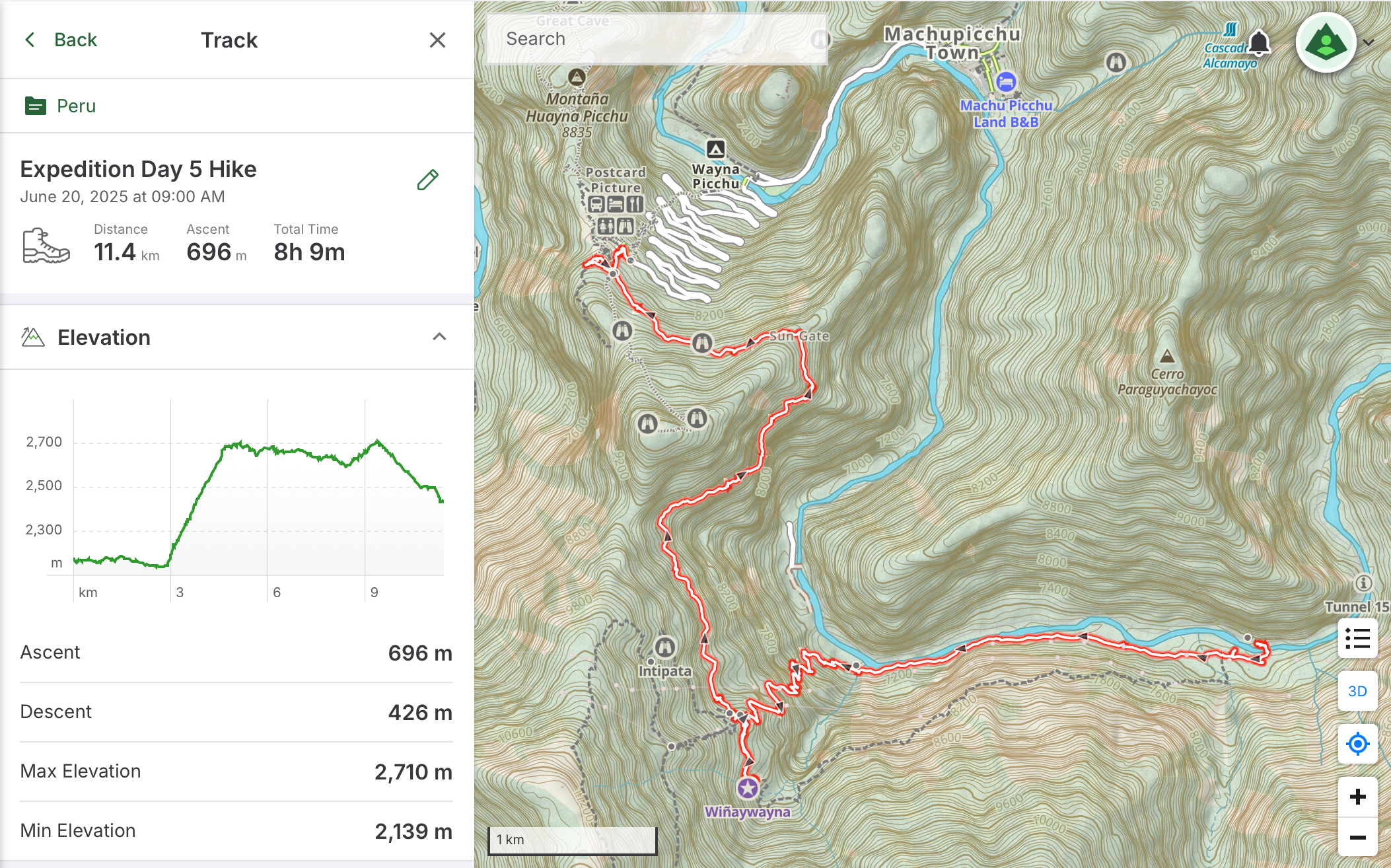
Once we were done with the circuit inside Machu Picchu, we started on the Huayna Picchu hike. Again, Huayna Picchu is the tall green mountain right behind Machu Picchu in all of the pictures. It looks very daunting from Machu Picchu, but it wasn’t too bad (most of the time). There is a path to get to the top, where additional Incan ruins are found. We had to check in at the gate and were on our way.

Brai leads the way to Huayna Picchu

Most of the trail (which takes about 45 minutes to get to the top) is stairs fashioned out of very well-worn stones. The path was (usually) wide enough for people to pass on each side, which was helpful because it’s the same route up and down. Closer to the top, the stairs became steeper and more narrow. It becomes easier to think of them like a ladder, and use your hands to keep steady. The path then leads you up a series of steep terraces, some stairs with the edge of the cliff on your left, and some buildings on the right. The brave people ventured into the buildings. Jo focused on the stairs in front of her until reaching solid ground at the top.

Steep stairs

Steep terraces

It was fortunate that today’s weather was not rainy. The one thing that would really make this hike dangerous would be wet stones. Brai said they won’t hesitate to close the route if there is too much rain. Heck, even the morning dew made certain spots tricky (especially since the trail is almost exclusively in the shade on the western face of the mountain.

Soon enough, everyone made it to the top! Even Britt who has a legitimate fear of heights. Nothing like intense exposure theory, am I right? According to Nan, there were 1,986 stairs to get to the top.

Huayna Picchu summit arrival

The Huayna Picchu view of Machu Picchu

The climb was 100% worth it and the views were amazing. We could see the Andes mountains surrounding the area as well as the entire Machu Picchu complex below. We jockeyed with the crowd for prime picture spots and realized we weren’t technically all the way at the top. So we took care of that by climbing up the final steep rocks. Jo made it mostly there. Britt opted out entirely. Pictures were taken and we scooted back down.

Jo took this picture…

From over here!

It was nice having Brai help us navigate where to go at the peak — or as one girl shouted to the crowd, “Can somebody please tell me how to get off this mountain!?!” Turns out there is a small loop to the path that leads back down, but that path goes over those final steep rocks mentioned above.

Instead, Brai got permission from one of the rangers to help us through a “shortcut” to meet up with the correct path. It was heavily covered in vegetation, and most of us ended up with prickly plant spikes in our hands, but hey, it worked! We were back on the main trail in the correct direction. Matt thought this shortcut meant we bypassed the “cave” portion of the path he read about. Unfortunately, he was wrong.

The real stairs of death

It’s not really a cave. More of a tunnel created by rocks laying on each other. But still, it was dark, low and narrow, which may be fine for Incan-sized humans, but not so much for Matt. Fortunately, he made it through without getting stuck. A few more narrow stairs (with solid ground on both sides) and we were back on the main two-way trail. From there, it was an easy (but cautious) downstairs walk back to the beginning. We went slow and steady at first, but soon found our balance and were cruising. We made it back safe and sound and waited for the rest of the group at the control booth.

Once everyone arrived, we finished our Circuit 3 route thru Machu Picchu — passing a few more fun locations such as the Temple of the Condor. We exited and went straight to Tampu, the restaurant in the Belmond Hotel that is right outside the entrance/exit gates. We had a huge buffet lunch with excellent food, subpar desserts, and limited WiFi. BUT! There was a soda fountain where we discovered that mixing Fanta and Inca Kola is delicious.

It’s the Picasso section of Machu Picchu

Machu Picchu Yelp review still good

Huayna Picchu hike details

Mid-day outside Machu Picchu is a madhouse

Next on the agenda was catching a shuttle bus down the mountain to catch our train in Aguas Calientes. The bus line was VERY long because something had temporarily halted the usually reliable stream of busses. After about 20 minutes, Luis was starting to look worried. Finally, a bus arrived! And then several more. We were close enough to the front of the line that we got on that first bus. When we got to the bottom, we speed-walked to the train station.

When we got to the train station gate, we confirmed that Inka Terra successfully delivered our bags. The station is located within a large craft market. Luis and Brai said we had 15 minutes to wander around before we needed to be back at this exact spot in 15 minutes to board the train in 15 minutes. Did I mention the part about 15 minutes???

So we went on an immediate mission to find the souvenir coin machines on the street next to the bus stop. We found one, negotiated the proper change from a nearby shop, and acquired a shiny GOLD Machu Picchu coin soon to become our next fridge magnet. SUCCESS! We hoofed it back to the train station with a few minutes to spare. Nan and Britt were also there, but… where was Qi?

We waited a few minutes, but Peru Rail does not suffer stragglers, and we eventually boarded the train without Qi. Luis stayed back to wait/search for Qi. I was pretty sure we weren’t gonna see Luis or Qi again until later that night (or who knows when!). Thankfully, with literally seconds to spare, Luis and Qi boarded the train. After the fact, we were able to laugh about this at dinner when it was revealed why Qi was late. Turns out, she lost track of time negotiating a killer deal at one of the booths. Then Qi’s phone rang. It was Luis, calling her like the banker in “Deal or No Deal.” “HEY QI, WE NEED TO LEAVE RIGHT NOW!” Thankfully, Qi said “DEAL” and finished her negotiations.

The train ride back to Ollantaytambo isn’t quite as exciting as the ride to Aguas Calientes, but they do put on a fun fashion show of (overpriced) Alpaca clothing items and they served us more traditional Peru Rail quinoa snacks. Quinoa cookies A+! We arrived back in Ollantaytambo and met our driver in the parking lot. One the ride back to Explora, Matt re-established his Bluetooth connection and played DJ once again. Mostly soothing 80s songs as most of the van was sleeping — until our arrival with Party Rock Anthem by LMFAO to get everyone pumped up for the rest of the night! Brai simulated flashing lights with his phone and asked if we were back in the 20s (aka. the early 2000s). To be fair, he was 14 when this song came out.

As we were (re)checking-in and being shown our new room, we discovered that we were allowed to go on a half-day exploration in the morning! YAPA!!!!!!!! We asked Brai which exploration he would suggest for the morning. He recommended one called Parcco. We quickly agreed and also asked Brai (half jokingly, but also quite seriously) to go tell Mati Weber to drop all of his previous plans and be our guide. Check back tomorrow for more on that.

Before dinner, we gathered at the bar and sat down for our final Expedition team meeting. Luis read us an amazing farewell letter he wrote for us. In return, we all wrote our messages to Luis on the Peru flag we’d been carrying around with us the whole time and presented it to him.

THANK YOU LUIS!!!

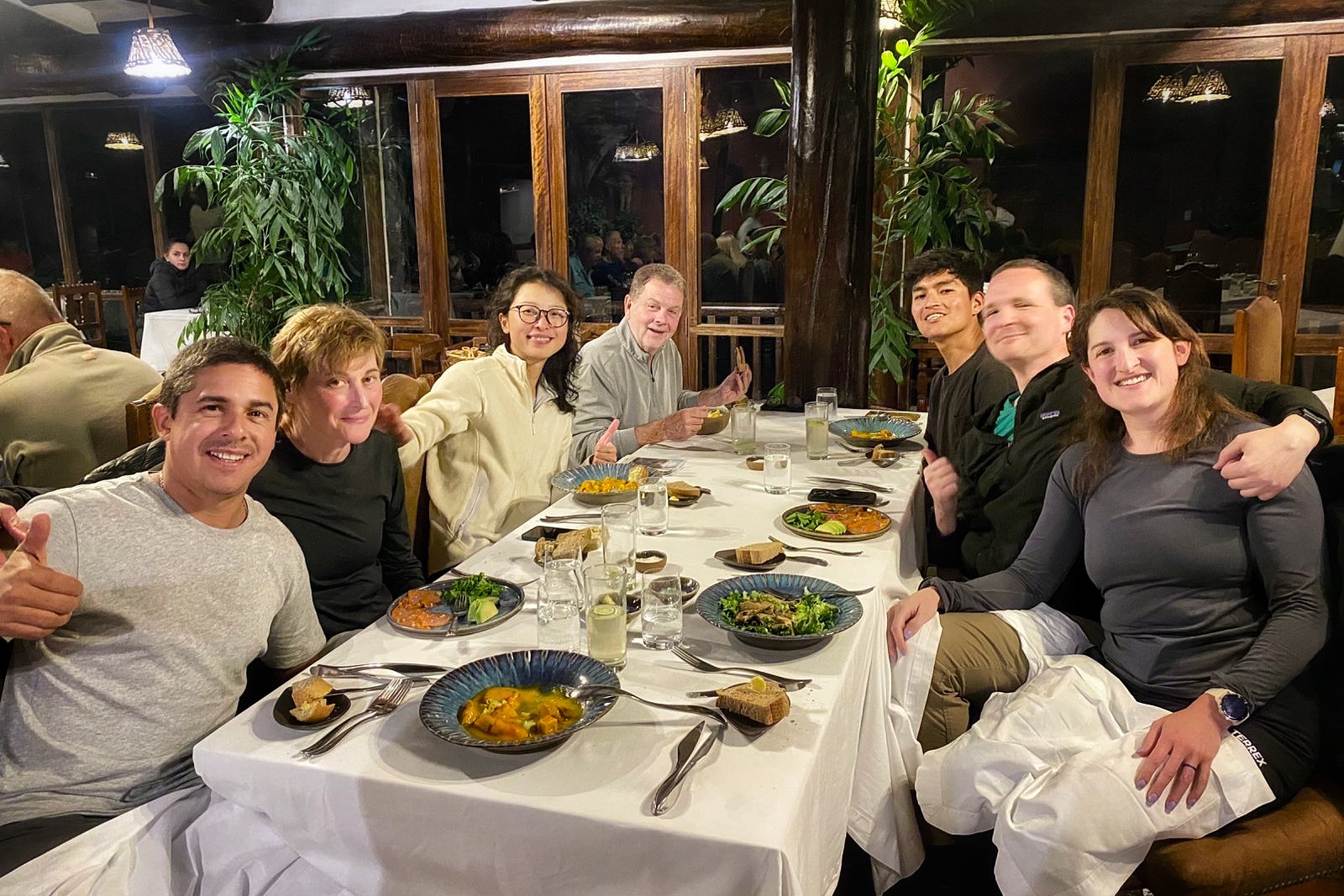
Then we feasted! Luis called ahead to make sure this final meal included ALL the items we’ve been talking about trying the last few days. We had Aji de Gallino with shredded Parmesan Cheese for the main course, Lucuma-flavored Suspiro a la Limeña for dessert, and a bonus birthday cake for Nan (her birthday is in two days).

Tomorrow will now be another early morning for us to go on our Parcco exploration before we leave for Cusco. Luis took care of getting us a late check out, so we will be able to hike, eat lunch and worry about packing our bags before 3pm. We also planned to see Luis (and his dogs!) once more tomorrow afternoon before we depart, but, as it turned out, Luis cleverly pulled a Michael Scott on us, making tonight our last goodbye. That’s ok, you’re still the best! 🙂 🇵🇪

Day 8: Machu Picchu

Today the expedition heads northwest, where we will venture to Machu Picchu, the world-famous 15th century Incan citadel sometimes referred to as “The Lost City of the Incas”. But it’s not lost anymore… we discovered this UNESCO Heritage site all the way back in 2022 (previous visit).

With that said, seeing Machu Picchu for the SECOND time is going to be WAY BETTER because we’ve got our Expedition friends with us and we’re going to EARN IT!!! The plan is to hike the last 12km and ~700m elevation gain of the Inca Trail to arrive via the Sun Gate (Inti Punku). Let’s go!

Today’s early morning start is no bull

The day started with a 4:45AM wake-up call at the campsite. Inti seemed fully on board with the plan, providing us with superb weather and clear pre-dawn skies (already an upgrade from our rainy/cloudy 2022 visit). We had a quick bite to eat before our 6AM departure, featuring the usual fruit and cereal and some special fluffy bread (too full to try). The only thing that didn’t go right this morning was Matt’s left contact split in half when he was putting in his eyes. Uh, that’s new! I suppose the cold weather didn’t help. Thankfully he has a backup, but the new margin of error for seeing properly the rest of the trip is far more dramatic now.

Packing up our gear, we are now officially done with the camping portion of the trip. All the remaining days will conclude at hotels. Therefore, the kitchen team gave us bag lunches to take with us on the hike, complete with two sandwiches, chips, fruit, and chocolates. Once everyone was actually in the van, we peeled out for the Ollantaytambo train station about 45 minutes away. At the station, we checked our bags with a luggage service to transport them to our next hotel in Aguas Calientes. We also said goodbye to Chio at this point, who was heading back to Explora and starting her vacation days. Adiós y buena suerte Chio!

We proceeded to the Peru Rail waiting area. The no-nonsense lady with the sign for Group A (that’s us) showed up at boarding time and and looked displeased with our “lining up” skills, but we immediately rectified that and followed her to our train. We found our seats and settled in (Brai kindly switched with Jo to let her face forward).

The train departed on time and we were off… but WAIT! As we were pulling away from the station, we casually asked Brai if our bags are supposed to be on this train or a following train, because, um, we just passed them sitting on the platform. “Probably this one,” he said. As if on cue, the train stopped, reversed back into the station, and paused for a few moments. When we pulled away again, the bags were no longer sitting on the platform. Magic!

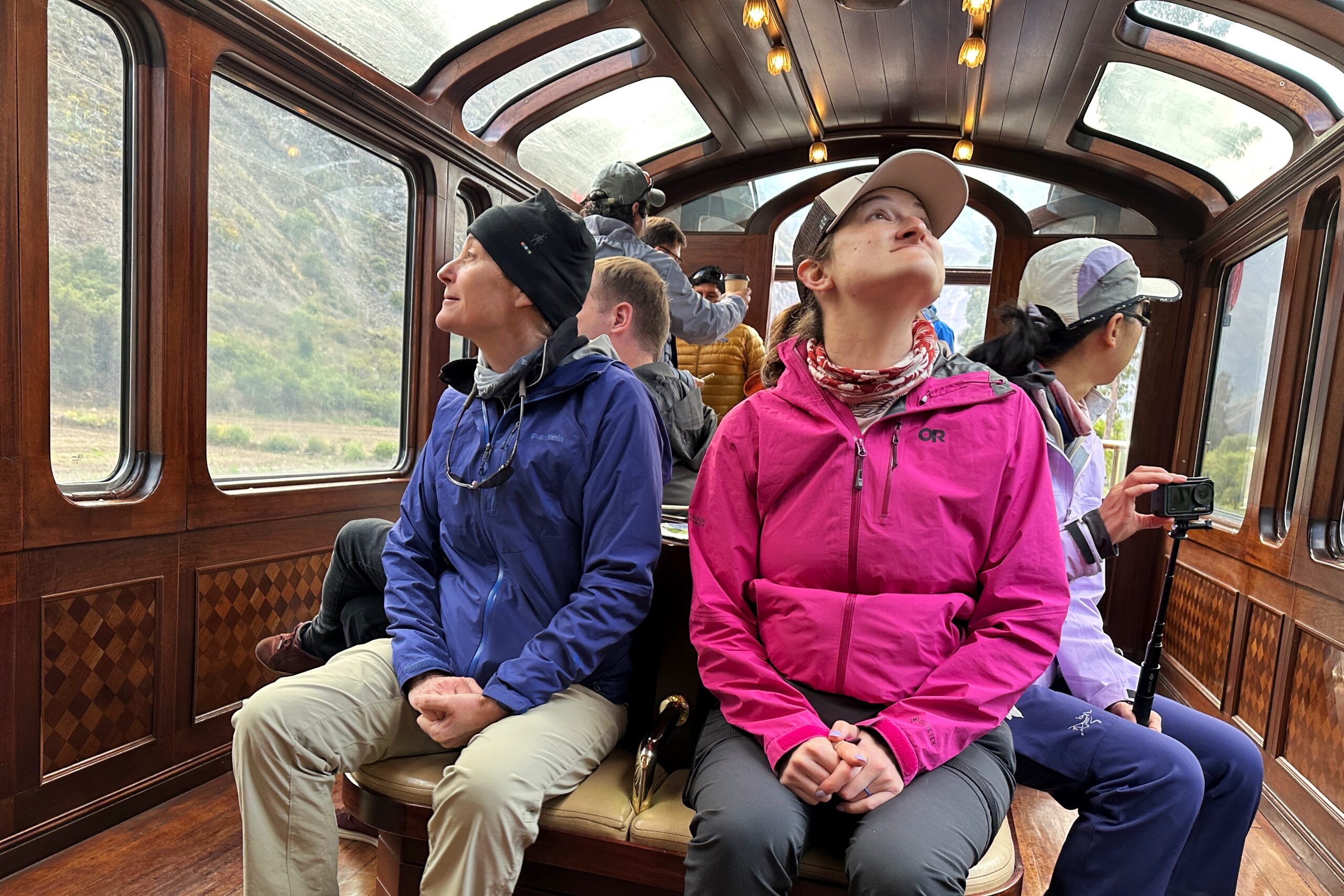
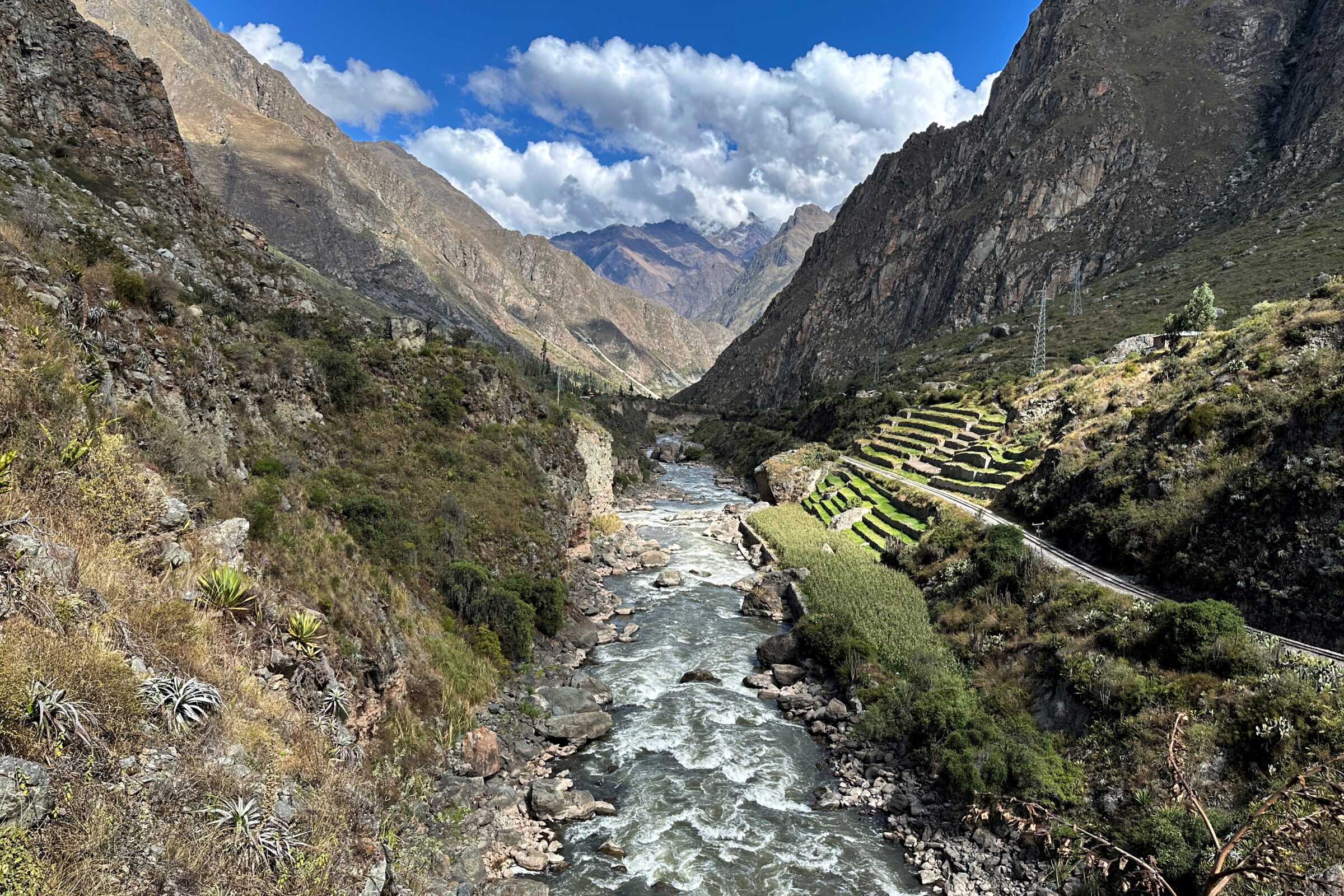
The train ride takes about 90 minutes. If the Urubamba River Valley scenery wasn’t enough, Peru Rail puts on quite a show to keep you entertained. We were (forcibly, lol) invited to go to the bar car with live music and traditional dancing. There was also a viewing car with huge windows to continue observing the gorgeous views. The only way this gets better is if enthusiastic train employees would kindly clap along to the music more than six-inches from your ear! (Go ahead and file that under first-world Peru Rail Group A problems)

Soaking in the scenery

When we were eventually booted from the bar car (to share with Group B), we returned to our seats, and started playing Booyah! — initiating Nan & Britt to the game. Rave reviews, as expected. Soon thereafter, the snack and beverage service started, featuring the familiar snack box of quinoa cereal bars and quinoa chips. Quinoa means they’re healthy, right? RIGHT?!? (For the record, the chips are much better than the bars.)

This train makes one stop before it reaches Aguas Calientes (aka. “Machu Picchu Town”), and that is at Kilometer 104 — where the adventurous Inca trail hikers get off (that’s us, again!). When the train “stops” here, you better be ready to jump! About five seconds after you get off the train, it is on it’s way again.

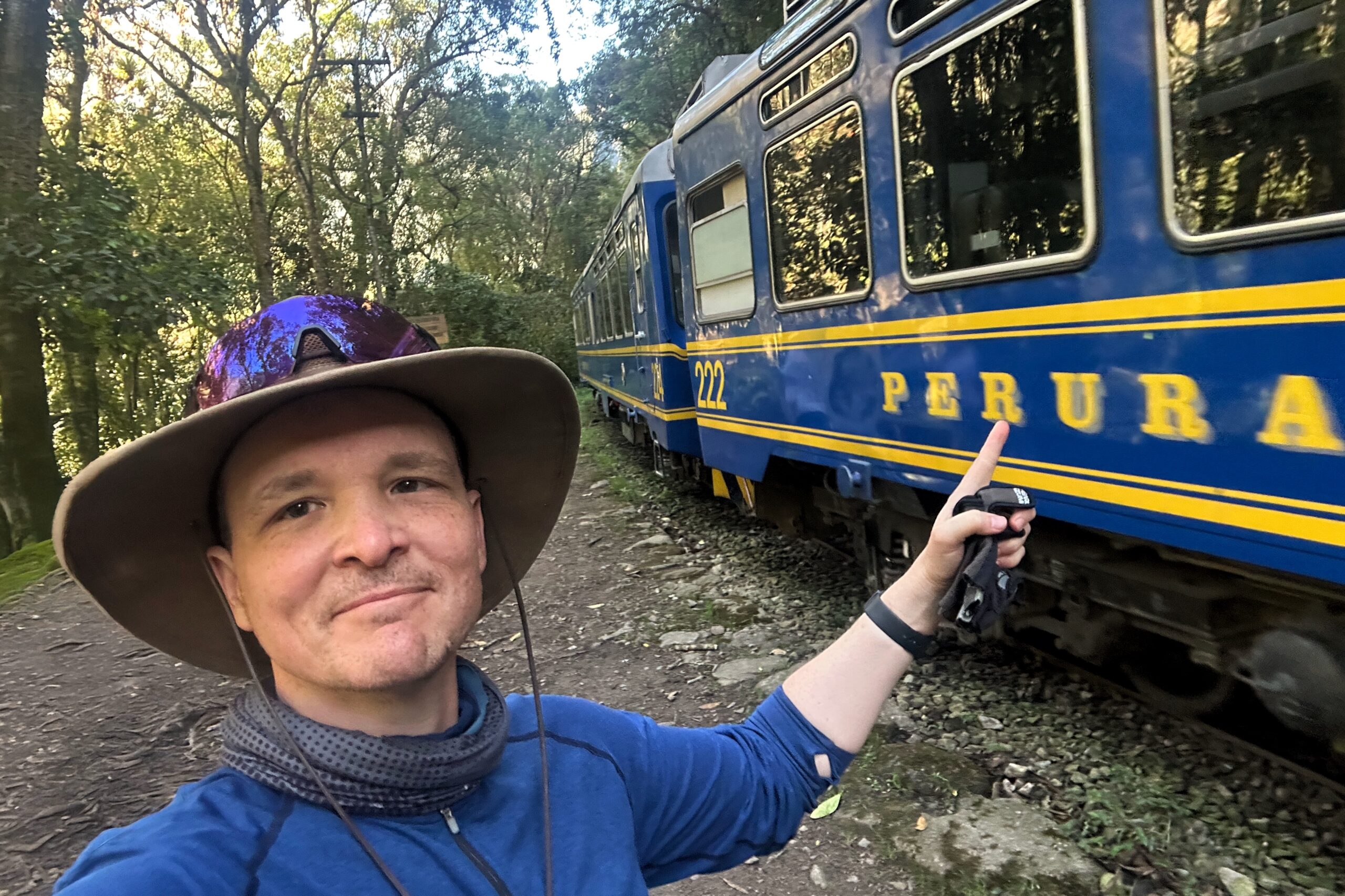
Second official train-pointing

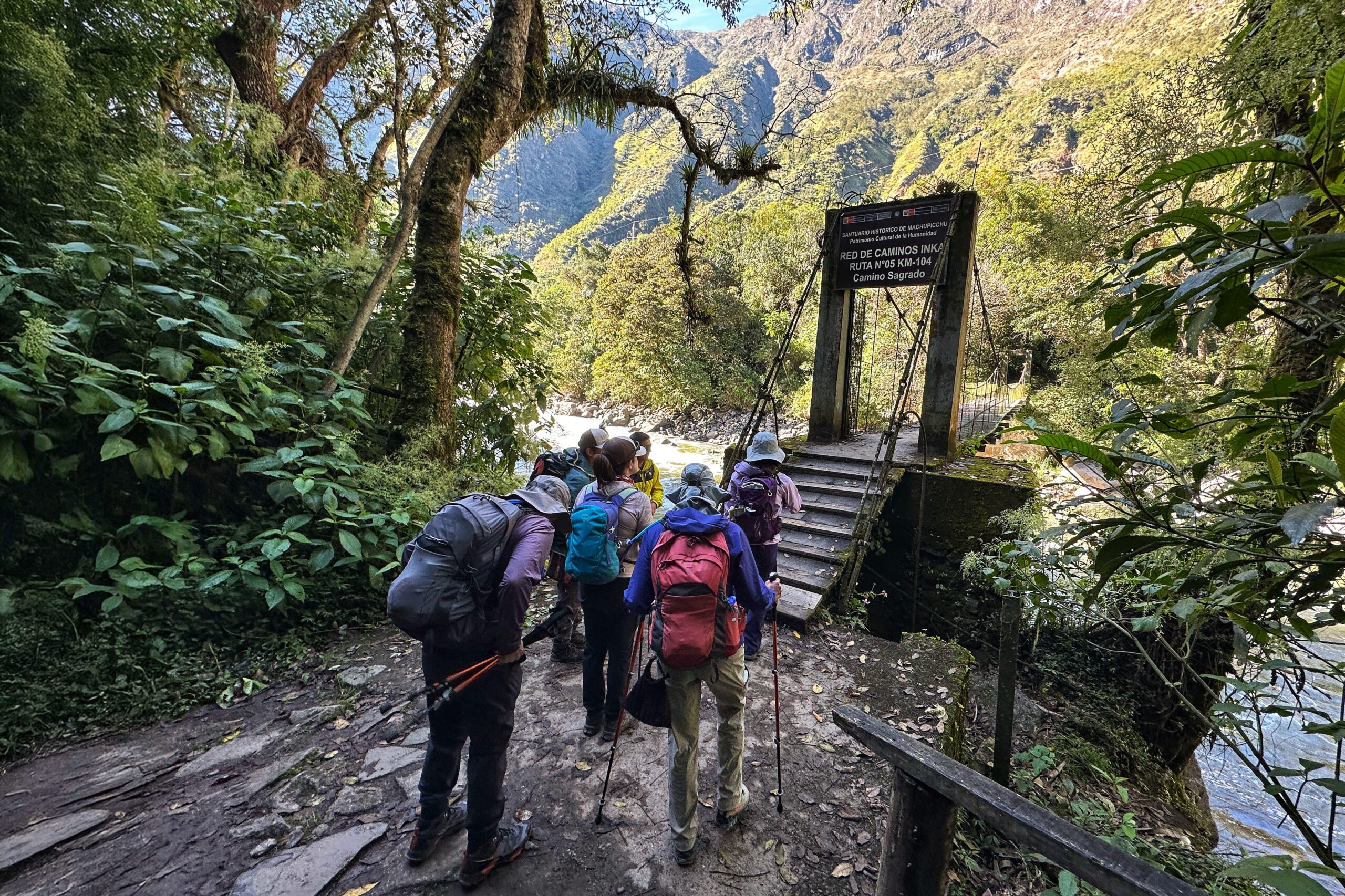
We took stock of our gear (double-checked our hiking poles had the rubber footies on them per regulations), put on sunscreen and bug cream, and crossed the bridge over the Urubama River to officially rejoin the Inca Trail. And then… a bunch of paperwork! But our passports eventually checked out and we were on our way. Weather was still amazing — nice and sunny, but not TOO hot just yet.

Inca Trail 2: The Return to the Inca Trail

On our route from Kilometer 104 onward, the typical Inca Trail currently has parts that are under construction after being washed out by heavy rains and landslides in February. So we had to take a different route. While the old route was a more gradual incline, our new route is very flat followed by a heart-attack level spike in elevation. For the first hour, we had lovely views of the river and some archeological sites, as well as some very cool rainforest zone nature, including the bright red National bird of Peru called the Andean Cock-of-the-rock.

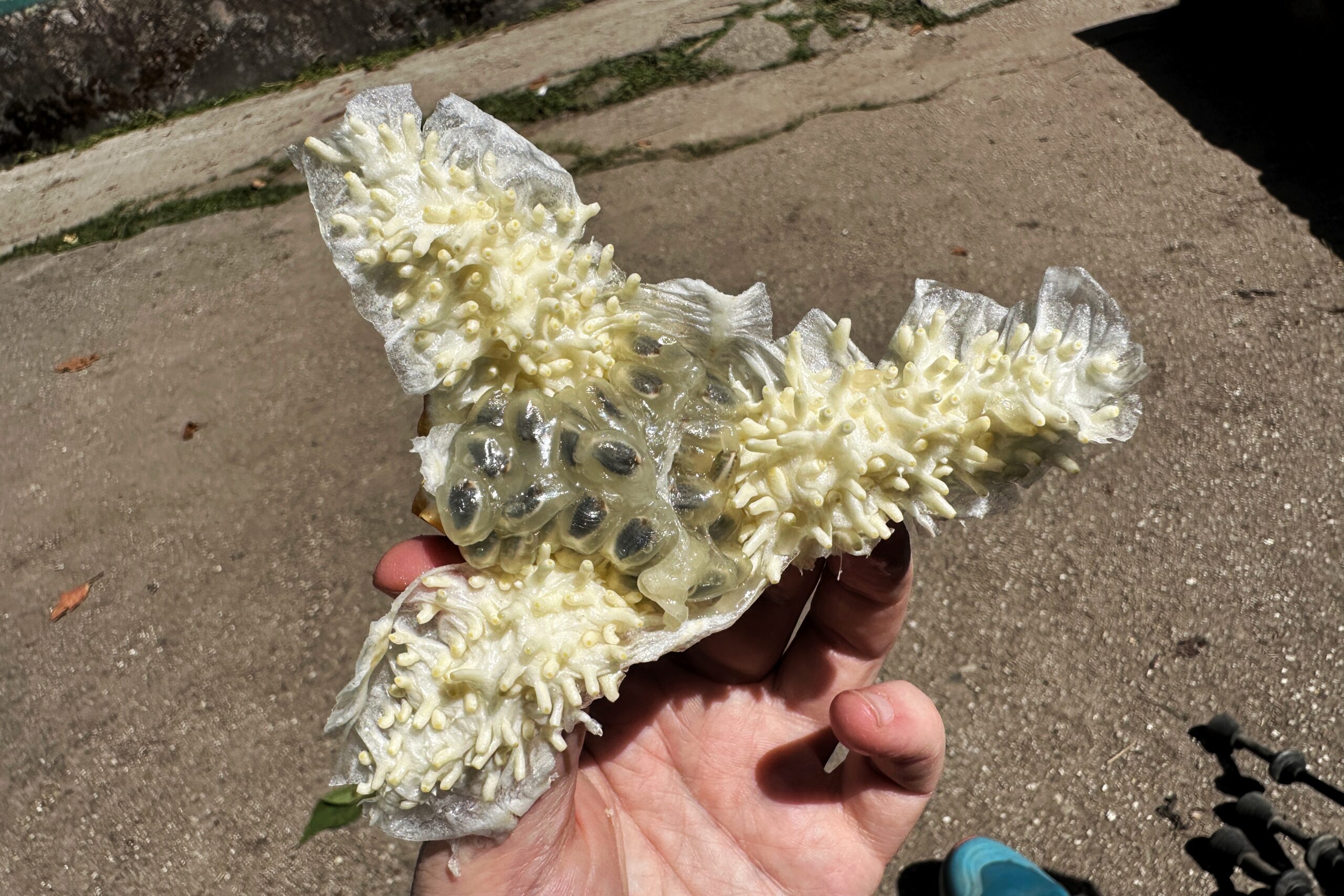
And then we arrived at the stairs section. For the next two hours, we hiked up Inca stairs for ~700 meters. We found it easier to maintain a slow, steady Geraint Thomas-like pace to the top of the climb rather than making frequent stops and starts. We remembered to stay hydrated and look at the amazing views. It was actually very fun! Once we got to the top, we found a shady spot to eat our bag lunch and figure out how to eat a Granadilla (a sweeter, less-tart version of passionfruit with translucent, jelly-like seeds) while waiting for the rest of the group. They are great! Speaking of Passionfruit, here’s a Pro Tip… Fill your bottle with cold Passion Fruit juice at breakfast to drink when you get to the top of this climb.

Up and away we go

Looks like a sea creature, tastes great!

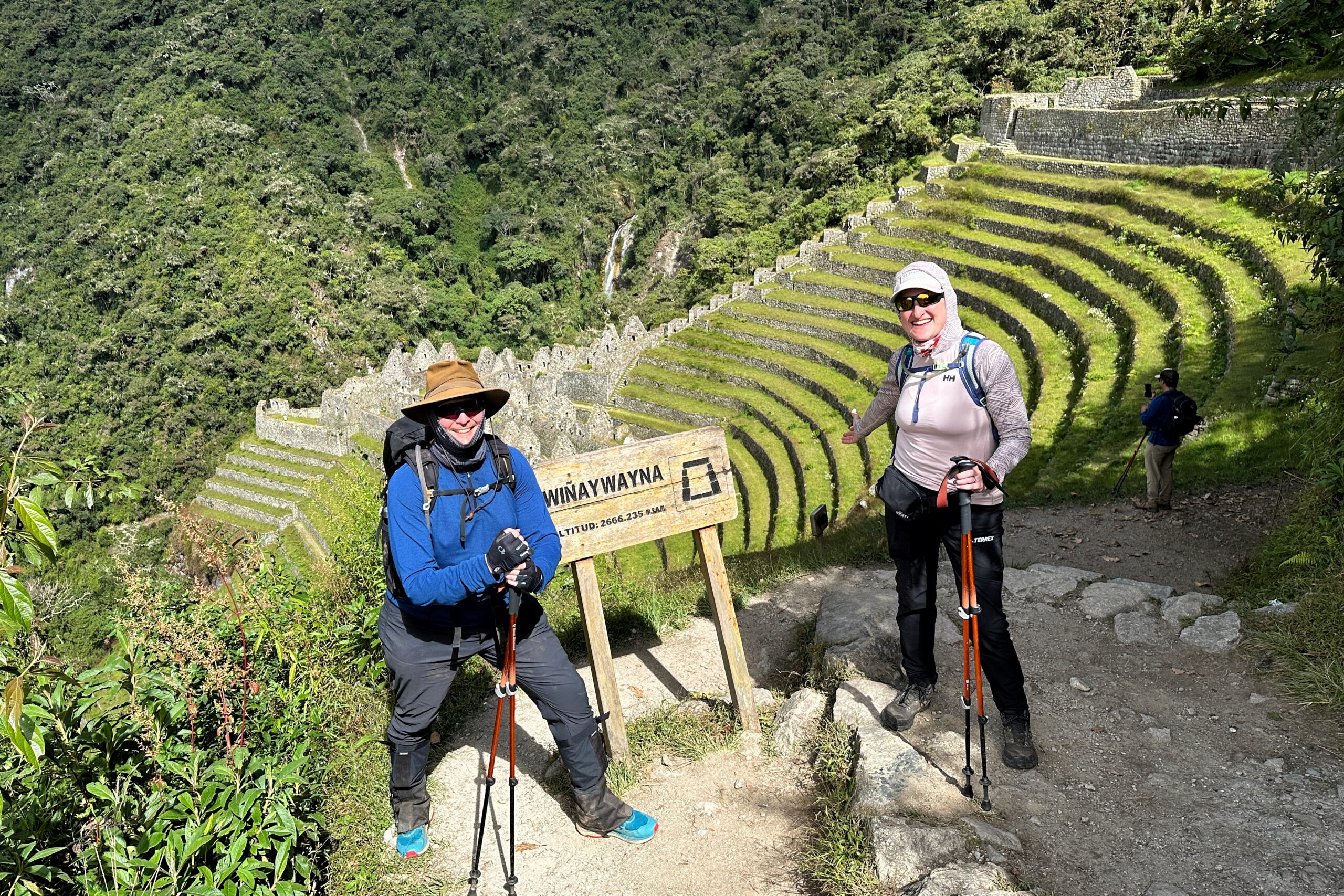
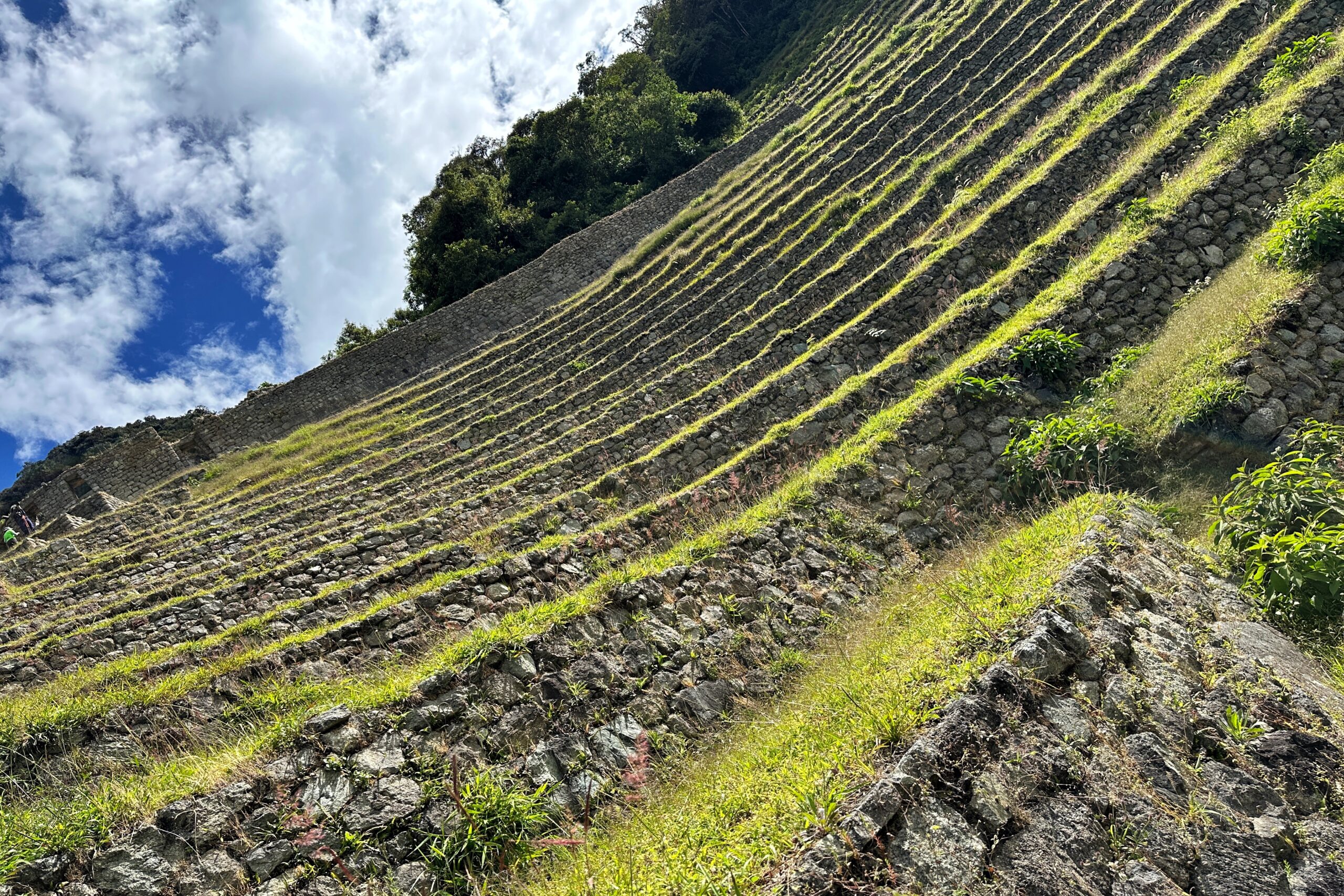
Once everyone had time to eat and recover, we made a pit stop at Wiñaywayña, another Incan citadel built by Pachacutec in the 15th century. In Quechua, the name means “forever young” or “eternally young.” In addition to the usual buildings, this complex features 40+ terraces and an ingenious aqueduct system to take water from 10 surrounding waterfalls and propagate it thru the citadel. We spent some time exploring the place before heading back to the the main trail and continuing our hike.

Welcome to Incan Rivendell!

Double-jam is his jam

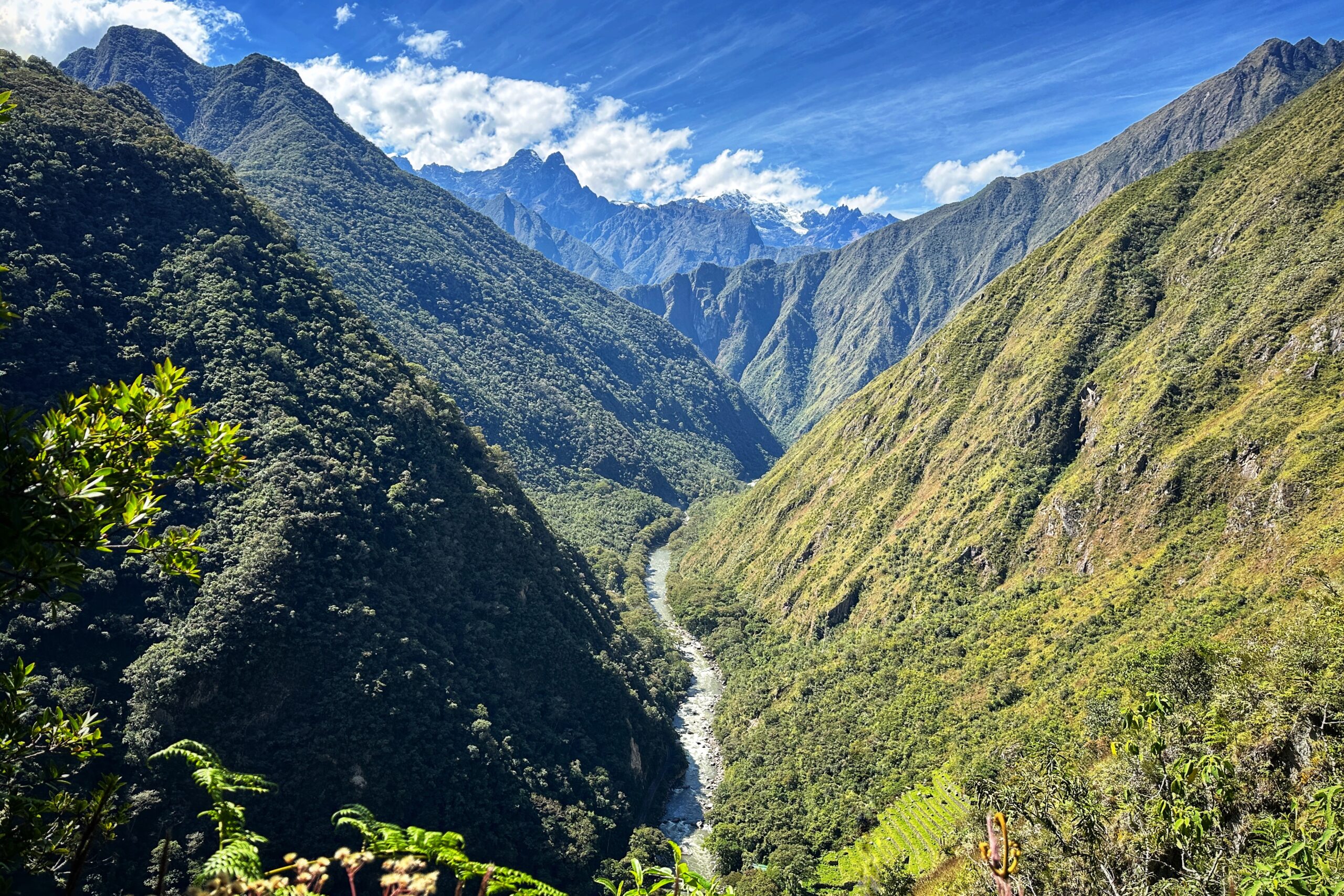
Great Urubamba River Valley views

Exploring the lower complex structures

“Be courageous and be brave. And in my heart, you’ll always stay, Forever young”

“Climb ev’ry terrace, Ford ev’ry stream, Follow ev’ry rainbow, Till you find your dream.”

Back on the Inca Trail, the remaining 6-7km leveled out with a few uphill sections, but nothing like the previous stairs section. We walked ahead with Brai to maintain a nice pace, while Luis teamed up with Qi, Nan, and Britt. To pass the time, we played the “I’m going on a trip and I’m taking with me…” game. Our best category was countries. (“Hey Brai… Albania, Brazil, Cuba, Denmark, Estonia, Finland, Greenland, Haiti, India, Japan, Kazakhstan, Liechtenstein, Morocco, Nigeria, Oman, Peru, Qatar, Russia, South Africa, Tanzania, Urugay, Venezuela, Wales, Xylophoneland, Yemen, and Zambia!!!”)

Inca Trail fun and games

At one point, Brai warned us about the “Gringo Killer Monkey Steps” section ahead. He didn’t give a ton of details and just said, “you will see!” with a smile. Thanks, Gollum. Turns out the name is much scarier than the steps. Sure, it’s steep, but it’s also plenty wide and there are no cliff edges to contemplate. At the top of the stairs was great lookout. We waited for everyone to join and enjoyed the view. Also, there was a giant spider web complex with multiple large spiders in the rocks/vegetation near the lookout. Very Shelob lair-ish, Gollum.

Monkey steppin’

Accidentally wore the team uniform

The seven… wonders… how much farther?

After the Monkey Steps, it wasn’t long before we arrived at the Sun Gate to Machu Picchu! We soaked in the afternoon sunshine and the golden views of Machu Picchu from the ruins of Inti Punku (aka. “sun door”). The sun gate also marks a position of the sun during the Summer Solstice (which will be useful exactly six months from today, more on that tomorrow). From here, Machu Picchu is still another 1-2km in the distance, and it takes roughly another hour of walking downhill to reach the classic high view point.

Sun Gate breached

Aptly-named Inti Punku

Tip of the hat, Inti

From the Sun Gate to Machu Picchu, the trail features some steep exposures to the east. There are treetops visible, but due to the undergrowth it’s hard to say if you are looking at a 10ft drop, or a 50ft drop. Either way, you really shouldn’t drop anything over the edge, because there’s NO WAY you’re going to be able to get it back.

UNLESS… You are Qi.

While taking pictures near the edge, Qi dropped her GoPro off the side. Miraculously, there were enough branches to cradle it and keep it from falling all the way down (who knows how far!). It was too low to reach (thankfully Luis decided not to jump off the edge), so she miraculously used two hiking poles to “grab” it and gently raise it high enough to retrieve. Just, wow.

Fin Camino Inca Trail

Finally, we made it to Machu Picchu. Our route took us right onto the classic viewing area where the sun was starting to set and we had a perfect view of golden hour. On arrival, we gave the weather/cloud cover a 7/10 rating, but Nan immediately negotiated a better deal with Inti and it quickly became a 10/10.

Another huge benefit of arriving to Machu Picchu by hike later in the afternoon is that all the crowds are gone (they all had to leave early to catch the bus, to the train, to the van back to Cusco or wherever, etc. — like we did in 2022). This time, we only had to contend with the llamas.

Machu Picchu back again x2

Watching the earliest sunset of the year at Machu Picchu

Just us and the locals up here at golden hour

Inca Trail to Machu Picchu hike details

When we were done gazing at Machu Picchu and it’s surroundings, we left the park and took the shuttle bus down the switchbacks to Aguas Calientes. From the bus stop, we walked to the Inkaterra hotel. As promised, our bags were at the hotel waiting for us. We checked in and were shown to our rooms (which have real fireplaces!). There was even time to shower and get ready before we returned to the bar and enjoyed our pisco sour welcome drinks.

Back in Aguas Calientes

The rest of the group joined us and we were eventually sat for dinner. Everything was tasty, but the passionfruit sour (aka. the fruit of the day!) was the best. The food, drinks, and alcohol were all on separate checks, so Luis got a chance to do his best Lionel Messi impression by signing everything put in front of him. Star power!

EARNED it!

By the time we were done, it was pretty late, and we were all ready to sleep. Alas, we did not hit a Karaoke bar with Brai. We have another early morning again tomorrow if we are gonna try to witness the Winter Solstice sunrise at the Sun Temple in Machu Picchu! Oh, and a small hike up Huayna Picchu.

Day 7: Camp Kamcancha

Good morning! The sun is shining. Roosters are crowing. Dogs are barking at the roosters. And other dogs are now barking at those dogs. But who cares about all that noise… WAKE UP!!! THE SUN IS SHINING!!! You can dry out that wet jacket in about five minutes in these rays!

Glorious blue skies

Today’s breakfast featured the usual spread of fruit, granola, and yogurt. There was also orange juice, toast, ham and cheese. Plus, we were each served a large pancake. Matt constructed a tasty pancake taco with butter and jam inside. Then the chef brought out a plate of extra pancakes, and we learned the Quechua word “yapa,” meaning “a little extra or bonus.” Qi proceeded to eat two full pancakes and gave Matt grief for only eating one. But hey, somebody is smart enough to save room for chocolates.

Additional educational nuggets from breakfast include the word “granola” translating directly to big wave (aka. “gran” and “ola”), while the wheat bran cereal is called Salvador de Trigo, which directly translates to “safe wheat.” In food recommendations to try later, Suspiro a la Limeña was emphasized. Explora has it on the menu and Luis said we can get one that is lucuma-flavored to kill two tasting birds with one stone.

Before leaving, all members of the expedition (guides, travelers, and camp staff) gathered for some official introductions and shared appreciations. The horse team was no longer planning to follow our route, so we bid farewell. The rest of us marched out of camp in an eastward direction, up a steep incline, then down a giant ravine, and back up the other side.

Laura is not here to whip up a grass bridge, so we traversed this ravine the old fashioned way

Continuing along the Inca Trail (we were still the only ones going backwards), we saw many groups of hikers and porters heading the other direction. On paper, Peru has regulations about the maximum weight that companies are allowed to make porters carry, but it’s obvious the enforcement of those regulations is questionable (compared to Tanzania’s protections for Kilimanjaro porters), given what some porters were hauling past us.

Oxbow back on track

There were no major towns along this portion of the trail, but that doesn’t stop entrepreneurial locals from setting up stands on the side of the road to sell travelers various goods and refreshments. The most popular refreshment is Chica – a fermented or purple corn-based beer/kombucha-style drink. Luis, Brai, and horse guide Alejandro purchased a round (only 3 soles total – about 85 cents) and immediately downed them. It was impressive.

Cheers to the sun!

Chica-powered hikers

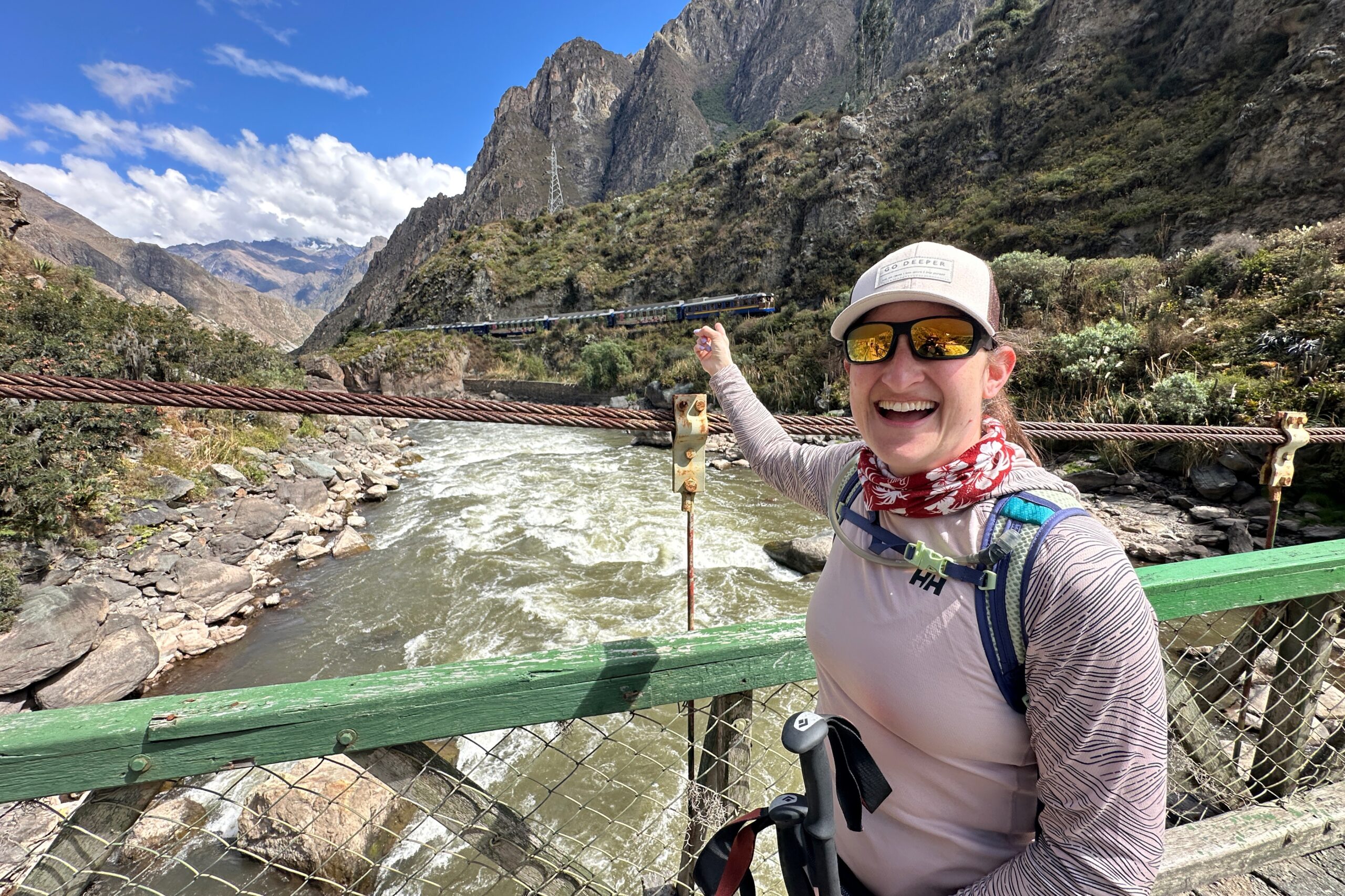
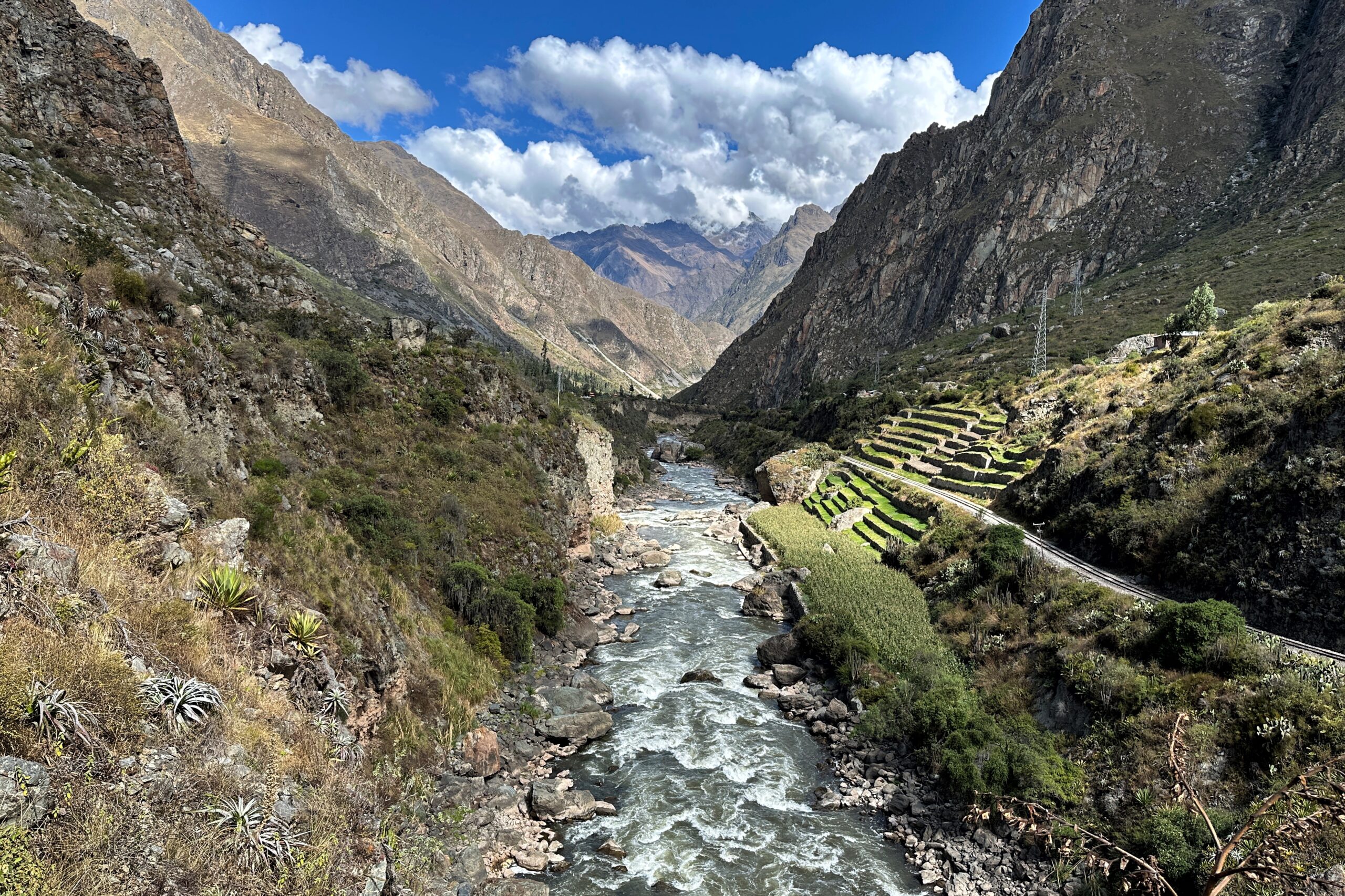
The rest of the hike was an Andean flat with a slight rise in elevation toward the end. The wildlife enjoyed the weather as much as the humans, with a variety of hummingbirds zipping around the side of the path. The snow-capped peak of Mt. Veronica loomed beautifully large in our sights as we followed the Urubamba River to Kilometer 82, and the bridge across the river to the town of Piskacucho — which is the traditional starting/entry point of the Inca Trail.

Mt. Veronica showing off today

Bridge to Piskacucho, Kilometer 82

Para bailar Urubama!

We have an official train-pointing

One for the calendar

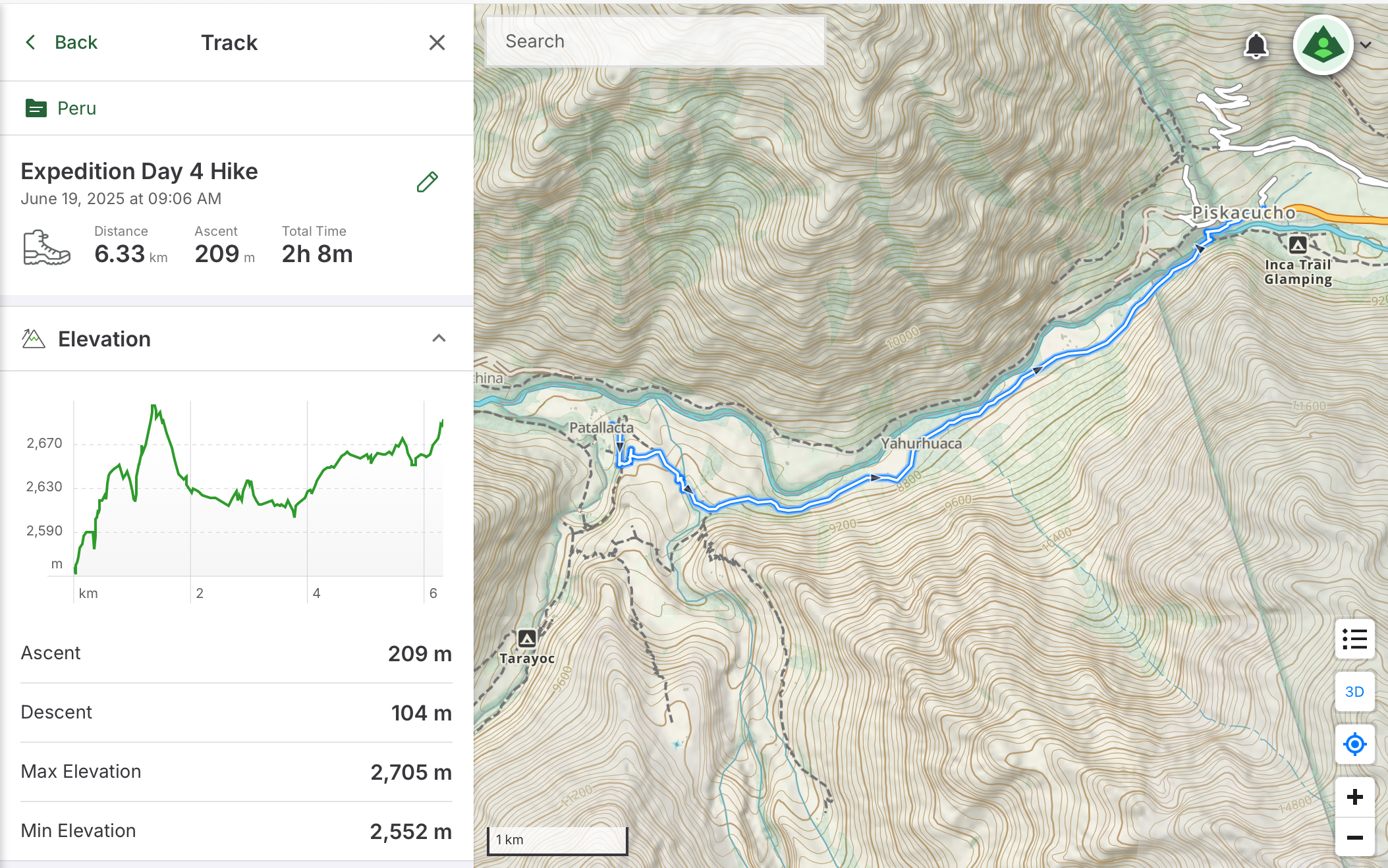
Hike to Piskacucho details

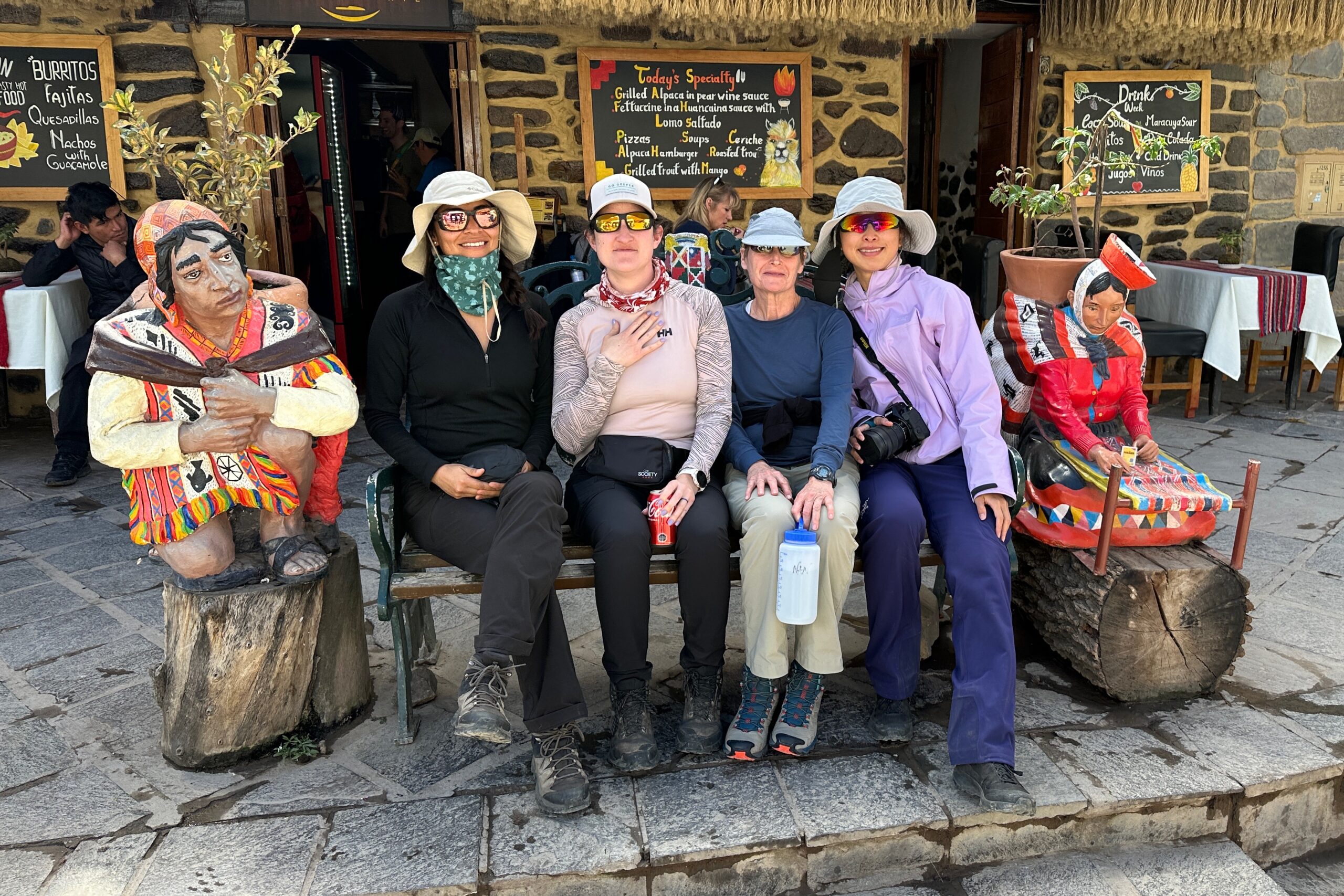
After officially “exiting” the Inca Trail entrance at Kilometer 82, we found Nan & Britt awaiting us in town with a Explora Van. Given the fact that we successfully hit our time splits on the morning hike, and our Plan A Camp 4 location was only a short drive away, we all opted to make a short field trip to nearby Ollantaytambo. But first, we had a quick box lunch of chips and quinoa with trout (instead of a fancier restaurant that probably would have taken at least two hours). Nan & Britt regaled us with the story of their mountain evacuation adventure from Day 5.

On the drive from Piskacucho to Ollantaytambo, Matt played bluetooth DJ and successfully timed Free Bird to end right exactly with our arrival in the main plaza. Chio took the lead and showed us around the town. We visited a Cancha — a common architectural arrangement featuring an enclosed residential area surrounded by four houses. These houses were about 600 years old and had a whole bunch of guinea pigs running around. We’re pretty sure this is the exact same Cancha we visited in 2022. That Singer sewing machine in the corner looked very familiar.

Expedition Ladies…

… and Gents

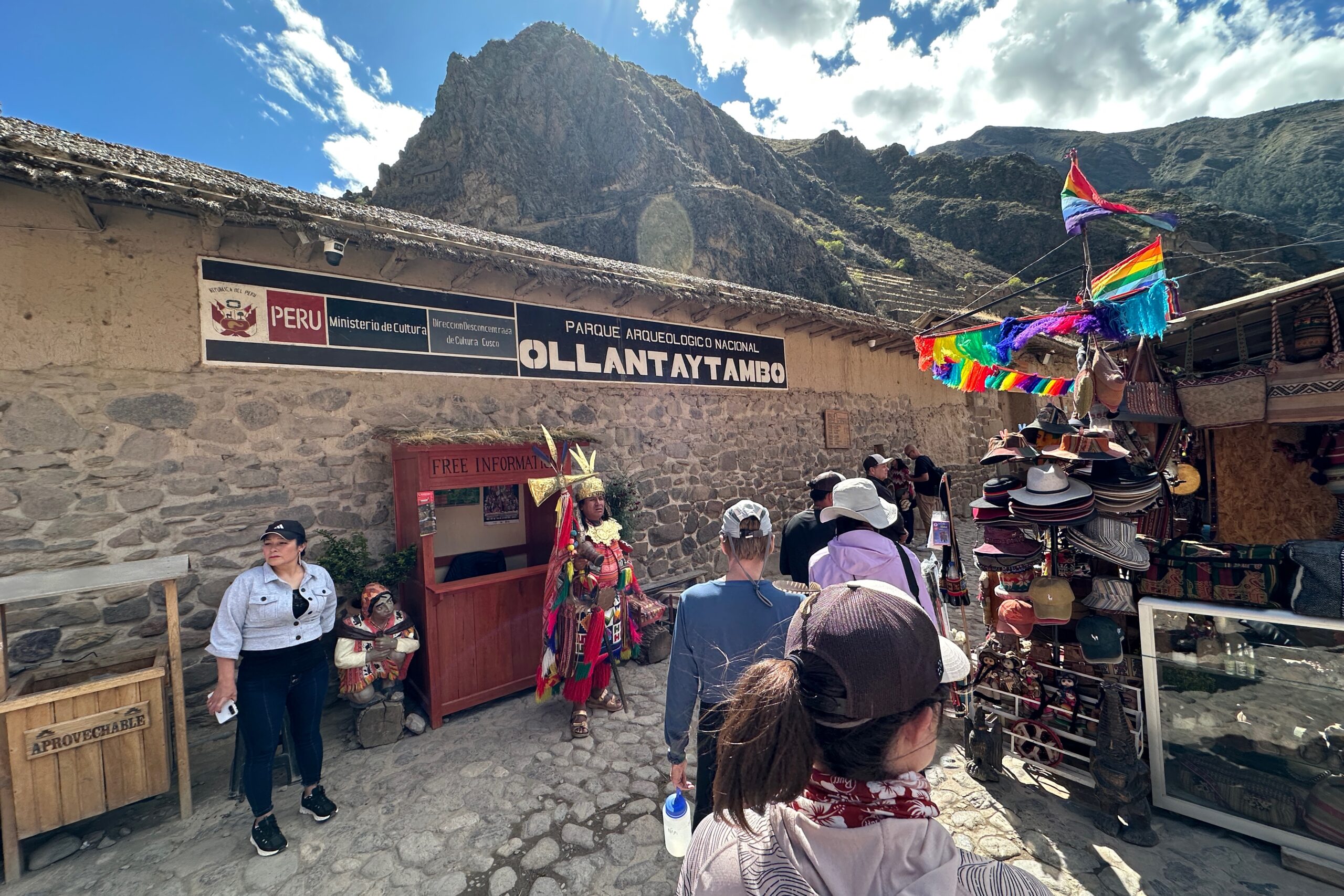
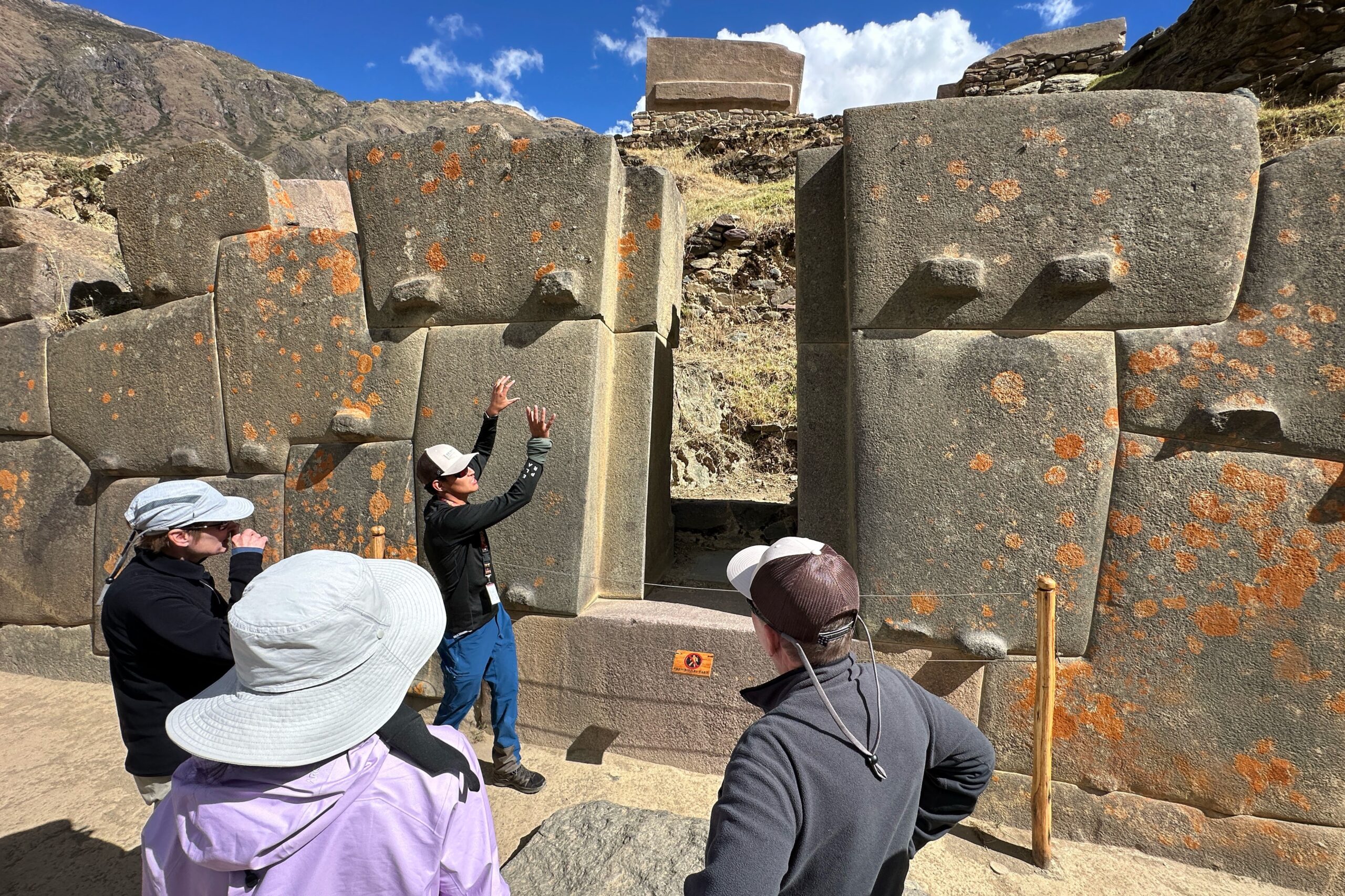
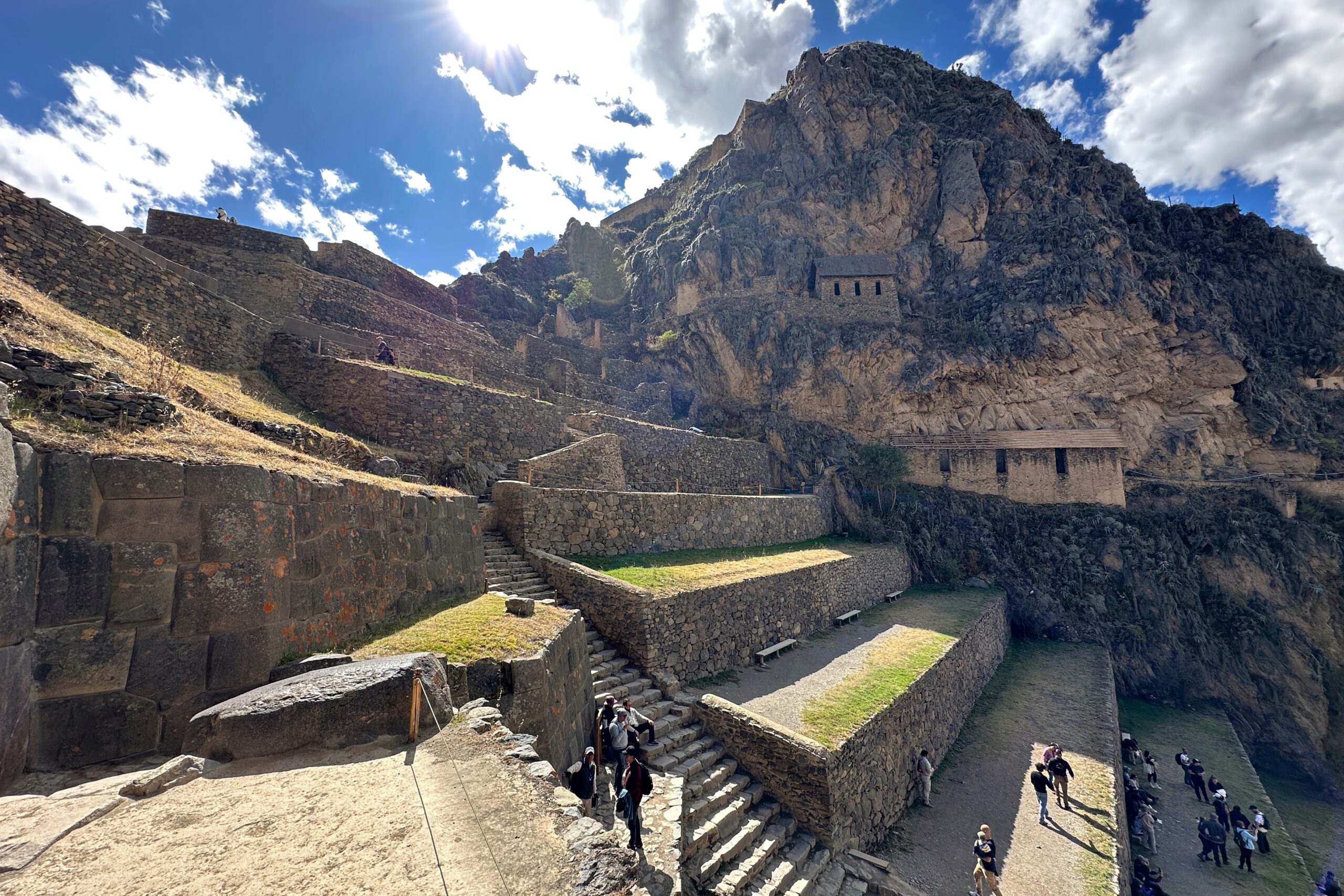
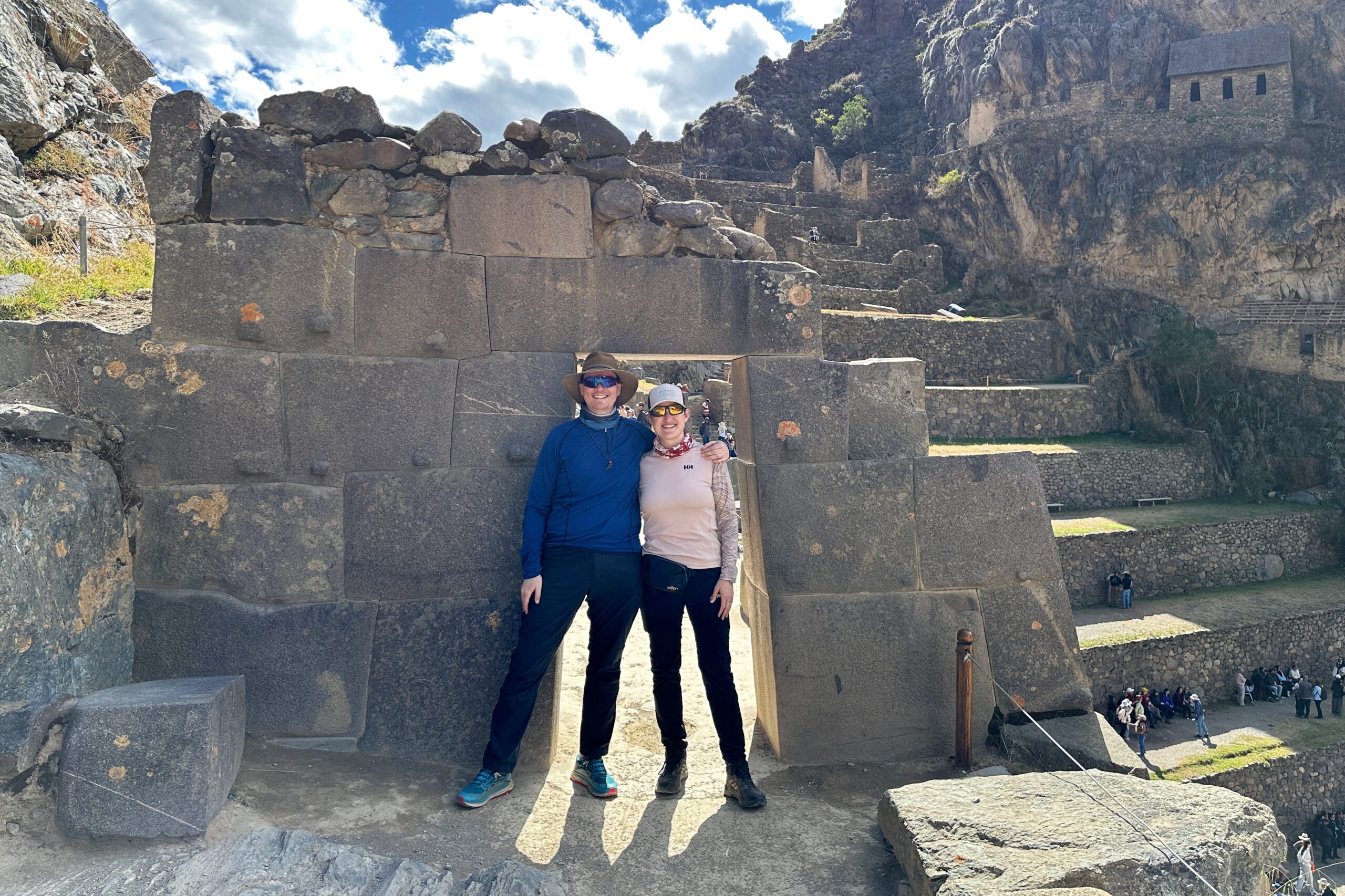
After strolling thru a few more back alleys, we made our way to the Ollaytatambo National Archeological Park entrance where Brai donned his official Peru archeological site tour guide credentials and guided us to the top with useful knowledge about Incan masonry, engineering, and beliefs. One of the most important structures on site is the Sun Temple. It was in the process of being built, but before it was finished, the Spanish invaded. The construction quickly turned from the Sun Temple to creating a military base on the same site.

“Let them come. There is still one Inca yet in Ollantaytambo who still draws breath.”

When Indiana Jones is teaching his class

Agricultural, astronomical and military structures

The other side of the door!

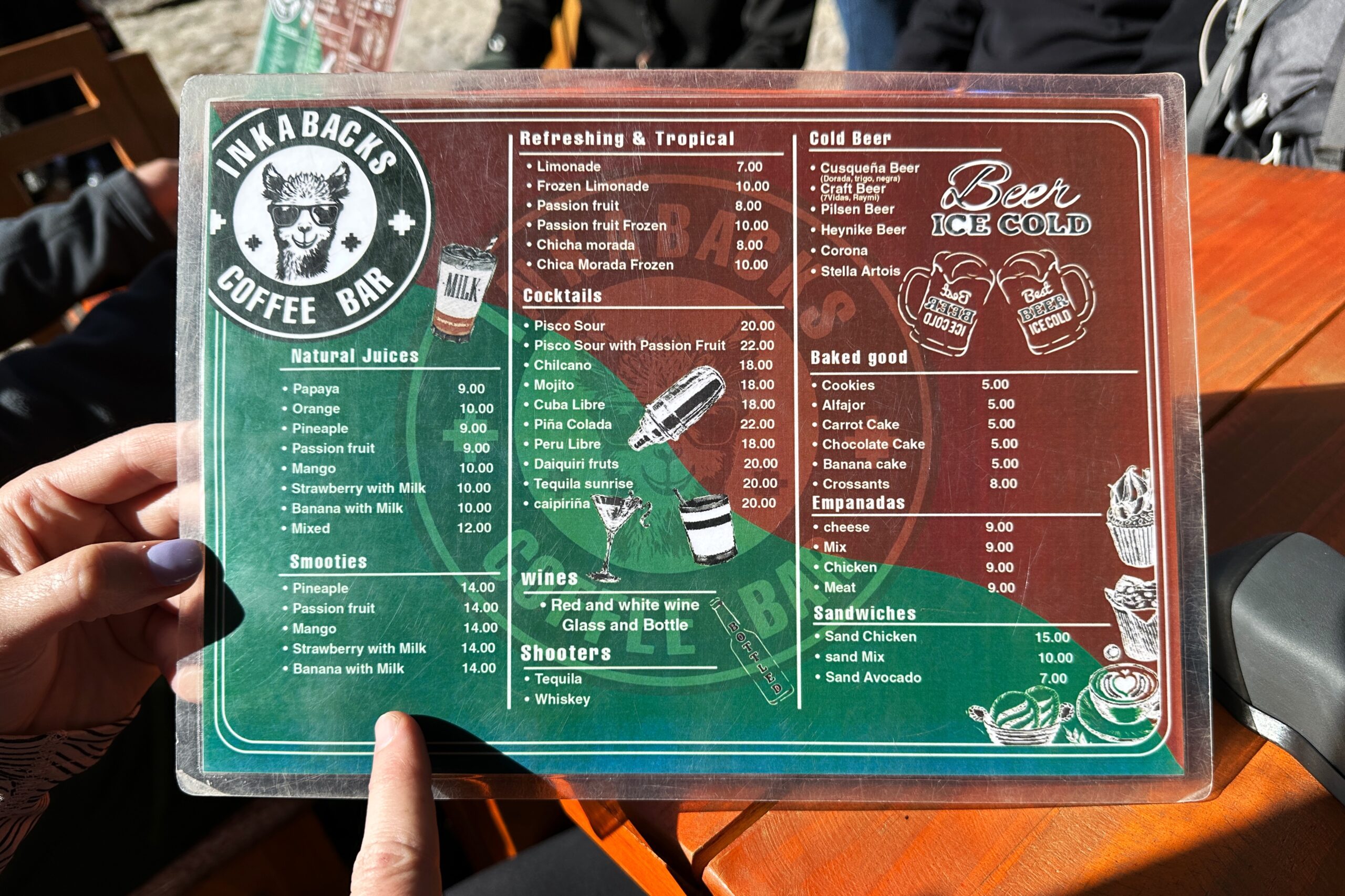
Once we were done exploring the top of the Ollantaytambo site, we climbed back down thru the crowd and checked out some fountains at the bottom before exiting. We found Chio and Luis holding a table for us at Incabacks Cafe — where we ordered a quick snack of amazing empanadas, a refreshing mango smoothie, and a colorful chicha icee.

One mango smootie please!

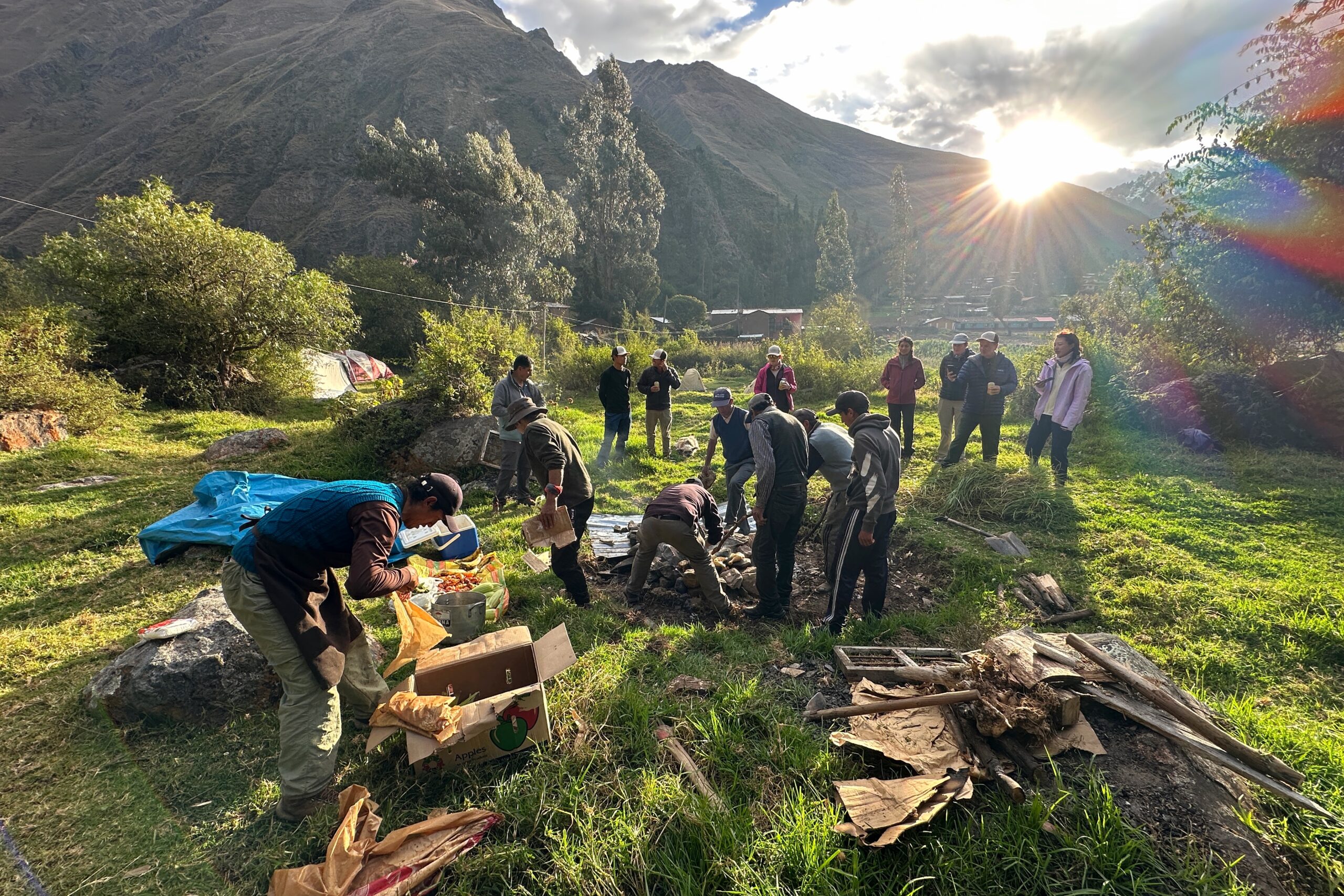
Back in the van, we headed to our Plan A Camp 4 campsite, called Kamcancha. When we arrived, we (aka. the camp staff) immediately started a pachamanca with potatoes, corn, pineapple, beef, chicken, and trout. The operation starts with a fire and some super-heated stones. When the stones are deemed hot enough, the rocks are carefully re-arranged and the food joins the party. With everything in place, the structure is covered with metal/tarp/dirt to cook inside the earth for about an hour.

Panchamanca Masters

What a coincidence! An hour is exactly how much time we need to get one last fabulous round of massages. When we were done, the team was just about ready to open the pachamarca and prepare dinner. Because there was so much food, and so many options, tonight the food was served buffet style. Everything turned out wonderfully and we all had our fill.

There was talk of another game of “Booyah!” but with a very early start planned for tomorrow (it’s gonna be good!!!), we decided to head to sleep instead.

PS. Animal antagonist of the night: A VERY vocal bull. 🐂

Day 6: Camp Patallacta

We awoke this morning to gray skies and damp everything. Our “clothes pachamanca” sort of worked, but not enough to fully dry anything. So Matt opted for a new pair of socks and different shoes, while Jo switched to a fresh pair of pants that weren’t caked in mud from the knees down. On a positive note, the hot coffee delivered thru the front door of our tent really hit the spot.

Morning weather report

We made our way to the breakfast tent where the selection included the usual fruit, granola, and yogurt, plus delicious scrambled eggs. And don’t forget the bran flakes with milk. Even better, yesterday Luis and Brai noticed Matt’s appreciation of the local chocolate confections that appear during Explora’s turn down service (in the tents too!) and are now hooking him up with extras. So bran flakes with milk AND chocolates for breakfast it is!

The plan for the day was an 11km hike — mostly downhill to reach our next (Plan B2) campsite. We followed a river/stream most of the way as we descended through the lingering clouds and light rain. We learned this amount of of rain is called “Misty Manchachiq”, aka. the kind of rain that makes city folk freak out, but isn’t really so bad.

Over the river and thru the misty manchachiq

Descending to the northeast

As promised, the hike was pretty flat with gradual downhills. Dropping in altitude, we were making pretty good time. We hiked though forest, farms, and fields, eventually finding ourselves below the misty mountain clouds — which meant the rain stopped, and it was even warm enough to tentatively shed some layers.

Brai found some explosive berries along the trail

Uruk-hai clovers for better luck with the weather?

Even Chumpy deserves a break

Roughly halfway on our route, we encountered Paucarcancha, an Incan archeological site that is a part of the larger Machu Picchu Sanctuary area. It is/was situated in a convenient location to grow some crops, observe the Qhapac Ñan, and gaze admiringly at Salkantay (when not cloudy!), but we have not yet reached the most popular sections of the Inca trail, so foot traffic here is pretty low. We basically had the place to ourselves for a while.

Discovery!

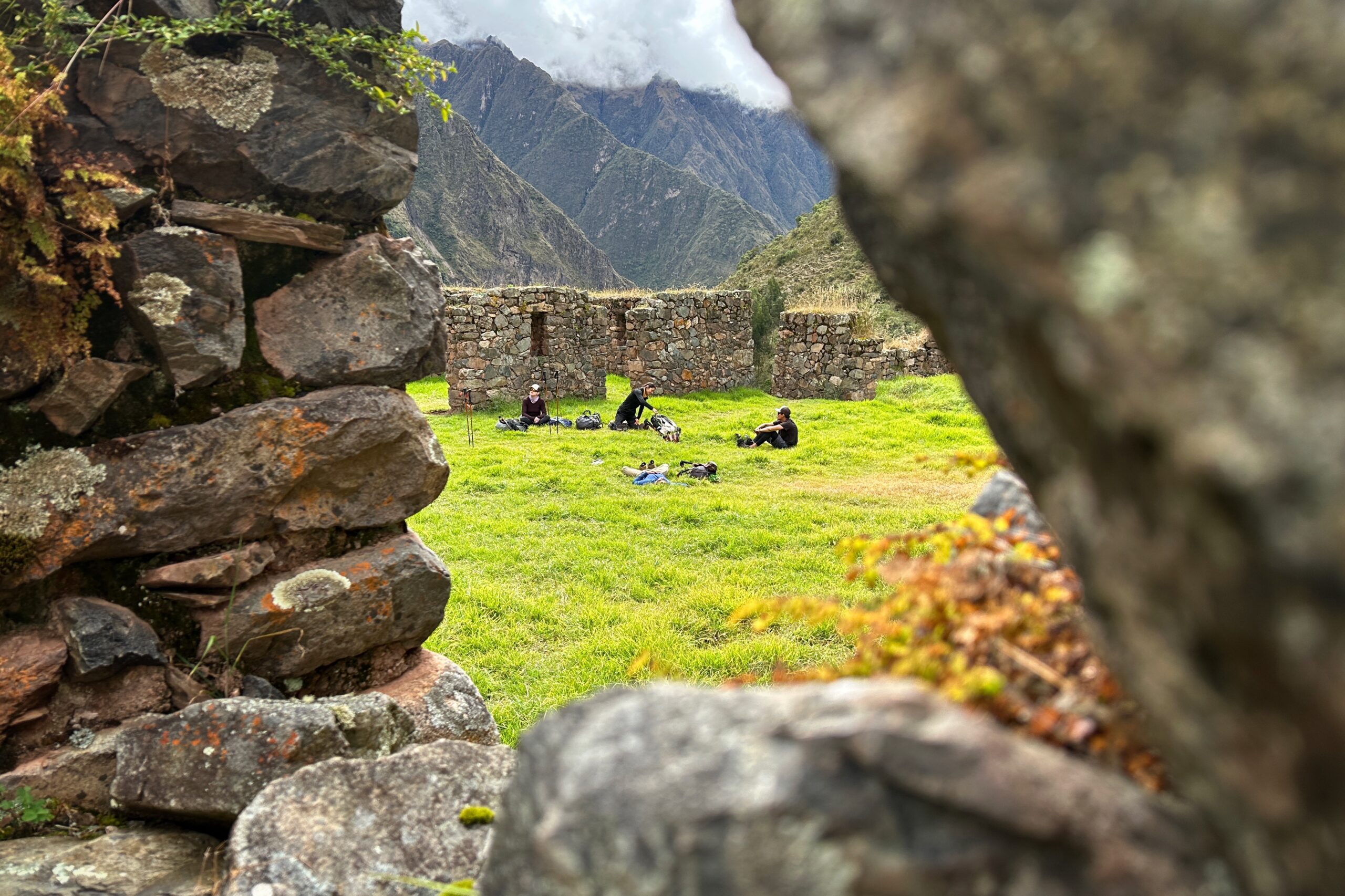
The site lived up to it’s name. Paucar means “colorful” or “flowery” and Cancha means “open space” or “corral.” The weather was starting to cooperate, so we spent the next 30-45 minutes exploring the ruins and sitting/relaxing in the grassy terraces of what was once a bustling administrative outpost of the Incan Empire.

Paucarcancha

Nap time amid the ruins

Some of the terraces are fixer uppers

This “rata” plant loves it when you explore here

After enjoying Paucarcancha for a while, we walked a few hundred meters below the ruins to a campsite area for lunch. We had cucumber and avocado salad with chia bread, dry potato soup (which is different than regular potato soup — and probably one of the accounting tricks Peru uses to claim so many varieties of potatoes), and a delicious vegetable saltado. Dessert was a chia ball/RX bar-type thing with sesame seeds that no one really ate. Alas.

We got ourselves ready again and set off for the second half of the hike. We eventually merged with the main Inca Trail that goes to Machu Picchu. Because of this, we saw lots of tour groups and porters (and trash). Because the Inca trail passes thru the existing town of Wayllabamba, there are also gift shops, bars, and discos. We were actually now hiking the Inca trail in the OPPOSITE direction used by travelers who are making the four or five day trek to Machu Picchu. One hiker who passed us asked her guide, “Wait, you can go DOWN the Inca Trail???”

Onward to Wayllabamba

Inca Trail 7-Eleven

More than one way to go on the Inca Trail

As we closed the distance to our campsite, we passed a fun-looking waka (Incan term for “sacred place” or “object of veneration”), right next to another archaeological site complete with terraces. Qi, Brai and Matt ventured up the steps to get a better view of this landmark. Perhaps the location was special because the rock at the top of the climb bears roughly the same outline as the mountain range behind it?

Venturing up the waka

Bit of a waka to get up here! (Rim-shot)

There is some congruity here

After exploring the waka, we continued on just a bit further to the campsite, named Patallacta. Turns out the day’s full hike was more like 16km (rather than 11), but we still arrived at about 4:30pm. And to be fair, this is Plan B, so Explora probably didn’t have our route measured perfectly, instead relying on the locals who probably aren’t running around with their Srava GPS turned on at all times.

View of Camp Patallacta (beyond the terraces)

Welcome home!

Hike to Camp 3 details

We had plenty of time for another round of amazing massages, and Happy Hour — featuring terra chips, cheese crackers, and wine. Pro tip: Add a scoop of the diced green rocoto chilis to the cheese chips for an instant jalapeño popper. Dinner was soup, fried chicken and polenta, and poached pears in a wine sauce for dessert. Delicious.

At dinner, Chio, Brai and Luis filled us in on several of Peru’s best-known spirits and legends including Jarjachas (nocturnal beasts punished for crimes of incest) and Condenados (evil spirits, perhaps cursed to perpetually cross rivers) — and shared their own scary stories about potential sightings.

Brai broke out the bluetooth speaker and we discovered his taste in music is incredible. We also learned jukeboxes are called rocolas. Finally, we shared some of our worldly knowledge and taught the guides how to play the game “Booyah!” Now the greatest and easiest card game has gone global — originating from Matt’s parents and renamed by our friend’s 9-year-old Charles. We played until we were too tired and had to sleep.

Tomorrow we’ll continue our hike backwards down the Inca trail, meet back up with Nan & Britt, check out Ollantaytambo, and make a triumphant return to the fourth night campsite from Plan A!

Antagonists of the night/early morning: dogs, trains, and roosters

Day 5: Camp Pampa Khawana

The weather this morning is completely unpredictable. After what seemed like a break in the clouds yesterday evening, we awoke at 1AM to the sound of heavy rain pelting our tent which continued thru our designated wake-up time of 5:45AM. Not encouraging at all (especially if you were thinking of sending any wifi messages overnight from outside your tent).

Evidence of rain all night (and Big Agnes secret Peru branding)

Fortunately, by the time we put on our hiking clothes, packed up (keeping those rain coats handy), and had our hot water/beverages delivered to our tent, the rain stopped and the skies momentarily cleared as we gathered for breakfast and our daily briefing. As expected, the breakfasts on the trail are Explora-level delicious – featuring porridge, fruit, granola, and yogurt, plus Matt’s personal boring favorite… bran flakes and milk.

What rain???

Before we started hiking, the staff checked on Nan’s condition. Unfortunately, she was still feeling pretty bad. With the advice of the guides, she decided she would try to walk a little and use the horse to get to the lunch spot and decide what to do from there. She has experience riding, so this seemed like a good option.

Nan decides to give it a shot

The day’s hike was planned for 15k further north and higher into the Puna region, including an extra kilometer or two at the start before we pass the original night one campsite (Acopia, which was too flooded to stay at). At the start, the clouds and fog were constantly moving about, drastically restricting visibility one second, then briefly clearing up.

Weather will be an uphill battle today

We never actually saw Salkantay to our northwest as we climbed in elevation. But we kept our spirits up by asking Brai questions, goofing around with animal bones, and identifying obvious Korok locations with our nifty monoculars.

Hey, Hey! Not Salkantay!

Puna fashion accessory

Take a picture, it will last longer

From this point forward, the battle for decent weather became a decidedly one-sided affair, as banks of mist rolled in from below us, the sky darkened above us, and varying forms of precipitation started again. As Brai warned us yesterday, “Everything is Possible in the Mountains, but nothing is sure.”

13th Warrior vibes

Nothing (literally) dampens Jo’s sprit

Many portions of the trail were just completely mud. We did our best to avoid these portions of the trail and walk on the grass/straw plants whenever possible, but sometimes there wasn’t enough room, or the grass was just as wet and squishy. Muddy shoes it is!

Fortunately no one fell in the mud, just frequent slipping and questionable footing, which slowed our pace considerably. There were also two pretty steep sections where we completely disregarded the switchbacks and bushwhacked our way to the top. It was tiring, but it worked. By this point, Britt also utilized one of the horses to help him get up the steep path.

After we got to the top of a section Brai affectionately called “El Diablo,” the rain turned to sleet. Then snow. The trails were starting to get covered in snow and we couldn’t quite tell where exactly was trail anymore. Walking became very difficult without slipping — and Matt happily noted that micro spikes would have been extremely useful right about now.

Side note: Next week we are going to Inti Raymi in Cusco, but Inti is doing a really crappy job of converting us to his religion. We figured one of the main perks of worshiping the Sun God was you can actually SEE THE SUN.

White out

About six hours after leaving the campsite in the morning, we finally made it to the lunch spot at the “halfway” point. By now, the snow was really falling, we still had about seven kilometers to go, and the sun was going to set in three hours. Because they were on the horses, Nan and Britt made it to the lunch spot about an hour before the rest of us. But Nan was still feeling altitude sickness, so an evacuation plan was put in motion to get Nan and Britt off the mountain and back to the Explora hotel.

We later learned this operation involved horses, walking, AND motorcycles — which sounds kinda awesome (all things considered). Plus, the southern route they took was thru a valley with halfway decent weather.

Lunch time and decision time

Meanwhile, the rest of us gathered in the dining tent to warm up and learn our fate over another delicious Explora lunch — while the snow and rain continued. The simple bread and cheese sandwich appetizers hit the spot, but of course they also brought out trout pasta and dessert. We were thinking, “Um, Hey! Maybe we should get moving!” But Brai and company were on top of it, huddling outside the tent and putting the satellite phone to work. So… we ate lunch both leisurely AND anxiously.

Ultimately, it was determined the weather was not clearing up. A runner from the camp team scouted our planned campsite (Wilke) and confirmed it was snowed in. Therefore, given the snow, the time of day, and the extreme sogginess of everybody’s “Peru Dry Season™” gear, the guides enacted Plan B: Get to lower ground, asap.

Instead of heading toward the snowed-in campsite to the east, we headed north, targeting a new campsite located at about ~3800m. The first portion of the new route was still at the ~4600m level so we braved the snow and cold for a bit longer. Brai literally lifted our spirits at our highest elevation by lifting a spirit – a capful of anais liqueur for each of us. Shots! We were energized and ready to go the rest of the way. Brai also made an offering to Salkantay (even though he was not cooperating).

Heading down

We were still trying to beat the sunset (“sun” being used VERY loosely there) and the precipitation, so we walked as quickly as possible without slipping. Luis’ bright yellow jacket was SUPER helpful to spot him when he was more than 20 feet in front of us. We got below the snow line, and the rain finally turned to mist.

Spotting Yellow things in the Mist, Part 1

Spotting Yellow things in the Mist, Part 2

We finally got to our campsite (just before dark!) called Pampa Khawana, meaning “flat viewpoint”. Lower in elevation, it was warmer than our lunch spot in the snow, but still quite cold. Plus, everything was soaking wet. Gortex can only do so much. It was such a challenging day that even Jo opted for a massage later at camp. Turns out they are good!

We’re Alive! And thankfully not the 1993 Movie!

Hike to Camp 2 details

Because of the change in plans, the camp team only arrived slightly before us, and they did a Herculean job to get all the essentials ready for us. Matt took a boiling camp shower to warm up and we laid out/hung up what we could in order to help things dry. But since the weather was still wet and cold, nothing was gonna dry.

We went to the dining tent for dinner of veggie soup, beef, potatoes, and a jackfruit dessert. We also had more anise shots and were advised that if we wanted to order anis at a bar or restaurant, we have to ask for Anisado. Otherwise, they will try to give us the spice. I know we are aren’t fluent in Spanish, but I think we would probably notice the difference.

During dinner, the guides also told us about a fruit called lucuma that they all love, but couldn’t describe. It goes in smoothies, or ice cream, or plain. We will have to try some when we get back to Explora. They also mentioned Ochucutu sauce, which is a homemade spicy sauce. We also confirmed that Rocoto peppers (Peruvian name) and Locoto peppers (Bolivian name) are the same thing, so we are set with our Rocoto sauce at home. But here’s a new Rocoto Pro Tip! Chopped up green Rocoto peppers makes an incredibly tasty salsa. Alas, those might be harder to find in Chicago.

Guides relax (a bit) after a crazy day. Thanks guys!!!

After dinner, the camp team gave us warm water bottles to use in our sleeping bags to help keep us warm. Matt figured we could use them to make a “clothes panchamaca” and take a shot at drying some of our clothes. So… we wrapped our wet clothes around the hot bottle, wrapped that inside of a couple blankets, and put it in the bottom of the sleeping bag. Here’s hoping that we have somewhat dry socks tomorrow!